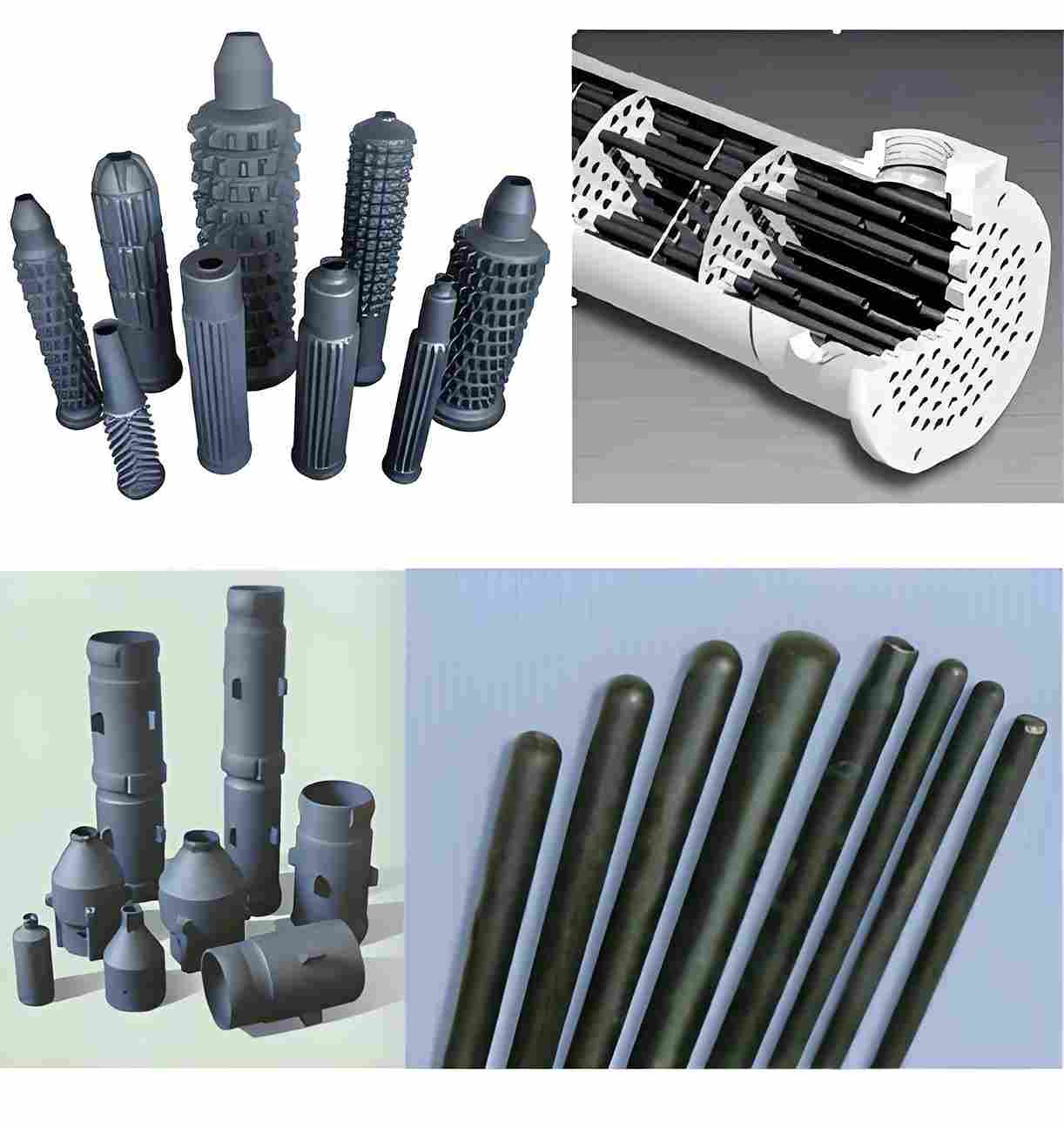
In demanding industrial services, pumps rarely fail at the casing or motor. Most unplanned downtime starts at the wet end: sleeves, journal bearings and mechanical seals. When liquids are hot, corrosive or dirty, traditional metal and polymer components wear out quickly, leading to leakage, vibration and repeated maintenance.
Silicon carbide pump components – sleeves, bearings and seals – give engineers a way to stabilise performance in these harsh conditions. This guide explains where and how to apply silicon carbide in pumps, what to consider for each component type and how to specify parts that survive real operating conditions instead of just looking good on a drawing.
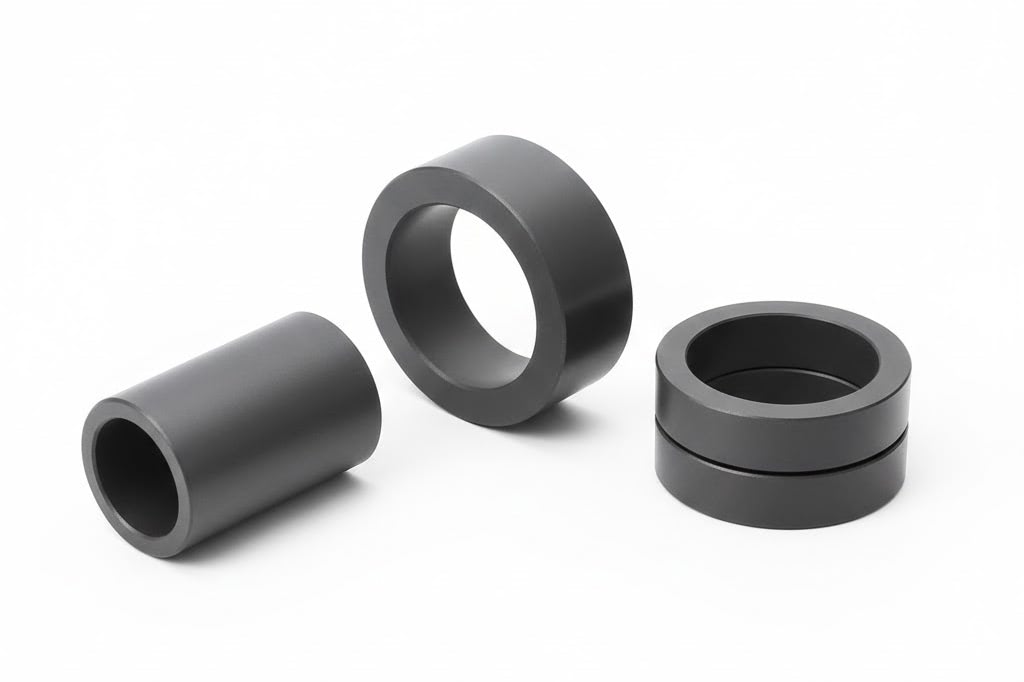
Why Use Silicon Carbide in Pumps?
Silicon carbide is a hard, corrosion-resistant ceramic material that fits the requirements of many industrial pump applications:
- Very high hardness and wear resistance – ideal for abrasive and high-speed services
- Excellent chemical resistance to many acids, alkalis and solvents
- High temperature capability with good thermal shock behaviour
- Good dimensional stability and low thermal expansion
More background on the material is available in references such as silicon carbide, but what matters in practice is that properly selected SiC sleeves, bearings and seals can significantly extend pump life in harsh industrial environments.
Key Silicon Carbide Pump Components
In centrifugal and other process pumps, silicon carbide is commonly used in three component groups:
- Sleeves – shaft sleeves and protective liners
- Bearings – journal bearings and thrust pads
- Seals – mechanical seal faces and seal rings
Each has different functions, failure modes and design requirements.
Silicon Carbide Sleeves
SiC sleeves are typically used as protective elements on the pump shaft or as stationary liners around rotating parts. They protect more expensive metallic components from wear and corrosion, acting as a sacrificial but long-lived barrier.
Typical functions
- Protecting a metal shaft from corrosive or abrasive liquids
- Providing a hard, dimensionally stable surface for mating bearings or seals
- Reducing leakage and erosion in close-clearance areas
Design considerations
- Fit on shaft or in housing: interference and mounting method must avoid cracking the ceramic.
- Wall thickness: thick enough to handle loads and impacts, but not so thick that stresses become excessive.
- Axial length: sufficient to support the mating component and distribute load.
In high-temperature or highly corrosive services, silicon carbide sleeves can be combined with other SiC parts in the pump system, such as silicon carbide tubes used as protection or guide elements in adjoining equipment.
Silicon Carbide Bearings
Hydrodynamic and hydrostatic bearings in process pumps can also benefit from silicon carbide, especially in wet-running designs where the pumped liquid lubricates the bearing. In this context, SiC is often used in journal bearing configurations.
Typical functions
- Supporting the pump shaft radially in wet-running designs
- Maintaining rotor alignment in vertical or multistage pumps
- Resisting abrasion from solids in the pumped liquid
Design considerations
- Bearing pair selection: SiC vs SiC or SiC vs another compatible material, depending on lubrication conditions.
- Clearance: must consider thermal expansion and liquid film formation.
- Grooves and lubrication channels: design to guide the fluid and avoid local dry spots.
Silicon carbide’s hardness and chemical stability make it suitable for bearings in dirty or chemically aggressive liquids where metallic or polymer bearings fail prematurely.
Silicon Carbide Seals
Mechanical seals are among the most critical components in many chemical and process pumps. Silicon carbide seal faces and rings are widely used where leakage must be minimised under corrosive, hot or abrasive conditions.
Mechanical seal basics
Mechanical seals use a pair of lapped faces – one rotating, one stationary – to prevent leakage. More detail can be found in general references such as mechanical seal, but at pump level you mainly need to choose the right material combination and face design.
SiC in mechanical seals
- SiC vs carbon: common pairing in relatively clean liquids, with good running behaviour.
- SiC vs SiC: used for abrasive or dirty liquids where carbon would wear too fast.
- Special grades: graphite-loaded SiC for improved tribology in marginal lubrication.
Zirsec supplies precision-machined silicon carbide mechanical seal rings for chemical pumps and other industrial equipment, tailored to the seal design and process conditions.
Choosing the Right Silicon Carbide Grade
For pump components, three silicon carbide families are most relevant:
- SSiC – Sintered Silicon Carbide – very dense, high purity, outstanding corrosion resistance and high strength.
- RBSiC / SiSiC – Reaction-Bonded Silicon Carbide – excellent strength and thermal shock resistance, good cost–performance balance.
- Special SiC formulations – filled or composite grades tuned for tribology or specific media.
Selection guidelines
- Use SSiC for critical seal faces and parts in aggressive chemical environments where leakage must be minimised.
- Use RBSiC / SiSiC for structural sleeves and bearings in demanding, but not extreme, conditions.
- Use special SiC grades when dry running risk or lubrication limitations are known to be significant.
In many chemical and slurry pumps, using SSiC for seal faces and high-grade RBSiC for sleeves and bearings provides a good combination of performance and cost.
Information You Should Prepare Before Specifying SiC Pump Components
Before sending RFQs for silicon carbide pump components, collect the key operating data:
- Liquid composition, including solids, gas content and possible contaminants
- Operating temperature range and maximum upset temperature
- Pressure, head and pump speed
- Existing component materials and typical failure modes (wear, corrosion, cracking, dry running)
- Required lifetime and acceptable maintenance intervals
The more complete this information is, the easier it is for a supplier to recommend specific SiC grades and component designs instead of generic catalogue solutions.
System-Level Thinking: Matching Components, Not Just Replacing One Part
Pumps operate as systems. Upgrading only one component to silicon carbide while ignoring others can shift the weak point rather than solving the root cause.
- When upgrading seal rings to SiC, review sleeves and bearing materials as well.
- For high-solids services, consider SiC wear protection upstream and downstream, for example with silicon carbide wear plates in chutes or housings.
- In hot, corrosive media, coordinate with process and mechanical engineers to ensure that all wetted parts are compatible and appropriately designed.
A consistent silicon carbide strategy across sleeves, bearings and seals typically delivers better reliability than isolated upgrades.
Case Example: SiC Pump Components in a Chemical Transfer Line
Background
A chemical plant operated horizontal centrifugal pumps to transfer a hot, mildly abrasive acid. Existing metal-backed components suffered from rapid wear and corrosion, causing frequent seal changes, high vibration and unscheduled downtime.
Findings
- Seal faces showed combined wear and corrosion damage.
- Shaft sleeves were heavily worn where they contacted packing and media.
- Journal bearings suffered abrasion from fine solids in the liquid.
Solution
- Replace shaft sleeves with silicon carbide sleeves designed for the existing shaft and housing.
- Upgrade mechanical seal faces to sintered silicon carbide vs carbon for better wear and chemical resistance.
- Introduce silicon carbide journal bearings with optimised clearances for the pumped liquid.
Result
- Seal life improved significantly, with leakage incidents reduced.
- Vibration levels dropped due to more stable bearing and sleeve geometry.
- Service intervals extended, lowering total maintenance cost and downtime.
FAQ – Silicon Carbide Pump Components
Q1. When does it make sense to upgrade a pump to silicon carbide components?
It makes sense when you have repeated failures due to wear, corrosion or high temperature, or when the cost of downtime is much higher than the cost difference between conventional and SiC components. Typical triggers are frequent seal failures, rapid sleeve wear or bearing problems in aggressive liquids.
Q2. Can I replace only the mechanical seal faces with SiC and keep other parts unchanged?
Yes, and this is common. However, if sleeves or bearings are also failing, a system-level upgrade is usually more effective. Otherwise, the failure point simply shifts to the next weakest component.
Q3. Are silicon carbide bearings and sleeves suitable for dry running?
No component enjoys continuous dry running. Silicon carbide behaves better than many materials at elevated temperature, but it still depends on some form of lubrication or cooling. Short accidental dry-running events may be tolerated, but the design should always aim to maintain proper liquid films where needed.
Q4. How do I choose between SSiC and RBSiC for pump components?
Use SSiC where maximum corrosion resistance, highest density and minimal porosity are critical, typically in mechanical seal faces or highly aggressive chemicals. Use RBSiC for sleeves and bearings where structural strength, thermal shock resistance and cost–performance balance are key.
Q5. Do silicon carbide components fit into standard pump designs?
Often yes. SiC components can be designed to match existing dimensions and interfaces, allowing retrofit into standard pump housings. For more complex upgrades, small design changes may be needed to accommodate ceramic behaviour and avoid overstressing the parts.
Q6. What information should I send to Zirsec when asking for silicon carbide pump components?
Provide pump type and size, liquid composition, temperature and pressure, speed, current material specifications, typical failure modes and drawings or dimensions of the components to be replaced. This allows Zirsec’s engineers to recommend suitable SiC grades and designs for sleeves, bearings and seals as a coherent package.
Planning to upgrade your pumps with silicon carbide sleeves, bearings or seals? Share your operating data and existing component drawings with Zirsec, and our team can help you design a SiC solution that improves reliability instead of just replacing parts one by one.