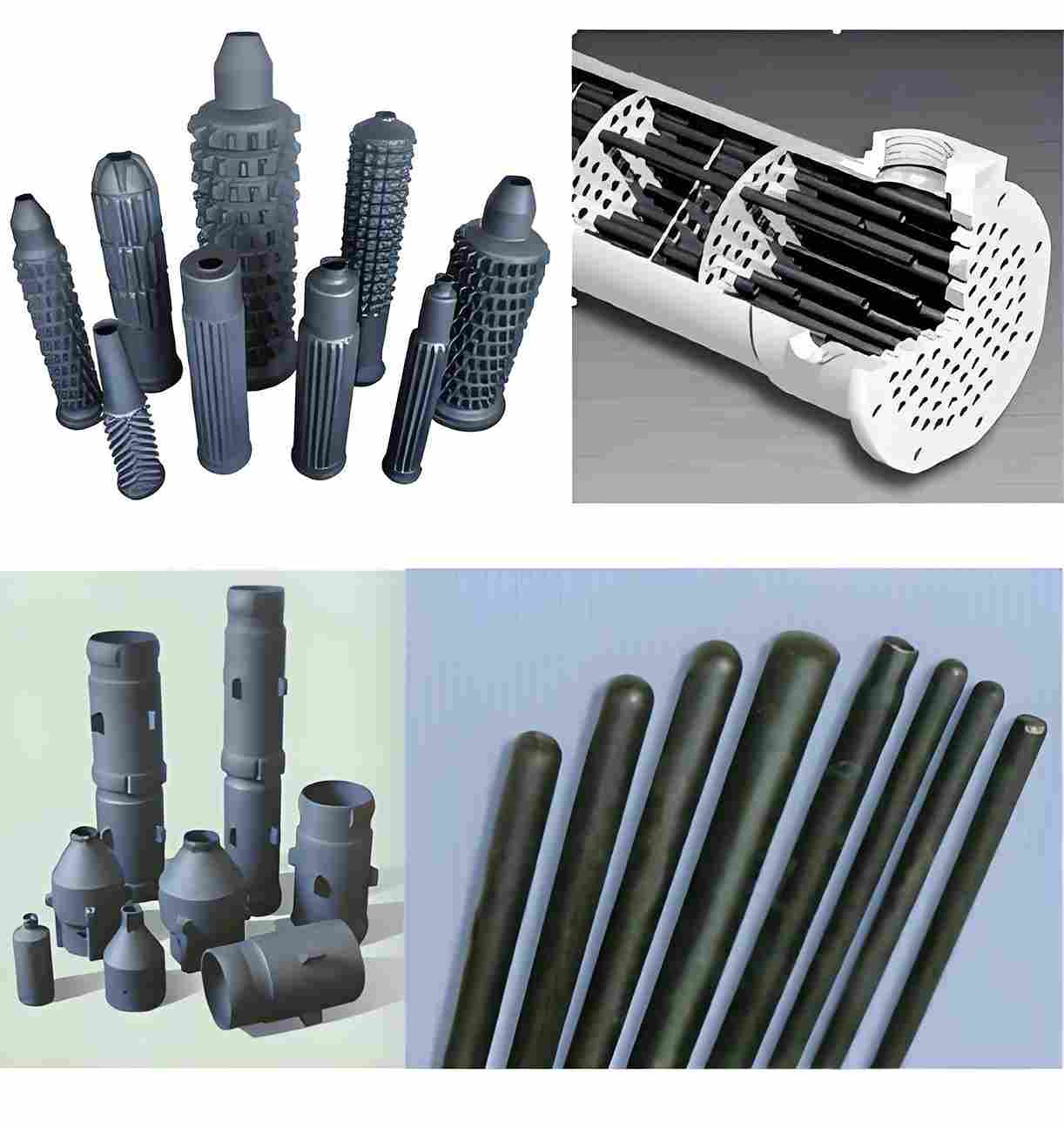
Marine and offshore systems depend on seawater for cooling, ballast, fire protection and desalination. At the same time, seawater is one of the most aggressive working fluids engineers have to deal with: it is corrosive, carries sand and silt, and is constantly in motion. Pumps operating in this environment must run reliably for long periods with minimal maintenance, often far from shore.
Silicon carbide pump components – particularly sleeves, bearings and mechanical seal rings – offer a powerful way to improve reliability in marine seawater systems. With excellent corrosion resistance, very high hardness and strong erosion behaviour, silicon carbide (SiC) helps seawater pumps survive where metals and softer materials struggle.
This article explains how silicon carbide pump components are used in marine seawater systems, where they add the most value and what to consider when specifying them.
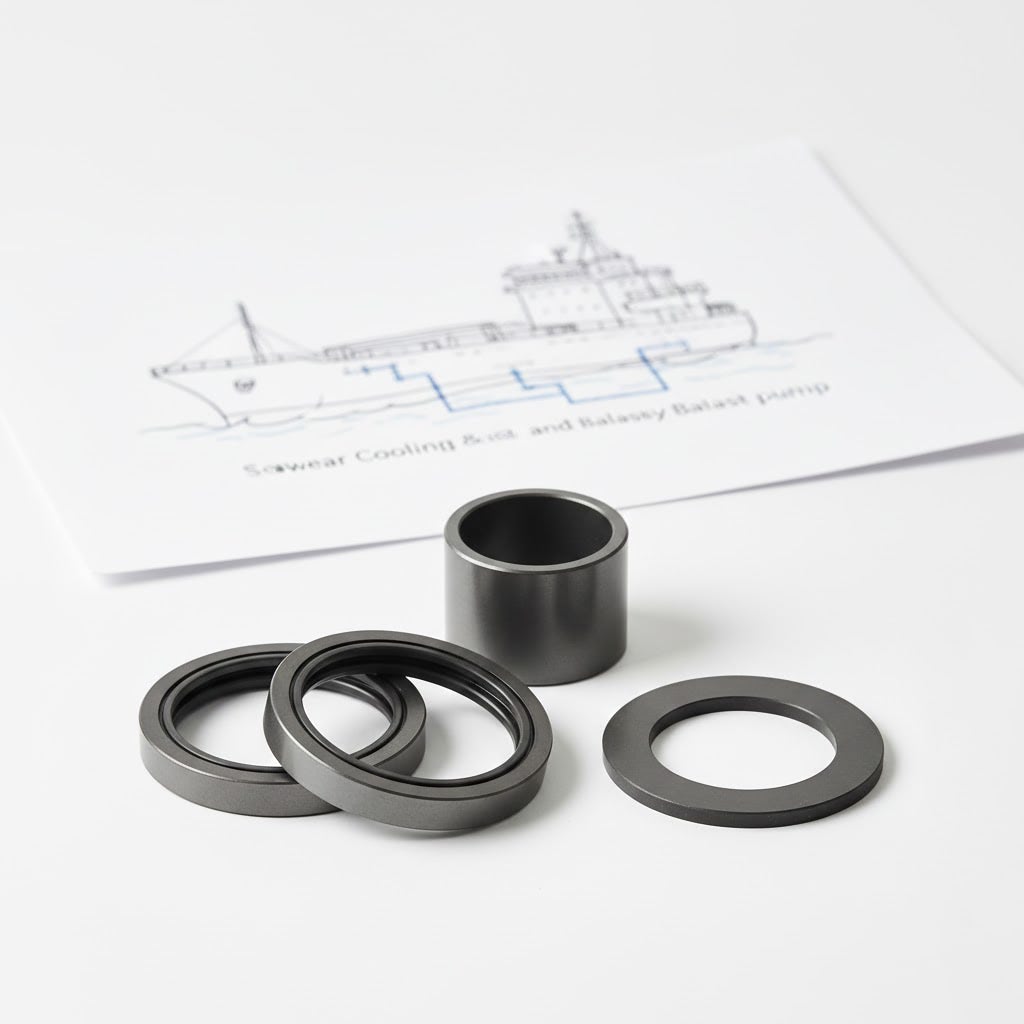
Why Seawater is So Tough on Pumps
In marine and offshore applications, seawater circuits are used for:
- Cooling systems: main engine jacket cooling, heat exchangers, condensers and auxiliary equipment.
- Ballast water systems: filling and emptying ballast tanks for trim and stability control.
- Firewater systems: high-reliability pumps feeding firefighting networks.
- Desalination and watermakers: seawater intake and high-pressure feed pumps.
Across these systems, seawater creates a combination of challenges:
- Corrosion: chloride ions drive pitting and crevice corrosion, even in many stainless steels.
- Erosion and abrasion: suspended sand, silt and shell fragments attack wetted surfaces.
- Biological fouling: biofilms and marine growth affect clearances and flow passages.
- Continuous duty: many pumps run for long periods with limited access for maintenance.
Traditional metallic and polymer components in pump bearings and seals often suffer early wear, seizure or leakage when exposed to this combination of factors.
Why Silicon Carbide Fits Marine Seawater Pump Duty
Silicon carbide, described more broadly in silicon carbide, brings a set of properties that directly address seawater pump problems:
- Excellent corrosion resistance: SiC is highly resistant to chloride-containing solutions and many seawater chemistries.
- Very high hardness: strong resistance to abrasion from sand and silt particles in seawater.
- Good erosion behaviour: tolerates high-velocity flow better than many metals and polymers.
- High thermal conductivity: helps remove heat from mechanical seal faces and bearing interfaces.
- Dimensional stability: maintains geometry and clearances over long service periods.
Zirsec supplies precision silicon carbide seal rings, sleeves and custom mechanical parts that can be integrated into seawater pumps for marine and offshore service.
Key Silicon Carbide Pump Components in Marine Seawater Systems
1. Mechanical Seal Rings and Faces
Mechanical seals are critical in seawater pumps used for cooling, ballast and firewater. Failures lead to leaks, environmental risk and unplanned downtime.
- SiC seal rings: used as rotating or stationary faces in mechanical seal assemblies.
- Face pairs: SiC vs SiC or SiC vs carbon/graphite, depending on duty and dry-running risk.
Silicon carbide seal faces help by:
- Resisting abrasion from sand and debris in seawater.
- Reducing grooving and scoring under mixed lubrication conditions.
- Maintaining flatness and sealing performance under temperature and pressure variations.
2. Sleeves and Shaft Protection
Metallic pump shafts exposed directly to seawater face corrosion and wear, especially near seals and bearings.
- SiC sleeves: silicon carbide sleeves installed over metallic shafts in wear-prone regions.
- Throat bushes and liners: SiC components protecting critical diameters and clearances.
By using silicon carbide sleeves and liners, engineers can protect costly shafts and housings, treating the SiC components as long-lived, replaceable wear elements.
3. Radial and Thrust Bearings
Many marine seawater pumps use product-lubricated bearings, where seawater itself acts as the lubricant. This is demanding for traditional bearing materials.
- Radial bearings: SiC bearing segments or sleeves supporting the shaft under radial load.
- Thrust bearings: silicon carbide pads or rings carrying axial loads from impellers and hydraulic thrust.
In these locations, silicon carbide provides:
- Wear resistance under boundary lubrication and solid particle exposure.
- Corrosion resistance in seawater across a wide temperature range.
- Dimensional stability that keeps pump clearances within design limits.
4. Wear Rings and Casing Protection
Wear rings and casing inserts help control leakage and efficiency in centrifugal pumps. In seawater service:
- SiC wear rings: silicon carbide rings paired against metallic or composite partners.
- Casing liners: SiC tiles or rings protecting high-velocity zones inside the pump casing.
Using silicon carbide in the most eroded sections of the pump extends overhaul intervals and keeps hydraulic performance stable longer.
Typical Marine Seawater Applications for Silicon Carbide Pump Components
Marine Engine Cooling Systems
Main engine and auxiliary cooling pumps often run continuously at sea, with limited opportunity for maintenance. Silicon carbide components help by:
- Reducing seal failures caused by sand, silt and occasional air ingress.
- Protecting shafts and housings from seawater-induced corrosion near seal chambers.
- Maintaining pump efficiency over long service intervals.
Ballast Water Pumps
Ballast systems deal with large volumes of seawater, often containing debris, sand and mud. SiC pump components:
- Resist abrasion in high-flow, high-solids conditions.
- Reduce the risk of jammed or seized bearings and wear rings.
- Help pumps survive irregular operating patterns and frequent starts.
Firewater and Safety-Critical Pumps
Firewater pumps must be available on demand, often after long periods of standby in seawater.
- Silicon carbide seals reduce the risk of leakage or failure on start-up.
- SiC bearings and sleeves preserve alignment and integrity after long idle periods.
For safety-critical systems, the added reliability provided by silicon carbide components is particularly valuable.
Desalination and Seawater Intake Pumps
Desalination plants and onboard watermakers rely on seawater intake and high-pressure feed pumps. Here, SiC components:
- Protect against erosion-corrosion in intake and booster pumps.
- Support stable operation under variable loading and start–stop cycles.
Many design principles used in industrial brine and chemical pumps transfer well to these marine applications.
How Silicon Carbide Pump Components Reduce Total Cost of Ownership
Upgrading to silicon carbide in key pump components affects both technical performance and economics:
- Extended maintenance intervals: less frequent seal and bearing replacement.
- Reduced unplanned downtime: fewer sudden failures in cooling, ballast or firewater systems.
- Improved efficiency retention: wear rings and clearances stay within design limits longer.
- Lower life-cycle cost: higher component cost is offset by reduced labour, dry-docking and spare parts usage.
For shipowners and offshore operators, even small reductions in unplanned service can significantly impact operating cost and schedule reliability.
Design Considerations for Silicon Carbide in Seawater Pumps
1. Face Pairing and Counterface Materials
For mechanical seals and bearing surfaces, silicon carbide always runs against a counterface:
- SiC vs SiC: very robust against abrasion, suited for particularly dirty seawater when lubrication is well controlled.
- SiC vs carbon/graphite: common seal pair balancing robustness and emergency running capability.
- SiC vs metal: possible for wear rings and sleeves, with correct clearances and hardness pairing.
Choosing the right counterface depends on solids loading, speed, pressure and expected dry-running events.
2. Lubrication and Solids Management
Even with silicon carbide, lubrication and solids management matter:
- Ensure flow paths that avoid dead zones where sand and silt can accumulate.
- Use flush lines or filters when feasible for critical seals.
- Design bearing and seal chambers to pass solids through rather than trap them.
Good hydraulic design lets silicon carbide components focus on resisting wear, not rescuing a fundamentally flawed layout.
3. Tolerances, Surface Finish and Standards
Pumps following marine standards still need tight control of clearances and leakage:
- Define clearance and fit for SiC bearings, wear rings and sleeves based on thermal expansion and shaft alignment.
- Specify surface roughness to support stable lubrication films on seal faces and bearing surfaces.
- Maintain consistent quality across batches, especially for high-volume OEM pump production.
Zirsec’s experience with precision SiC seal rings and mechanical parts supports the tolerances needed for demanding marine pump designs.
Case Example: Upgrading Seawater Cooling Pumps with Silicon Carbide Components
Background
A ship operator experienced frequent seal and bearing failures in seawater cooling pumps, particularly on vessels operating in shallow, sandy waters. Unplanned maintenance and spare parts usage increased operating costs.
Approach
- Replace existing hard face materials with silicon carbide seal rings in mechanical seals.
- Introduce silicon carbide sleeves on critical shaft areas exposed to seawater.
- Upgrade product-lubricated bearings to SiC bearing segments designed for the specific pump geometry.
Results
- Seal and bearing lifetime increased significantly, with fewer failures between scheduled dry-dockings.
- Pump performance remained more stable over time, with less loss of efficiency due to wear.
- Overall maintenance and spare parts costs for the cooling pump fleet were reduced.
FAQ – Silicon Carbide Pump Components in Marine Seawater Systems
Q1. Can silicon carbide components be retrofitted into existing seawater pumps?
Often yes. Many pumps can be upgraded by replacing seal faces, sleeves, wear rings or bearings with silicon carbide versions that match existing envelopes. Some applications require minor modifications to housings or carriers, but full pump redesign is rarely necessary.
Q2. Are silicon carbide pump components only for newbuild ships and offshore installations?
No. Retrofit projects on existing vessels and platforms are common, especially where chronic pump problems exist. Upgrading critical components during planned dry-docks is a typical strategy to improve reliability without replacing entire pumps.
Q3. How does silicon carbide behave with chlorinated or treated seawater?
Silicon carbide itself is generally resistant to treated seawater, but the total system – including elastomers, metals and coatings – must be checked. When specifying SiC components, always consider the full fluid chemistry, including any biocides or anticorrosion additives.
Q4. Does silicon carbide eliminate all pump wear in seawater?
No material can completely eliminate wear in abrasive seawater service. Silicon carbide significantly slows down wear in the most critical components, extending service intervals and reducing the rate of performance decline. Good hydraulic and mechanical design is still essential.
Q5. What information should I provide when requesting silicon carbide pump components from Zirsec?
Provide pump type and size, seawater conditions (temperature, solids content, treatment), operating pressure and flow, speed, existing materials, typical failure modes and drawings of the seal, bearing or wear ring assemblies. This allows Zirsec to propose suitable silicon carbide seals, sleeves, bearings or custom parts for your specific marine application.
Running seawater pumps in demanding marine or offshore service? Integrating silicon carbide pump components in the right locations can turn high-maintenance pumps into stable, long-life assets, cutting unplanned downtime and improving confidence in critical cooling, ballast and firewater systems.