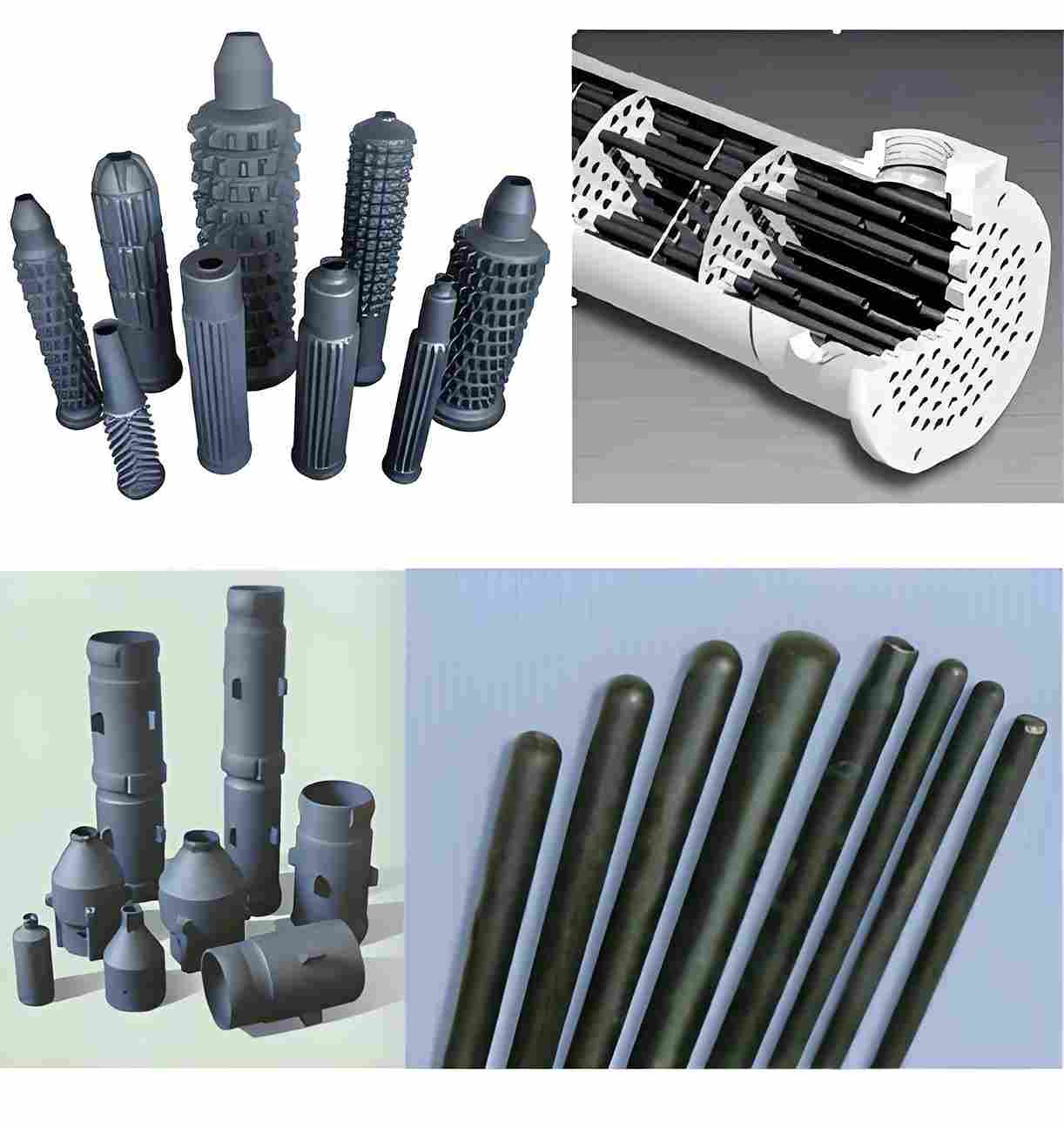
Cement plants run on thin margins and tight production schedules. When rotary kiln burners crack, erode or fail, the result is unstable clinker quality, forced shutdowns and expensive refractory repairs. Burner areas are among the hottest and most mechanically stressed zones in the entire kiln system.
Silicon carbide burners and burner nozzles give cement plants a practical way to stabilise this critical zone. With excellent high-temperature resistance, strong thermal shock behaviour and outstanding erosion resistance, silicon carbide (SiC) helps cut maintenance downtime and extend kiln campaign life.
This article explains why burner zones are so problematic in cement kilns, how silicon carbide burners improve performance and what to consider when upgrading from conventional burner tiles and nozzles.
Why the Burner Zone Limits Cement Kiln Reliability
Rotary cement kilns operate under harsh thermal and mechanical conditions:
- Extreme temperatures: flame temperatures can exceed 2000 °C, with the burning zone shell running at very high heat flux.
- Thermal shock and cycling: frequent changes in fuel feed, kiln speed and secondary air flow.
- Mechanical stress: coating build-up and collapse, clinker impacts and pressure pulsations.
- Abrasion and chemical attack: dust-laden gas, alkalis and sulphur-bearing species attacking burner blocks and tiles.
Conventional burner tiles and nozzles made from basic refractories or castables often suffer:
- Cracking around burner throats and tile corners.
- Erosion of the burner outlet, changing flame shape.
- Local spalling during kiln upsets or coating collapse.
The result is repeated hot repairs and unstable combustion, both of which reduce kiln availability and clinker quality.
Why Silicon Carbide Burners Work Better in Cement Kilns
Silicon carbide, described more generally in silicon carbide, offers properties that fit the kiln burner environment:
- High-temperature strength: retains shape and mechanical integrity at burner throat temperatures.
- Excellent thermal shock resistance: tolerates rapid changes in flame temperature and gas composition.
- High hardness and erosion resistance: resists wear from dust-laden hot gas and clinker backflow.
- Good oxidation resistance: stable in strongly oxidising kiln atmospheres near the burner.
- High thermal conductivity: helps spread heat and reduce local hot spots in burner tiles.
Zirsec provides silicon carbide nozzles and burner components engineered for high-temperature industrial furnaces, which can be adapted to the conditions found at the front end of rotary cement kilns.
Key Silicon Carbide Components in Cement Kiln Burner Systems
1. Burner Nozzles and Outlet Inserts
Burner nozzles define flame shape and mixing characteristics. In cement kilns they must cope with alternative fuels, high momentum primary air and hot secondary air:
- SiC burner nozzles: maintain outlet geometry over long periods, supporting repeatable flame patterns.
- Outlet inserts and tips: silicon carbide tips that resist erosion, especially with solid alternative fuels.
Stable nozzle shape means more consistent heat transfer to the clinker bed and easier control of free lime and coating formation.
2. Burner Tiles and Throat Blocks
Burner tiles and throat blocks protect the kiln hood and shell around the burner pipe:
- Silicon carbide tiles in the immediate burner zone resist cracking and spalling under thermal shock.
- SiC plates and rings around the burner pipe protect the interface between steel and refractory.
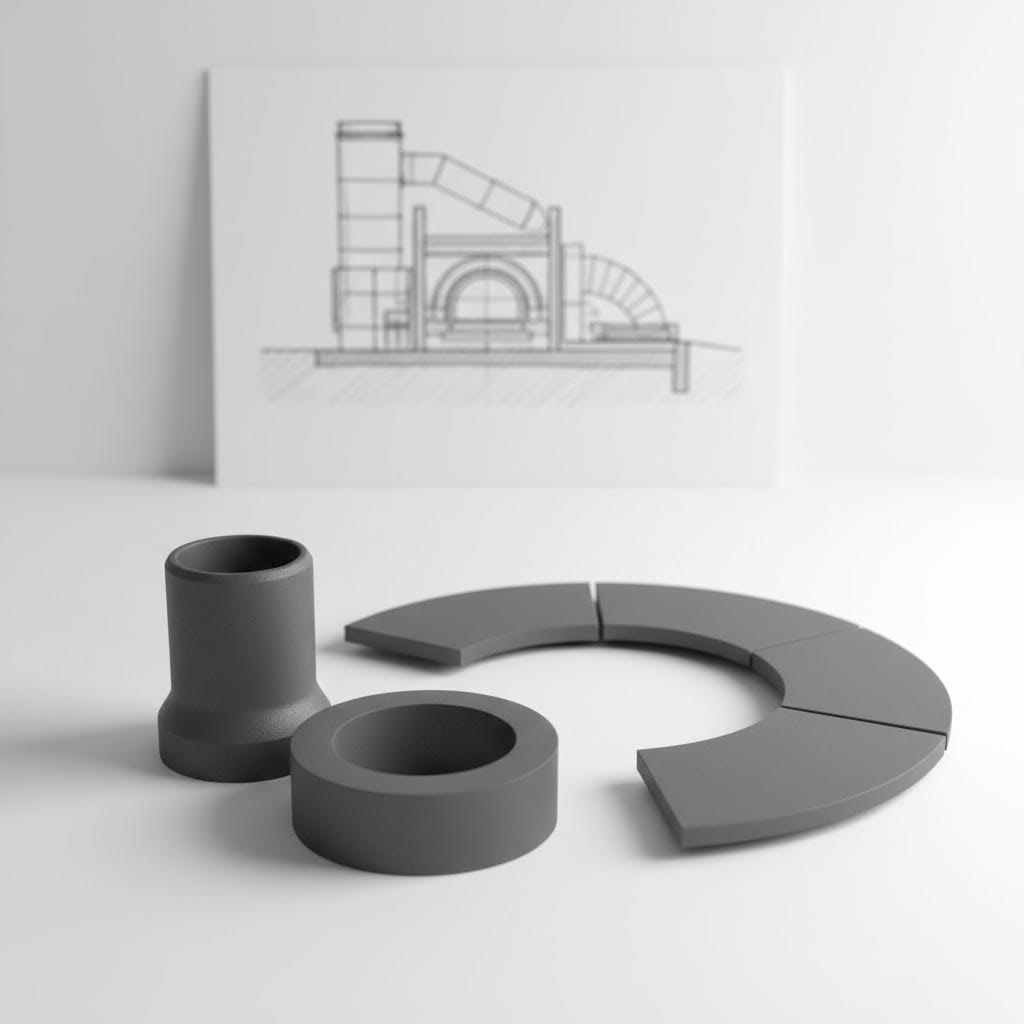
Zirsec’s silicon carbide plates can be configured as segmented tiles or rings to reinforce these high-stress regions.
3. High-Temperature Duct and Hood Elements
Near the burner, the kiln hood and tertiary air inlet regions also see high heat flux and dust loading:
- SiC lining tiles in critical impact zones of the hood and ducts.
- Flow control baffles made from silicon carbide to stabilise gas flow near the burner.
Targeted use of silicon carbide in these areas helps avoid local refractory failures that force unscheduled shutdowns.
How Silicon Carbide Burners Cut Maintenance Downtime
Upgrading burner tiles and nozzles to silicon carbide is not just a material swap. It changes how the burner zone behaves:
- Longer life between repairs: better resistance to cracking, erosion and spalling extends the interval between burner overhauls.
- Fewer emergency shutdowns: less risk of catastrophic burner tile failure or severe gas bypass.
- More stable flame shape: consistent burner outlet geometry supports steady combustion and clinker quality.
- Less collateral damage: stable burner hardware reduces thermal shocks to adjacent refractories.
For plants targeting higher alternative fuel rates or more flexible production schedules, a reliable burner zone becomes even more important for overall kiln availability.
Design and Implementation Considerations
1. Matching Burner Design and SiC Geometry
Successful upgrades start with a clear view of the existing burner system:
- Review burner pipe layout, primary air channels and secondary/tertiary air patterns.
- Identify current failure modes: cracking, erosion, spalling, block movement.
- Define SiC nozzle and tile geometry to fit existing burner pipes and hood openings.
In some cases, only the nozzle tip and immediate tile ring are converted to silicon carbide; in others, a more extensive SiC tile ring is installed around the burner front.
2. Anchoring, Expansion and Interfaces
Silicon carbide ceramics behave differently from basic refractories and metals:
- Anchoring: use appropriate anchors, keys or backing castables that allow SiC tiles to seat without point loading.
- Expansion: account for thermal expansion differences between SiC, castables and steel supports.
- Joint design: maintain tight joints to minimise gas bypass while avoiding stress concentrations.
Correct mechanical design is as important as material choice in achieving long service life.
3. Fuel and Operating Strategy
Burner zones in modern cement plants must handle a mix of traditional and alternative fuels:
- High-velocity pulverised coal or petcoke.
- Solid alternative fuels such as RDF, biomass or tyre chips.
- Multi-channel burners with complex mixing patterns.
Silicon carbide nozzles and tiles help tolerate the additional thermal and mechanical variation introduced by these fuels, but burner tuning and flame shaping must be revisited after installation to exploit the improved stability.
Case Example: Reducing Burner Tile Repairs with Silicon Carbide
Background
A cement plant running a large rotary kiln experienced frequent burner tile cracking and erosion, particularly after increasing alternative fuel rates. Hot repairs in the burner zone became a regular cause of unscheduled downtime.
Approach
- Replace the conventional burner throat tiles with segmented silicon carbide tiles and rings.
- Install a silicon carbide burner nozzle tip to stabilise flame shape and protect the outlet region.
- Review anchoring and backing castables to accommodate SiC’s thermal and mechanical behaviour.
Results
- Burner tile life increased significantly; emergency repairs in the burner zone were largely eliminated.
- Flame geometry remained more stable, simplifying kiln control and alternative fuel optimisation.
- Overall kiln availability improved as burner-related downtime decreased.
FAQ – Silicon Carbide Burners in Cement Kilns
Q1. Do I need to redesign my burner to use silicon carbide components?
Not necessarily. Many plants retrofit SiC nozzles and tiles into existing burner designs with limited changes. However, a review of burner geometry, tile layout and anchoring is essential to ensure that silicon carbide components are properly supported and aligned.
Q2. Will silicon carbide burners change my flame shape?
Silicon carbide itself does not change combustion physics, but it helps keep burner outlets and tiles in their designed shape for longer. This means flame shape remains closer to the design intent instead of drifting due to erosion or deformation.
Q3. How does silicon carbide handle alternative fuels?
Silicon carbide’s erosion resistance and thermal shock behaviour make it well-suited to the more variable conditions created by alternative fuels. It tolerates higher particle loads, more frequent temperature fluctuations and local hot spots better than many conventional burner refractories.
Q4. Where is the best place to start with silicon carbide in a cement kiln?
Start with the most problematic burner zone components: nozzle tips that erode quickly, tiles that crack repeatedly or throat blocks that require frequent hot repair. Upgrading these elements to SiC gives the clearest view of benefits in reduced maintenance and downtime.
Q5. What information should I provide when asking Zirsec about SiC burner components?
Provide kiln size and type, burner layout, current refractory design, operating temperatures, fuel mix, recent failure history and photos of the burner zone. With this information, Zirsec can propose silicon carbide nozzles, tiles or plates tailored to your kiln conditions.
Planning your next kiln shutdown? Upgrading burner tiles and nozzles to silicon carbide can turn a chronic weak point of the rotary kiln into a stable, long-life zone, cutting maintenance downtime and supporting more flexible, fuel-efficient cement production.