Pharmaceutical and food production lines live under constant pressure: strict hygiene rules, tight quality standards and zero tolerance for contamination. At the same time, pumps, valves and process equipment still have to handle abrasive slurries, cleaning chemicals and continuous operation. If critical components wear out or corrode, the result is unplanned downtime, batch risk and a lot of paperwork nobody wants.
Inert silicon carbide components offer a practical way to increase reliability in clean processing environments. With excellent chemical resistance, high hardness and dimensional stability, silicon carbide (SiC) helps engineers build equipment that lasts longer and stays cleaner in pharmaceutical and food applications.
This article explains how inert silicon carbide components fit into the pharmaceutical industry and food processing, where they are most useful and what to consider when specifying them.
Clean Processing: Where Materials Usually Fail First
In both pharma and food plants, core process equipment must satisfy two targets at once:
- Product safety and hygiene: no unacceptable leaching, contamination or microbial traps.
- Mechanical reliability: pumps and valves must survive continuous service with abrasive or chemically aggressive media.
Typical weak points include:
- Pump seals and bearings: wear, scoring or corrosion under aggressive cleaning cycles (CIP/SIP) and abrasive suspensions.
- Valve trim and seats: erosion and pitting from high-velocity flow or solid particles.
- Contact surfaces in high-shear or dosing equipment: wear that changes clearances and dosing accuracy.
Traditional materials like stainless steel, coated metals and engineering plastics work well up to a point, but they have limits when faced with combined abrasion, chemicals and thermal cycling from cleaning regimes.
Why Inert Silicon Carbide Components Fit Clean Processing
Silicon carbide, described broadly in silicon carbide, brings several properties that are attractive in hygienic process equipment when the right grades and surface finishes are used:
- Chemical resistance: stable in many cleaning agents, solvents and process fluids used in pharma and food plants.
- High hardness and wear resistance: resists abrasion from crystals, pigments, fillers and other solids in suspensions.
- Dimensional stability: maintains geometry and clearances over long operating periods.
- Good thermal properties: handles temperature changes, including CIP and SIP cycles, when designed correctly.
- Inert and non-reactive behaviour: suitable for well-defined process windows where extractables and leachables must be tightly controlled.
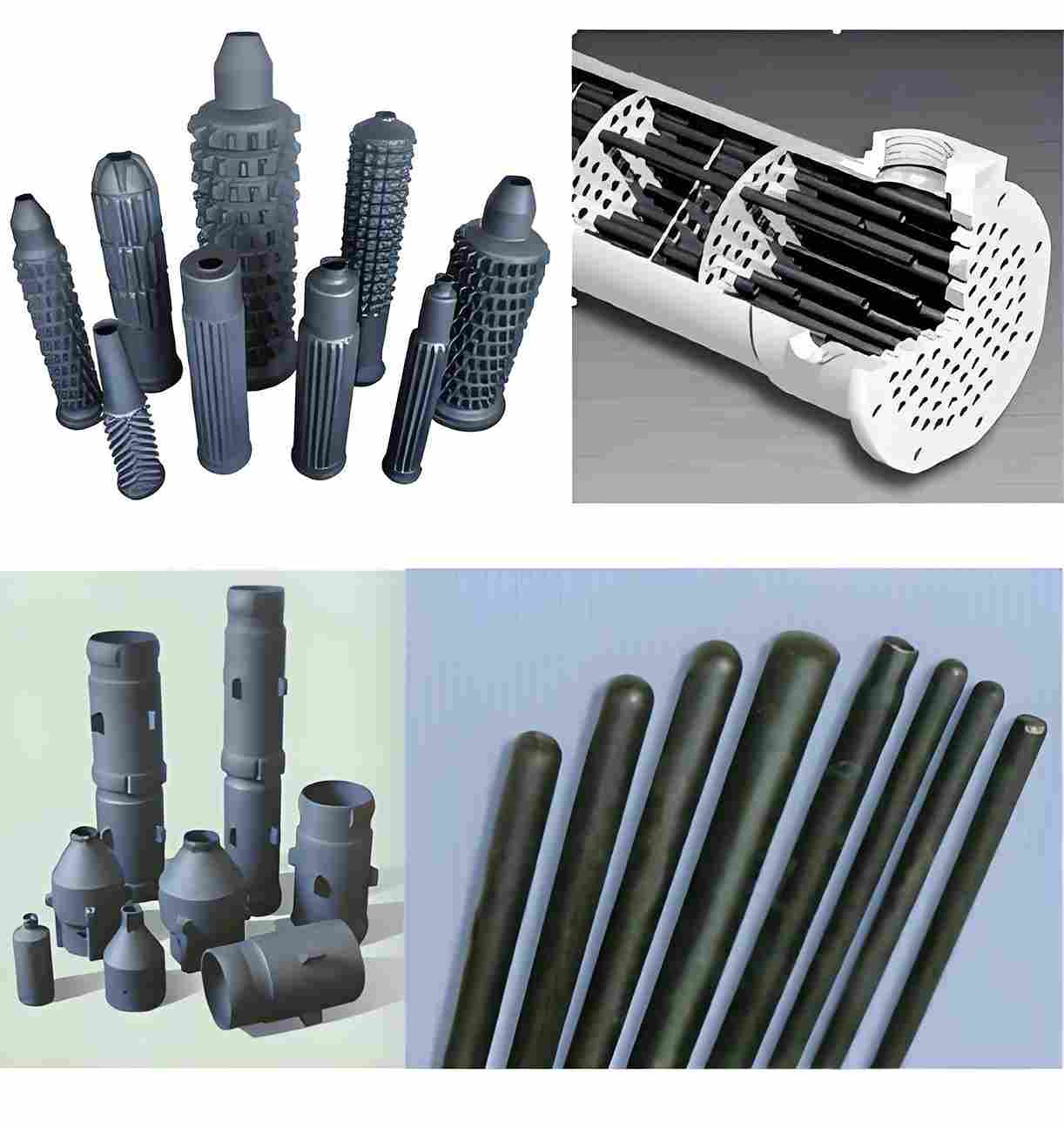
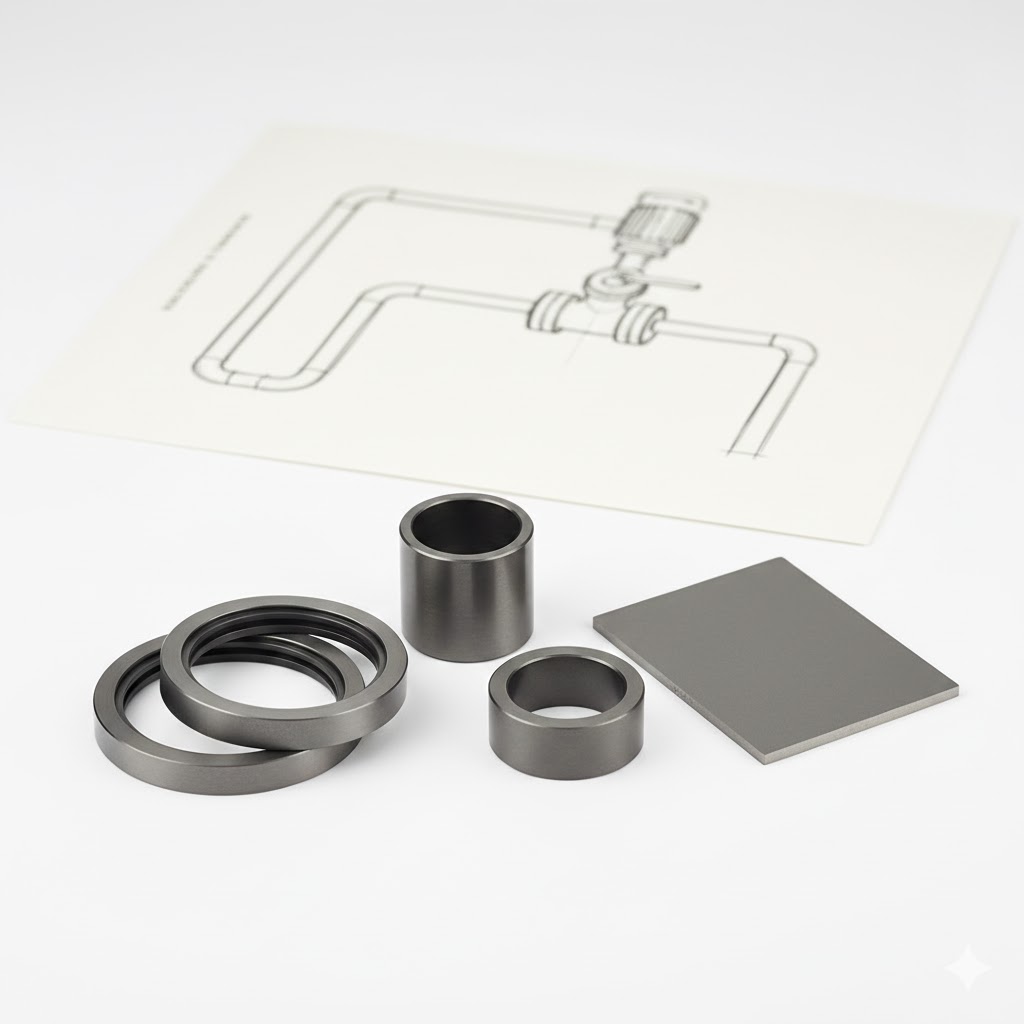
Zirsec manufactures precision silicon carbide seal rings, tubes, plates and custom mechanical parts that can be engineered into pump, valve and process equipment designs for clean processing environments.
Key Silicon Carbide Components in Pharma & Food Processing
1. Mechanical Seal Rings for Hygienic Pumps
Hygienic centrifugal and positive-displacement pumps are central to most pharmaceutical and food processes. Mechanical seal failures are a frequent cause of unplanned downtime.
Inert silicon carbide seal rings can be used as:
- Rotating or stationary faces in single or double mechanical seals.
- Seal pairs such as SiC vs SiC or SiC vs carbon, depending on dry-running risk and product nature.
Advantages in clean processing include:
- Resistance to CIP/SIP chemicals and temperature cycling at the seal interface.
- Reduced wear and grooving when handling slurries, suspensions or products with crystals or fillers.
- Stable sealing behaviour over long service intervals, reducing leakage risk.
2. Sleeves, Bearings and Bushings in Product-Lubricated Designs
Many hygienic pumps and agitators use product-lubricated bearings or bushings, especially where oils and greases are not acceptable near the product zone.
- Silicon carbide sleeves: protect shafts in wetted areas from wear and corrosion.
- SiC radial bearings and bushings: carry loads while running directly in the product or compatible flushing media.
Here, silicon carbide helps by:
- Maintaining tight clearances under abrasive or intermittent lubrication conditions.
- Reducing the risk of seizure and scoring compared with softer bearing materials.
3. Valve Seats, Discs and Wear Inserts
Valves used in dosing, isolation and control functions deal with repeated cycling, pressure drops and sometimes abrasive ingredients.
- SiC valve seats and discs: used in high-cycle or erosive positions, particularly in slurry or powder-in-liquid handling.
- Trim inserts and liners: silicon carbide wear inserts in throttling valves or high-velocity sections.
The high hardness and erosion resistance of silicon carbide helps keep sealing surfaces smooth and reliable across many cycles, supporting consistent valve performance.
4. High-Wear Surfaces in Mixers and Dosing Equipment
In some mixers, mills and dosing units, a few specific surfaces see most of the mechanical stress:
- Contact faces where rotating elements pass very close to stationary housings.
- Guide and support elements for moving parts in abrasive or filled products.
Silicon carbide plates or inserts can be used to reinforce these high-wear zones, extending service life and preserving geometry without introducing problematic contamination pathways.
Benefits of Inert Silicon Carbide Components for Clean Processing
Longer Service Life in Aggressive Conditions
Pharmaceutical and food equipment must tolerate a combination of product exposure and cleaning regimes:
- Abrasive media: particles, crystals, fibre and fillers in slurries, emulsions or suspensions.
- Frequent CIP/SIP: repeated exposure to hot caustic, acids and disinfectants.
- Thermal cycling: heating and cooling cycles between process and cleaning steps.
Silicon carbide components slow down wear in these conditions, making seal and bearing life less sensitive to small process upsets.
Reduced Risk of Particulate and Metal Contamination
When metallic components corrode or wear, the resulting particles can compromise product quality and trigger investigations. Inert silicon carbide helps by:
- Providing hard, wear-resistant surfaces that generate fewer particles under normal operation.
- Reducing exposure of underlying metal components to aggressive media when used as liners or sleeves.
With appropriate surface finish and cleanliness controls, SiC parts support hygienic design in demanding duty points.
More Stable Equipment Performance
As seals, bearings and clearances wear, equipment performance drifts:
- Pumps lose efficiency and may struggle to hold flow or head.
- Valves lose tight shut-off or accurate control characteristics.
- Dosing and mixing geometry shifts, affecting process consistency.
By maintaining dimensions and surface quality for longer, silicon carbide components help keep equipment performance inside the original design window.
Design and Specification Considerations
1. Grade and Purity Selection
“Silicon carbide” covers a range of materials. For pharmaceutical and food applications:
- Use high-quality technical grades with well-defined composition and low porosity.
- Define limits for impurities and potential leachables according to your regulatory environment.
- Consider surface finish requirements compatible with clean processing and cleaning regimes.
Industrial-grade SiC from Zirsec is well suited for mechanical roles in pumps, valves and auxiliary equipment; final suitability for direct contact with specific products must be evaluated within your quality and regulatory framework.
2. Surface Finish and Cleanability
Clean processing is not just about bulk material; surface condition matters:
- Specify surface roughness that supports clean-in-place performance and minimises product retention.
- Avoid sharp internal corners and complex surface textures that trap residues.
- Validate cleaning procedures (CIP/SIP) on real SiC components, not just metal prototypes.
Silicon carbide can be machined and finished to surface qualities compatible with hygienic equipment when these requirements are clear upfront.
3. Pairing with Other Materials
Silicon carbide almost always runs against other materials in seals, bearings and valves:
- Seal faces: SiC vs SiC or SiC vs carbon/graphite, chosen based on dry-running and product behaviour.
- Bearings and sleeves: SiC vs metals or compatible ceramics, with clearances matched to thermal expansion and operating conditions.
- Valve trim: SiC seats mated with appropriate metals or composites.
Matching thermal expansion, hardness and surface finish across pairs is essential for long-term, low-wear performance.
Typical Use Cases in Pharmaceutical & Food Industries
Pharma: Process and Utility Pumps
In pharmaceutical production, product and utility pumps must handle solvents, intermediates and cleaning chemicals without compromising batch integrity:
- Silicon carbide seal rings in process pumps handling aggressive intermediates or solvents.
- SiC sleeves and bushings in WFI distribution or high-purity utility pumps, where cleanability and reliability are critical.
Food & Beverage: Slurry, Syrup and CIP Circuits
Food and beverage lines move thick, often abrasive products plus the cleaning fluids needed to keep systems hygienic:
- SiC mechanical seal faces in syrup, sauce or slurry pumps where sugar, fibres or solids cause wear.
- Silicon carbide valve seats in control valves at bottling, filling or pasteurisation stages.
In both sectors, the same basic benefit applies: more robust components in the “high-stress” spots mean fewer surprises and less downtime.
Case Example: Extending Seal Life in a Hygienic Slurry Pump
Background
A food processing plant handling abrasive, high-viscosity slurries experienced frequent mechanical seal failures in hygienic pumps. Standard hard face materials wore quickly, requiring seal replacements that disrupted production.
Approach
- Upgrade rotating and stationary seal faces to high-quality silicon carbide rings.
- Optimise flush and cooling conditions around the seal chamber.
- Validate cleanability and inspect for any change in product contact behaviour.
Results
- Seal life between planned maintenance intervals increased significantly.
- Unplanned seal-related downtime decreased, improving line availability.
- No adverse impact was observed on cleaning performance or hygienic status.
FAQ – Inert Silicon Carbide Components for Clean Processing
Q1. Are silicon carbide components suitable for direct product contact in pharma and food?
Silicon carbide is inert and chemically resistant in many environments, but final suitability depends on specific product formulations and regulatory requirements. In practice, SiC is often used in mechanical seals, sleeves and valve components that are in or near product contact zones, evaluated under each site’s quality and compliance procedures.
Q2. Will silicon carbide components change my cleaning (CIP/SIP) procedures?
Normally, existing CIP/SIP regimes can be maintained, but cleaning validation should include the new materials. Silicon carbide handles typical cleaning chemistries and temperatures well; the main tasks are to confirm compatibility and ensure surface finishes support complete cleaning.
Q3. How does silicon carbide compare with coated metals or high-performance polymers?
Coated metals can perform well until coatings are damaged; polymers offer flexibility but may have limits in temperature, pressure or chemical resistance. Silicon carbide behaves as a hard, monolithic ceramic: excellent wear and corrosion resistance with high temperature capability, but requiring appropriate design to manage brittleness and pairing with other materials.
Q4. Where is the most effective place to start using SiC in my process lines?
Focus on components that repeatedly fail or wear out: mechanical seal faces in difficult pumps, bushings and sleeves in abrasive service, or valve seats in high-cycle or erosive locations. Upgrading these specific parts usually delivers visible reliability gains without redesigning entire systems.
Q5. What information should I provide when asking Zirsec for silicon carbide components for pharma or food applications?
Provide process fluid description, temperature and pressure ranges, presence of solids, cleaning (CIP/SIP) conditions, current failure modes, equipment type and key dimensions. With this information, Zirsec can propose suitable silicon carbide seal rings, sleeves, bearings or custom parts that fit the mechanical and hygienic requirements of your process.
Working to reduce unplanned downtime in clean processing lines? Integrating inert silicon carbide components into pumps, valves and high-wear equipment locations can improve reliability and help keep pharmaceutical and food plants running smoothly under demanding quality and hygiene standards.