Next-generation nuclear reactors aim to deliver safer, more efficient and more flexible power than earlier designs. Concepts such as high-temperature gas-cooled reactors, molten salt reactors and advanced light-water reactors require materials that can tolerate higher temperatures, aggressive coolants and longer operating lifetimes than traditional systems.
Silicon carbide ceramics are one of the most promising material families for these advanced reactors. With excellent high-temperature strength, corrosion resistance and dimensional stability, silicon carbide (SiC) supports the move towards higher outlet temperatures, improved safety margins and more compact designs in nuclear energy.
This article explains how silicon carbide ceramics fit into nuclear power, why they are attractive for next-generation reactors and where they can be applied in reactor cores and supporting systems.
Next-Generation Reactors: Higher Demands on Materials
Advanced reactor concepts go beyond the operating window of conventional light-water reactors:
- Higher temperatures: outlet temperatures significantly above those of standard pressurised water reactors to improve efficiency and enable process heat applications.
- Alternative coolants: helium, molten salts, liquid metals or supercritical water instead of ordinary light water.
- Extended lifetimes: components designed for long campaigns with fewer replacements.
- Enhanced safety concepts: passive safety and accident-tolerant features that rely strongly on material behaviour under extreme conditions.
These requirements put pressure on traditional metallic alloys used for fuel cladding, core internals and heat transfer equipment. Materials that soften, oxidise or corrode rapidly at higher temperatures cannot support the new design envelope.
Why Silicon Carbide Ceramics Are Attractive for Nuclear Energy
Silicon carbide, described in more detail in silicon carbide, offers a combination of properties that align well with many next-generation reactor needs:
- High-temperature capability: maintains strength and stiffness at temperatures where many alloys creep or lose mechanical integrity.
- Good thermal conductivity: supports efficient heat transfer, particularly in fuel cladding and core structures.
- Chemical stability: resistant to oxidation and compatible with many advanced coolants under controlled conditions.
- Dimensional stability: low creep and good resistance to thermal deformation at operating temperatures.
- Low activation potential (for certain grades): helps reduce long-term radiological inventory compared with some high-alloy steels.
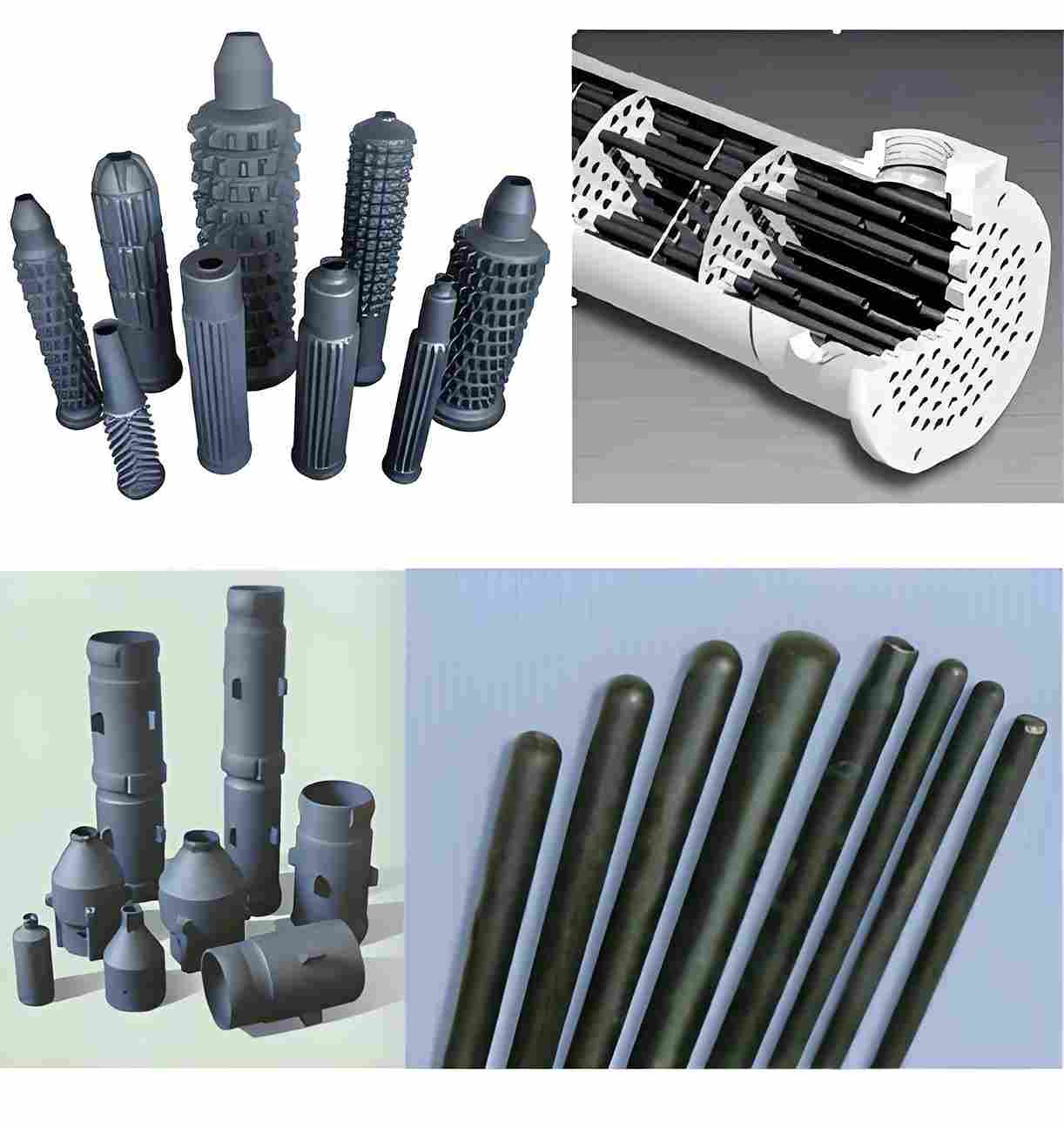
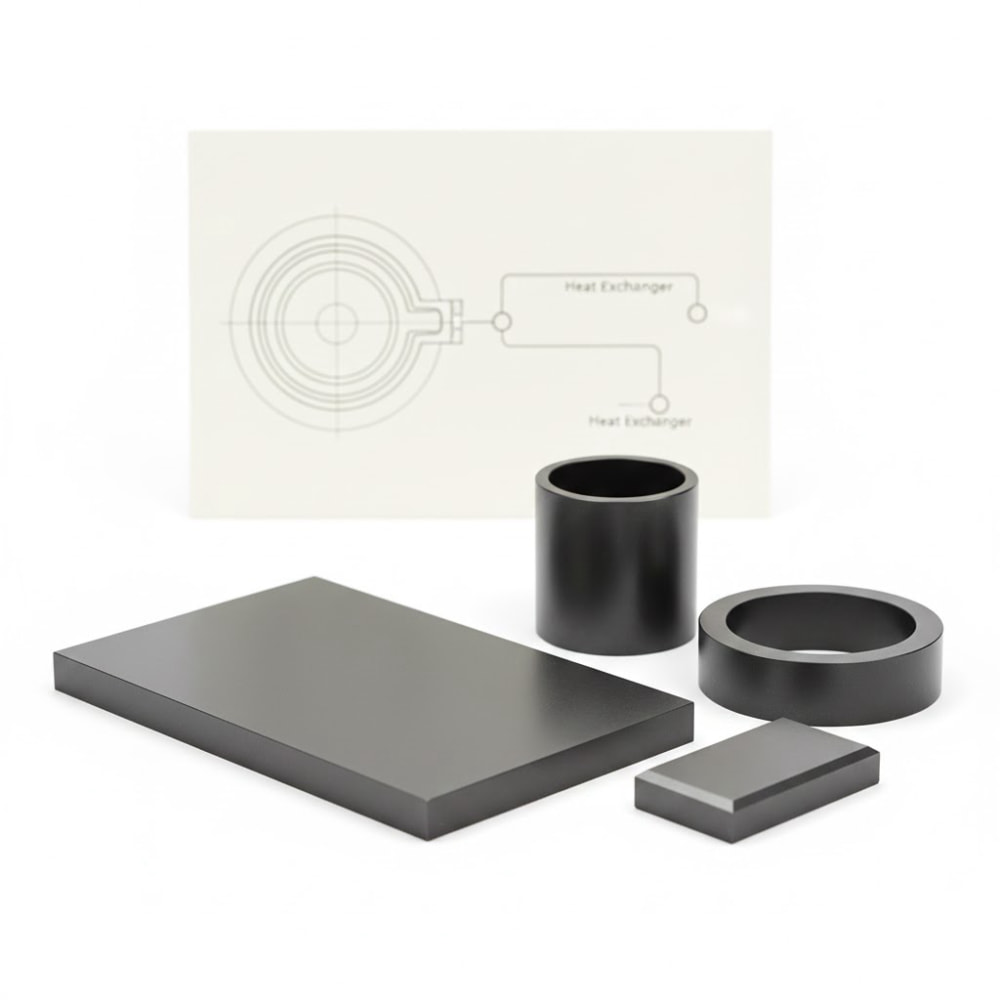
Zirsec supplies industrial silicon carbide components such as silicon carbide tubes, plates and custom mechanical parts. The same design and manufacturing expertise can be applied when engineering SiC-based parts for nuclear-related equipment, especially in thermal and structural roles.
Key Silicon Carbide Applications in Next-Generation Reactors
1. Fuel Cladding and Channel Components
In advanced light-water and high-temperature reactors, fuel cladding and channel components are central to both safety and performance. Silicon carbide composites and ceramic elements are investigated as part of accident-tolerant fuel concepts and advanced fuel assemblies:
- Cladding concepts: SiC-based cladding systems designed to maintain integrity under high temperature and off-normal conditions.
- Channel boxes and guide structures: silicon carbide plates and profiles used to support fuel assemblies in some designs.
While final implementation is subject to licensing and extensive testing, the underlying motivation is clear: to use materials that better tolerate high temperature and aggressive conditions than traditional zircaloy-based systems.
2. Core Structural Supports and Internals
Core internals must support fuel assemblies, control rods and reflector elements in a demanding environment. In some next-generation concepts, certain support structures can benefit from silicon carbide ceramics:
- Support plates and blocks: SiC elements that carry loads at elevated temperature with limited creep.
- Reflector elements and core blocks: silicon carbide structures that help shape neutron and thermal fields in high-temperature reactors.
Here, silicon carbide’s high-temperature strength and dimensional stability support long campaigns and stable core geometry.
3. High-Temperature Heat Transfer Components
Many advanced reactor concepts target high outlet temperatures to improve efficiency or supply process heat for hydrogen, synthetic fuels or industrial applications. High-temperature components that may incorporate SiC include:
- Heat exchanger elements: silicon carbide tubes, plates or blocks in intermediate heat exchangers where compatible with coolant and design requirements.
- Hot duct liners and thermal shields: SiC ceramics protecting metallic structures from peak temperatures.
Zirsec’s expertise in high-temperature silicon carbide heat exchanger components and tubes for industrial service can be adapted to design directions in nuclear heat transfer equipment, subject to nuclear-specific codes, standards and qualification procedures.
4. Pumps, Valves and Auxiliary System Components
Outside the core, nuclear plants still rely on pumps, valves and sealing systems, especially in secondary and auxiliary circuits. Silicon carbide ceramics are already widely used in demanding pump and seal applications:
- Mechanical seal rings: SiC rings in coolant and process pumps supporting long-term operation under challenging conditions.
- Shaft sleeves and wear parts: silicon carbide elements protecting metallic components from erosion and corrosion.
These components are a natural bridge between today’s industrial experience and more specialised future nuclear deployments, provided that nuclear qualification and documentation requirements are met.
Benefits of Silicon Carbide Ceramics for Next-Generation Reactors
Higher Operating Temperatures and Efficiency Potential
By using materials with higher temperature capability, advanced reactors can target:
- Higher coolant outlet temperatures for improved thermodynamic efficiency.
- Process heat applications that require stable high-temperature operation.
Silicon carbide ceramics contribute by maintaining mechanical and thermal performance where many conventional alloys would be significantly weakened.
Improved Safety Margins under Off-Normal Conditions
Advanced designs aim to tolerate a wider range of transients and off-normal conditions. Materials with stronger high-temperature performance can:
- Delay or prevent loss of structural integrity in critical components.
- Support designs that rely on passive safety and inherent material robustness.
Silicon carbide’s thermal stability and oxidation behaviour fit this direction, especially when integrated into accident-tolerant fuel and core concepts.
Stable Geometry and Long Campaigns
Next-generation reactors are often designed for long operating campaigns with fewer shutdowns:
- Low creep and deformation: SiC components maintain geometry at operating temperature.
- Less distortion over time: core and hot-zone structures remain closer to their design shape.
This dimensional stability supports predictable core physics, heat transfer and mechanical behaviour over extended periods.
Engineering Considerations for Nuclear Applications
1. Neutron Irradiation Effects
Nuclear environments add a key factor not present in typical industrial service: neutron irradiation. Designers must consider:
- Radiation-induced dimensional changes and potential swelling or shrinkage.
- Changes in mechanical properties under neutron exposure.
- Activation behaviour and long-term radiological characteristics of the ceramic.
For nuclear use, silicon carbide components must be evaluated in the context of specific reactor types, neutron spectra and dose histories.
2. Coolant Compatibility
Advanced reactors may use coolants ranging from helium to molten salts or liquid metals. For each system, materials must be compatible with the coolant chemistry and temperature:
- Evaluate corrosion and interaction between SiC surfaces and the chosen coolant.
- Consider impurity control in coolant loops to protect ceramics and metals alike.
- Match thermal expansion and mechanical properties of SiC with adjacent materials in the system.
Successful deployment requires not just a strong material, but a full system design that balances all material interactions.
3. Codes, Standards and Qualification
Nuclear components must meet strict regulatory and code requirements. For silicon carbide ceramics, this means:
- Developing material property databases across temperature and irradiation conditions.
- Documenting manufacturing consistency and quality control.
- Working through qualification programmes with operators, regulators and technology developers.
Zirsec’s role in this context is to supply consistent, well-characterised silicon carbide ceramics and support engineering teams with data on mechanical, thermal and chemical behaviour in relevant ranges.
Illustrative Example: Silicon Carbide Components in a High-Temperature Test Loop
Background
An engineering team developing high-temperature reactor technology required a test loop to study heat transfer and materials performance in advanced coolant conditions. Metallic components in early prototypes showed distortion and corrosion under target temperatures.
Approach
- Introduce silicon carbide tubes and plates as key hot-zone components within the loop.
- Redesign supports and joints to account for SiC’s thermal and mechanical behaviour.
- Implement monitoring to track dimensional stability and surface condition over test campaigns.
Results
- Test loop stability improved, with reduced drift in thermal performance over time.
- Component maintenance intervals were extended thanks to better high-temperature resistance.
- The team collected more reliable data for scaling up to future reactor designs.
FAQ – Silicon Carbide Ceramics for Next-Generation Nuclear Reactors
Q1. Is silicon carbide already used in commercial nuclear reactors?
Silicon carbide is widely used in industrial high-temperature components and is under active development for nuclear applications, especially in advanced reactor and accident-tolerant fuel concepts. Specific nuclear uses depend on ongoing qualification, licensing and demonstration projects in each country.
Q2. Where is the most realistic starting point for SiC in nuclear systems?
Near-term opportunities include non-core components such as high-temperature test rigs, auxiliary systems, heat transfer equipment and pump/seal parts in secondary circuits. These benefit from SiC’s high-temperature and wear performance while having more accessible qualification pathways.
Q3. How does silicon carbide compare with traditional stainless steels and nickel alloys in nuclear service?
Silicon carbide offers higher strength at elevated temperature, good thermal conductivity and chemical stability in many environments. However, it behaves as a ceramic rather than a ductile metal, so design rules, joining methods and failure modes are different. It is not a drop-in replacement, but rather a high-performance option where its ceramic nature can be properly accommodated.
Q4. Does silicon carbide solve all material challenges in next-generation reactors?
No single material can address every requirement across core, vessel, internals and balance-of-plant. Silicon carbide is a strong candidate in specific roles such as cladding concepts, core structures and high-temperature heat transfer components, but it must be integrated alongside metallic and other ceramic materials in a carefully balanced design.
Q5. What information should I provide when discussing SiC ceramics with Zirsec for nuclear-related projects?
Provide the reactor or test system concept, target temperature range, coolant type, expected lifetime, irradiation conditions (if any), functional role of the component and preliminary dimensions. This enables Zirsec to recommend suitable silicon carbide tubes, plates or custom parts and to share relevant mechanical and thermal data for early-stage design work.
Working on advanced reactor concepts or high-temperature nuclear test systems? Integrating silicon carbide ceramics into the right components can support higher temperatures, more stable structures and more robust safety margins in next-generation nuclear energy technologies.