Renewable energy manufacturing looks clean on the outside, but inside the factories it is still a tough industrial environment. Solar wafer lines, cell and module production, battery slurry mixing and electrode coating all involve high temperatures, abrasive powders, aggressive chemistries and tight process tolerances. When critical components wear out or deform, yields drop and line uptime suffers.
Silicon carbide parts offer a robust option for some of the most demanding stations in both solar and battery production. With high wear resistance, good thermal behaviour and chemical stability, silicon carbide (SiC) helps keep furnaces, dryers, pumps and handling systems running more reliably in renewable energy manufacturing.
This article explains where silicon carbide fits into solar cell and lithium-ion battery production lines, what benefits it brings and what engineers should consider when specifying SiC parts.
Where Silicon Carbide Fits in Renewable Energy Manufacturing
Solar and battery factories share a few unpleasant but familiar realities:
- Abrasive powders and slurries: Si, SiC, cathode/anode powders and fillers attacking surfaces and clearances.
- High-temperature processes: diffusion, firing, calcination, sintering and drying at elevated temperatures.
- Aggressive chemistries: etching, cleaning, binder systems and solvent-based slurries.
- Continuous operation: high-throughput lines with limited tolerance for unexpected downtime.
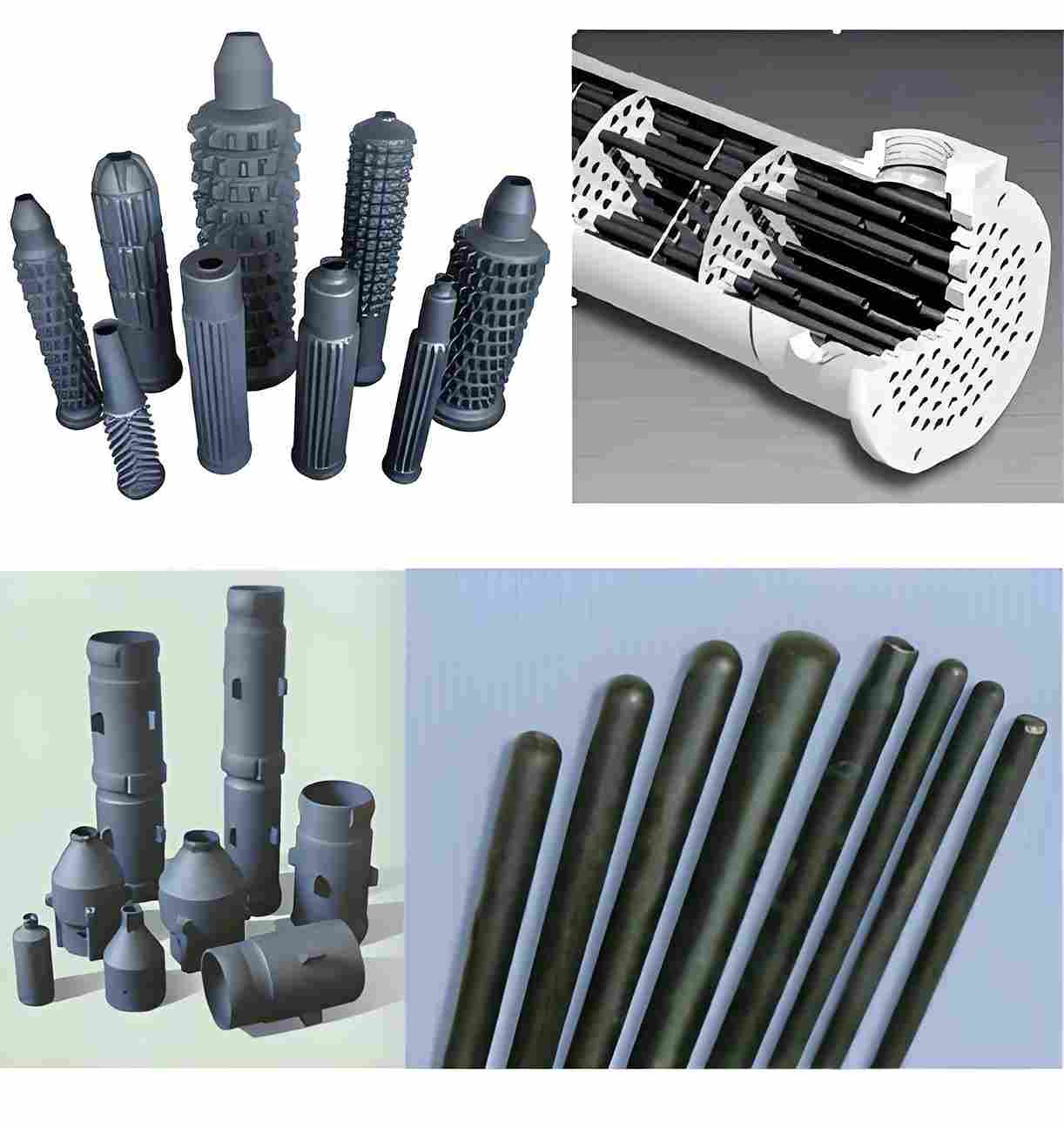
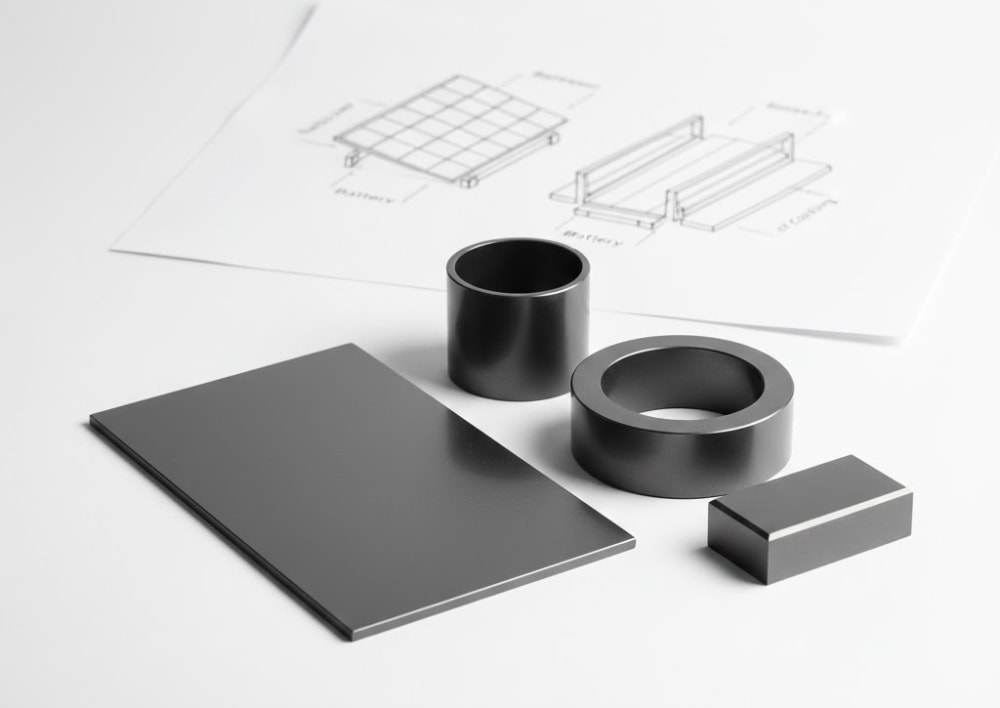
In these conditions, silicon carbide is rarely the “whole machine”, but often the right material for the parts that see the most abuse: hot-zone supports, wear surfaces, seal faces, sleeves and precision plates. Zirsec supplies silicon carbide plates, tubes and custom mechanical parts that can be adapted into solar and battery equipment designs.
Silicon Carbide Parts in Solar Manufacturing
1. Wafer and Cell Furnace Components
Thermal processes in solar manufacturing include ingot growth, wafer treatments, diffusion, firing and annealing. In these zones, SiC can be used for:
- Support plates and setters: silicon carbide plates carrying wafers or carriers through high-temperature steps.
- Beams and kiln furniture: SiC beams and props supporting decks in continuous furnaces or kilns.
- Tubes and radiant components: silicon carbide tubes in burners or high-temperature sections where compatible with the furnace design.
The higher strength and thermal conductivity of SiC compared with many traditional refractories allow thinner, more stable components that contribute to faster, more uniform heating.
2. Handling Fixtures and Wear Plates
Wafer handling and carrier systems operate with tight tolerances and high cycle counts:
- Guide plates and rails: SiC wear plates in positions exposed to repeated contact and friction.
- Support inserts: silicon carbide blocks or pads in fixtures that see high pressure and temperature.
Properly finished silicon carbide surfaces can help reduce long-term wear and preserve alignment in critical handling sections.
3. Pumps and Valves for Etching and Cleaning
Etching, texturing and cleaning steps expose pumps and valves to aggressive chemistries. Here, silicon carbide is often used in:
- Mechanical seal rings: SiC vs carbon or SiC vs SiC seal faces in chemical handling pumps.
- Shaft sleeves and bushings: silicon carbide sleeves protecting metallic shafts in corrosive liquids.
These same design patterns, widely proven in chemical processing, transfer directly into solar wet-processing lines when correctly engineered.
Silicon Carbide Parts in Battery Production
1. Slurry Mixing and Transfer
Electrode slurry production involves highly filled, often abrasive mixtures of active material, conductive additives and binders. This is hard on moving parts:
- Seal faces in slurry pumps and mixers: silicon carbide rings resist abrasion from particles.
- Sleeves and bearings: SiC sleeves and bushings protect shafts and housings in product-lubricated designs.
In these positions, silicon carbide helps maintain clearances and reduce unplanned downtime due to seal or bearing failures.
2. Drying and Calcination Equipment
Both cathode and anode materials may require thermal treatments and drying at elevated temperatures. Silicon carbide can be used for:
- Support plates and trays: SiC plates carrying powder trays, electrodes or carriers through dryers and ovens.
- Hot-zone protection: silicon carbide tiles or liners in zones with high radiant load and abrasive gas flow.
Using SiC in these areas improves stability of hot surfaces and reduces deformation over long campaigns.
3. High-Wear Points in Conveyors and Material Handling
Powder handling and scrap management involve chutes, transfer points and hoppers that wear quickly if they are not protected:
- Impact liners: silicon carbide tiles at high-impact points in chutes and hoppers.
- Wear plates: SiC plates protecting bends and transitions where abrasives attack metals.
By concentrating silicon carbide where wear is worst, battery factories can reduce local repairs and stabilise material flow.
Why Renewable Energy Manufacturers Choose Silicon Carbide
More Stable Uptime on High-Throughput Lines
Solar and battery production lines are capital-intensive and designed for high throughput. When a small component fails, the entire line pays the price. Silicon carbide helps by:
- Extending service intervals for seals, sleeves, wear plates and hot-zone parts.
- Reducing surprise failures in abrasive or high-temperature zones.
- Maintaining dimensions in components that control clearances or positioning.
Better Control of Thermal Processes
Many efficiency gains in solar and battery manufacturing come from tuning thermal processes. Silicon carbide contributes through:
- High thermal conductivity: more uniform temperatures across plates, shelves and beams.
- High-temperature strength: flatter, more stable supports in hot furnaces or dryers.
More stable hardware makes it easier to maintain consistent firing, drying and annealing behaviour over long runs.
Improved Resistance to Aggressive Chemistries
Etching, cleaning, binder systems and drying atmospheres can all attack conventional materials. Correctly specified SiC parts show:
- Good corrosion resistance in many chemical environments.
- Reduced erosion–corrosion where particles and chemicals act together.
This is particularly valuable in wet-processing stations and around gas inlets or high-velocity flow regions.
Engineering Considerations When Specifying Silicon Carbide
1. Define the Real Problem Area First
Silicon carbide is not cheap filler; it is for the spots that actually hurt you. Before specifying SiC, clarify:
- Which components fail repeatedly or need frequent adjustment.
- Where temperature, abrasion and chemistry combine to cause problems.
- What lifetime or uptime target would make the business case work.
Then use silicon carbide where it actually changes the failure curve, not where a cheaper material already works fine.
2. Match Shape and Grade to the Duty
“Silicon carbide” covers a range of sintering processes and microstructures. For renewable energy equipment, typical needs include:
- Plates and tiles for hot-zone supports and wear liners.
- Tubes and rings for heat transfer or seal components.
- Custom shapes for carriers, guides or special fixtures.
Provide temperature, atmosphere, mechanical loads and expected lifetime so the SiC grade, thickness and geometry can be matched to the duty.
3. Consider Integration with Existing Designs
Most OEMs and line owners are not going to redesign entire machines at once. Practical steps include:
- Retrofitting SiC plates or inserts into existing fixtures and furnace cars.
- Upgrading seal rings and sleeves to silicon carbide in problem pumps.
- Adding SiC liners at the worst wear points in chutes and hoppers.
Zirsec can produce silicon carbide plates, tubes and custom parts sized to drop into current layouts with minimal change to surrounding hardware.
Case Example: Upgrading a Solar Firing Furnace with Silicon Carbide Supports
Background
A solar module manufacturer running high-throughput firing furnaces saw increased scrap and frequent maintenance due to warped supports and uneven thermal profiles. Conventional support plates deformed over time, forcing conservative firing curves.
Approach
- Replace key support plates in the hot zone with silicon carbide plates designed for the furnace temperature and load.
- Optimise plate thickness to balance strength, thermal mass and heat transfer.
- Monitor temperature uniformity and product quality across several campaigns.
Results
- Support flatness remained stable over extended operation, reducing mechanical adjustments.
- Temperature distribution improved, allowing gradual optimisation of the firing curve.
- Scrap related to firing distortion decreased, and maintenance windows became more predictable.
FAQ – Silicon Carbide Parts in Solar and Battery Production
Q1. Where is the best place to start using silicon carbide in a solar factory?
Start where your maintenance logs hurt the most: supports and kiln furniture in diffusion or firing furnaces, seal faces in aggressive chemical pumps or high-wear handling fixtures. These positions give the clearest reliability and yield benefits from upgrading to SiC.
Q2. Can silicon carbide parts be used in direct contact with slurries and powders?
Yes. Silicon carbide is widely used in abrasive and slurry environments. The key is to match grade, geometry and surface finish to the slurry properties and to pair SiC with suitable counterfaces in seals and bearings.
Q3. Will silicon carbide components change my process temperatures or cycle times?
They can. Higher thermal conductivity and lower thermal mass (for thinner SiC parts) often support faster and more uniform heating. In practice, you would install the SiC parts, validate stability and then step-by-step optimise your profiles.
Q4. How does silicon carbide compare with coated metals in renewable energy equipment?
Coated metals work until the coating is damaged; then corrosion or wear accelerates quickly. Silicon carbide is a monolithic ceramic: if designed correctly, it offers more stable long-term behaviour in high-temperature or high-wear zones, with different design rules for mounting and pairing.
Q5. What information should I provide when asking Zirsec for silicon carbide parts for solar or battery equipment?
Provide process step (solar or battery, and which station), temperature and atmosphere, media (powders, slurries, chemicals), current failure modes, desired lifetime and basic dimensions or drawings. With this, Zirsec can propose silicon carbide plates, tubes, seal rings or custom mechanical parts matched to your renewable energy manufacturing line.
Trying to make your solar or battery plant less sensitive to “small component” failures? Targeted use of silicon carbide parts in hot, abrasive and chemically aggressive zones is a practical way to stabilise throughput and protect your margins in renewable energy manufacturing.