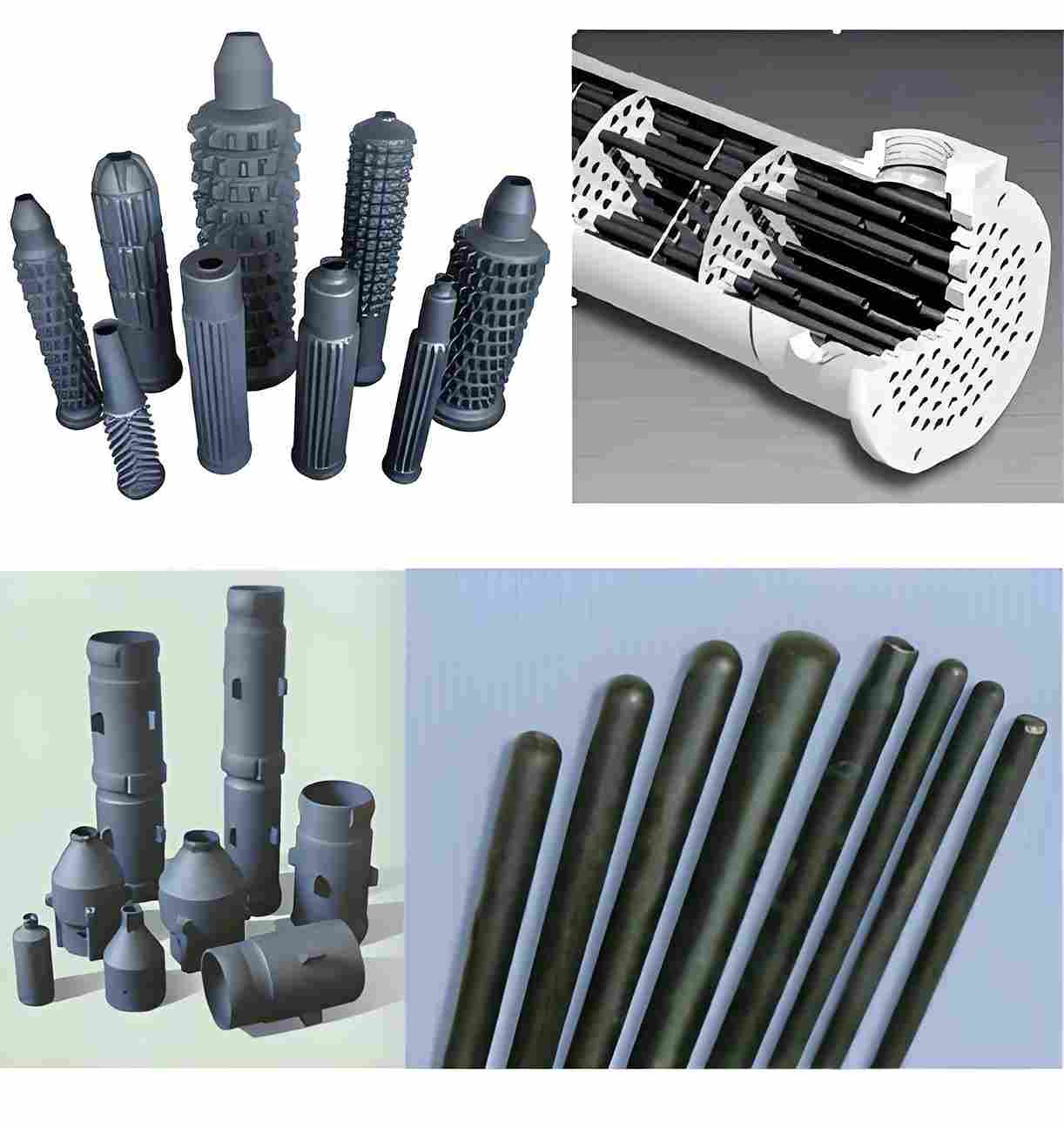
If a component lives in a high-wear zone, it usually fails in three predictable ways: it wears too fast, it cracks under thermal or mechanical shock, or it becomes too expensive to upgrade every time you change operating conditions. In those situations, the real choice is not “ceramic or not,” but sintered vs reaction-bonded silicon carbide. Both are silicon carbide, both are used in high-wear applications, and both can outperform metals. The difference is how they trade strength, thermal shock resistance, geometry, and cost.
This overview explains how sintered (SSiC) and reaction-bonded silicon carbide (RBSiC / SiSiC) differ, how those differences show up in high-wear applications, and how to select the right grade for your pumps, nozzles, kiln furniture and furnace components. The focus is on practical decisions for OEM designers, process engineers, and MRO teams.
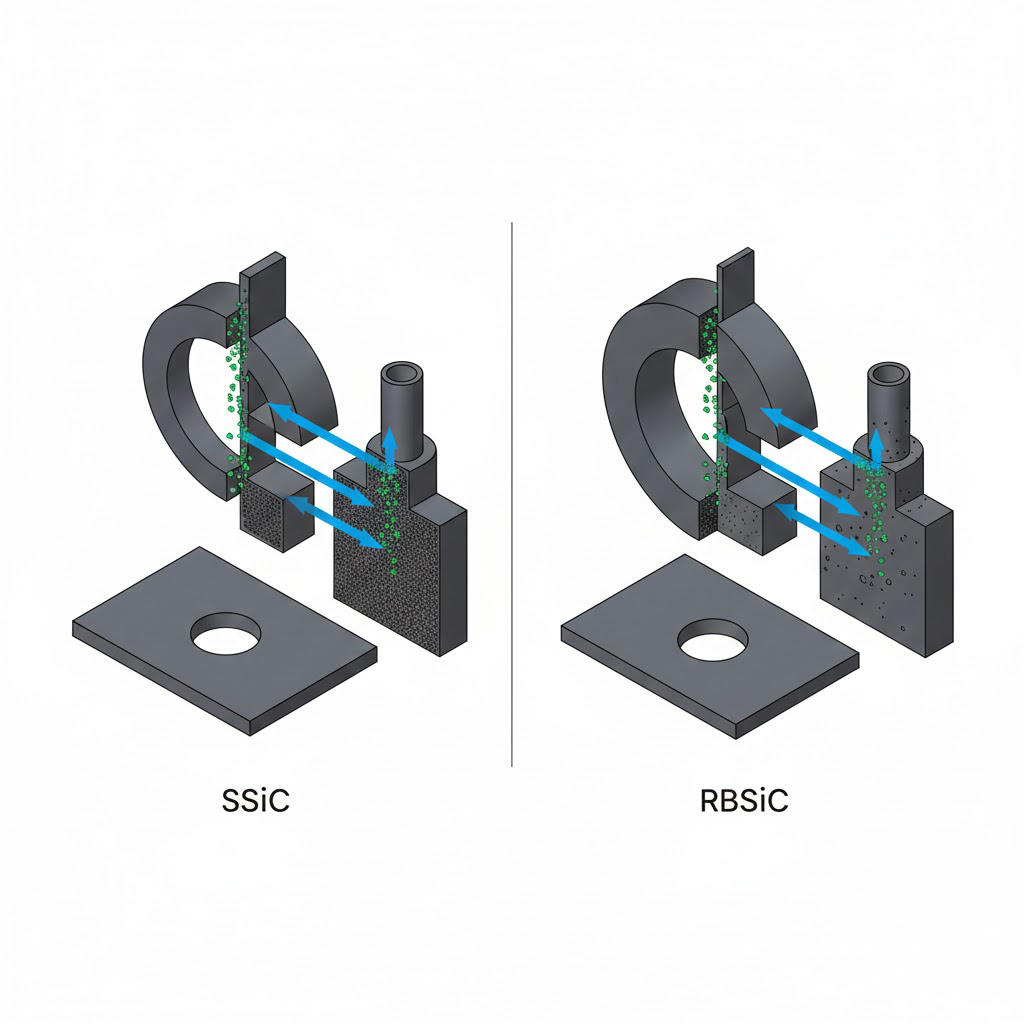
What Are Sintered and Reaction-Bonded Silicon Carbide?
Both sintered and reaction-bonded silicon carbide start from SiC powders, but they are bonded and densified in different ways. That processing difference shows up directly in microstructure and performance.
Sintered Silicon Carbide (SSiC)
Sintered silicon carbide is produced by pressureless sintering of high-purity SiC powder with small amounts of sintering aids. The result is:
- very high SiC content (typically > 98–99% by weight),
- near-full density with very low closed porosity,
- high hardness and flexural strength, even at elevated temperatures,
- excellent corrosion and wear resistance in aggressive media.
Because of this combination of density, purity and strength, SSiC is widely used for mechanical seal rings, bearings, precision wear parts, high-end kiln furniture and high-temperature structural components where maximum performance and long life are required.
Reaction-Bonded Silicon Carbide (RBSiC / SiSiC)
Reaction-bonded silicon carbide is produced by infiltrating a porous SiC + carbon preform with molten silicon. The silicon reacts with carbon to form additional SiC and bond the structure, but some free silicon remains. The result is:
- a SiC + free silicon composite, often with about 85–94% SiC and 6–15% residual Si,
- high density and good mechanical strength,
- very good thermal shock resistance,
- good wear resistance in many high-temperature and abrasive environments,
- better capability for large and complex shapes compared with many direct-sintered grades.
RBSiC (SiSiC) is widely used in kiln furniture, burner nozzles, radiant tubes, wear liners and structural furnace components where a mix of high temperature, thermal cycling and abrasion is present, and where geometry and cost matter as much as absolute peak properties.
Key Material Differences That Drive High-Wear Performance
Both SSiC and RBSiC are hard, high-performance ceramics. The key question is how their differences matter in high-wear environments.
1. Density, Porosity and Microstructure
- SSiC: near-full density and very low porosity; microstructure dominated by tightly bonded SiC grains.
- RBSiC: dense microstructure with SiC grains embedded in a silicon-rich matrix; residual silicon fills pores and bonds particles.
In high-wear service, higher density and lower porosity in SSiC support superior sliding wear and corrosion resistance, especially where corrosive liquids or slurries can penetrate porous structures. RBSiC remains very good, but free silicon can be a weak point in certain chemistries.
2. Hardness, Strength and Fracture Behavior
- Hardness and strength: SSiC generally offers higher hardness and flexural strength than RBSiC, making it the better choice in extreme sliding wear and high stress contact.
- Fracture behavior: both are ceramics with limited fracture toughness; design must avoid sharp stress concentrations. In practice, SSiC tends to be more resistant to micro-chipping in precision contact surfaces.
For mechanical seals, bearings and high-precision wear parts, SSiC’s higher strength and hardness translate into lower wear rates and more stable running surfaces over time.
3. Chemical and Corrosion Resistance
- SSiC: fully ceramic structure with minimal metallic phases; offers excellent chemical resistance in a very wide range of acids, solvents and many alkalis.
- RBSiC: residual silicon provides good corrosion resistance in many environments, but performance can be lower than SSiC in aggressive acids or hot alkalis that attack the silicon phase.
In corrosive high-wear service (for example, chemical pumps handling abrasive slurries), SSiC is typically preferred for the most demanding combinations of corrosion and wear, while RBSiC remains highly competitive in less aggressive chemistries or dry/wet high-temperature wear.
4. Thermal Shock Resistance and Cycling
- SSiC: very good thermal shock resistance, but with limitations that must be respected in extreme cycling.
- RBSiC: often shows even better thermal shock resistance in many configurations, helped by its composite microstructure and processing route.
For kiln furniture, radiant tubes and burner components subject to rapid heating and cooling, RBSiC often offers an attractive balance: very good wear resistance plus robust thermal shock behavior, at a lower cost than some high-end SSiC grades.
5. Manufacturability, Size and Shape Complexity
- SSiC: best suited for small to medium parts or shapes compatible with sintering and finish grinding; complex 3D geometries can be challenging and costly.
- RBSiC: preforms can be shaped before silicon infiltration, so larger and more intricate geometries are often easier and more economical to produce.
For large wear plates, complex kiln furniture assemblies, or intricate burner blocks, RBSiC is frequently the more practical option from a cost and manufacturing standpoint, even when purely mechanical properties of SSiC look better on paper.
Choosing Between Sintered and Reaction-Bonded SiC in High-Wear Applications
Instead of asking “which material is better,” treat the choice as “which material is better for this specific wear mechanism, geometry and chemistry.”
1. Sliding Wear: Seals, Bearings and Bushings
When sliding wear and tight leakage control dominate (mechanical seal faces, pump bearings, bushings):
- SSiC is usually the first choice because of its higher hardness, density and corrosion resistance.
- RBSiC can be used where pressures and PV values are lower or where cost/geometry constraints favor reaction bonding.
For example, Zirsec SiC sealing rings for chemical processing applications are typically designed around high-grade SSiC for the most demanding services, as shown on the SiC sealing rings and Chemical Processing Applications pages.
2. Erosion and Slurry Wear: Nozzles, Liners and Launders
In erosive and slurry wear (spray nozzles, scrubber internals, launder liners, slurry guides):
- Both SSiC and RBSiC provide much better wear resistance than steels or basic refractories.
- SSiC is preferred for the harshest slurry and corrosion combinations.
- RBSiC is often the most economical choice for larger components or where thermal cycling is severe.
3. High-Temperature Wear with Thermal Cycling: Kiln Furniture and Furnace Components
For kiln plates, beams, burner blocks and radiant tubes in high-temperature furnaces, where wear, creep and thermal shock interact:
- RBSiC is commonly used as a workhorse material for kiln furniture and furnace components because of its thermal shock resistance and shape flexibility.
- SSiC may be selected for specific components that need maximum stiffness, minimum mass, or extreme corrosion resistance at temperature.
These roles are illustrated in Zirsec’s High-Temperature Furnace Applications and general Zirsec Types overview.
4. Component Size, Geometry and Cost
If the required component is:
- small to medium, with critical tolerances and high PV or corrosion: SSiC is more likely to deliver the required performance.
- large, complex, or integrated into a structural assembly: RBSiC often wins on manufacturability and cost.
For OEMs, it can be effective to combine both materials in one platform: SSiC for precision wear components, RBSiC for structural and large-area wear components.
Typical High-Wear Use Cases: SSiC vs RBSiC Patterns
The table below summarizes typical patterns seen in real applications.
| Application | Dominant Wear Mechanism | Typical Preferred Grade | Comments |
|---|---|---|---|
| Mechanical seal faces in chemical pumps | Sliding wear + corrosion | SSiC | High hardness and corrosion resistance support long MTBF and tight leakage control. |
| Pump bearings and bushings | Sliding wear + occasional solids | SSiC or RBSiC | SSiC for most aggressive media; RBSiC acceptable where loads are lower and thermal shock is higher. |
| Spray and scrubber nozzles | Erosion + chemical attack | RBSiC or SSiC | RBSiC common for large nozzles and blocks; SSiC where chemistry is especially severe. |
| Kiln shelves and plates | Thermal cycling + load + abrasion | RBSiC | Low-mass RBSiC plates balance strength, thermal shock resistance and cost. |
| Radiant tubes and furnace wear components | High-temperature wear + thermal shock | RBSiC or SSiC | RBSiC for most general furnace duty; SSiC for extreme environments or where corrosion dominates. |
How Zirsec Uses SSiC and RBSiC Across Its Portfolio
Zirsec’s silicon carbide product families, presented in the Zirsec Types overview, use both sintered and reaction-bonded grades depending on application:
- SSiC-dominated products: precision SiC sealing rings, high-performance wear parts and components in demanding chemical processing services.
- RBSiC-dominated products: plates, beams and structural parts in high-temperature furnace applications, where large, thermally cycled components must survive high temperatures and abrasive loads.
- Hybrid systems: combinations of SSiC and RBSiC where precision wear parts and structural components coexist in the same furnace, pump or processing line.
For OEMs, this means the question is not “which one does Zirsec offer,” but “which combination of SSiC and RBSiC makes the most sense for the specific high-wear service.”
FAQs: Sintered vs Reaction-Bonded SiC in High-Wear Applications
1. Is sintered silicon carbide always better than reaction-bonded?
No. SSiC offers higher strength, hardness and chemical resistance, which is ideal for many high-wear and corrosive applications. However, RBSiC often offers better thermal shock resistance, easier production of large and complex shapes, and lower cost per part. The “better” material depends on load, wear mechanism, geometry, chemistry and budget.
2. Which one should I choose for a high-PV mechanical seal?
For high PV (pressure × velocity) mechanical seals in aggressive liquids or slurries, SSiC is normally the reference choice due to its higher density, hardness and corrosion resistance. RBSiC may still be acceptable in less severe conditions or where geometry and cost favor its use, but SSiC is usually the benchmark in high-end seal designs.
3. Which one is better for kiln furniture and furnace plates?
For kiln furniture, kiln plates and many furnace structural components, RBSiC is often preferred. Its thermal shock resistance, good high-temperature strength and support for complex shapes make it very attractive. SSiC may be used selectively for thin, low-mass plates or components where maximum stiffness and corrosion resistance are critical and budgets allow.
4. How do I compare lifecycle cost between SSiC and RBSiC?
Instead of comparing only piece price, compare cost per operating hour or per ton processed. Include:
- expected lifetime (cycles, hours, campaigns),
- failure modes and risk of unplanned downtime,
- impact on energy consumption and efficiency,
- maintenance and replacement logistics.
SSiC can justify its higher unit cost where extended life and reduced failures matter most; RBSiC often delivers the best cost/performance ratio for larger structural parts and kiln furniture.
5. Can I mix SSiC and RBSiC components in the same system?
Yes. In many real systems, SSiC is used for precision high-wear parts (such as seal faces and critical bushings), while RBSiC is used for structural and larger-area components (plates, beams, nozzles). The important part is to design supports and interfaces correctly so that thermal expansion mismatches and stress concentrations are controlled.
6. What information should I prepare before asking for a grade recommendation?
To get a meaningful recommendation, prepare:
- operating temperatures and cycling profile,
- media composition (including solids, pH and chemistry),
- mechanical loads and wear mechanisms (sliding, erosion, impact),
- component geometry and critical tolerances,
- target lifetime and current failure history.
With this information, material selection between SSiC and RBSiC becomes an engineering decision, not guesswork.
Get a Grade Recommendation for Your High-Wear Application
If you are deciding between sintered and reaction-bonded silicon carbide for high-wear components, the fastest path is to combine your real service data with Zirsec’s SiC product families. Start from the Zirsec Types overview, then map your application to the relevant High-Temperature Furnace Applications or Chemical Processing Applications.
Once basic operating windows, wear mechanisms and geometry are clear, it becomes straightforward to decide where SSiC’s maximum performance is justified and where RBSiC’s blend of performance, thermal shock resistance and manufacturability gives you the best outcome in high-wear industrial service.