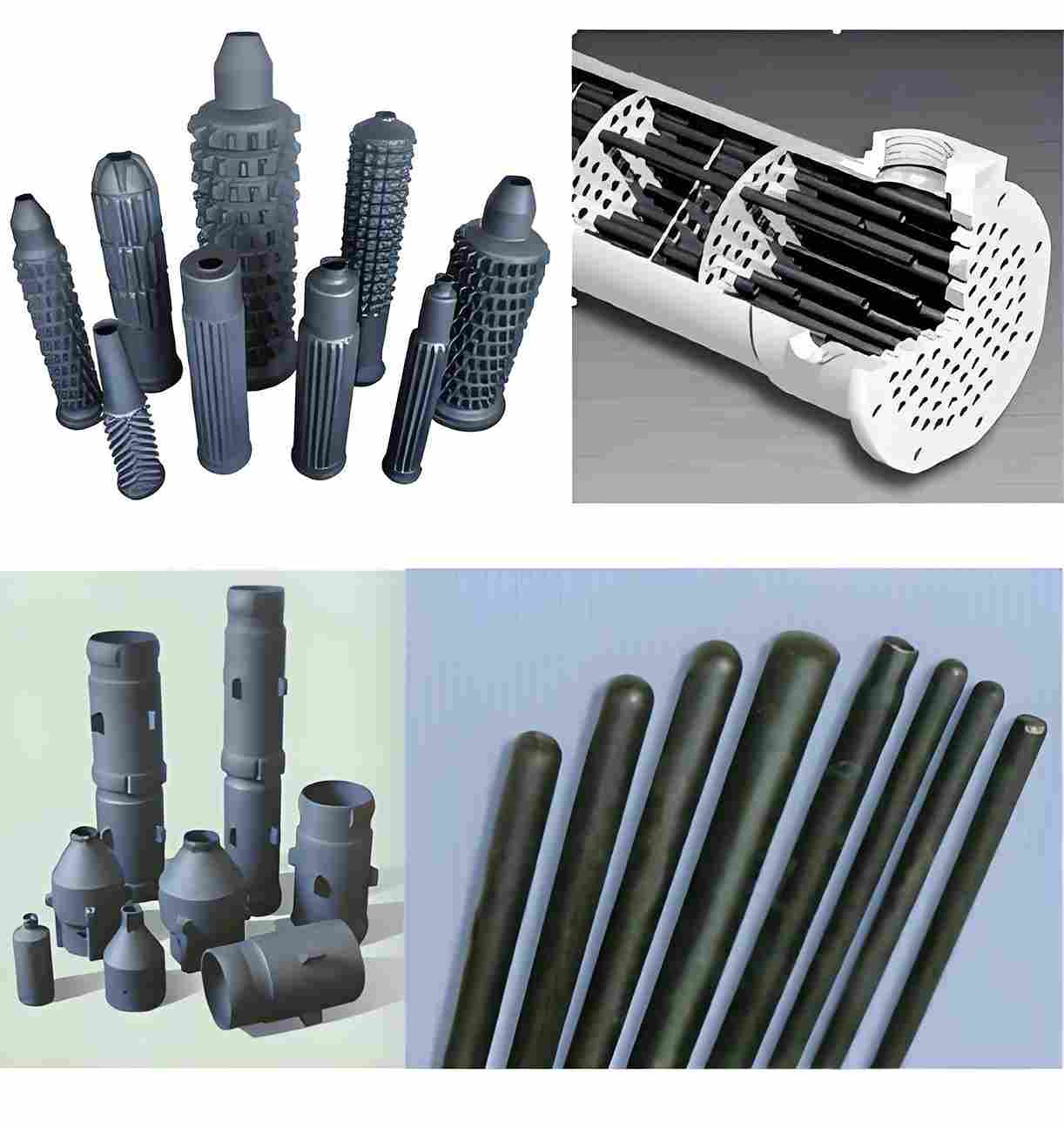
What Is a Silicon Carbide Mechanical Seal Face?
A silicon carbide mechanical seal face is a precision-ground SiC ceramic ring used as one of the two primary sealing
elements in a mechanical seal set for pumps, compressors and agitators. One face rotates with the shaft, the other
remains stationary in the gland. Together they create a controlled sealing interface that limits process fluid
leakage to a defined, low rate over a long operating period.
For industrial buyers, these are not generic “ceramic rings”. Each face is defined by the silicon carbide grade
(SSiC or RBSiC), geometry, dimensional tolerance, face flatness, surface finish and quality documentation. Those
parameters drive seal reliability, mean time between failures (MTBF) and the total lifecycle cost of rotating
equipment.
Zirsec manufactures silicon carbide mechanical seal faces as custom components, matched to OEM or end user drawings
and to the specific operating envelope of the equipment: pressure, speed, temperature and fluid chemistry.
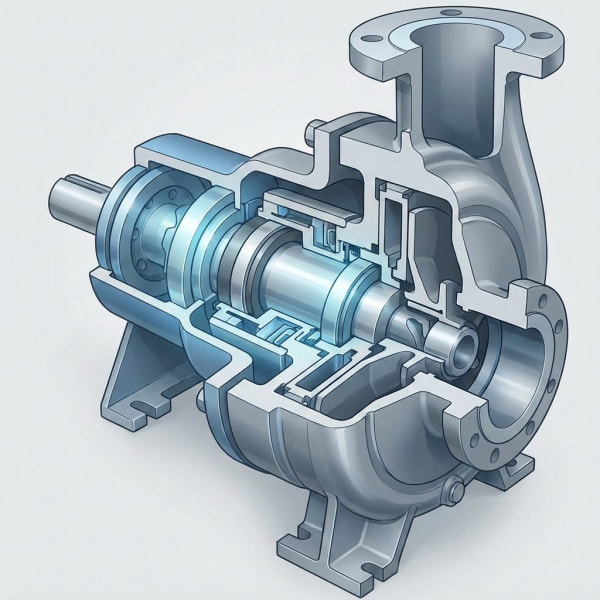
Why Silicon Carbide Mechanical Seal Faces Matter in Industrial Applications
In chemical processing, refining, power generation, water treatment and general industry, a single mechanical seal
failure can shut down a line, trigger safety incidents and consume unplanned maintenance budget. Silicon carbide
mechanical seal faces matter because they directly influence how often these failures occur and how predictable seal
performance is over time.
Compared with metallic or resin-based materials, SiC faces help procurement and reliability teams achieve:
- Higher MTBF: High hardness (typically 20–26 GPa) and wear resistance slow down abrasive
damage from catalyst fines, mineral particles or fibre contamination. - Stable leakage and emissions: Good thermal conductivity (≈60–120 W/m·K, grade-dependent)
and chemical stability help maintain face flatness and micro-geometry, which stabilises leakage rates. - Lower unplanned downtime: Reduced risk of thermal cracking, blistering or corrosion-related
pitting compared with some metallic faces in aggressive fluids. - More consistent repair outcomes: When faces are supplied against controlled tolerances and
finishes, refurbished seals perform closer to their original design.
For plants in the US, Germany, Italy, the UK and other industrial countries, correct specification of silicon
carbide mechanical seal faces is a practical way to support reliability targets, emissions constraints and total
cost of ownership objectives without redesigning entire pump or compressor installations.
Key Selection Factors / Technical Guide
Selecting silicon carbide mechanical seal faces is a technical decision that should be traceable in specifications
and purchase documents. The points below help procurement engineers challenge drawings, datasheets and supplier
offers in a structured way.
1. SiC Grade: Sintered SSiC vs Reaction-Bonded RBSiC
Sintered silicon carbide (SSiC) is near-fully dense, with very low free silicon content. It is
typically chosen when:
- Fluids are strongly acidic, oxidising or contain chlorides;
- High purity is required (risk of contamination must be minimised);
- Operating temperatures are elevated, within the limits of the seal design;
- Long service intervals are expected and corrosion risk must be reduced.
Reaction-bonded silicon carbide (RBSiC) contains both SiC and free silicon. It is often selected
when:
- Media are chemically less aggressive but can carry fine abrasive solids;
- Thermal shock resistance and robustness are important;
- A balanced cost-to-performance ratio is required across a large pump fleet.
A practical approach is to standardise on RBSiC for general services, and specify SSiC for critical, aggressive or
high-purity lines. Zirsec supports both material families and can map existing services into grade recommendations
based on fluid data.
2. Face Pairing and Counterface Material
Silicon carbide is one face of the pair. The counterface material has a strong impact on start-up behaviour, dry
running tolerance and wear pattern. Common combinations include:
- SiC vs carbon/graphite: Often used for broad chemical compatibility and better emergency
running, especially where short dry-running events are possible. - SiC vs SiC: Used when low leakage, high chemical resistance and low contamination are priority.
This pairing requires reliable lubrication and controlled PV loading. - SiC vs tungsten carbide: Applied in specific high-pressure or slurry services where both faces
must withstand high mechanical loads.
For procurement engineers, it is important to ensure that the material grade of both faces is clearly defined in
specifications and that replacement parts from alternative suppliers maintain the intended pairing.
3. Operating Envelope: Pressure, Speed and Temperature
The PV value (pressure × sliding velocity) at the face interface is a practical indicator of loading.
Approaching the PV limit of a seal design without adapting material or flushing can shorten seal life.
Procurement documents and RFQs should include:
- Seal chamber pressure and maximum differential pressure across the faces;
- Shaft speed and calculated sliding velocity at the running diameter (m/s);
- Normal and peak fluid temperature at the seal faces;
- Flush or cooling plan (API plan or internal recirculation scheme).
With this data, Zirsec can confirm whether a given SSiC or RBSiC grade is appropriate or whether a different
configuration would provide a more robust margin.
4. Geometry, Tolerances and Face Quality
For SiC mechanical seal faces, geometry and machining quality are as important as the material itself. Typical
values specified by OEMs and reliability-focused plants include:
- Dimensional tolerance on inner and outer diameter down to ±0.01 mm;
- Face flatness within 2–3 µm over the full sealing width;
- Surface roughness on the sealing face with Ra ≤ 0.1–0.2 µm;
- Controlled chamfers, grooves or drive features according to seal design.
When such values are present on the drawing, procurement teams can compare offers based on measurable criteria
instead of only piece price.
5. Fluid Chemistry, Solids and Cleanliness
Silicon carbide grades behave differently depending on chemistry and solids. Before locking a specification or
approving a new supplier, it is useful to confirm:
- Normal and off-spec composition of the process fluid and any cleaning agents;
- Presence, size distribution and hardness of solid particles (for example <50 µm catalyst fines);
- Risk of crystallisation or deposition at the seal faces during cool-down or standstill;
- Availability and quality of flush or barrier fluid, including filtration level.
Zirsec uses this information to recommend realistic combinations of SSiC/RBSiC, face finish and, where necessary,
additional surface features that stabilise the fluid film.
How Zirsec Solves These Engineering Challenges
Zirsec is focused on silicon carbide ceramics for industrial equipment rather than general-purpose ceramics. For
mechanical seal faces, this specialisation directly supports engineering and procurement teams that need predictable
performance and short, reliable lead times.
Key elements of Zirsec’s approach include:
- Targeted SiC portfolio: SSiC and RBSiC grades characterised for flexural strength
(≈250–450 MPa), hardness, thermal conductivity and corrosion resistance relevant to seal applications. - Precision machining and lapping: CNC machining with dimensional tolerances typically down to
±0.01 mm, controlled flatness and surface roughness suited to high-PV seals. - Responsive prototyping and sampling: Ability to supply small batches and samples in short
lead times, aligned to planned shutdowns or qualification schedules. - Application engineering support: Review of service data and existing failure modes to match
SiC grade and face design to real operating conditions. - Export-ready documentation: Material certificates, dimensional inspection records and batch
traceability to meet QA requirements for plants in the US, Europe and other industrial regions.
For buyers, this means that a drawing, operating envelope and timeline can be turned into a clear proposal with
defined tolerances, material data and delivery commitment rather than generic ceramic offers.
Application Scenarios
Silicon carbide mechanical seal faces from Zirsec are used in a range of rotating equipment where leakage control
and uptime are critical. Typical application scenarios include:
- Chemical process pumps: Handling acids, alkalis and solvents with variable composition where
corrosion resistance and predictable leakage are required. - Refinery and petrochemical pumps: Light hydrocarbons and amine-containing streams with low
viscosity and limited lubricity, where SSiC or RBSiC faces paired with carbon help maintain seal life. - Power generation circuits: Boiler feedwater and condensate services where solids are low but
temperature and pressure are significant, and emission limits are strict. - Pulp and paper stock pumps: Liquors and stock slurries where fibres and mineral fillers
demand high wear resistance from the SiC faces. - Desalination and seawater handling: High-chloride environments where corrosion resistance and
resistance to sand particles are essential for long seal life. - Mining and mineral processing: Slurry pumps where silicon carbide’s hardness helps slow down
wear from hard particles. - High-speed compressors and agitators: Equipment where elevated PV values require stable thermal
behaviour and face flatness under dynamic load.
In each scenario, silicon carbide mechanical seal faces provide a defined contribution to MTBF, safety and emission
compliance, which can be evaluated in procurement and reliability reports.
Real Case Example
A process plant in Europe operating horizontal chemical process pumps on a corrosive, low-viscosity mixture faced
repeated seal failures. Average seal life in a critical line was around 9 months. The existing seal faces were
a generic ceramic against carbon, with limited documentation on material grade and tolerances.
The plant’s reliability team approached Zirsec with failure reports, used seal faces and basic operating data.
Zirsec responded by:
- Reviewing pressure, temperature, fluid composition and estimated sliding velocity;
- Analysing the worn faces to confirm corrosion and abrasion as dominant damage mechanisms;
- Recommending a switch to sintered silicon carbide (SSiC) faces with defined flatness and Ra ≤ 0.1–0.2 µm;
- Preparing a drawing-based quotation with tolerances down to ±0.01 mm and a firm delivery time;
- Manufacturing and shipping the first batch in time for the next scheduled shutdown.
After installation, the updated seals ran beyond 18 months without leakage-related unplanned stops in that
line. Maintenance records showed:
- A reduction in seal-related emergency work orders;
- More stable leakage readings during inspections;
- Better alignment between planned shutdowns and actual seal replacement needs.
For the plant’s procurement team, the key advantages were the combination of fast technical response, clear
specifications, tight machining tolerances and reliable lead time from Zirsec, which made SiC mechanical seal faces
a controlled element in their reliability strategy.
Specifications / Parameters
The table below summarises typical parameter ranges for Zirsec silicon carbide mechanical seal faces. Exact values
are set per drawing and application.
| Parameter | SSiC (Typical) | RBSiC (Typical) |
|---|---|---|
| Density | ≥ 3.10 g/cm³ | ≥ 3.00 g/cm³ |
| Flexural strength (room temperature) | ≈ 400–450 MPa | ≈ 250–320 MPa |
| Hardness | ≈ 22–26 GPa | ≈ 20–23 GPa |
| Thermal conductivity (room temperature) | ≈ 80–120 W/m·K | ≈ 60–90 W/m·K |
| Linear thermal expansion (20–800 °C) | ≈ 4.0–4.5 × 10⁻⁶/K | ≈ 4.0–4.8 × 10⁻⁶/K |
| Typical face flatness | < 2–3 µm over sealing width | < 2–3 µm over sealing width |
| Typical Ra on sealing face | ≤ 0.1–0.2 µm | ≤ 0.1–0.2 µm |
| Dimensional tolerance (diameter) | Down to ±0.01 mm | Down to ±0.01 mm |
These values help technical buyers compare offers and document material capability. Zirsec provides detailed
datasheets and test data upon request as part of the quotation and qualification process.
FAQ
1. When should I specify SSiC instead of RBSiC for mechanical seal faces?
SSiC is usually specified for aggressive chemicals, chloride-containing media, high-purity applications and high
temperature services where corrosion resistance is critical. RBSiC is suitable for many general industrial fluids
and slurry duties where a balanced cost–performance ratio is required. Zirsec can review your fluid list and
recommend where a grade upgrade is technically justified.
2. Can silicon carbide mechanical seal faces tolerate dry running?
Silicon carbide offers better emergency running behaviour than many materials, but continuous dry running is not
recommended for most seals. Short dry-running events may be tolerable if the seal design, counterface and flush
plan are prepared for it. Zirsec can comment on material risk once operating scenarios are described.
3. What information does Zirsec need to quote custom SiC seal faces?
Typically, Zirsec requires a drawing or 3D model, preferred material grade (SSiC or RBSiC if already defined),
operating pressure, fluid temperature, basic chemistry description, approximate sliding speed and expected volumes.
With this information a technical and commercial offer with realistic lead time can be prepared.
4. Can Zirsec match existing faces from another supplier?
In many cases, Zirsec can reverse engineer existing faces from physical samples and dimensional checks, and then
propose an equivalent or improved SiC grade. This is useful for plants that want a second qualified source without
redesigning the seal hardware.
5. How are tolerances and surface finishes controlled in production?
Zirsec uses CNC machining, grinding and lapping processes with defined inspection steps. Critical dimensions, face
flatness and surface roughness are measured according to agreed sampling plans. Measurement results can be provided
in inspection reports linked to each batch.
6. Are Zirsec SiC faces suitable for high-speed compressors?
Zirsec SSiC and RBSiC grades can be used in compressor seals where PV loading, cooling and hardware design are
appropriate. For such applications, Zirsec typically works with OEMs or specialised seal suppliers to confirm
limits and align material choice with test results.
7. How does silicon carbide influence fugitive emissions performance?
By maintaining face flatness and surface integrity under thermal and chemical load, SiC faces help keep leakage
within design values over a longer period. This supports lower fugitive emissions and fewer emission-driven seal
replacements compared with less stable materials.
8. Does Zirsec support small batches and urgent orders?
Yes. Zirsec can supply single-piece prototypes, pilot batches and serial quantities. For urgent cases, production
is scheduled around shutdown dates where possible, subject to material and capacity availability. This helps
procurement teams align deliveries with maintenance windows instead of carrying excessive stock.
Contact Zirsec
If you are planning a seal upgrade, qualifying a second source for silicon carbide faces or specifying materials for
new equipment, Zirsec can support with material selection, drawing review and manufacturing capability data.
Engineering and procurement teams in the US, Germany, Italy, the UK and other industrial markets are invited to
share drawings and operating data so that Zirsec can provide a clear, technically grounded proposal.
Need custom silicon carbide components for your project? Contact Zirsec for drawings, quotations, or technical consultation.