Thermal power generation plants operate under continuous high-temperature, high-load and chemically aggressive conditions. Improving plant efficiency is not only about fuel optimization but also about material selection for critical components that directly affect heat transfer, reliability and maintenance cycles.
Efficiency Challenges in Thermal Power Generation Plants
Key components in thermal power plants such as heat exchangers, furnace tubes, nozzles and sealing systems face extreme thermal stress, erosion from ash or particles and chemical corrosion from flue gases. Conventional metals often suffer from oxidation, scaling and rapid wear, leading to efficiency loss and frequent shutdowns.
Why Material Selection Impacts Power Plant Efficiency
Material degradation reduces heat transfer efficiency, increases leakage risk and raises maintenance costs. Selecting advanced ceramic materials like silicon carbide allows power plant designers and operators to maintain stable performance over long operating cycles.
How Silicon Carbide Enhances Thermal Efficiency
High Thermal Conductivity
Silicon carbide offers superior thermal conductivity compared to many traditional ceramics, enabling more efficient heat transfer in components such as Silicon Carbide Heat Exchangers and furnace internals.
Excellent High-Temperature Stability
SiC components maintain mechanical strength and dimensional stability at temperatures exceeding 1400°C, reducing deformation and heat loss in boilers and combustion systems.
Resistance to Oxidation and Corrosion
Flue gases containing sulfur compounds, alkalis and particulates accelerate metal degradation. Silicon carbide resists oxidation and chemical attack, maintaining surface integrity and thermal performance.
Critical Silicon Carbide Components in Thermal Power Plants
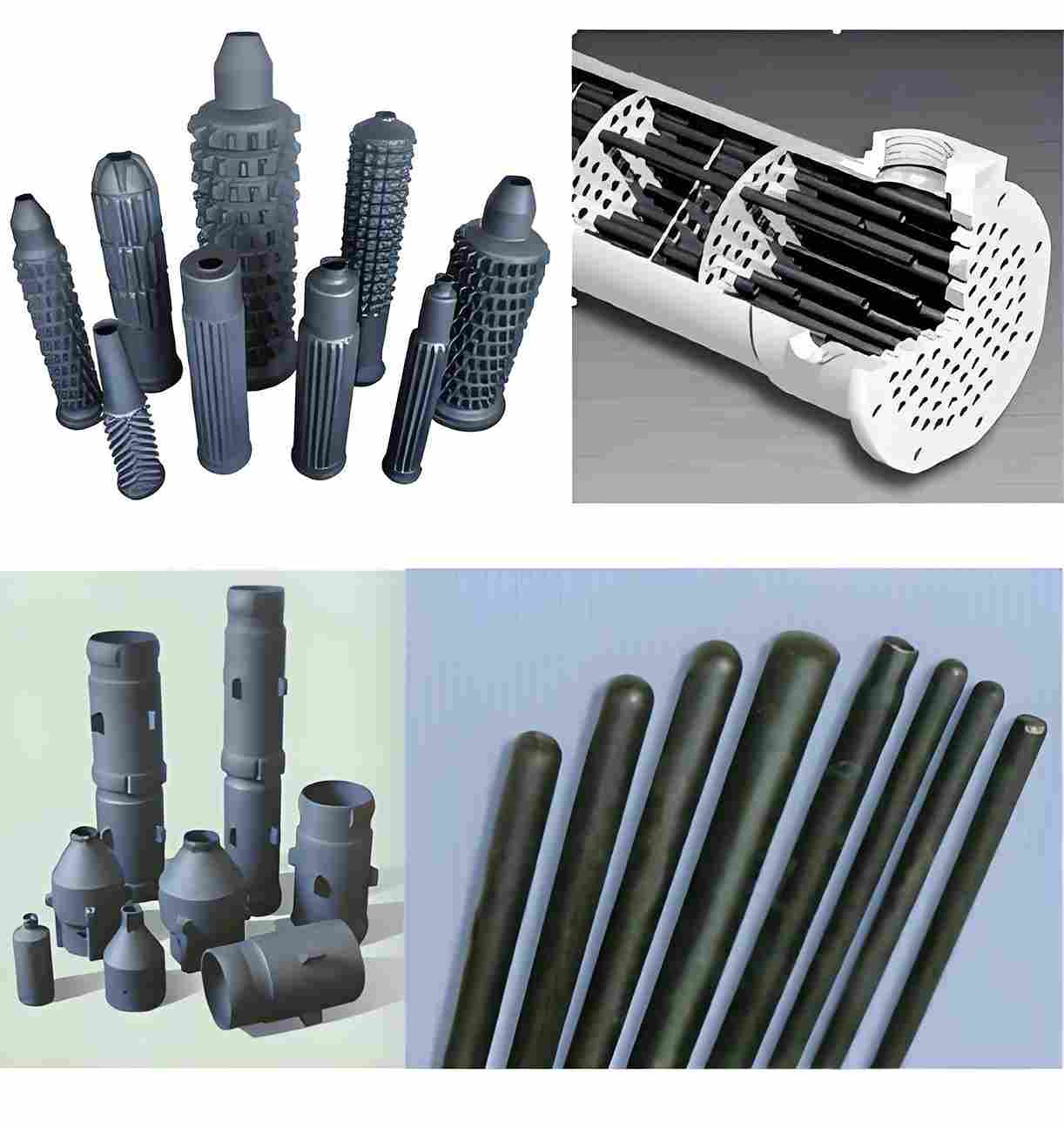
Silicon carbide is commonly used in furnace tubes, burner nozzles, heat exchanger elements and wear-resistant liners. Components such as Silicon Carbide Tubes and Silicon Carbide Nozzles directly contribute to stable combustion and efficient heat distribution.
Zirsec Solutions for Thermal Power Applications
Zirsec supplies industrial-grade silicon carbide components engineered for thermal power generation plants. With factory-direct production, flexible customization and strict quality control, Zirsec supports both replacement and OEM projects requiring reliable high-temperature performance.
Case Example: Extending Maintenance Intervals in a Coal-Fired Plant
A thermal power plant experienced frequent tube replacement due to oxidation and ash erosion. Zirsec provided custom silicon carbide furnace tubes designed for the specific operating temperature and flue gas composition. After installation, tube lifespan increased significantly, reducing shutdown frequency and improving overall plant efficiency.
Silicon Carbide vs Traditional Materials in Power Plants
| Material | Thermal Conductivity | High-Temp Stability | Corrosion Resistance | Maintenance Frequency |
|---|---|---|---|---|
| Carbon Steel | Moderate | Low | Low | High |
| Stainless Steel | Moderate | Moderate | Moderate | Medium |
| Silicon Carbide | High | Excellent | Excellent | Low |
FAQ: Silicon Carbide in Thermal Power Generation
Is silicon carbide suitable for continuous high-temperature operation?
Yes. SiC is designed for long-term exposure to extreme temperatures without significant degradation.
Can SiC components reduce unplanned shutdowns?
Improved wear and corrosion resistance significantly reduce component failure rates.
Does Zirsec support custom power plant components?
Zirsec provides drawing-based customization and engineering support for power plant equipment.
Are small batch or replacement orders accepted?
Yes. Zirsec supports small batch orders and fast delivery for maintenance and retrofit projects.
Improve Power Plant Efficiency with Zirsec
If your thermal power generation plant faces efficiency loss due to component wear or corrosion, Zirsec’s silicon carbide solutions can help improve reliability and reduce lifecycle costs. Contact our engineering team to discuss your application requirements.