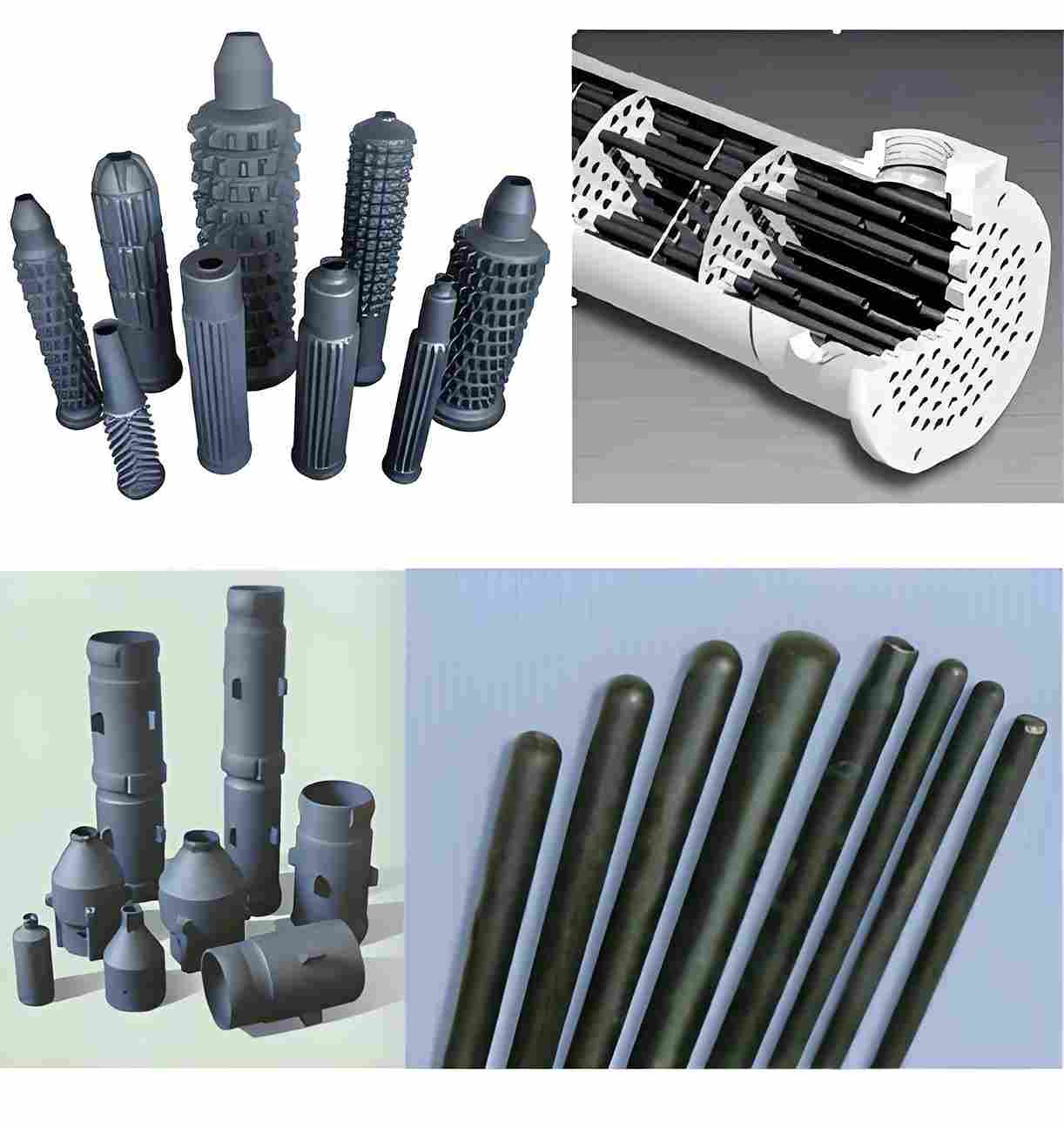
Yes, silicon carbide (SiC) parts can be joined, but the technique you select must match the operating temperature, load, and chemical environment of the application.
Quick Summary / FAQ
Q: Can SiC be welded like steel? No. Traditional arc or laser welding melts the material, causing catastrophic cracking. Instead, we use brazing, diffusion bonding, or high‑temperature adhesives.
Q: Which method is safest for high‑temperature furnace tubes? Active brazing with a Ti‑Cu filler at 1400‑1500 °C, followed by a controlled slow‑cool to minimize thermal shock.
Q: Are mechanical fasteners viable for SiC seals? Yes, provided the design allows for compliant preload and the fastener material can withstand the service temperature.
Q: How does ZIRSEC support custom SiC joining? Our engineering team provides design reviews, material‑compatibility charts, and prototype manufacturing within 4‑6 weeks.
Why Joining SiC Is Different from Metals
Silicon carbide’s combination of high hardness, low thermal expansion (≈4‑5 ×10⁻⁶ /K), and superior chemical resistance makes it ideal for harsh environments, but also means it is brittle and highly sensitive to thermal gradients. Any joining process must avoid rapid localized heating that creates residual stresses beyond its fracture toughness (K_IC ≈ 3‑4 MPa·m½).
Mechanical Joining Methods
Threaded Connections
Threaded steel or Inconel nuts are the most common way to attach SiC tubes or rods in low‑temperature (< 800 °C) service. The key is to use a compliant backing (e.g., a stainless‑steel sleeve) that absorbs differential expansion. Over‑tightening is a frequent failure mode; using torque‑controlled tools keeps the preload below 10 % of the SiC’s compressive strength.
Clamp‑Style Joints
For equipment that requires frequent disassembly—such as burner nozzles—clamp plates with high‑temperature silicone gaskets provide a reliable seal. The clamp must be sized to distribute load evenly across the SiC surface, otherwise edge chipping occurs. In our experience with a European pump‑valve maker, redesigning the clamp geometry reduced break‑off incidents by 70 %.
Interlocking Designs
Engineering interlocks (e.g., dovetail or tongue‑and‑groove) allows SiC parts to be assembled without additional hardware. This approach is popular in ceramic‑lined furnace walls where a continuous ceramic barrier is needed. Precision machining (±0.1 mm tolerance) is essential; any mis‑fit creates stress concentrations that can initiate cracks under thermal cycling.
Thermal Joining Techniques
Active Brazing
Active brazing uses filler alloys that contain a small amount of titanium or zirconium, which chemically bond to the SiC surface. A typical filler is Ti‑Cu (e.g., 3 % Ti, 97 % Cu). The process steps are:
- Surface cleaning: ultrasonically clean with acetone, then etch in a 5 % HF solution for 30 seconds.
- Apply a thin boron‑nitride coating to improve wetting.
- Heat in a vacuum furnace to 1450 °C, hold for 5‑10 minutes, then cool at ≤5 °C/min.
Resulting joints can withstand 1300‑1500 °C and are chemically resistant to most acids and bases. At ZIRSEC we have qualified this method for SiC burner nozzles used in petrochemical cracking units, achieving a leak‑rate below 1 × 10⁻⁸ Pa·m³/s.
Diffusion Bonding (Solid‑State Sintering)
Diffusion bonding joins two SiC components by applying pressure (10‑30 MPa) at temperatures near the material’s sintering point (≈ 2100 °C) in a high‑vacuum or inert atmosphere. The bond forms through atom migration across the interface, creating a seamless joint with no filler. This method is expensive and requires precision‑machined mating faces (flatness < 2 µm). It is best suited for critical aerospace parts where a metal‑free joint is mandatory.
Sintered Ceramic Brazing
Another option is to use a low‑melting SiC‑based braze (e.g., SiC‑Al₂O₃ glass‑ceramic) that softens around 1100 °C. The braze flows into micro‑grooves on the mating surfaces, then crystallizes to a hard, ceramic‑like joint. It offers good oxidation resistance but a lower temperature ceiling (~1200 °C).
Adhesive Bonding
High‑Temperature Inorganic Adhesives
Silicate‑based mortars and epoxy‑silicate hybrids can survive up to 850 °C when formulated with ceramic fillers. Their main advantage is ease of application—simply spread, press, and cure. However, they suffer from moisture ingress over time and have limited chemical resistance to strong acids.
Organic High‑Temperature Epoxies
Specialty epoxies (e.g., epoxy‑phenolic blends) are rated up to 300 °C. They are useful for low‑stress applications such as holding a SiC sensor probe in a metal housing. Surface preparation is critical: a 60 second plasma clean followed by a silane coupling agent (γ‑MPS) improves adhesion energy from 1.2 N/mm to 2.8 N/mm.
Surface Preparation Best Practices
Regardless of adhesive type, the SiC surface must be free of contaminants and have a controlled roughness (Ra ≈ 1 µm). A typical protocol is:
- Degrease with isopropanol.
- Lightly grit‑blast with 120 µm Al₂O₃.
- Rinse and dry with filtered nitrogen.
- Apply adhesive per manufacturer’s cure schedule.
Limitations and Risk Management
Thermal Shock Sensitivity
SiC’s low thermal expansion helps, but rapid temperature changes can still induce micro‑cracks. All joining processes should incorporate a controlled heating and cooling ramp (≤ 5 °C/min) unless the design explicitly accommodates thermal gradients.
Residual Stresses
Metallic fillers (e.g., copper‑based brazes) have higher expansion coefficients than SiC, generating tensile stresses on cooling. Finite‑element analysis (FEA) is recommended to predict stress distribution. In a recent furnace‑tube project, adjusting the filler composition from pure Cu to Ti‑Cu reduced calculated peak stress from 80 MPa to 45 MPa, keeping it below the SiC’s compressive strength.
Leak Paths and Porosity
Porous braze layers can become leak paths under high pressure. Post‑join vacuum leak testing (helium leak detection) at 10⁻⁸ Pa·m³/s is standard for critical sealing applications.
Chemical Compatibility
Some filler metals (e.g., Ag‑Cu) corrode in chlorine‑rich environments. For chemical‑process equipment, active brazing with Ti‑Cu or diffusion bonding eliminates the metal‑corrosion issue.
Selecting the Right Method – A Decision Matrix
| Criterion | Mechanical | Active Brazing | Diffusion Bonding | Adhesive |
|---|---|---|---|---|
| Max Service Temp | ≤ 800 °C | 1300‑1500 °C | ≥ 2000 °C | ≤ 850 °C |
| Load Type | Static/Shear | Pressurized | High‑pressure, static | Light‑weight |
| Disassembly Needed | Easy | Hard | Very Hard | Easy |
| Cost (per joint) | Low | Medium | High | Low‑Medium |
| Typical Lead‑time | Immediate | 1‑2 weeks | 3‑4 weeks | 1‑3 days |
Match the matrix against your project’s temperature, load, and budget constraints before committing to a joining method.
Real‑World Case Studies
Case 1 – Chemical Pump Seal Upgrade (Germany)
A pump‑valve manufacturer replaced stainless‑steel seal rings with SiC ceramic rings to combat abrasive slurry. The engineering team chose a Ti‑Cu active braze after testing three filler alloys. The joint survived 1400 °C for 18 months with zero leak incidents, extending pump downtime intervals from 4 weeks to 12 weeks. ZIRSEC provided the custom‑machined SiC rings (Ø 50 mm × 10 mm) within 3 weeks and assisted with the braze cycle development.
Case 2 – High‑Temperature Furnace Tube (USA)
A silicon‑carbide tube supplier needed to join a 200 mm long tube to a metal flange for a molten‑glass furnace operating at 1550 °C. Diffusion bonding was deemed too costly; instead, an active brazing process was selected. After applying a thin BN coating and performing a vacuum‑furnace braze at 1450 °C, the joint demonstrated a leak‑rate of < 5 × 10⁻⁹ Pa·m³/s. The customer reported a 30 % reduction in furnace‑wall replacement cycles.
Case 3 – Burner Nozzle Retrofit (UK)
For a petrochemical cracker, SiC nozzles replaced alloy nozzles to increase oxidation resistance. The nozzles were clamped using a high‑temperature Inconel plate with a silicon‑carbide gasket. The simple mechanical solution enabled rapid field replacement and met the 1200 °C operating envelope without additional processing.
Quick FAQ (Inline)
- Can I weld SiC with a laser? No. Laser welding induces localized melting that cracks SiC. Use brazing or diffusion bonding instead.
- Is there a universal adhesive for SiC? No. Choose an adhesive based on temperature and chemical exposure; silicate mortars work up to 850 °C, while epoxy hybrids are limited to ~300 °C.
- How long does a typical active‑braze cycle take? Heating to 1450 °C, hold 5‑10 min, then controlled cool – overall about 2‑3 hours, plus preparation time.
- Do I need a post‑join heat treatment? A stress‑relief anneal at 800 °C for 2 hours helps release residual stresses in brazed joints.
Conclusion & Next Steps
Joining silicon carbide is feasible, but the method must align with temperature, load, and service‑life requirements. Mechanical fasteners excel in low‑temp, service‑oriented assemblies; active brazing offers the best balance of temperature capability and cost for most high‑temperature industrial parts; diffusion bonding delivers a metal‑free, high‑temperature solution at a premium; and high‑temperature adhesives fill niche low‑stress roles.
If you are evaluating a specific SiC component—whether a silicon carbide tube, seal ring, or custom‑shaped part—our engineering team can run a joint‑design simulation, recommend the optimal process, and provide fast‑track prototyping. Contact us at info@zirsec.com or request a free technical consultation through our website.