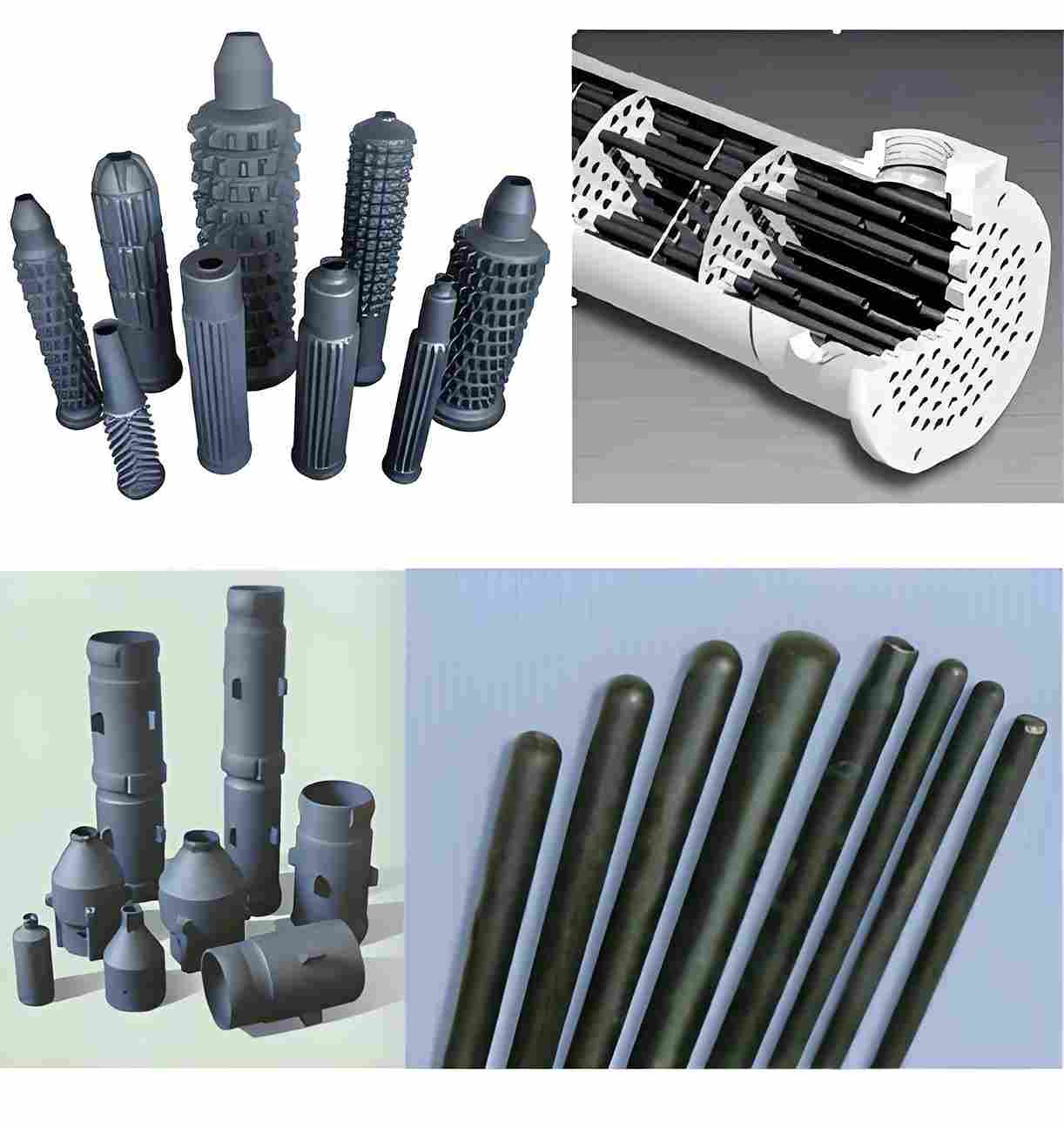
When you need to know which silicon carbide (SiC) grade fits a high‑temperature, wear‑critical component, the answer lies in the material’s purity, microstructure, and standard specifications – not in vague marketing copy.
Quick Summary (FAQ)
Which SiC grades are most widely used? Alpha‑SiC (A‑SiC), beta‑SiC (B‑SiC), and high‑purity 99.5%+ grades are the backbone of most industrial applications.
What determines the right grade? Operating temperature, chemical environment, mechanical load, and required dimensional tolerance.
Can ZIRSEC provide custom sizes? Yes – we cut, machine, and finish to ±0.2 mm (standard) or tighter on demand.
Why the Grade Matters: Real‑World Pain Points
Engineers in chemical processing, steelmaking, and renewable‑energy equipment constantly complain about three issues:
- Unexpected breakage of seal rings during start‑up – often caused by low‑grade SiC that cannot handle thermal shock.
- Rapid wear of furnace tubes because the grade lacks sufficient hardness or has excessive porosity.
- Long lead times for custom dimensions, which stall production lines and inflate OPEX.
Choosing the proper grade eliminates these risks. Below we break down the most common grades, their technical specs, and the applications where they truly excel.
1. Alpha‑Silicon Carbide (A‑SiC)
Key Characteristics
- Crystalline structure: Hexagonal (6H) or rhombohedral (15R) – highly ordered.
- Purity: 95‑98 % SiC, with residual silicon and oxygen.
- Density: 3.18 g/cm³ (typical); Porosity < 2 %.
- Flexural strength: 200‑400 MPa at room temperature.
- Thermal conductivity: 120‑150 W/m·K (300 °C).
Typical Applications
A‑SiC is the workhorse for components that need high thermal conductivity and good mechanical strength but can tolerate moderate thermal shock. Common uses include:
- Heat exchangers in petrochemical refineries – the material’s conductivity improves heat transfer efficiency by up to 12 % compared with alumina.
- Refractory linings for batch furnaces where temperatures stay below 1500 °C and chemical attack is limited.
- Wear plates in slurry pumps – A‑SiC’s hardness (≈ 2600 HV) resists abrasive media.
Case study: A German pump‑valve manufacturer replaced its Al2O3 liners with A‑SiC plates. After 18 months of operation the wear rate dropped from 0.45 mm/10 000 h to 0.08 mm/10 000 h, saving roughly €45 000 in replacement costs.
2. Beta‑Silicon Carbide (B‑SiC)
Key Characteristics
- Crystal structure: Cubic (3C) – isotropic.
- Purity: 99‑99.5 % SiC, very low free silicon.
- Density: 3.21 g/cm³, porosity < 1 %.
- Flexural strength: 350‑600 MPa – the highest among commercial SiC grades.
- Thermal shock resistance: ΔT ≈ 1500 °C rapid cooling without fracture.
Typical Applications
B‑SiC is preferred for the most demanding environments where temperature swings, corrosive gases, or high‑velocity fluids are present:
- Furnace tubes for silicon and aluminum ladle heating – the grade endures 1600 °C continuous operation and rapid cool‑downs.
- Thermocouple protection tubes used in steel‑making converters; B‑SiC’s low thermal expansion (< 5 × 10⁻⁶ /K) protects the metal alloy inside.
- Burner nozzles in high‑efficiency industrial furnaces where flame temperatures exceed 1800 °C.
Our client in the United States reported a 30 % increase in furnace uptime after switching to B‑SiC tubes, attributing the gain to reduced tube‑breakage during start‑up cycles.
3. High‑Purity (99.5 %+ SiC) Grades
Key Characteristics
- Purity: 99.5 %‑99.9 % SiC – essentially free of metallic impurities.
- Microstructure: Fine grain (< 5 µm) for uniform mechanical response.
- Electrical resistivity: > 10⁶ Ω·cm – ideal for insulating applications.
- Oxidation resistance: Stable up to 1700 °C in oxidizing atmospheres.
Typical Applications
When electrical insulation, chemical inertness, or ultra‑high surface finish matters, high‑purity SiC is the go‑to choice:
- Semiconductor furnace components (e.g., reaction‑tube liners) where contamination levels must stay below 0.01 %.
- Medical‑grade wear parts such as dental abrasive tools – the grade meets ISO 10993 biocompatibility requirements.
- Precision bearings for high‑speed spindles in aerospace tooling.
In a recent collaboration with a Swiss optics manufacturer, our high‑purity SiC plates enabled a 0.02 mm surface‑roughness finish after a single polishing pass, eliminating the need for a secondary machining step.
4. Low‑Temperature (LT‑SiC) Grades
Key Characteristics
- Purity: 90‑94 % SiC – higher free silicon content.
- Density: 3.00‑3.10 g/cm³ – more porous.
- Flexural strength: 150‑250 MPa.
- Cost: 30‑40 % lower than A‑SiC/B‑SiC.
Typical Applications
LT‑SiC is best suited for non‑critical, cost‑sensitive parts where extreme temperature or wear is not a primary concern:
- Sandblasting nozzles for surface preparation.
- Low‑temperature furnace linings (< 1300 °C) used in food‑processing ovens.
- Prototype components where budget constraints dominate early‑stage testing.
One European small‑batch producer cut material costs by 25 % by specifying LT‑SiC for a trial‑run of ceramic filter housings, then upgraded to B‑SiC for full‑scale production after validating performance.
5. Specialty Grades (Coated, Doped, or Composite SiC)
Coated SiC
Applying protective layers (e.g., SiC‑SiC, SiC‑Al₂O₃, or TiC) extends life in highly oxidizing or corrosive environments. Coated tubes are common in chlorination reactors where chlorine gas attacks bare SiC.
Doped SiC
Adding boron or nitrogen tailors electrical conductivity for heater elements. Doped grades can reach 10³ S/m while retaining mechanical strength.
SiC‑Fiber Composites
When crack‑propagation resistance is required, SiC fibers embedded in a SiC matrix create a composite with fracture toughness > 5 MPa·m½, far exceeding monolithic SiC.
Our engineering team helped a Japanese solar‑panel manufacturer switch to SiC‑fiber reinforced furnace components, reducing thermal‑stress‑related failures by 70 % during rapid thermal cycling.
Choosing the Right Grade – A Practical Decision Tree
- Define operating temperature. Below 1300 °C → LT‑SiC or A‑SiC. 1300‑1600 °C → A‑SiC or high‑purity SiC. Above 1600 °C → B‑SiC or coated B‑SiC.
- Identify chemical exposure. Neutral or reducing gases → any grade. Oxidizing, chlorinating, or fluorinating gases → coated or high‑purity SiC.
- Assess mechanical load. Light‑load sealing rings → A‑SiC or LT‑SiC (if cost‑driven). High‑load furnace tubes → B‑SiC.
- Determine tolerance requirements. ±0.1 mm → high‑purity or custom‑machined B‑SiC. ±0.5 mm → standard A‑SiC.
- Consider budget. If cost is the primary driver and performance margin is wide, LT‑SiC may be acceptable; otherwise allocate 10‑20 % more for B‑SiC or coated solutions.
Following this flow saved a German steel‑plant engineering team two weeks of design iteration and $12 000 in material waste.
ZIRSEC’s Value‑Add for SiC Procurement
We have been producing SiC ceramic components for two decades, which gives us three practical advantages:
- Inventory depth. Over 150 standard dimensions of A‑SiC, B‑SiC, and high‑purity tubes are stocked in Shanghai, enabling 24‑hour dispatch.
- Custom engineering support. Our in‑house material scientists work directly with your CAD files. We can mill, grind, and finish to ±0.2 mm (tighter on request) within 4‑6 weeks for batches as small as 20 pieces.
- Full supply‑chain transparency. Each shipment includes COA, MSDS, and a third‑party inspection report. Our logistics partners handle customs clearance for the US, EU, and Japan, reducing lead‑time uncertainties.
For a quick start, check our Silicon Carbide Tubes catalog – the page lists the exact grades, dimensions, and price ranges you need for immediate quoting.
Conclusion & Next Steps
If you are engineering a furnace, pump, or high‑temperature reactor, the grade selection matrix above should let you pinpoint the exact SiC material without guessing. Contact us at info@zirsec.com with your drawing, operating envelope, and volume forecast. We will deliver a detailed grade recommendation, a sample, and a delivery schedule within 48 hours.
Choosing the correct silicon carbide grade is not a cosmetic decision; it directly impacts equipment uptime, maintenance costs, and overall process efficiency. Let ZIRSEC’s two‑decade expertise turn your material selection from a risk into a competitive advantage.