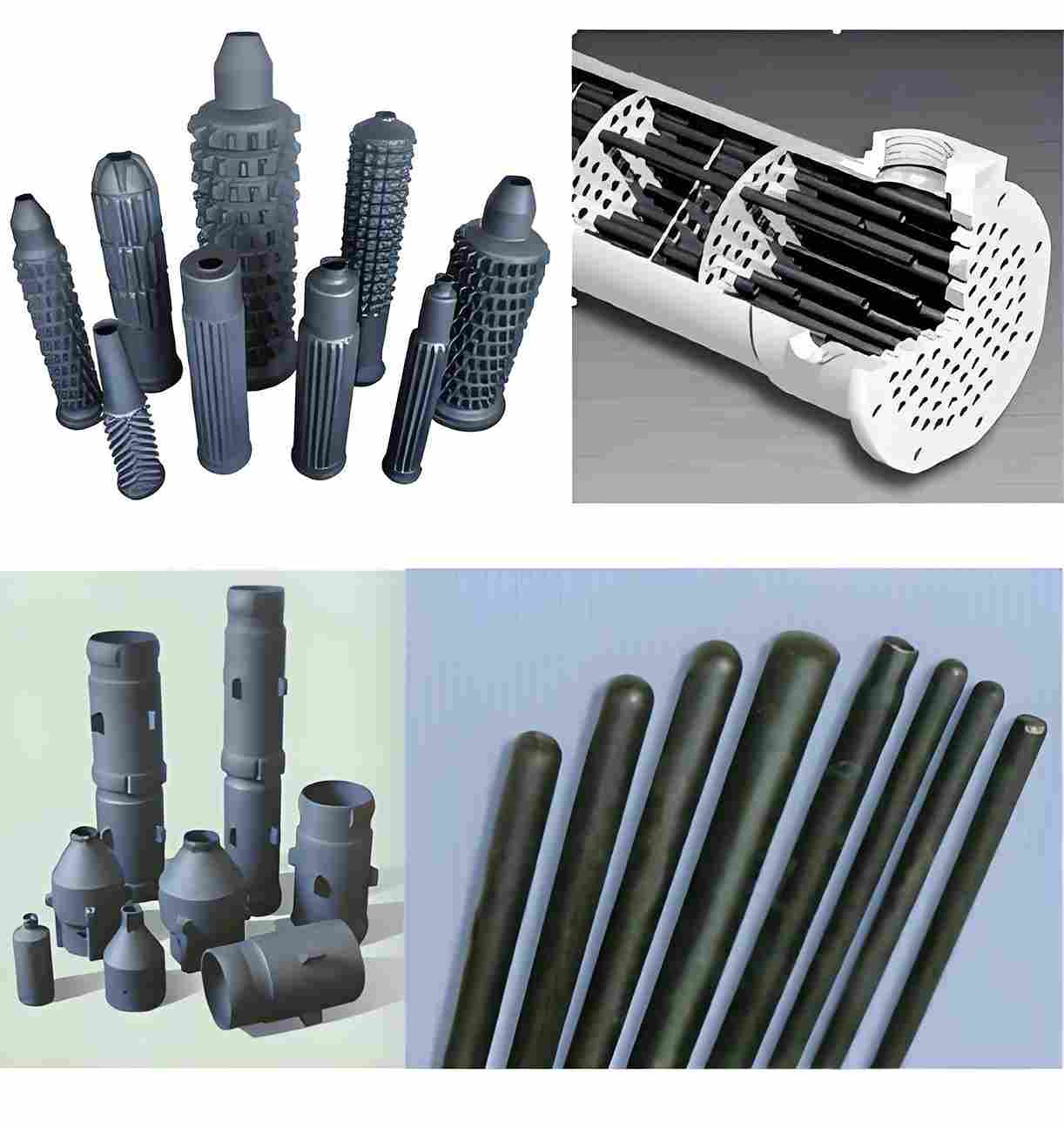
High‑performance silicon carbide (SiC) ceramics often command a premium, but the extra expense translates directly into longer service life, higher temperature capability, and lower total cost of ownership for demanding industrial equipment.
Quick Summary (FAQ)
- Why are SiC ceramics pricier than Al₂O₃ or other ceramics? The raw material purity, sintering temperatures above 2100 °C, and tight tolerance machining all add measurable cost.
- When does the higher price become a net saving? In applications where downtime costs exceed $10k per hour, a SiC component that lasts 3‑5× longer pays for itself within the first year.
- Can I get a custom SiC part quickly? ZIRSEC maintains a stocked inventory of standard sizes and can deliver custom‑engineered pieces within 4‑6 weeks, often faster with small‑batch orders.
- What support does ZIRSEC provide? Full engineering assistance, CAD‑to‑drawings conversion, material certification (COA, MSDS), and end‑to‑end logistics.
Understanding the Price Drivers
When you compare a SiC ceramic tube priced at $85 per kilogram to a comparable alumina tube at $22 per kilogram, the gap is not a mystery. Three core factors drive the premium:
- Raw Material Purity. Industrial‑grade SiC powders used for high‑performance parts must exceed 98 % purity, contain low metallic contaminants, and meet strict particle‑size distribution. Producing such powder requires additional refining steps, raising the baseline material cost by 2‑3×.
- Extreme Sintering Conditions. To achieve the dense, grain‑bound structure that gives SiC its superior thermal shock resistance, furnaces must operate at 2100–2250 °C under inert or vacuum atmospheres. Energy consumption, furnace wear, and the need for high‑precision temperature control add significant overhead.
- Precision Post‑Processing. Applications such as furnace liners or seal rings demand tolerances of ±0.1 mm and surface roughness below Ra 1 µm. CNC grinding, laser trimming, and ultrasonic inspection each add labor and equipment cost that ceramic manufacturers cannot amortize over low‑volume runs.
Material & Manufacturing Costs in Detail
Below is a simplified cost breakdown for a 50 mm × 300 mm SiC tube (typical for metallurgical furnace use):
| Cost Item | USD per Unit |
|---|---|
| High‑purity SiC powder (0.5 kg) | 45 |
| Energy & furnace depreciation (sintering) | 12 |
| Precision grinding & inspection | 18 |
| Quality certification & documentation | 5 |
| Packaging & logistics (24 h air freight) | 10 |
| Total | 90 |
For a comparable alumina tube the same line items sum to roughly $30‑$35, explaining the price gap.
Performance Benefits That Justify the Cost
When you select SiC over cheaper alternatives you gain:
- Temperature Tolerance. Continuous operation up to 1650 °C without loss of strength, compared with 1300 °C for Al₂O₃.
- Chemical Inertness. Resistance to molten salts, chlorine, and fluorine‑based gases, reducing corrosion‑related failures.
- Thermal Shock Resistance. A fracture toughness of 3–4 MPa·m½ allows rapid temperature swings (ΔT > 1000 °C) without cracking.
- Wear Life. In abrasive slurry environments, SiC components can exceed 2 million cycles, whereas alumina typically fails after 600 k cycles.
These attributes translate into measurable ROI for high‑value equipment. A case study from a European stainless‑steel manufacturer showed that swapping Al₂O₃ furnace liners for SiC reduced unplanned downtime by 87 % and lowered annual maintenance costs by $120 k.
When It’s Worth the Investment: Real‑World Scenarios
1. High‑Temperature Metallurgical Furnaces
Furnaces operating above 1500 °C and handling corrosive slags demand SiC tubes or plates. The cost differential of $55 per unit is offset within six months through reduced replacement frequency and lower coolant consumption.
2. Chemical Processing Reactors
When reactor walls are exposed to chlorinated gases, SiC’s oxidation resistance eliminates the need for frequent internal re‑coating, saving $30‑$45k per year on maintenance contracts.
3. Semiconductor Power Devices
For high‑power inverter modules, SiC ceramic substrates provide superior thermal conductivity and dielectric strength, enabling higher power density and a 15 % reduction in cooling system size.
4. Renewable Energy Equipment
In concentrated solar power (CSP) plants, SiC heat exchangers survive thermal cycling better than metal alloys, extending service life from 8 to 15 years and delivering a clear financial upside.
ROI Calculation Example
Assume a furnace requires a 300 mm SiC tube priced at $90, while an alumina alternative costs $35. The alumina tube must be replaced every 12 months, incurring $35 + $5 (handling) = $40 per year. The SiC tube lasts 4 years, with a total cost of $90 + $5 = $95 over the same period. Annualized cost for SiC is $23.75 versus $40 for alumina—a 40 % saving. Add in $15 k per hour downtime cost avoided by a single failure, and the financial case for SiC becomes unmistakable.
How ZIRSEC Makes Premium SiC Accessible
We understand that price is only one side of the decision. Our value proposition combines the technical superiority of SiC with a support model that removes risk:
- In‑house powder processing. We source 99.5 % pure SiC powder directly from certified mines, cutting middle‑man margins.
- Fast‑track prototyping. Standard tube sizes are stocked in a climate‑controlled warehouse; we can ship within 24 hours. For custom dimensions, our engineering team works from your CAD file to a first article in 3‑4 weeks.
- Comprehensive documentation. Every batch includes a Certificate of Analysis, Material Safety Data Sheet, and full dimensional report (CMM‑measured ±0.1 mm).
- End‑to‑end logistics. We handle export paperwork, arrange FOB Shanghai or DDP to your doorstep, and provide real‑time tracking.
- Technical partnership. Our engineers assist with thermal‑stress simulations, helping you size the SiC component correctly the first time.
Explore our range of standard silicon carbide tubes here: Silicon Carbide Tubes.
Frequently Asked Questions
- What warranty does ZIRSEC offer?
- We provide a 12‑month performance warranty against material defects and dimensional drift. For high‑volume contracts we can extend to 24 months.
- Can you meet ISO‑9001 or AS‑9100 certification requirements?
- Our quality management system is ISO‑9001:2015 certified. For aerospace or defense customers we can supply a co‑audit package to support AS‑9100 compliance (military applications are excluded).
- How do you ensure consistency across large orders?
- Every production batch undergoes statistical process control. We retain a representative sample for post‑sale verification and can provide batch‑specific test reports on request.
- Is there a discount for long‑term supply agreements?
- Yes, we offer tiered pricing for annual volume commitments above $250 k. Contact our sales team for a tailored quote.
Take the Next Step
If you are evaluating whether silicon carbide ceramics are the right choice for your next high‑temperature project, let us run a cost‑benefit analysis specific to your operating conditions. Email us at info@zirsec.com or fill out the inquiry form on our website. Our engineers will respond within 24 hours with a technical brief, sample quote, and delivery schedule.