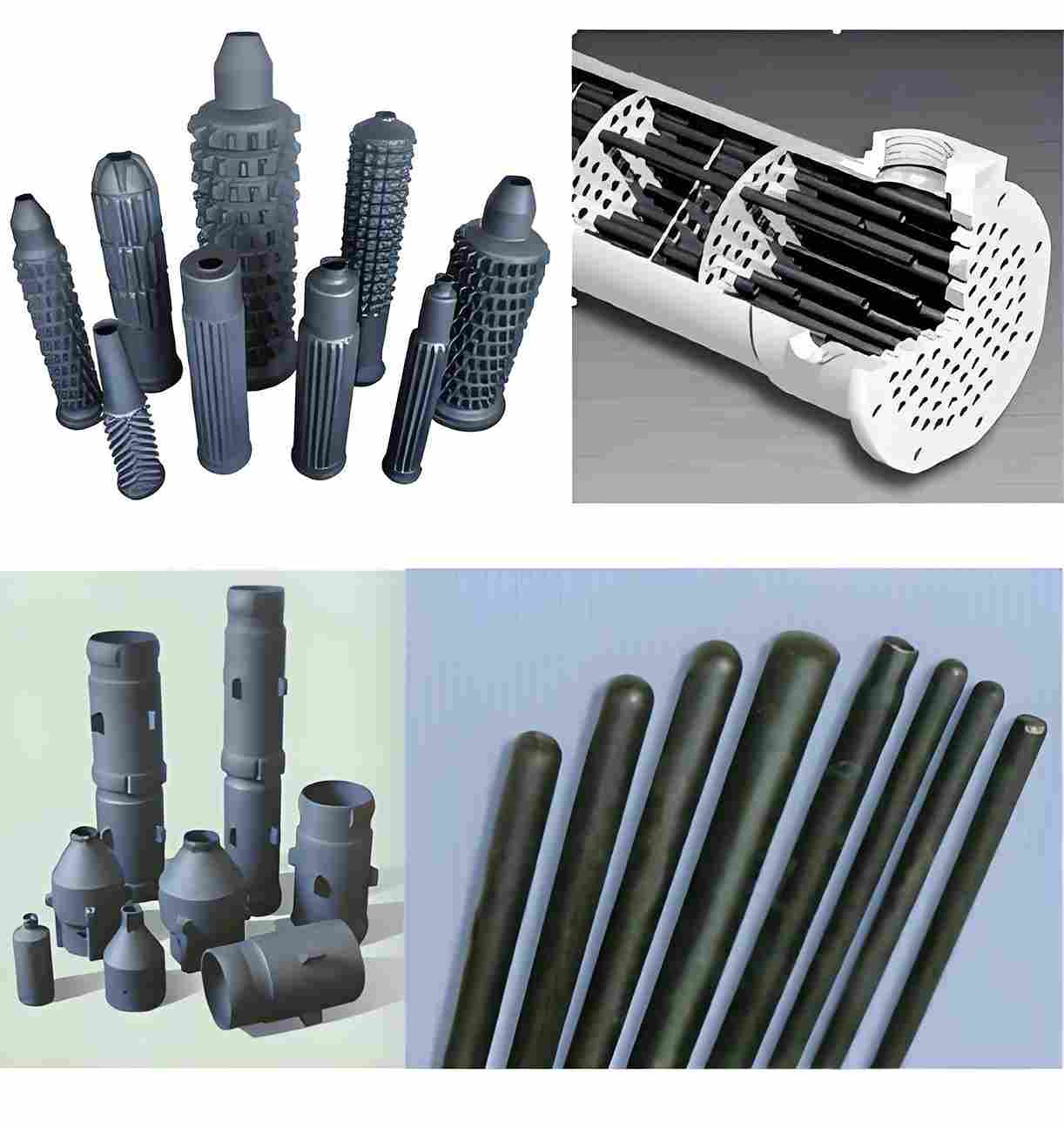
When a batch of silicon carbide (SiC) components arrives at your factory, the first question is simple: does it meet the specifications that keep your equipment running smoothly?
Quick Summary (FAQ)
Q: What are the most critical attributes to check on receipt?
A: Purity (>98% SiC), dimensional tolerance (±0.1‑0.5 mm), density (≥3.2 g/cm³), flexural strength (≥130 MPa), and thermal shock resistance.
Q: How fast can a reliable inspection be completed?
A: A focused workflow can deliver a full report within 2‑3 working days for standard parts and 5‑7 days for custom geometries.
Q: Which test gives the best early‑failure insight?
A: Ultrasonic C‑scan combined with surface microscopy identifies micro‑cracks that most other methods miss.
Why Incoming Inspection of SiC Matters
In high‑temperature, corrosive environments – such as furnace tubes, pump seals, or burner nozzles – a single out‑of‑spec SiC part can shut an entire production line. Our customers in Europe have reported up to $15,000 in loss for an eight‑day outage caused by a cracked seal ring. The cost of a systematic inspection is fractions of that loss, yet many firms still rely on supplier certificates alone.
Core Quality Attributes You Must Verify
- Chemical Purity: SiC ≥ 98 % with trace < 0.1 % of metallic impurities.
- Density & Porosity: Bulk density 3.15‑3.22 g/cm³; open porosity < 0.5 %.
- Grain Size Distribution: Median grain size 5‑12 µm for standard tubes; finer‑grained for wear‑critical seals.
- Dimensional Accuracy: Critical dimensions within ±0.1 mm for custom tolerances, ±0.5 mm for standard sizes.
- Mechanical Strength: Flexural strength ≥ 130 MPa, hardness 1900‑2100 HV.
- Thermal Performance: Oxidation resistance up to 1600 °C, thermal shock ΔT ≥ 800 °C.
1. Visual & Surface Inspection
Before any lab test, a trained inspector should perform a systematic visual check. Use a 10×–20× stereomicroscope to look for:
- Surface chipping or glaze defects.
- Discoloration indicating improper sintering.
- Edge cracks that may propagate under thermal load.
We keep a reference photo library of good and bad examples from our own Silicon Carbide Tubes line, allowing instant comparison.
2. Dimensional Verification
Accurate dimensions are non‑negotiable for sealing rings and nozzle throats. Our recommended toolset:
- CMM (Coordinate Measuring Machine): Best for complex geometries; repeatability ±0.02 mm.
- Laser Scanning: Faster for long tubes; typical uncertainty ±0.1 mm.
- Calipers & Micrometers: Useful for quick checks on standard diameters.
Document each part number with a printable PDF report that includes the measured values, the tolerance band, and a pass/fail flag.
3. Mechanical Property Testing
Flexural Strength (Three‑Point Bending)
Cut a 20 mm×4 mm×2 mm specimen and test according to ASTM C1161. Record the maximum load and calculate strength. In our recent batch of 500 mm furnace tubes, the average flexural strength was 138 MPa, well above the 130 MPa spec, while a small 2 % subset fell under 120 MPa – those were rejected on the spot.
Hardness & Modulus
Vickers hardness (HV) gives a quick proxy for wear resistance. Values under 1850 HV often indicate insufficient densification. For critical sealing rings we also run nano‑indentation to extract Young’s modulus, ensuring it stays above 400 GPa.
4. Thermal Performance Tests
Thermal shock and oxidation resistance are the make‑or‑break features of SiC in furnace or burner environments.
Thermal Shock Test
Heat the specimen to 1500 °C in a furnace, then quench in water. Count the number of cycles to failure. Our in‑house standard is 10 cycles with ≤ 5 % strength loss. A recent inspection of custom burner nozzles showed 8‑cycle survival, prompting a redesign of the cooling jacket.
Oxidation Weight Gain
Expose samples at 1600 °C for 100 h in air and measure weight change. Acceptable gain is < 0.1 % of original mass. Any sample exceeding that threshold is flagged for impurity review.
5. Chemical Purity & Phase Analysis
Two complementary techniques are widely used:
- XRF (X‑ray Fluorescence): Quick screening for major elements; detects > 0.5 % impurity levels.
- ICP‑OES (Inductively Coupled Plasma – Optical Emission Spectroscopy): Low‑level detection (< 0.01 %) for Fe, Al, Ti that can affect high‑temperature oxidation.
Samples are taken from the bulk after the first visual pass. If any impurity exceeds the spec sheet, the whole lot is quarantined for further supplier discussion.
6. Non‑Destructive Evaluation (NDE)
When the component cannot be sacrificed – for example, a sealed valve body – we rely on ultrasonic C‑scan or phased‑array techniques. Modern ultrasonic equipment can resolve cracks down to 30 µm and produce a 2‑D map of internal porosity. In a case study with a German pump manufacturer, ultrasonic scanning identified a 0.3 mm internal crack that visual inspection missed, saving a $22,000 replacement cost.
7. Statistical Process Control & Sampling Plans
Applying ISO 2859‑1 AQL (Acceptable Quality Level) helps balance inspection cost and risk. For high‑risk parts (seal rings, nozzle throats) we use AQL 0.65 % with a double‑sampling plan. For standard tubes, an AQL 1.0 % single‑sampling plan is sufficient.
Our Excel‑based SPC dashboard tracks lot‑by‑lot defect rates, trending them over six months. A rising trend triggers a supplier corrective action request (SCAR) before the next shipment.
8. Documentation, Traceability & Compliance
Every inspected part must be traceable to:
- Certificate of Analysis (COA) from the supplier.
- Material Safety Data Sheet (MSDS).
- Incoming inspection report (including lot number, test results, inspector initials).
We provide a template that matches ISO 9001‑based Q‑records, making it easy for your quality auditor to locate the data.
9. Practical Inspection Checklist
- Verify packing list vs. purchase order.
- Open the sealed container in a clean area; photograph the outer packaging.
- Conduct visual check under stereomicroscope; note any surface defects.
- Measure critical dimensions using CMM or laser scanner; record values.
- Select 5 % (or 10 % for high‑risk lots) for mechanical testing – flexural strength and hardness.
- Run thermal shock test on at least one specimen per lot.
- Perform XRF/ICP analysis on a representative sub‑sample.
- Apply ultrasonic C‑scan to non‑destructive parts.
- Complete SPC entry and compare against AQL limits.
- Generate final inspection report; attach COA, MSDS, and any deviation notes.
10. Common Pitfalls & How to Avoid Them
| Pitfall | Impact | Mitigation |
|---|---|---|
| Relying solely on supplier COA | Undetected impurity spikes → early failure | Independent XRF/ICP verification on first lot. |
| Skipping thermal shock test for custom geometry | Crack propagation during service | Include a minimum of one thermal test per design change. |
| Using only calipers for complex tubes | Dimensional drift > 0.5 mm | Combine CMM for critical sections with laser scan for straightness. |
| Inconsistent sample size for mechanical testing | Statistical bias, false acceptance | Adopt ISO 2859‑1 sampling charts and document each datum. |
11. Actionable Next Steps
If you are ready to tighten your incoming inspection process, start by requesting a sample lot from your current supplier and run it through the checklist above. Document every step – the data becomes a bargaining chip when you discuss tighter tolerances or price adjustments.
Our engineering team at ZIRSEC can help you set up an on‑site inspection protocol tailored to your product line. We offer:
- Custom testing kits with calibrated CMM probes.
- Technical support for XRF and ultrasonic equipment.
- Fast‑track sample analysis (48 h turnaround).
- Full traceability documentation aligned with ISO 9001.
Contact us at info@zirsec.com or visit our website to schedule a free consultation.
Conclusion
Verifying silicon carbide quality at the moment it arrives is not a luxury – it’s a necessity for any operation that cannot afford downtime. By combining visual inspection, precise dimensional measurement, mechanical and thermal testing, and rigorous statistical control, you build a defense line that catches defects before they become costly failures. Implement the checklist, keep the data alive in your Q‑systems, and you’ll see a measurable drop in scrap rate, warranty claims, and production stoppages. Let ZIRSEC be the partner that turns quality assurance into a competitive advantage.