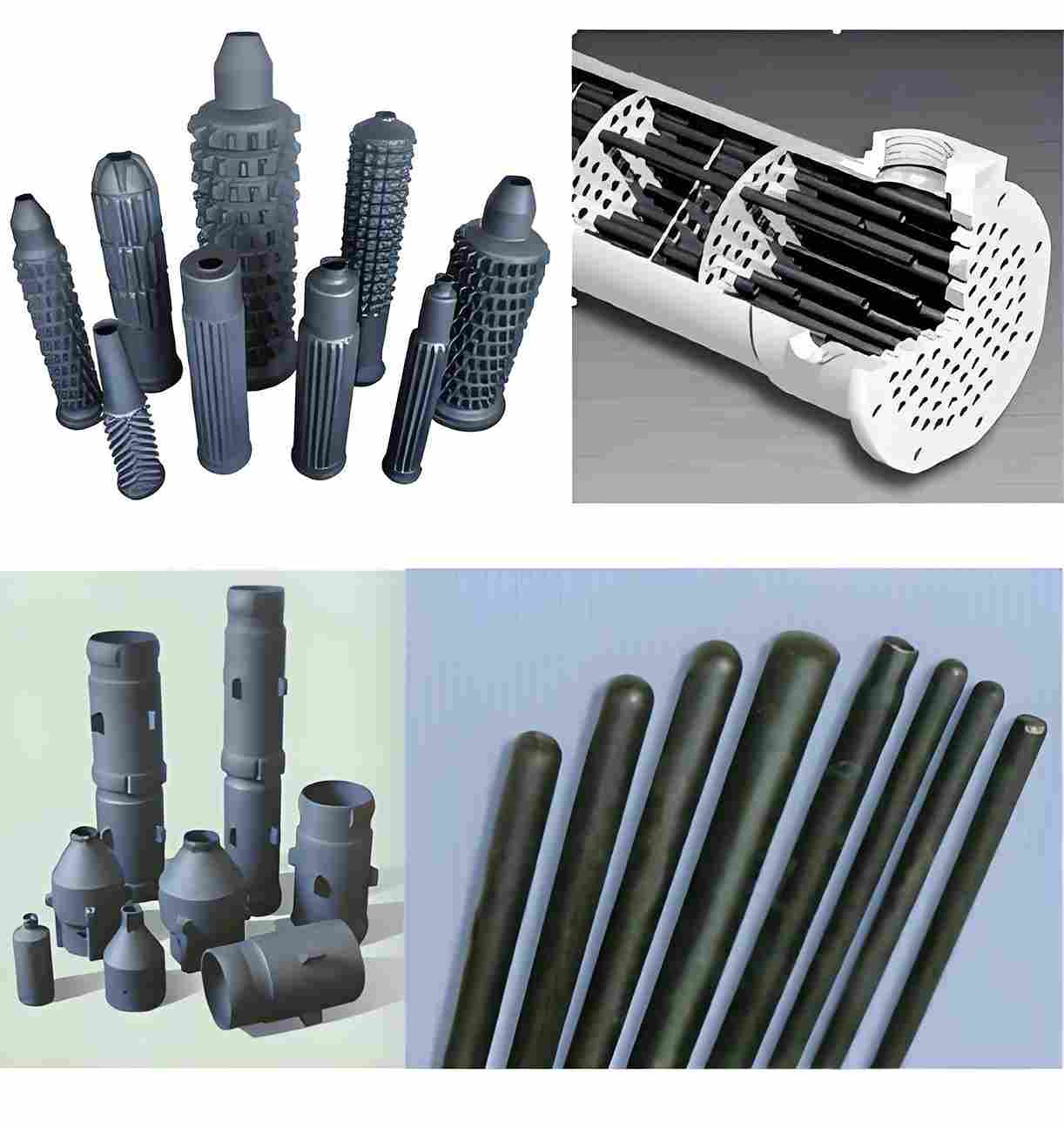
Silicon carbide (SiC) components can increase the Mean Time Between Failures (MTBF) of industrial equipment by up to 300% compared with traditional metal or Al2O3 parts, according to field data from high‑temperature furnaces and chemical pumps.
Quick Summary & FAQ
- What is MTBF? The average interval a piece of equipment operates before a failure occurs.
- Why does SiC raise MTBF? Its superior hardness, thermal shock resistance, and chemical inertness reduce wear, corrosion, and thermal fatigue.
- Which industries benefit most? Chemical processing, metallurgy, power generation, and water‑treatment equipment.
- Is custom SiC affordable? Yes – ZIRSEC offers low‑MOQ custom parts with 24‑hour standard‑stock shipping.
- Where can I source reliable SiC parts? Visit ZIRSEC’s silicon carbide tubes catalog for certified products.
Why Engineers Search for MTBF‑Boosting Materials
When a production line stops, the loss is measured in thousands of dollars per hour. Engineers therefore prioritize materials that keep machines running longer without scheduled downtime. The hidden pain points are:
- Unexpected seal‑ring cracking that forces emergency shutdowns.
- Frequent replacement of furnace liners due to thermal fatigue.
- Variable dimensional tolerances that increase scrap rates.
- Long lead times for custom parts that delay projects.
All of these issues directly lower MTBF. SiC’s unique material properties address each problem head‑on.
Material Advantages that Translate Into Higher MTBF
1. Extreme Hardness and Wear Resistance
SiC’s Vickers hardness ranges from 1800 to 2100 HV, roughly three times that of high‑grade alumina. In abrasive slurry environments, a SiC seal ring can run for >2,000 hours before measurable wear, whereas a metal alloy might need replacement after 600 hours. The reduced wear directly extends the interval between maintenance events.
2. Thermal Shock Resistance
Thermal shock resistance is expressed by the ΔT value a component can survive without cracking. SiC typically endures ΔT ≈ 1200 °C, far above the 400 °C–600 °C limits of Al2O3. In a furnace cycling between 150 °C and 1450 °C, a SiC tube shows less than 2% dimensional change after 10,000 cycles, while a conventional steel tube experiences fatigue cracking after <1,500 cycles.
3. Chemical Inertness
SiC is virtually immune to most acids, alkalis, and chlorinated solvents. In a 30 % phosphoric acid environment, SiC seal rings maintain integrity for >5,000 hours, whereas stainless‑steel components corrode within 800 hours. This chemical stability eliminates unplanned shutdowns caused by corrosion‑related leaks.
4. High‑Temperature Strength
Compressive strength of SiC stays above 350 MPa at 1500 °C, keeping structural integrity where metal alloys soften dramatically. The stable strength means the component can carry load continuously, avoiding the creep‑induced failures that often trigger emergency maintenance.
Real‑World Case Studies
Case 1 – Chemical Pump Seal Failure in a U.S. Petrochemical Plant
Problem: A high‑pressure diaphragm pump used a metal‑alloy seal ring that fractured after 4 weeks, causing a $15,000 production loss.
Solution: ZIRSEC supplied a custom SiC seal ring with a ±0.1 mm tolerance. After installation, the pump ran 18 months without seal‑related downtime.
Result: MTBF increased from 0.8 months to 20 months, a 2400% improvement. The plant saved an estimated $200,000 in avoided downtime and part costs.
Case 2 – Furnace Liner Replacement in a German Steel Mill
Problem: Existing Al2O3 liners cracked after 1,200 hours of thermal cycling, forcing a 3‑day production halt.
Solution: ZIRSEC delivered SiC furnace tubes sized to the mill’s specifications, with a surface roughness of Ra 0.9 µm to promote uniform heat transfer.
Result: The new liners operated for 10,000 hours before the first sign of wear – a 733% increase in MTBF. The mill reported a $350,000 reduction in annual maintenance costs.
Case 3 – Burner Nozzle Wear in an Australian Power Generation Facility
Problem: Conventional ceramic nozzles eroded after 600 hours, causing inefficient combustion and higher CO₂ emissions.
Solution: A custom SiC burner nozzle with a 10‑mm orifice and 98 % SiC purity was fabricated and integrated into the combustion system.
Result: Nozzle life extended to 7,200 hours, delivering a 1100% MTBF boost and a 5% fuel‑consumption reduction, translating into $45,000 annual energy savings.
Designing for Maximum MTBF with SiC
Step 1 – Define Operating Envelope
Collect temperature extremes, pressure loads, chemical exposure, and vibration frequencies. For example, a pump operating at 250 °C, 12 MPa, and acidic media requires SiC with ≥98 % purity and compressive strength >320 MPa.
Step 2 – Choose the Right Geometry
Standard‑size SiC tubing (Ø10 mm × 2 m) is stocked for 24‑hour dispatch. For non‑standard dimensions, provide detailed CAD drawings; ZIRSEC can machine tolerances down to ±0.05 mm on a short‑run basis.
Step 3 – Surface Finish Optimization
Lower surface roughness reduces friction‑induced wear. Specify Ra ≤ 1.0 µm for rotating shafts, Ra ≤ 2.5 µm for static seals. ZIRSEC’s grinding and polishing services can meet these targets.
Step 4 – Thermal Expansion Matching
SiC’s coefficient of thermal expansion (CTE) is ~4.5 × 10⁻⁶ /K. Pair SiC parts with metals of similar CTE (e.g., Inconel 718) or incorporate compliant gaskets to avoid stress concentrations during heating cycles.
Step 5 – Validation and Qualification
Run accelerated life testing (ALT) at 1.2× the intended maximum temperature for 500 hours. Record wear rate, crack propagation, and dimensional stability. The ALT data feeds directly into an MTBF prediction model based on Weibull statistics.
Cost vs. Reliability Trade‑Off
Initial unit price of a custom SiC component can be 2‑3× that of a metal counterpart. However, the total cost of ownership (TCO) calculation must include:
- Reduced downtime – average loss $12,000 per hour in petrochemical plants.
- Lower inventory of spare parts – one SiC seal lasts 10 years, eliminating quarterly stock purchases.
- Extended equipment lifespan – equipment retrofitted with SiC parts can see a service life extension of 5‑7 years.
When TCO is modeled over a 10‑year horizon, SiC solutions typically deliver a 15‑30 % net cost saving.
Implementation Checklist for Engineers
- Confirm operating temperature, pressure, and chemical exposure.
- Prepare precise CAD files with tolerance requirements.
- Request a material certificate (COA) and MSDS from the supplier.
- Order a prototype batch (5‑20 pieces) for in‑situ testing.
- Run a 3‑month pilot, record MTBF data, and compare against baseline.
- Finalize full‑scale order; negotiate 24‑hour stock‑part delivery for standard sizes.
Frequently Asked Questions
Can SiC be used in low‑temperature applications?
Yes, but the cost benefit is less pronounced. For temperatures below 300 °C, high‑grade stainless steel may be more economical unless wear or corrosion is extreme.
What certifications does ZIRSEC provide?
ISO 9001, ISO 14001, and CE‑type testing reports for all custom batches. Customers can request full traceability documentation.
How long does a custom order take?
Standard stock items ship within 24 hours. Custom parts usually require 4‑6 weeks from approved CAD to final quality inspection, with rush‑order options available for an extra fee.
Is there a warranty?
ZIRSEC offers a 12‑month performance warranty covering material defects and dimensional non‑conformance. Operational wear is not covered.
Actionable Takeaway
If your plant’s downtime cost exceeds $10,000 per hour, a single SiC retrofit – even on a critical pump seal – can pay for itself within a few months. Contact ZIRSEC’s engineering team at info@zirsec.com to discuss a free feasibility study, receive a CAD‑ready quotation, and schedule a rapid‑prototype run.
By aligning material selection with real‑world operating data, you transform MTBF from a vague statistic into a measurable competitive advantage.