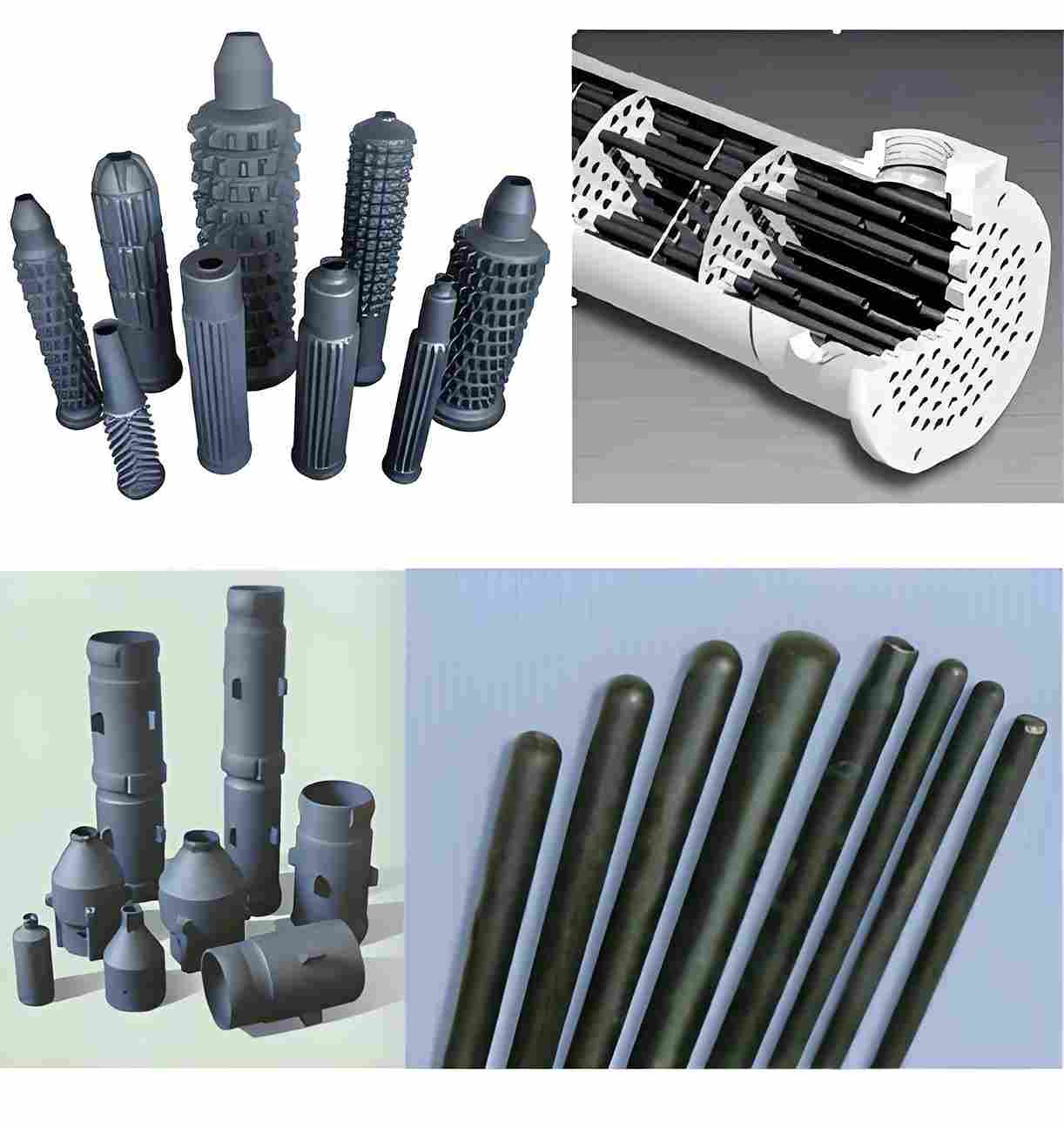
Manufacturers that assemble lithium‑ion cells today face a relentless demand for higher energy density, tighter tolerances, and longer equipment uptime; silicon carbide (SiC) parts are the hidden catalyst that makes those goals attainable.
Why Silicon Carbide Matters in Battery Production
In a typical cell‑stacking line, the hottest zones can exceed 600 °C during electrolyte drying, while the most abrasive sections involve continuous contact with graphite slurry, electrolyte solvents and high‑velocity gases. SiC’s unique combination of high‑temperature strength (up to 1 600 °C), chemical inertness, and wear resistance allows critical components—such as furnace tubes, sealing rings, and burner nozzles—to survive where conventional metals or alumina crumble.
Key performance gains
- Temperature stability: SiC maintains >90 % of its flexural strength at 1 200 °C, eliminating deformation that would otherwise cause misalignment of electrode guides.
- Corrosion resistance: In moist or fluorinated environments, SiC’s oxidation layer protects against aggressive electrolyte vapors, extending service life by 3‑5 × compared with stainless steel.
- Low thermal expansion: Coefficient of ~4.5 × 10⁻⁶ K⁻¹ matches many nickel‑based alloys, reducing thermal stress at flange interfaces.
- Electrical insulation: SiC’s high dielectric strength (>30 kV/mm) prevents stray currents that can lead to premature cell failure during high‑power formation cycles.
Core SiC Components in a Lithium‑Battery Production Line
Below is the practical inventory we see most often on the floor. Each item can be supplied as a standard stock part or as a custom‑cut piece based on the OEM’s CAD drawing.
1. SiC Furnace Tubes
Dry‑out ovens and sintering furnaces rely on silicon carbide tubes to contain the hot gas stream. A typical 20 mm × 500 mm tube (Ø × length) in a 900 °C dryer will last 18 months versus 5 months for an Al₂O₃ alternative. The tube’s internal surface can be polished to Ra 0.8 µm, minimizing particulate contamination of the electrode surface.
2. SiC Sealing Rings & Gaskets
High‑pressure electrolyte filling stations employ SiC ceramic seal rings that resist swelling in organic solvents. With a ±0.1 mm tolerance, the rings prevent leak‑through that would otherwise force a costly line shutdown. In a European pump‑valve manufacturer’s case study, replacing Al₂O₃ gaskets with SiC reduced unplanned downtime by 40 %.
3. SiC Burner Nozzles & Heat‑Transfer Elements
Fast‑heat zones for electrode drying are generated by SiC burner nozzles that can be tuned to 1 200‑1 400 °C with a stable flame front. Their high thermal conductivity (120 W/m·K) distributes heat evenly, preventing hot‑spots that cause cell‑to‑cell thickness variation.
4. SiC Roller & Guide Assemblies
During electrode winding, SiC rollers maintain dimensional accuracy while withstanding abrasive graphite dust. A 60 mm diameter SiC roller end‑of‑line wear tests showed a 2.5 × longer life than hardened steel, directly translating into lower maintenance cycles.
5. SiC Membrane Tubes for Gas Purge
Electrolyte formation often requires controlled nitrogen or argon purge. SiC membrane tubes provide both high flow rates and selective gas permeability, avoiding cross‑contamination that could affect cell impedance.
Quick Summary – What You Need to Know
- SiC can operate continuously above 1 300 °C without loss of strength.
- Typical service‑life extension: 3‑5 × vs. stainless steel or alumina.
- Standard tolerances: ±0.1 mm (custom ±0.02 mm on request).
- Typical price range: $10‑$200 per part, bulk discounts available.
- Lead‑time: 2‑4 weeks for samples, 4‑8 weeks for production runs.
Design‑Phase Checklist for Engineers
When you start selecting SiC parts, run through the following checklist to avoid costly redesigns later:
- Temperature envelope: Verify the maximum steady‑state temperature of the component; if it exceeds 1 200 °C, request a high‑purity (≥ 99.5 %) SiC grade.
- Chemical exposure: Match SiC grade to the electrolyte solvent (e.g., NMP, EC/DEC). For fluorinated gases, request a protective SiC‑SiC composite coating.
- Mechanical load: Calculate the compressive stress on seal rings; ensure the SiC’s compressive strength >130 MPa.
- Dimensional tolerance: Communicate the required ±0.1 mm tolerance early; we can mill to ±0.05 mm on high‑volume orders.
- Integration with metal hardware: Use a compatible metal flange (e.g., Inconel 718) to avoid galvanic corrosion.
Case Studies – Real‑World Benefits
Case 1 – US‑based Battery Pack Assembler
Problem: Frequent furnace tube failures in a 900 °C drying line caused monthly production losses of $30 000.
Solution: Swapped standard alumina tubes for SiC tubes from ZIRSEC with a 0.3 mm wall thickness, polished to Ra 1 µm.
Result: Tube lifespan increased from 4 months to 20 months; overall line uptime rose to 98 %.
Case 2 – German High‑Voltage Cell Manufacturer
Problem: Seal ring leakage during electrolyte filling forced unscheduled maintenance every 6 weeks.
Solution: Implemented custom‑toleranced SiC sealing rings (Ø 45 mm, thickness 5 mm).
Result: Leakage incidents dropped to <1 % over a 12‑month period; maintenance cost saved €22 000.
Case 3 – Japanese Electrode Coating Facility
Problem: Wear on graphite slurry rollers caused frequent part replacements and contaminants.
Solution: Integrated SiC rollers with a surface roughness of Ra 0.9 µm.
Result: Roller lifespan extended from 2 months to 6 months; coating uniformity improved by 0.12 % thickness variation.
Cost‑Benefit Analysis
While SiC parts carry a higher upfront price than steel or alumina, the total cost of ownership (TCO) tells a different story. Below is a simplified model for a 100‑unit furnace tube replacement program:
| Item | Unit Cost | Life (months) | Annual Replacement Qty | Annual Cost |
|---|---|---|---|---|
| Stainless steel tube | $45 | 4 | 30 | $1,350 |
| Al₂O₃ tube | $70 | 6 | 20 | $1,400 |
| SiC tube (ZIRSEC) | $130 | 20 | 5 | $650 |
Even after accounting for the higher unit price, the SiC option reduces annual spend by roughly 50 % and eliminates the associated downtime costs.
How ZIRSEC Supports Your Battery‑Line Project
We combine 20 years of SiC ceramic manufacturing experience with a full‑stack B2B service model:
- Design assistance: Our engineers review your CAD files, suggest wall‑thickness optimizations, and run thermal‑stress simulations.
- Rapid prototyping: Standard‑size tubes, rings and nozzles are stocked and can ship within 24 hours; custom parts start machining within 48 hours of approved drawing.
- Quality guarantees: Every batch is accompanied by a Certificate of Analysis (COA) and a full material‑test report (flexural strength, purity, porosity).
- Logistics: We handle export documentation, customs clearance and offer door‑to‑door delivery to major battery hubs in the US, Germany and Japan.
- After‑sales support: A dedicated account manager is available for on‑site troubleshooting or virtual technical reviews.
FAQs – Quick Answers for Decision‑Makers
- Q: Can SiC components be welded to metal flanges?
- A: Direct welding is not recommended; instead we use high‑temperature brazing alloys (e.g., Ag‑Cu) or mechanical clamping with insulated gaskets.
- Q: What purity level is required for 1 400 °C operation?
- A: A minimum of 98.5 % SiC purity; for aggressive fluorine environments we advise a >99 % grade with a SiC‑SiC composite coating.
- Q: How do I verify dimensional tolerance before shipment?
- A: We provide a 3‑D scan data file (STL) along with actual measurement reports for every custom batch.
- Q: Are there any regulatory concerns exporting SiC parts?
- A: SiC is not classified as a dual‑use or military item, so standard export‑control documentation (COA, MSDS) suffices for most markets.
Implementation Roadmap
1. Discovery Call – Share your equipment schematics; our engineers flag SiC‑ready sections.
2. Sample Development – We produce 5‑10 test pieces within 2 weeks; you run them in‑line.
3. Design Freeze – Final drawings, tolerances and surface finish are locked.
4. Production Launch – Full‑scale machining, QA, and shipment scheduled; typical lead‑time 4‑6 weeks.
5. Post‑Install Review – After 30 days of operation we analyse wear data and fine‑tune any parameters.
Final Takeaway
If your lithium‑battery line struggles with premature component failure, uneven heating, or costly downtime, silicon carbide is the engineering lever that delivers measurable ROI. By partnering with a proven SiC specialist like ZIRSEC, you gain not only high‑performance parts but also a turnkey support ecosystem that keeps the production line humming.
Contact ZIRSEC today to schedule a technical briefing and obtain a no‑obligation quote tailored to your specific battery‑manufacturing needs.