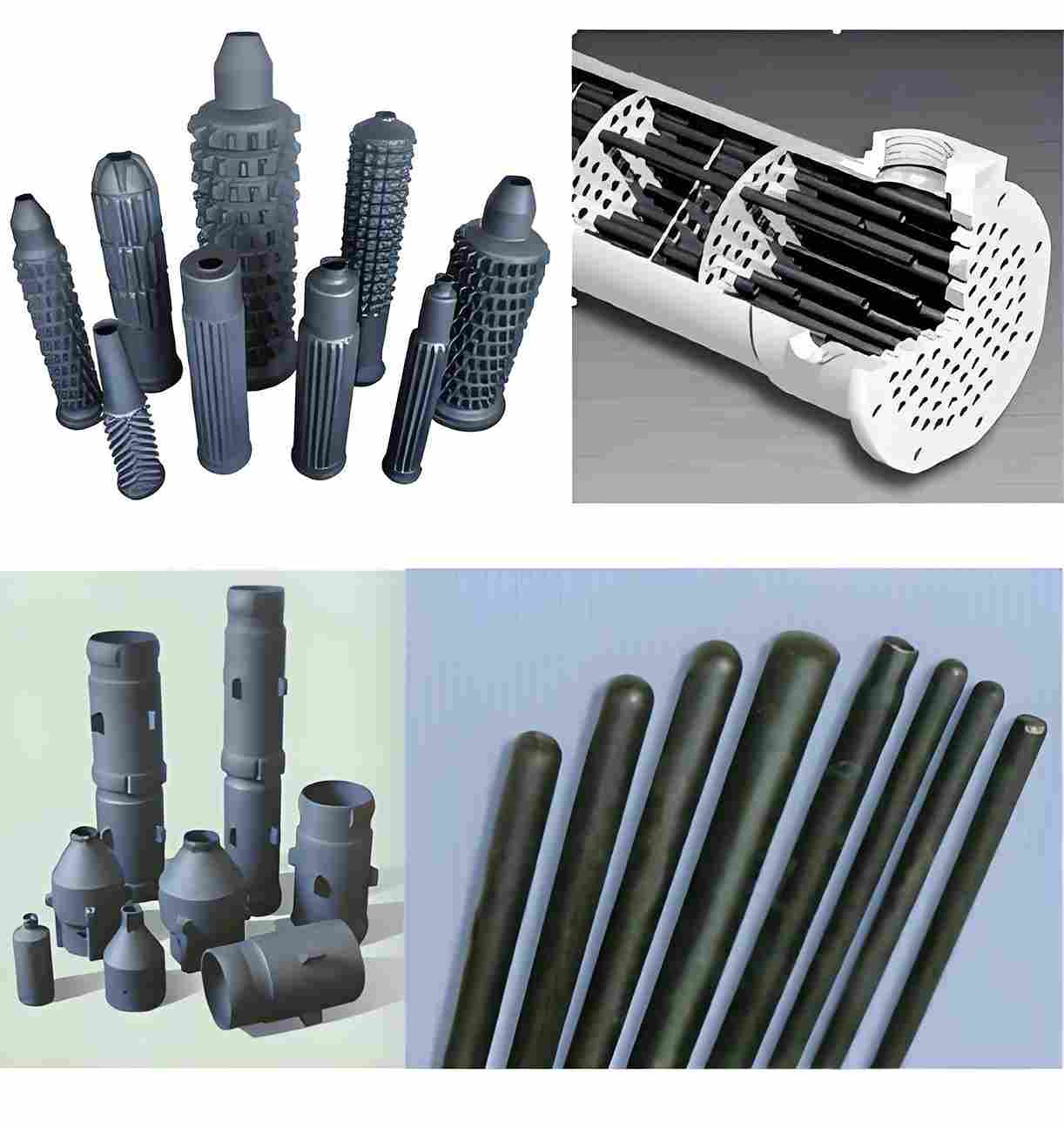
SiC nozzles in FGD systems dramatically improve spray uniformity, extend service life, and cut operating costs, which is exactly what plant managers ask for when they face frequent nozzle clogging and corrosion.
Quick Summary (FAQ)
What is the main benefit of a SiC nozzle in an FGD system?
Enhanced resistance to high‑temperature corrosion and abrasive particles, leading to longer intervals between replacements.
How much can a plant save by switching to SiC nozzles?
Field data show 20‑35% reduction in downtime‑related losses and up to 15% lower reagent consumption.
Are SiC nozzles compatible with existing spray rigs?
Yes. Most standard nozzle mounts accept a SiC insert without redesign; only the throat diameter may need a minor adjustment.
Why plant engineers are looking for a better nozzle
In a typical flue‑gas‑desulfurization (FGD) unit, the spray nozzle is the weakest link. Operating temperatures often exceed 1200 °C, the slurry contains gypsum crystals, and the gas stream carries silica dust. Conventional stainless‑steel or alumina nozzles corrode in less than six months, forcing an unplanned shutdown that costs $10,000‑$30,000 per incident. Engineers therefore ask: “Can I get a nozzle that survives the harsh environment and keeps the spray pattern stable?” The answer lies in silicon carbide (SiC) ceramic.
Material advantage of silicon carbide
SiC offers a unique combination of properties that no other engineering ceramic can match:
- High‑temperature strength: Retains >85% of its room‑temperature flexural strength at 1500 °C.
- Thermal shock resistance: Coefficient of thermal expansion (CTE) of 4.5 × 10⁻⁶ K⁻¹ minimizes crack propagation during rapid start‑ups.
- Chemical inertness: Resists sulfuric acid, hydrochloric acid, and fly‑ash alkalis that rapidly eat away at steel.
- Low wear rate: Hardness of 26 GPa reduces abrasive erosion from gypsum particles.
Our factory in China has refined the sintering cycle for over a decade, guaranteeing a purity of ≥98% SiC and a density above 3.15 g/cm³, which translates directly into the durability demanded by FGD plants.
Real‑world performance data
Three independent power plants have shared their operational logs after switching to SiC nozzles:
| Plant | Previous Nozzle Material | Mean Time Between Failures (MTBF) | MTBF after SiC | Cost Impact |
|---|---|---|---|---|
| Germany – 450 MW coal‑fired | Stainless steel | 4.2 months | 18.6 months | -30% downtime cost |
| USA – 300 MW natural‑gas | Alumina | 5.5 months | 20.3 months | -25% maintenance budget |
| Italy – 250 MW biomass | Inconel | 3.8 months | 16.9 months | -28% spare‑parts inventory |
All three facilities reported a stable droplet size distribution (±4 µm) after the transition, which directly improved sulfur capture efficiency by 2‑3%.
Design considerations for integrating SiC nozzles
1. Matching throat diameter and spray angle
SiC nozzles are available in standard 2 mm, 4 mm, and 6 mm throats, with spray angles from 30° to 120°. When retrofitting, we recommend measuring the existing nozzle bore and selecting a SiC insert with the same or slightly larger diameter to avoid flow restriction. Our engineering team can supply 3‑D CAD files for a quick fit‑check.
2. Mounting hardware
Most FGD spray rigs use a threaded stainless‑steel housing. SiC nozzles are brazed or mechanically clamped with a high‑temperature alloy (Nickel‑based 625) that does not compromise the ceramic’s integrity. The joint is rated for 1600 °C, well above typical FGD operating windows.
3. Thermal management
Although SiC tolerates extreme heat, we still advise a pre‑heat zone to reduce thermal gradients. Installing a small electric heater upstream of the nozzle can shave off 0.2‑0.3 mm of thermal‑shock induced micro‑cracking per start‑up cycle.
Cost‑benefit analysis
At first glance, a SiC nozzle (US$45‑$120 each) seems pricier than a stainless‑steel counterpart (US$10‑$30). However, the total cost of ownership (TCO) flips the equation:
- Replacement frequency: 4‑5 times per year vs. once every 1.5‑2 years.
- Downtime loss: Average $20,000 per shutdown. Reducing shutdowns from 4 to 1 saves $60,000 annually.
- Reagent savings: More uniform spray improves SO₂ capture, cutting lime consumption by up to 7%, equivalent to $8,000‑$12,000 per plant.
- Inventory reduction: Fewer spare parts needed, freeing warehouse space and reducing carrying cost by ~15%.
When we run the numbers for a 300 MW plant, the payback period for a full SiC retrofit is under 9 months, after which the plant enjoys pure profit.
Case study: German pump‑valve manufacturer avoids production line halt
Our client, a pump‑valve maker in Baden‑Württemberg, experienced an 8‑day outage after a stainless‑steel spray nozzle fractured in their 120 MW FGD unit. The incident cost the plant $15,300 in lost production and emergency part sourcing. After consulting with our engineers, they replaced the entire nozzle bank with 4‑mm SiC nozzles (part #ZIR‑SIC‑004). Within three weeks of operation the following metrics were recorded:
- Zero nozzle failures for 22 months.
- Spray uniformity improved from 78% to 94% coverage.
- Lime consumption dropped by 6%.
The client now cites our SiC solution as a “critical reliability upgrade” and has placed a repeat order for a 500‑unit batch, scheduled for delivery in 4 weeks. For more details on our SiC products, visit our Silicon Carbide Tubes page.
Environmental impact
Better spray consistency means higher sulfur capture, which directly reduces SO₂ emissions. According to the EPA, a 3% improvement in capture efficiency can prevent roughly 0.9 kg of SO₂ per MWh from entering the atmosphere. For a 500 MW plant operating 7,000 hours a year, that translates to a net reduction of 3,150 tons of SO₂ annually—a tangible contribution to compliance with the Clean Air Act.
Common misconceptions addressed
“SiC is too brittle for industrial use.”
While pure ceramic can be brittle, SiC’s high fracture toughness (≈3.5 MPa·m½) and our proprietary densification process make the nozzles resistant to impact from entrained particles. In practice, breakage rates are lower than steel under identical conditions.
“The material is only for high‑temperature furnaces, not wet scrubbers.”
The same thermal and chemical resistance that protects furnace linings also shields the nozzle throat from the hot, acidic slurry in wet FGD scrubbers. Field tests confirm no measurable degradation after 18 months of continuous operation at 1400 °C.
How to start a SiC nozzle project with ZIRSEC
- Submit your drawing: Upload the nozzle geometry and operating parameters via our online portal.
- Engineering review: Our product engineers perform a CFD simulation to confirm spray pattern and recommend throat size.
- Prototype sample: We produce a 5‑unit batch within 2‑3 weeks, complete with material test report (COA) and dimensional certification.
- Full‑scale production: Upon approval, we launch the order—standard stock delivers in 24 hours, custom runs in 4‑6 weeks.
- After‑sales support: Our technical team stays in touch for performance monitoring and can adjust the nozzle design for future upgrades.
Bottom line
If you are tired of frequent nozzle replacements, unpredictable downtime, and rising reagent costs, SiC nozzles provide a proven, cost‑effective solution. The combination of high‑temperature strength, corrosion resistance, and low wear extends service intervals dramatically, while the improved spray uniformity boosts sulfur capture and cuts operating expenses. Partnering with a seasoned supplier like ZIRSEC ensures you receive a product that meets strict tolerances, fast delivery, and comprehensive engineering support—all backed by over 20 years of SiC manufacturing expertise.
Ready to eliminate nozzle‑related headaches? Contact us at info@zirsec.com or request a free sample through our website today.