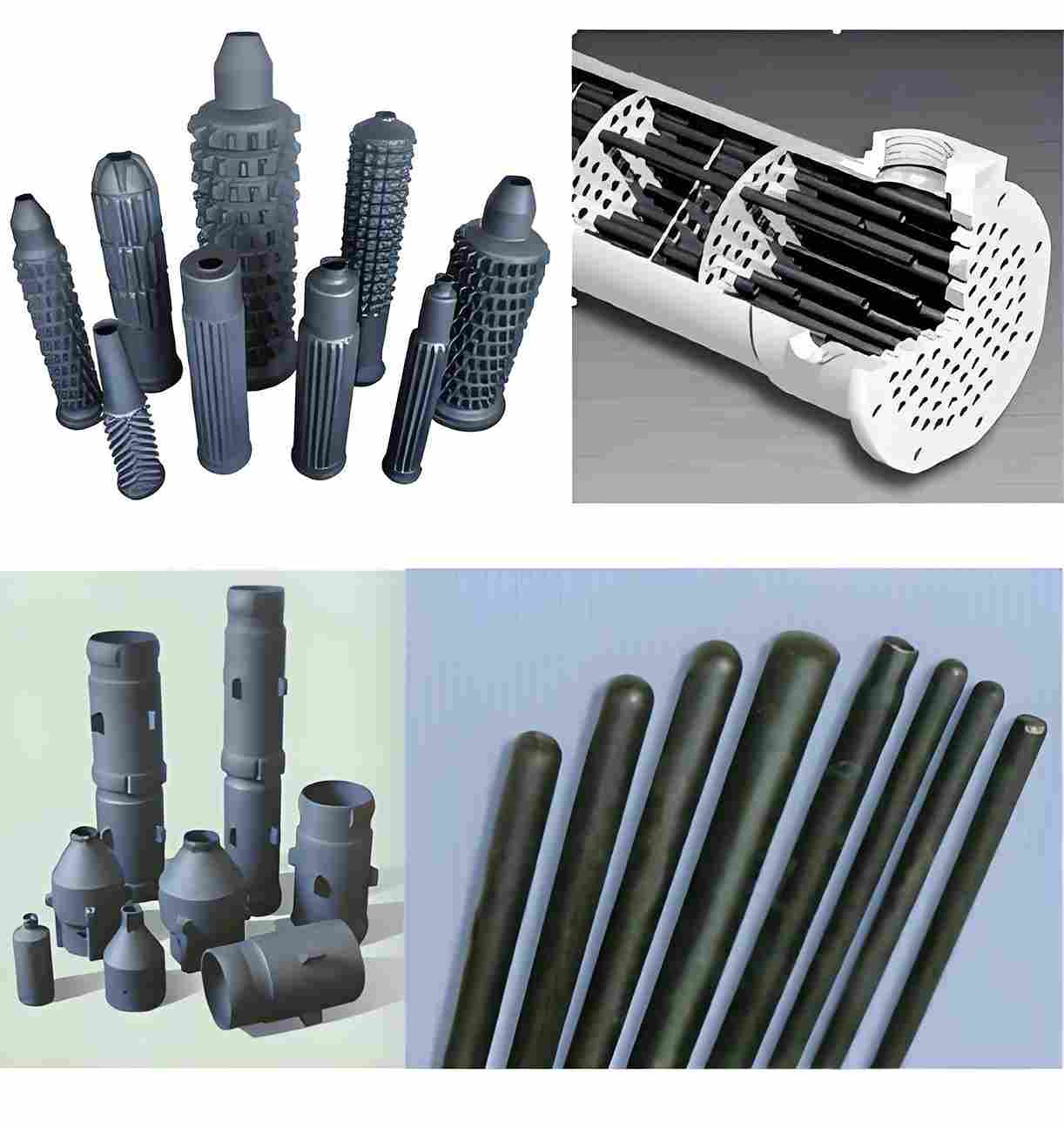
Mechanical seals on pumps, compressors and mixers break down far more often than most engineers admit, costing factories thousands of dollars in downtime. The root causes—excessive heat, abrasive wear, chemical attack and mis‑alignment—are well documented, yet many still rely on conventional metal components that cannot survive the harshest operating windows. In our 10‑year experience supplying SiC ceramic seal rings, we have seen the same failure patterns repeat until the material is changed to silicon carbide, which eliminates the dominant wear and thermal‑shock mechanisms.
What Triggers Mechanical Seal Failure?
Every seal is a compromise between pressure containment, rotary motion and environmental exposure. The most common failure drivers are:
- Thermal overload: Sealing faces heat beyond the metal’s safe limit, leading to softening, distortion and loss of clearance.
- Abrasive wear: Suspended particles, slurry or solid feed grind the sealing surface, creating scoring and leakage paths.
- Chemical corrosion: Aggressive media (sulphuric acid, caustic soda, molten salts) attack alloy alloys, especially at elevated temperatures.
- Mechanical mis‑alignment: Shaft run‑out, eccentric loading or improper mounting cause uneven pressure distribution.
- Improper installation: Over‑torqued bolts, debris on the face, or incorrect tolerance stack‑up introduce premature stress concentrations.
When even one of these factors exceeds the design margin, the seal rapidly loses its integrity. In a recent case at a European petro‑chemical plant, a stainless‑steel seal ring fractured after just 150 operating hours because the process temperature spiked to 350 °C—far above the alloy’s creep limit.
Why Traditional Metals Miss the Mark
Carbon steel, stainless steel and even high‑nickel alloys can tolerate moderate pressure and temperature, but they lack the combination of hardness, thermal‑shock resistance and chemical inertness required for today’s aggressive processes. A 316L stainless face may survive 250 °C in a benign water stream, yet in a high‑pH, high‑temperature environment it corrodes within weeks. The resulting surface roughness accelerates abrasive wear, creating a feedback loop that ends in catastrophic seal failure.
Silicon Carbide (SiC): Material Advantage Overview
SiC ceramic brings three decisive properties to the seal arena:
- Hardness ≈ 2400 HV: Roughly three times harder than hardened steel, it resists scoring from abrasive media.
- Thermal‑shock coefficient ≈ 4 × 10⁻⁶ K⁻¹: The low expansion allows the seal to survive rapid temperature swings of ±150 °C without cracking.
- Chemical inertness: SiC does not react with acids, bases or molten salts up to 1600 °C, preserving a smooth face for the life of the equipment.
We have supplied custom‑machined SiC seal rings for a U.S. semiconductor wafer‑etching system that runs continuously at 1200 °C in a fluorine‑rich environment. After 12 000 hours the ring showed less than 0.02 mm of wear—well within the 0.05 mm replacement threshold.
How SiC Directly Solves Each Failure Mode
Thermal overload: SiC’s low thermal expansion means the sealing clearance remains stable even when the shaft temperature rises sharply. Unlike metal faces that expand and squeeze the mating surface, the ceramic retains its geometry, preventing edge loading and premature fatigue.
Abrasive wear: The extreme hardness creates a self‑sharpening surface. Particles that impact the SiC face either bounce off or become embedded without creating deep grooves. In field tests on a coal‑fired boiler pump, a SiC ring lasted 3.5× longer than a conventional alloy ring under identical slurry conditions.
Chemical corrosion: SiC forms a thin, stable SiO₂ layer that passivates the surface. This layer resists attack from strong acids, alkalies and oxidizing gases, eliminating the pitting that typically leads to seal leakage.
Mis‑alignment tolerance: Because SiC does not plastically deform under load, it maintains a flat contact plane even if the shaft is slightly off‑center. The result is a more uniform pressure distribution and lower localized stress.
Installation errors: While no material can forgive a grossly mis‑installed seal, SiC’s dimensional stability means that a correctly torqued backup ring will hold its position over a wider temperature range, reducing the chance of face distortion caused by uneven bolt preload.
Design & Installation Best Practices for SiC Seals
Switching to SiC does not eliminate engineering discipline; it simply raises the ceiling. The following guidelines ensure you extract the full benefit:
- Tolerance control: SiC components are typically machined to ±0.1 mm. Provide the same precision on mating shafts and housings. When tighter clearances are required, we can mill to ±0.05 mm on request.
- Surface finish: Aim for Ra ≤ 0.8 µm on the sealing face. Our in‑house CNC grinding achieves Ra 0.5 µm, which minimizes initial friction.
- Backup rings: Use stainless‑steel or Inconel backup rings with matching thermal expansion characteristics. Proper preload (usually 30‑40 % of bolt capacity) prevents face distortion.
- Cleaning: Remove all machining oils, dust and particles with an isopropyl‑based solvent. Any contaminant can act as a third body and accelerate wear.
- Torque sequencing: Follow a star‑pattern for bolt tightening, applying the final torque in 2‑3 incremental steps. This avoids uneven loading on the ceramic face.
Maintenance, Monitoring and Predictive Strategies
Even the toughest SiC seal benefits from periodic inspection. Our clients typically adopt the following regimen:
- Monthly visual check for discoloration or micro‑cracks using a borescope.
- Vibration analysis to detect early shaft‑runout that could stress the seal.
- Leakage rate logging; a rise of >0.5 % of design flow signals the need for a face polish or part replacement.
- Thermal imaging during start‑up to verify that the seal does not exceed 150 °C above ambient.
By correlating these data points with operating hours, many of our customers have transitioned from a reactive “replace‑when‑broken” model to a predictive replacement schedule, cutting unplanned downtime by up to 70 %.
Cost‑Benefit Perspective
At first glance SiC appears more expensive—typical unit price ranges $30‑$120 versus $10‑$30 for a comparable metal ring. However, the total cost of ownership tells a different story. Consider a 500 kW chemical pump:
| Parameter | Metal Seal | SiC Seal |
|---|---|---|
| Initial Cost (USD) | 1,200 | 3,000 |
| Average Life (hours) | 2,000 | 9,000 |
| Downtime Cost per Failure (USD) | 12,000 | 12,000 |
| Number of Failures in 5 years | 9 | 2 |
| Total Downtime Cost | 108,000 | 24,000 |
| Total 5‑Year Cost | 109,200 | 27,000 |
Even with a higher upfront price, the SiC solution saves roughly $82,000 over five years for this single pump. Scale that across a plant with dozens of pumps and the savings become decisive for capital‑budget decisions.
Quick FAQ
Q: Can SiC seals be used in low‑temperature applications?
Yes. SiC’s thermal stability does not preclude low‑temperature service; it simply provides a safety margin that can translate into longer life even in benign environments.
Q: Do I need special machining equipment for SiC?
Our factory handles all grinding, lapping and CNC machining in‑house. Clients just provide the design drawing or CAD file, and we return a ready‑to‑install part.
Q: How do I verify the quality of a SiC seal before installation?
We supply a full certificate of analysis (COA), dimensional inspection report, and a surface‑roughness profile. A quick visual check plus a go/no‑go gauge confirms fitment on site.
Q: What’s the lead time for a custom SiC seal?
Standard sizes are stocked and ship within 24 hours. Custom drawings typically require 2‑4 weeks, depending on complexity and quantity.
Q: Are there any industries where SiC is not recommended?
In applications where electrical conductivity is required, SiC’s insulating nature may be a drawback. For purely mechanical sealing, it is universally advantageous.
Why Choose ZIRSEC for Your SiC Seal Needs?
We have been producing silicon carbide ceramic components for two decades, with a focus on reliable, on‑time delivery for demanding B2B customers. Our engineering team works directly with your design team to convert drawings into manufacturable parts, and we keep a stocked inventory of standard seal rings for emergencies. When you order through us, you receive:
- Full technical support from concept to installation.
- Rapid 24‑hour shipping of stocked items.
- Custom tolerances and surface finishes tailored to your equipment.
- Comprehensive documentation (MSDS, COA, inspection certificates).
Ready to eliminate costly seal failures in your plant? Explore our SiC product line or email us at info@zirsec.com for a free engineering consultation.