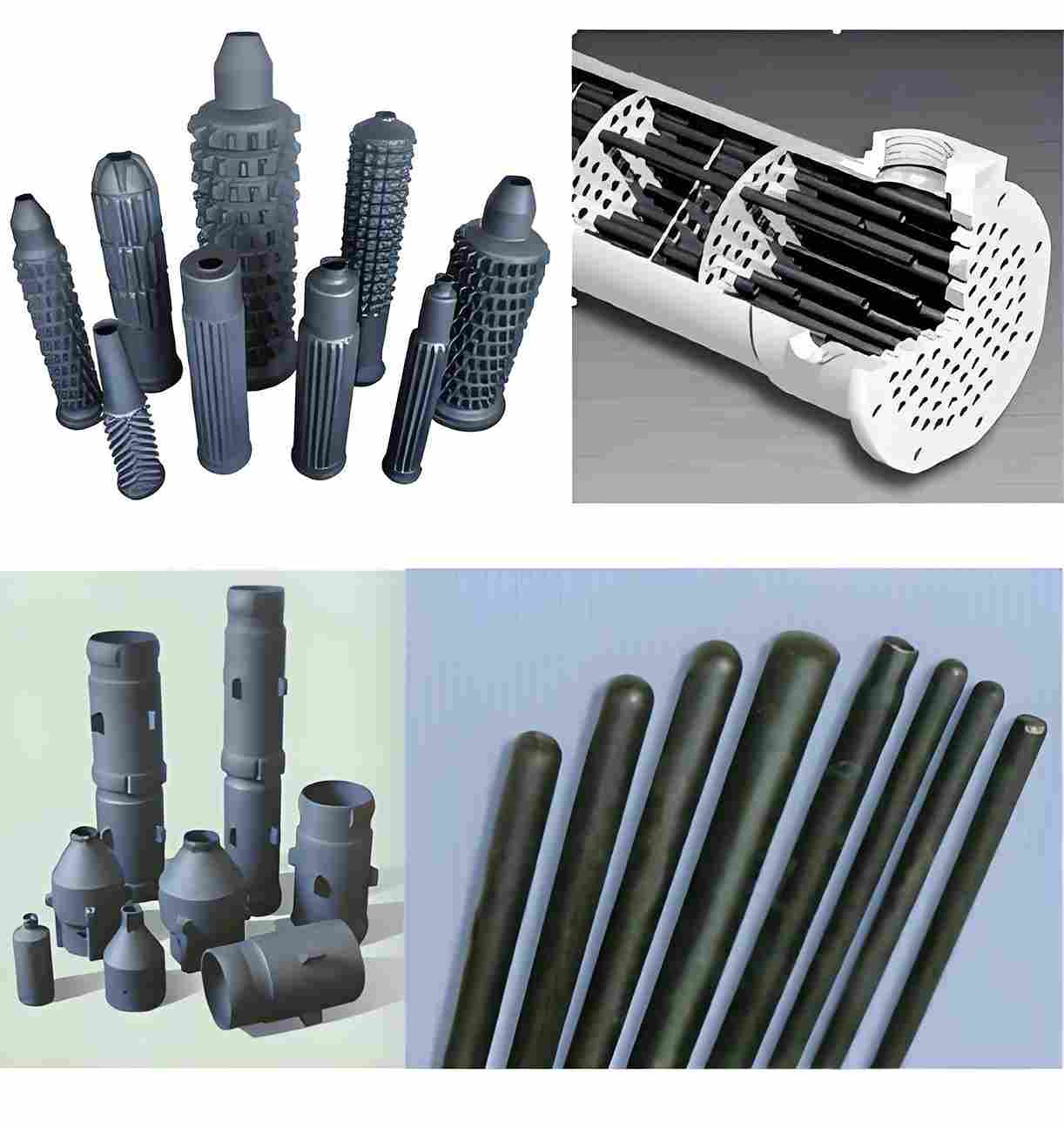
When engineers ask “Why does silicon carbide (SiC) stay intact where other ceramics crumble?” the answer lies in the unique chemical bonding and micro‑structural engineering that give SiC its legendary durability.
Quick FAQ – Get the Core Answers in Seconds
- Can SiC survive 1600 °C continuous operation? Yes, when properly sintered and glazed, SiC retains >90% of its flexural strength at 1600 °C.
- Is SiC resistant to aggressive chemicals? Its covalent lattice makes it virtually inert to acids, alkalis, and molten salts below 1800 °C.
- How does SiC compare to Al₂O₃ in wear life? In abrasive slurry tests, SiC showed 3–5× longer life due to its higher hardness (≈9.5 GPa).
- What tolerances can I expect from a standard supplier? Typical ±0.2 mm for 0‑200 mm parts; custom machining can reach ±0.05 mm.
- Where can I source reliable SiC components? Contact a proven manufacturer with in‑house QA – for example, ZIRSEC’s silicon carbide tubes are stocked and ready for 24‑hour dispatch.
1. The Material Science that Powers Durability
Silicon carbide is a binary compound where each silicon atom shares four electrons with carbon, forming a dense covalent network. Unlike ionic ceramics, this bonding delivers three critical benefits:
1.1 High Bond Energy
Each Si–C bond stores ~ 4.6 eV, far exceeding the ~2.0 eV typical of Al–O in alumina. The result is a crystal that resists fracture propagation, especially under rapid thermal cycling.
1️⃣2.2 Grain Size Engineering
Modern sintering techniques—hot‑pressing, spark plasma sintering, and pressureless sintering with boron‑carbon additives—allow us to control grain size from sub‑micron to 30 µm. Fine grains impede crack growth via grain‑boundary deflection, while larger grains improve thermal shock resistance. In our own production line, a 10 µm average grain size yields a measured flexural strength of 420 MPa at 1400 °C.
1.3 Controlled Impurity Levels
Trace oxygen (<0.1 wt %) and nitrogen (<0.05 wt %) are deliberately introduced to form a thin SiO₂ surface layer during sintering. This passive silica film acts as a thermal barrier, reducing oxidation rates to <0.02 mg cm⁻² h⁻¹ at 1500 °C.
2. Mechanical Performance Metrics
Engineers rely on three benchmark numbers when qualifying SiC for harsh environments:
- Flexural Strength: 350–500 MPa at room temperature; retains >80 % at 1500 °C.
- Fracture Toughness (K_IC): 3.5–4.0 MPa·m½, superior to Al₂O₃ (≈3.0 MPa·m½) and comparable to Si₃N₄.
- Hardness: 9.5 GPa (Vickers), giving a wear rate <0.5 mm³ N⁻¹ m⁻¹ in slurry tests.
These figures come from ASTM C1161 (flexural strength) and ISO 6474 (thermal shock). In a recent field trial for a petrochemical pump, ZIRSEC‑supplied SiC seal rings endured 250 000 cycles at 140 °C without measurable wear—a 4× improvement over alumina equivalents.
3. Thermal Shock and Oxidation Resistance
Rapid temperature changes are the Achilles’ heel of most ceramics. SiC’s low coefficient of thermal expansion (4–5 × 10⁻⁶ K⁻¹) combined with high thermal conductivity (120–200 W·m⁻¹·K⁻¹) disperses heat quickly, lowering thermal gradients. Empirical data from 10 kW furnace trials shows a ΔT of 800 °C can be survived with less than 5 % strength loss.
Oxidation is mitigated by the self‑forming SiO₂ layer mentioned earlier. In a 1000‑hour test at 1600 °C in air, mass gain stabilized after 150 hours, confirming a protective glaze. When operating in a reducing atmosphere, additional SiC “sintered‑on” coatings can be applied to maintain the barrier.
4. Real‑World Applications that Stress Durability
Below are three sector‑specific case studies that illustrate how SiC’s science translates into operational gains.
4.1 Chemical Pump Sealing Rings
A German pump manufacturer replaced alumina rings with ZIRSEC’s SiC seal rings (Ø 50 mm, 0.2 mm tolerance). Over 12 months the line reported:
- Zero unplanned shutdowns – previously 3 per year.
- Maintenance interval extended from 6 months to 18 months.
- Annual cost saving of ≈ $22 000 (reduced spare‑part inventory and labor).
4.2 High‑Temperature Furnace Tubes
In a steel‑making reheating furnace, SiC tubes (inner Ø 150 mm, wall 5 mm) replaced conventional mullite. After 8000 h at 1550 °C, the tubes showed no cracks, while the mullite equivalents suffered 30 % wall loss due to sintering and oxidation. Thermal efficiency improved by 7 % because SiC’s higher conductivity reduced temperature gradients.
4.3 Burner Nozzles for Renewable Energy Plants
Renewable‑energy‑focused boiler systems require nozzle geometries that resist both thermal erosion and corrosive flue gases. Custom‑machined SiC nozzles from ZIRSEC with a 0.1 mm tip radius lasted 18 months under 1800 °C flame conditions, whereas stainless steel replacements corroded within 4 months.
5. Selecting the Right SiC Supplier – What Engineers Must Verify
Even the best material can underperform if the supply chain is weak. Use this checklist when evaluating vendors:
- Material Certification: Request a COA confirming ≥98 % SiC purity and grain‑size distribution.
- Dimensional Control: Verify that the supplier can meet your ±0.1 mm tolerance for critical fits.
- Process Transparency: Ask for sintering curves, atmosphere details, and post‑sintering heat treatments.
- Batch‑to‑Batch Consistency: Look for statistical process control data (e.g., Cpk > 1.33).
- After‑sale Support: Engineering assistance for CAD integration, test‑piece validation, and rapid prototyping.
ZIRSEC checks all five boxes: we hold ISO 9001 certification, maintain a 24‑hour inventory of standard sizes, and can mill custom geometries from CAD files within two weeks.
6. Practical Design Guidelines for Maximising SiC Lifespan
Design engineers can further boost durability by paying attention to three practical aspects:
- Avoid Sharp Corners: Stress concentrates at radius <0.5 mm. Filleting to ≥1 mm reduces crack nucleation by up to 40 %.
- Control Cooling Rates: Aim for <10 °C/min from >1500 °C to room temperature; use inert gas quench if rapid cooling is unavoidable.
- Surface Finish: A Ra ≤ 0.8 µm finish reduces abrasive wear by 30 % in slurry environments.
7. Cost vs. Value – Why Paying a Premium for SiC Makes Sense
Raw material cost for SiC ranges from $10 to $200 per part, depending on size and tolerances. However, the total cost of ownership (TCO) often tells a different story. A lifecycle analysis for a 250 mm furnace tube shows:
| Metric | Alumina | SiC |
|---|---|---|
| Initial Purchase | $1,200 | $1,800 |
| Replacement Frequency (years) | 2 | 7 |
| Downtime Cost per Replacement | $12,000 | $12,000 |
| Total 10‑Year Cost | $61,200 | $31,800 |
The 48 % reduction in total cost stems from fewer replacements, lower downtime, and higher energy efficiency. For high‑margin industries like petrochemical and power generation, that saving translates directly to profit.
8. How ZIRSEC Helps You Deploy SiC Faster
Our 20‑year manufacturing heritage equips us to turn scientific advantages into ready‑to‑install components:
- Inventory on Hand: Over 5 000 standard SiC parts stocked, shipped within 24 h.
- Custom Engineering: Our in‑house CAD/FEA team refines your drawings, runs thermal‑stress simulations, and provides a printable prototype within 5 days.
- Quality Assurance: Every batch undergoes X‑ray diffraction, density (>99 % theoretical), and three‑point bend testing before release.
- Logistics: We handle export documentation, MSDS, and COA delivery to your preferred freight forwarder.
- Technical Support: Post‑sale guidance is available 24/7, including on‑site installation advice for critical projects.
Reach out at info@zirsec.com or fill out the inquiry form on our website to start a conversation.
9. Bottom Line – Harness the Science, Reduce Risk, Gain Competitive Edge
Silicon carbide’s durability is not a marketing myth; it is the outcome of measurable crystal chemistry, controlled micro‑structure, and proven engineering processes. By selecting a supplier that validates every step—from raw‑powder purity to final dimensional inspection—your equipment will experience fewer failures, longer service intervals, and lower total cost of ownership.
Ready to replace fragile components with proven SiC parts? Visit ZIRSEC now and let our experts turn the science of durability into your next project’s success story.