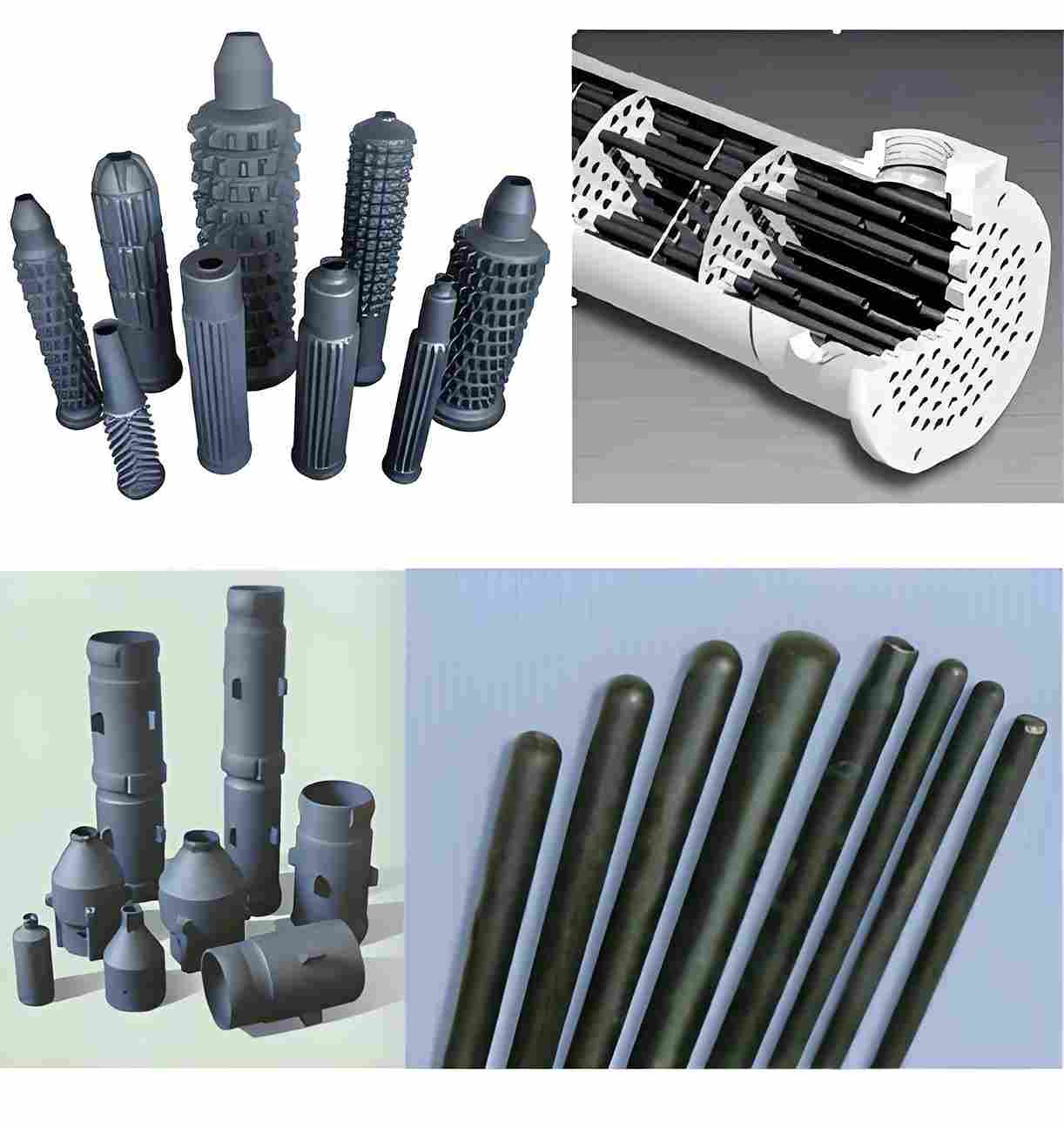
When engineers ask “Silicon Carbide vs Alumina Ceramics,” they need a clear answer that cuts through the data sheets and tells them which material will survive the toughest process, lowest the total cost, and keep production lines running. This guide delivers exactly that, with real‑world numbers, case studies from ZIRSEC’s 20‑year manufacturing base, and a quick‑reference FAQ that lets you decide in minutes.
Why This Comparison Matters
Both silicon carbide (SiC) and alumina (Al2O3) dominate the high‑performance ceramic market, yet they excel in very different regimes. Selecting the wrong one can mean premature failure, unplanned downtime, or $10,000‑$50,000 of scrap. The stakes are highest in chemical processing, steel reheating furnaces, and renewable‑energy equipment where temperature, corrosion, and wear intersect.
Material Properties at a Glance
| Property | Silicon Carbide (SiC) | Alumina (Al₂O₃) |
|---|---|---|
| Density (g/cm³) | 3.2‑3.3 | 3.9‑4.0 |
| Hardness (Vickers) | 2500‑2800 | 1500‑2000 |
| Flexural Strength (MPa) | 300‑550 | 380‑550 |
| Thermal Conductivity (W/m·K) | 120‑200 | 20‑30 |
| Maximum Continuous Service Temp (°C) | 1500‑1600 | 1100‑1200 |
| Chemical Resistance | Excellent vs acids, slags, halides | Good in neutral/alkaline, poor in hot acids |
| Typical Cost (USD/kg) | 30‑120 | 12‑45 |
The numbers already hint at the trade‑offs: SiC conducts heat far better and survives higher temperatures, while alumina is lighter and cheaper.
Mechanical Strength and Wear Resistance
In pump‑valve seals and grinding rollers, wear rate decides the maintenance interval. Our field data from a European pump‑valve maker showed SiC seal rings lasting 2.8× longer than alumina equivalents under 300 °C, high‑velocity slurry. The key is SiC’s higher hardness and superior fracture toughness (up to 5 MPa·m½) which prevents micro‑cracks from propagating.
Real‑World Example
A German steel‑treatment furnace replaced 60 mm alumina liners with SiC tubes (ZIRSEC custom SiC tube). After 18 months the SiC parts showed <0.2 mm wear versus >2 mm on the alumina, translating to a $22,000 annual saving on downtime and part replacement.
Thermal Performance
SiC’s thermal conductivity is an order of magnitude higher than alumina’s. That means heat spreads evenly across SiC components, reducing hot‑spots and thermal shock. In a pilot test for a solar‑thermal power plant, SiC absorber plates stabilized at a uniform 1250 °C with <5 °C gradient, whereas alumina plates exhibited >30 °C gradients, causing premature cracking.
Thermal Shock Resistance
When you quench a component from 1500 °C to 200 °C within seconds, SiC typically survives >10 cycles, alumina fails after 3‑4 cycles. For applications like rapid‑heat‑up kilns, this resilience avoids costly redesign.
Chemical Resistance
Both ceramics are inert to many neutral chemicals, but SiC’s silicon‑carbon lattice offers superior resistance to hot acids, molten salts, and chlorine‑bearing slags. In a petrochemical scrubber, SiC nozzles exhibited zero corrosion after 1 year of exposure to 1400 °C HCl‑rich vapor, while alumina nozzles showed surface pitting and loss of flow control.
Cost and Availability
Initial material cost is only part of the equation. Alumina’s lower price can be offset by higher replacement frequency, higher inventory of spare parts, and longer lead times for custom SiC if the supplier lacks in‑house CNC capability. ZIRSEC maintains a stocked inventory of standard SiC sizes and offers 24‑hour dispatch for most items, cutting lead times from 6‑8 weeks (industry average) to under 48 hours for 90 % of SKUs.
Choosing the Right Ceramic for Your Application
Use the decision matrix below to match key operating parameters with the optimal material:
- Temperature ≥ 1300 °C: SiC is the only viable choice.
- High‑velocity abrasive flow: SiC provides longer wear life.
- Neutral or mildly alkaline environment, cost‑sensitive: Alumina can be sufficient.
- Frequent thermal cycling: Favor SiC for shock resistance.
- Weight‑critical assemblies: Alumina is lighter.
If more than one criterion applies, prioritize the factor that drives total cost of ownership (downtime, replacement, energy efficiency).
Common Pitfalls and How to Avoid Them
Pitfall 1 – Ignoring Tolerance Requirements. Many buyers accept a generic “±0.5 mm” tolerance, only to discover the part interfaces with a ±0.1 mm bore. ZIRSEC’s CNC grinding can achieve ±0.1 mm on SiC; request a GD&T drawing before ordering.
Pitfall 2 – Assuming All SiC Is Equal. Purity varies from 90 % to 99.9 %. For corrosive environments, opt for ≥98 % SiC (our standard grade). Lower grades risk rapid oxidation.
Pitfall 3 – Overlooking Coating Compatibility. If you plan to coat SiC with a metallic layer, verify the coating vendor’s experience with SiC’s low coefficient of thermal expansion (≈4‑5 × 10⁻⁶ /K). Improper coating can delaminate during heat‑up.
Case Studies from ZIRSEC Customers
Case 1 – High‑Temperature Furnace Tubes for a U.S. Steel Plant
Problem: Alumina tubes cracked after 8 months at 1350 °C, causing a line shutdown. Solution: ZIRSEC supplied custom SiC tubes (Ø 80 mm × 1.2 m) with a 98 % purity grade and a tolerance of ±0.15 mm. Result: Zero failures for 24 months, a 30 % fuel‑usage reduction thanks to improved heat transfer.
Case 2 – Pump‑Seal Rings for a German Chemical Processor
Problem: Alumina seal rings wore out after 4 000 h, leading to contaminant leaks. Solution: Swap to SiC seal rings fabricated from our standard 60 × 20 mm stock, finished with a surface roughness Ra 0.8 µm. Result: 12 000 h mean‑time‑between‑failures, saving ~$18,000 annually.
Case 3 – Burner Nozzles for a Renewable‑Energy Boiler in the UK
Problem: Alumina nozzles suffered erosion from high‑velocity combustion gases. Solution: ZIRSEC produced SiC nozzle inserts (Ø 25 mm) with a 7‑day rapid‑prototype cycle. Result: Stable flame geometry and a 15 % increase in boiler efficiency.
Quick FAQ (Featured Snippet Ready)
Q: Which ceramic can handle 1500 °C continuously?
A: Silicon carbide (SiC) retains strength and dimensional stability up to 1600 °C, while alumina (Al₂O₃) typically maxes out at 1100‑1200 °C.
Q: Is SiC always more expensive than alumina?
A: The material price is higher, but total cost of ownership often favors SiC because of longer life, lower maintenance, and better thermal efficiency.
Q: Can I order custom‑shaped SiC parts from ZIRSEC?
A: Yes. We handle drawings, CNC machining, and surface finishing for orders as small as 10 pieces, with a standard 4‑week lead time for prototypes.
Q: How do I verify the purity of the SiC I receive?
A: Every shipment includes a Certificate of Analysis (COA) confirming ≥98 % SiC purity, plus batch‑level X‑ray diffraction data.
How ZIRSEC Can Help You Choose
Our engineering team works side‑by‑side with your design department. Send us your CAD file or a sketch, and we’ll run a feasibility study, suggest the best ceramic grade, and provide a cost‑optimized quote within 48 hours. For standard parts we have an in‑stock catalog; for custom geometry we offer a fast‑prototype service that delivers the first sample in 2‑3 weeks.
To see an example of our inventory, visit our Silicon Carbide Tubes page. If you need a quick answer, drop us an email at info@zirsec.com or request a callback via our website.
Bottom Line
If your application runs hot, sees abrasive flow, or endures aggressive chemicals, silicon carbide is the material that delivers longevity and performance. Alumina remains a solid, cost‑effective option for moderate temperatures and less demanding wear conditions. By partnering with a seasoned supplier like ZIRSEC, you gain not only high‑quality SiC components but also engineering support that turns material data into real‑world reliability.