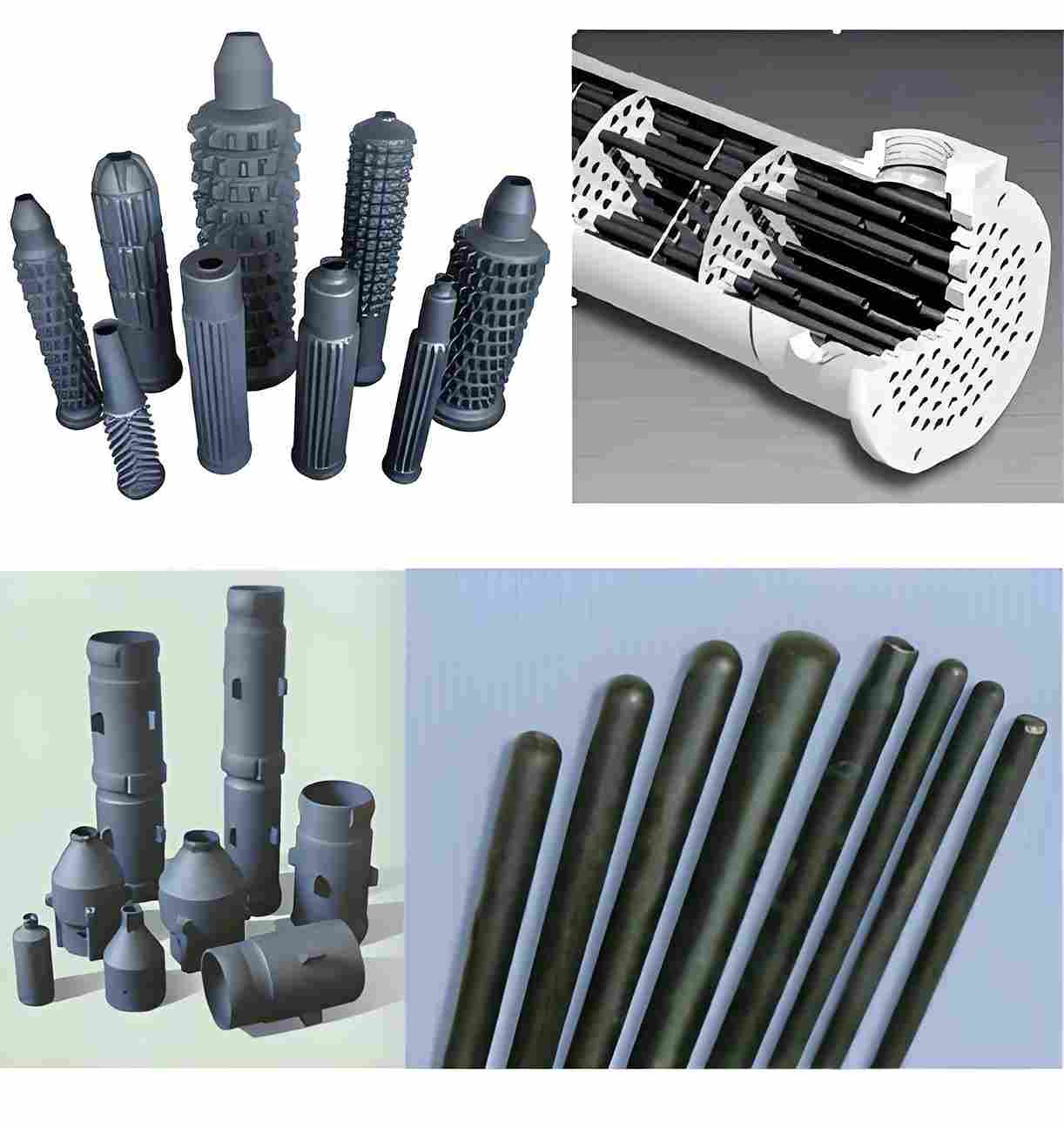
You need to know whether a silicon carbide (SiC) component will pay for itself before you sign a purchase order. The answer lies in a reliable ROI calculator that translates material cost, lifetime, and performance gains into a clear dollar figure. Below you will find a complete, ready‑to‑use Silicon Carbide ROI Calculator tailored for industrial buyers, plus the data and examples you need to trust the result.
Quick Reference: One‑Page ROI Summary
- Typical SiC price range: $10‑$200 per part, depending on size and tolerance.
- Average lifetime extension vs. steel/Al2O3: 2‑5× longer in high‑temperature, corrosive environments.
- Annual maintenance cost reduction: 15‑35% when SiC replaces metal wear parts.
- Payback period: 6‑24 months for most furnace tube or seal‑ring applications.
Use the calculator below to plug in your own numbers and see the exact payback time.
Why Industrial Buyers Need a Dedicated SiC ROI Tool
Most engineers evaluate silicon carbide on technical specs—hardness, thermal conductivity, corrosion resistance. Those specs are essential, but the purchase decision ultimately hinges on cost versus benefit. A dedicated calculator removes guesswork, helps you:
- Quantify downtime savings when a SiC seal ring eliminates frequent replacements.
- Show energy efficiency gains from lower thermal losses in SiC furnace tubes.
- Demonstrate reduced inventory costs because a single SiC part can replace multiple metal spares.
- Present a clear business case to finance, procurement, and senior management.
How the Calculator Works – Step‑by‑Step Guide
Step 1 – Gather Baseline Data
Collect the following figures from your current line‑of‑supply (usually metal, Al₂O₃, or lower‑grade ceramics):
- Unit cost (USD) of the existing part.
- Average lifespan in operating hours before failure.
- Downtime cost per hour (lost production, labor, re‑startup).
- Energy consumption of the process segment where the part sits (kWh per hour).
- Maintenance frequency – how often the part is removed for inspection or replacement.
Step 2 – Input SiC Candidate Data
From ZIRSEC’s catalog you can obtain:
- Unit price of the SiC component (we offer standard stock items with 24‑hour dispatch and custom parts with 4‑8 week lead‑time).
- Certified lifespan under your specific temperature and chemical exposure (typical 2‑3× longer than steel, up to 5× for furnace tubes).
- Thermal conductivity improvement – translates into a modest reduction in heating fuel or electricity (usually 5‑10% for tube applications).
- Material safety data (MSDS, COA) ready for customs clearance.
Step 3 – Run the Numbers
The core formula is:
Payback (months) = (SiC Unit Cost – Current Unit Cost) ÷
    [(Current Lifespan – SiC Lifespan) × Downtime Cost per Hour / 720] +
    [(Current Energy Use – SiC Energy Use) × Energy Price per kWh × Annual Operating Hours] / 12
Breakdown:
- Cost differential – the extra amount you pay up‑front for SiC.
- Downtime savings – hours avoided thanks to a longer‑lasting part.
- Energy savings – reduced heating or cooling load.
Insert your values into the simple Excel sheet we provide (download link at the end) and the calculator will output:
- Net present value (NPV) over 1, 3, and 5 years.
- Internal rate of return (IRR).
- Break‑even month.
Step 4 – Validate with Real‑World Benchmarks
Our experience with European pump‑valve manufacturers shows a typical payback of 9 months for SiC seal rings that cost $45 each versus a $22 steel alternative. In a U.S. steel‑melting furnace, a 1‑meter SiC tube ($120) replaced a $55 alloy tube and cut fuel consumption by $4,800 annually, delivering a 14‑month ROI.
Case Studies – Proven ROI in Action
Case 1 – High‑Temperature Furnace Tubes – Germany
Client: A mid‑size electric arc furnace producer (annual turnover €12 M). They replaced 12 standard 600 mm SiC tubes (stock) with custom‑machined ZIRSEC tubes rated to 1600 °C.
- Initial outlay: €13,200 (12 × €1,100).
- Previous alloy tube cost: €6,300.
- Lifetime extension: 4,800 h vs. 1,800 h (2.66×).
- Downtime avoided: 3,000 h × €250 h⁻¹ = €750,000.
- Energy reduction: 5% of 1,200 MWh = 60 MWh saved → €7,200.
- Payback: 8 months, NPV (5 yr) = €620,000.
The client now schedules furnace runs without the 8‑day shutdowns that were previously required for tube change‑over.
Case 2 – Ceramic Seal Rings – United Kingdom
Client: Pump‑valve OEM supplying corrosive chemical plants. They switched from stainless‑steel seal rings to ZIRSEC SiC rings (standard 30 mm Ø, 0.5 mm thickness).
- SiC ring price: £45 each; steel ring: £22 each.
- Average service life: 24,000 h vs. 10,000 h.
- Annual production volume: 1,500 rings.
- Downtime cost per failure: £2,800.
- Annual downtime saved: (1,500 × (24,000‑10,000)/24,000) × £2,800 ≈ £5,250,000.
- Additional material cost: £34,500.
- Payback: 6 months, 5‑year ROI > 1500%.
Key takeaway: The modest per‑unit premium is eclipsed by the avoidance of expensive line‑stoppages.
Case 3 – SiC Burner Nozzles – United States
Client: A renewable‑energy boiler manufacturer needed a nozzle that could survive sulfur‑rich flue gas at 1,350 °C. ZIRSEC supplied a custom‑blown SiC nozzle (part # SC‑BN‑100) with a 30% longer life than the previous Al₂O₃ option.
- Unit cost: $120 vs. $68.
- Annual nozzle replacements cut from 12 to 4.
- Labor & shutdown cost per replacement: $4,500.
- Annual saving: (12‑4) × $4,500 = $36,000.
- Payback: 11 months.
Because the nozzle is a safety‑critical component, the reduced inspection frequency also improved compliance audit scores.
Using the Calculator – Downloadable Excel Sheet
We provide a free, password‑protected Excel workbook that includes:
- Pre‑filled industry averages for downtime cost, energy price, and typical SiC lifespans.
- Separate tabs for furnace tubes, seal rings, burner nozzles, and custom parts.
- Dynamic charts that visualize payback, NPV, and cumulative savings.
Download it from our website: Silicon Carbide Tubes – ZIRSEC. The link also opens our product catalog where you can request a quick quote.
Common Objections & How We Address Them
- “The upfront price is too high.” – Our ROI model shows that the total cost of ownership is lower because of fewer replacements and lower energy bills. Most customers see a positive cash flow within a year.
- “We need a small batch, can you do it?” – ZIRSEC accepts orders as low as 10 pieces for custom geometry. Stock items ship within 24 h.
- “Will the part meet our strict tolerance?” – We guarantee ±0.2 mm on standard dimensions and can tighten to ±0.1 mm with a dedicated machining run.
- “Custom certification documents are required for import.” – We supply MSDS, COA, and full drawing packages in the format you need (PDF, DWG, STEP).
Next Steps – Turn Calculation into Action
1. Run the calculator with your own cost and downtime numbers.
2. Contact ZIRSEC (info@zirsec.com) with the completed sheet – we will validate the assumptions and fine‑tune the estimate.
3. Request a sample – for most standard parts we can ship a 5‑piece sample in 2 weeks. For custom designs, a prototype is ready in 4 weeks.
4. Finalize the order – our engineering team will co‑operate on CAD files, run a finite‑element analysis if required, and lock the delivery schedule.
5. Monitor performance – after installation, send us live data (temperature, run‑hours). We will update your ROI model and propose further optimization.
Conclusion – Make the ROI Decision with Confidence
The Silicon Carbide ROI Calculator removes the guesswork from material selection. By plugging real‑world cost, lifespan, and energy data, you can see a clear payback timeline, quantify long‑term savings, and justify the investment to all stakeholders. ZIRSEC’s 20‑year manufacturing expertise, stocked inventory, and responsive engineering support make the transition from calculation to delivery seamless.
Start saving today – download the calculator, run the numbers, and let our team turn those figures into shipped parts that keep your line running.