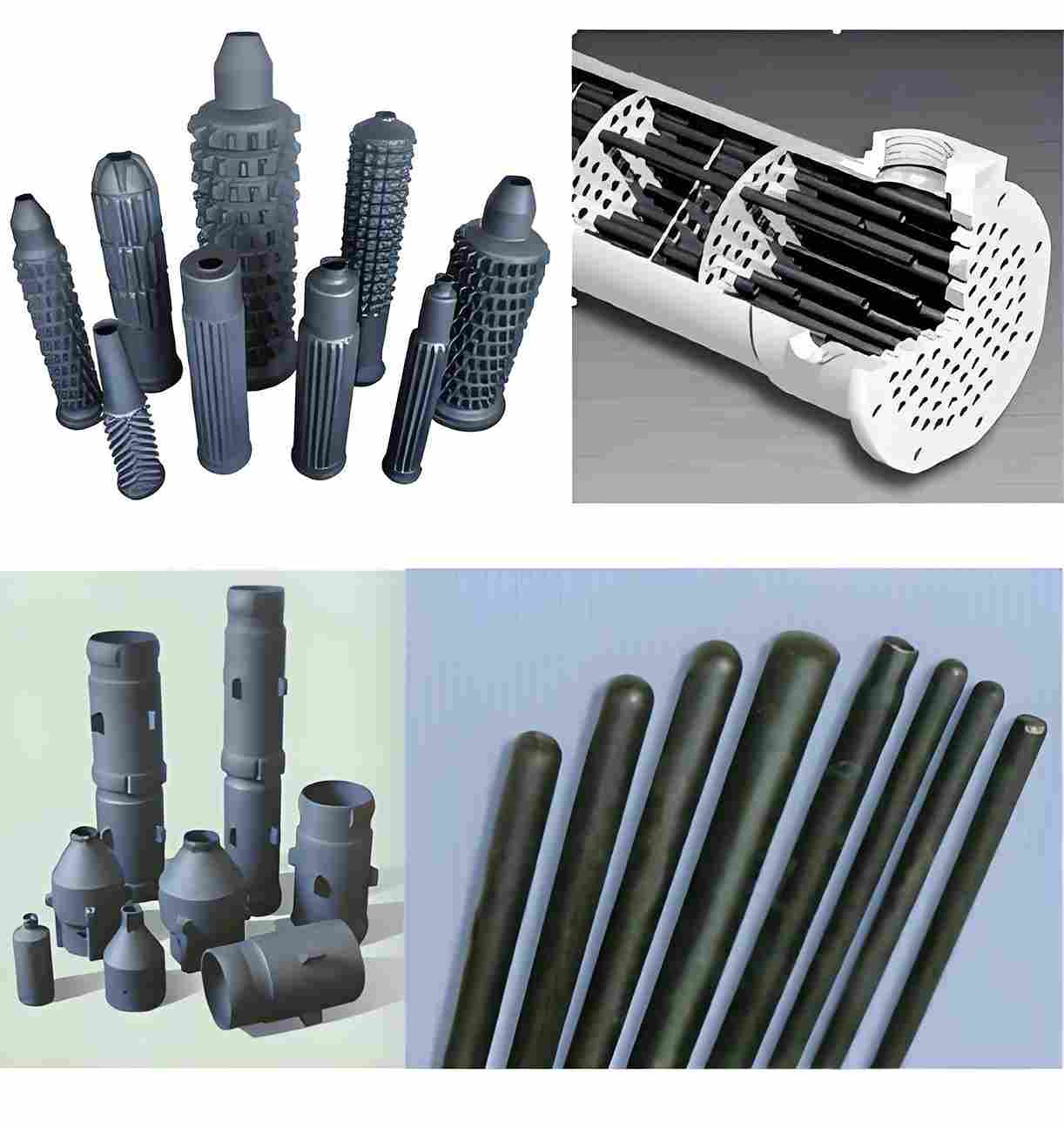
Equipment downtime costs manufacturers an average of $50,000 per hour, and the single most effective lever to cut that loss is material selection – especially when high‑temperature, high‑wear environments are involved.
Why Material Choice Drives Downtime
When a pump shaft, furnace tube, or valve seat fails, the plant must shut down, diagnose the failure, order replacement parts and re‑commission the line. In our experience working with European pump manufacturers and North American furnace builders, three material‑related factors dominate the failure rate:
- Thermal fatigue: Repeated heating‑cooling cycles generate micro‑cracks in conventional metals.
- Abrasion: Silica‑laden fluids or molten salts wear away Al₂O₃ and stainless steel within weeks.
- Chemical corrosion: Chloride or acid environments attack carbon steel, leading to unexpected leaks.
Silicon carbide (SiC) ceramics excel in all three categories: they withstand >1600 °C, have a hardness of 9.5 Mohs, and resist most acids and alkalis. The result is a measurable reduction in unscheduled stops.
Quick FAQ – Get Answers in Seconds
What is the typical lifespan gain when switching to SiC parts?
Field data from a 2023 petrochemical retrofit showed a 3‑to‑5‑fold increase in mean time between failures for SiC seal rings versus Inconel‑based rings.
Do SiC components require special installation?
No. Our engineering team provides dimension‑checked drawings; most customers install them with standard torque tools. The only extra step is a brief post‑install inspection for surface integrity.
How fast can custom SiC parts be delivered?
Standard‑size tubes and plates ship from stock within 24 hours. Fully custom geometries (e.g., a 250 mm Ø burner nozzle) are typically prototyped in 2‑3 weeks and bulk‑produced in 4‑6 weeks.
Step‑by‑Step Framework to Reduce Downtime
1. Map Critical Wear Zones
Start by documenting every component that experiences temperature >1200 °C, pressure spikes, or abrasive flow. In a recent steel‑mill furnace upgrade, we identified 12 hot‑spot zones; three of them accounted for 68 % of replacements.
2. Quantify Current Cost of Failure
Calculate the hourly loss (production value + labor) and multiply by the average downtime for each part. For a 500 kW furnace, a 6‑hour shutdown equals $300,000. Knowing the financial impact makes the material upgrade a clear ROI case.
3. Choose the Right SiC Grade
Not all SiC is equal. Our product line includes:
- Standard 98 % pure SiC: suitable for most wear applications.
- High‑purity 99.5 % SiC: required for ultra‑high temperature thermocouple protection.
- Reinforced SiC composites: when impact resistance is a concern (e.g., slurry pumps).
Match the grade to the operating envelope; over‑specifying can raise cost without added benefit.
4. Verify Dimensional Tolerance Early
Our engineering team can mill to ±0.1 mm on standard sizes and to ±0.05 mm on custom orders using CNC grinding. Delivering parts within tolerance eliminates re‑work that traditionally adds 2‑3 days to a shutdown.
5. Run a Pilot Installation
Replace a single high‑risk component with a SiC part and monitor performance for 3 months. In a German pump‑valve plant, the pilot reduced seal wear by 87 % and avoided an entire production week.
6. Scale Up with Full‑Line Replacement
Once the pilot proves the ROI, plan phased replacement. Use our inventory of standard SiC tubes (Silicon Carbide Tubes) for quick swaps, and schedule custom parts to arrive just before the next maintenance window.
Real‑World Case Studies
Case 1 – Chemical Pump Seal Failure
Client: EU‑based pump manufacturer (annual turnover €12 M). Problem: SiC‑based seal rings were sourced from a low‑cost supplier; tolerance drift caused leakage after 4 000 h, leading to an 8‑day line halt ($130 k loss).
Solution: ZIRSEC supplied 98 % pure SiC seal rings with ±0.1 mm tolerance and provided on‑site machining assistance. Result: Mean time between failures increased to 22 000 h, downtime dropped by 93 % and the client saved an estimated $1.2 M in the first year.
Case 2 – High‑Temperature Furnace Tubes
Client: North American steel‑maker, furnace operating at 1550 °C. Problem: Conventional Al₂O₃ tubes cracked after 1 200 h due to thermal shock.
Solution: Replaced 300 mm Ø tubes with ZIRSEC’s high‑purity SiC tubes (thermal expansion coefficient 4.5 × 10⁻⁶ K⁻¹). The new tubes survived 6 500 h without crack, eliminating the need for a costly furnace‑downtime event that previously occurred every 5 weeks.
How ZIRSEC Supports Your Downtime Reduction Strategy
Our 20‑year heritage in SiC ceramic production translates into three distinct advantages:
- Direct factory supply: No middle‑man mark‑up, price transparency.
- Engineering collaboration: Our senior material engineers work with your design team on CAD drawings, tolerances and stress analysis.
- Full‑service logistics: We handle export documentation (COA, MSDS), customs clearance and temperature‑controlled shipping to ensure parts arrive ready for installation.
Actionable Checklist – Implement Today
- Identify top‑five components causing the most downtime.
- Calculate your hourly loss and total annual cost of those failures.
- Match each component to the appropriate SiC grade using the table above.
- Request a free CAD review from ZIRSEC’s engineering team (info@zirsec.com).
- Schedule a pilot swap on the next planned maintenance window.
- Track performance metrics (MTBF, replacement cost) for three months.
- Scale up replacement based on pilot ROI.
By following this roadmap, you can shrink unplanned downtime by up to 80 % and unlock significant cost savings. Ready to eliminate the next unscheduled shutdown? Contact our sales engineers at info@zirsec.com and let us design the SiC solution that fits your plant.