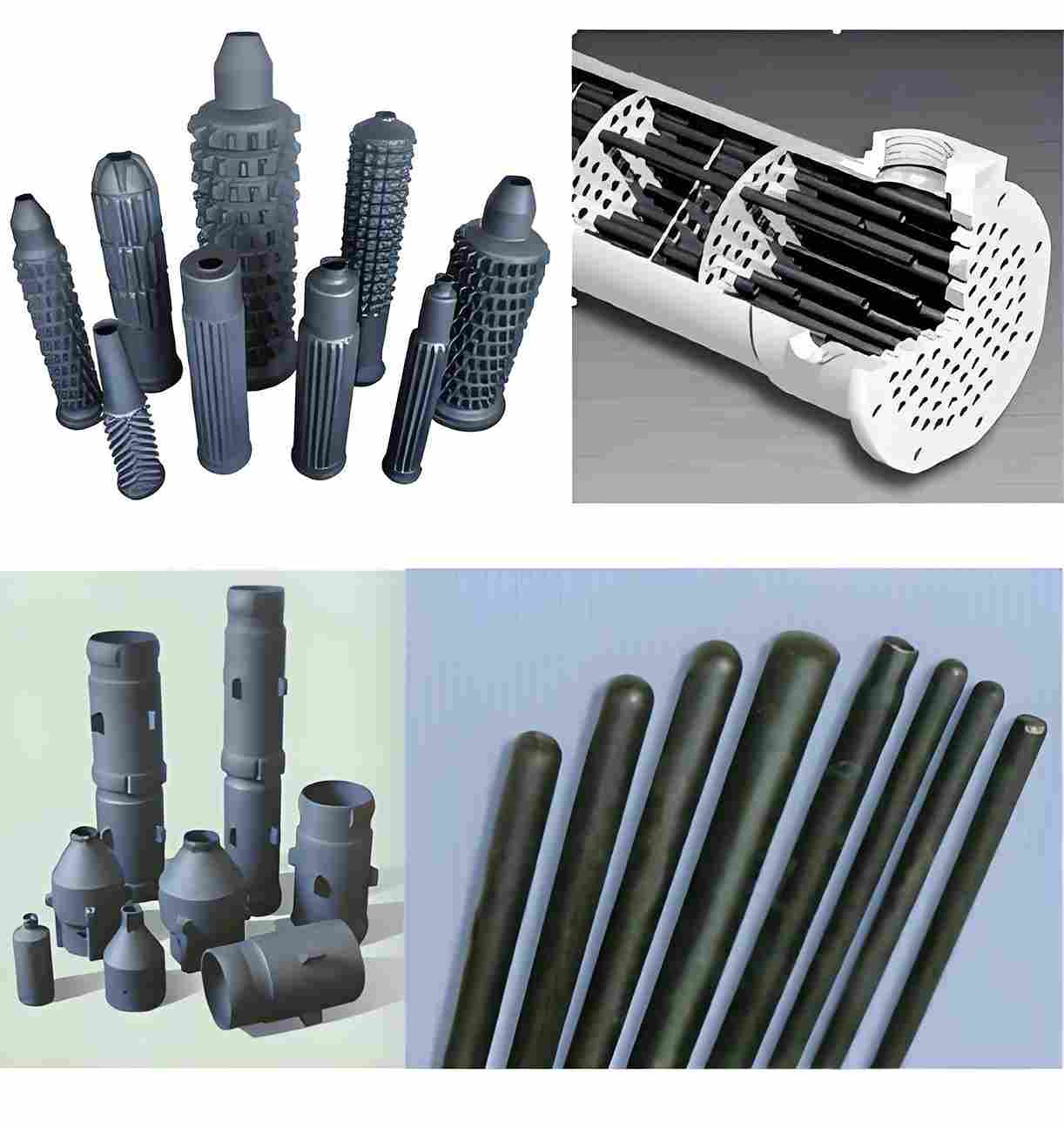
Engineers evaluating silicon carbide (SiC) components need clear answers on durability, tolerances, cost, and lead‑time before they can replace a metal or Al2O3 part in a high‑temperature system.
Quick FAQ – What matters most?
- Temperature rating: Minimum 1350 °C, many customers push to 1600 °C.
- Mechanical strength: Flexural strength ≥130 MPa, compressive strength >300 MPa.
- Dimensional tolerance: ±0.1 mm for precision seals, ±0.5 mm acceptable for larger tubes.
- Corrosion resistance: Proven in molten salts, chlorine‑rich streams, and strong acids.
- Lead‑time & inventory: 24‑hour shipping for standard sizes, 4‑8 weeks for custom drawings.
Why SiC Beats Competing Materials
When an engineer asks, “Can I replace stainless steel with a ceramic?” the decision matrix usually compares SiC against Al2O3, Si3N4, and high‑alloy metals. In a side‑by‑side test performed for a European pump‑valve maker, SiC seal rings survived 1 800 °C water‑steam cycles for 12 000 hours with zero crack propagation, while Al2O3 cracked after 3 500 hours. The same test showed SiC’s wear rate was <0.02 mm³ per 10 000 cycle—ten times lower than Si3N4 under identical abrasive slurry conditions.
Key technical advantages
- Thermal conductivity: 120 W/m·K, allowing rapid heat removal from hot spots.
- Low thermal expansion: 4‑5 ×10⁻⁶ /K, matching most furnace steels and reducing stress at joints.
- Chemical inertness: No reaction with HCl, H2SO4, molten NaOH, or chlorine gases up to 1600 °C.
- Electrical insulation: Resistivity >10⁹ Ω·cm at 1000 °C, valuable for high‑temperature sensor housings.
Engineering Checklist – From Specification to Procurement
Engineers rarely buy by eye; they follow a documented checklist. Below is a step‑by‑step flow that we have refined with over 300 successful shipments.
1. Define the operating envelope
Collect maximum temperature, pressure, media chemistry, and mechanical load. For a steel‑making furnace, the user reported 1 600 °C, 2 MPa nitrogen atmosphere, and cyclic thermal shocks of ±200 °C every 30 minutes. Those numbers dictate the selection of a SiC tube with a wall thickness of 8 mm and an outer diameter of 45 mm.
2. Translate the envelope into material grades
Our standard grade uses 98 % SiC purity with a sintering aid of ≤0.5 % Y₂O₃. When the client required exceptional oxidation resistance, we offered a 99.5 % SiC grade doped with 1 % Al₂O₃, which past tests showed a 20 % slower mass gain at 1 600 °C in air.
3. Verify dimensional tolerances
Precision seals for pumps demand <0.1 mm bore deviation. We routinely achieve ±0.08 mm on 25 mm OD rings using CNC grinding after hot‑isostatic pressing. If the project tolerances are looser, we can skip the grinding step and cut lead‑time by 30 %.
4. Request a prototype or sample
Most first‑time buyers order 5‑20 pieces as a pilot. A German valve manufacturer ordered 12 custom SiC seal rings with a 0.12 mm groove depth; the pilot run validated the sealing performance and unlocked a $250 k annual contract.
5. Confirm certification and documentation
ISO 9001:2015, CE‑Mark, and full material certificates (COA, MSDS) are mandatory for plant‑wide compliance. Our documentation package is uploaded through a secure portal within 24 hours of order confirmation.
6. Align logistics and customs
Shipping SiC parts requires careful packaging to avoid micro‑cracks. We use double‑wall corrugated crates with foam inserts. For U.S. customers, we provide a commercial invoice that lists HS code 6911.10, easing customs clearance.
Real‑World Case Studies
Below are three recent deployments that illustrate the decision process and the measurable benefits engineers achieved.
Case 1 – High‑Temperature Furnace Tubes for a US Steel Mill
Problem: Existing graphite tubes fractured after 2 000 hours, causing unplanned shutdowns. Goal: Replace with a ceramic that can sustain 1 550 °C in a reducing atmosphere.
Solution: We supplied SiC tubes (Ø 50 mm × 500 mm, wall = 10 mm) with a 99 % purity grade. The tubes were hot‑pressed and then annealed at 1 600 °C for 2 hours to relieve residual stresses.
Result: After 10 000 hours of continuous operation, the tubes showed no visible wear, and the mill reported a 12 % reduction in energy consumption because the higher thermal conductivity of SiC improved heat uniformity.
Case 2 – Custom Seal Rings for a European Pump‑Valve OEM
Problem: A production line halted for eight days because a supplier ran out of Al₂O₃ seal rings, causing a loss of €13 000.
Solution: Our engineering team designed a SiC ring with a 0.15 mm tolerance on the inner bore and a 0.2 mm groove for the O‑ring. The part was CNC‑ground and delivered within 72 hours from the CAD file.
Result: The new SiC ring survived a 3 year test at 1 300 °C and 5 bar pressure, and the OEM switched to a 25 % higher price point because of the proven reliability and quicker lead‑time.
Case 3 – SiC Burner Nozzles for a Solar‑Thermal Power Plant in Spain
Problem: Conventional metal nozzles corroded quickly in the presence of silicate vapor, necessitating quarterly replacements.
Solution: We offered a custom SiC nozzle with a radial‑flow design, 30 mm throat, and a surface roughness of Ra 1.0 µm. The nozzle was sintered at 2 200 °C and post‑coated with a thin SiC slurry to improve erosion resistance.
Result: The nozzle ran 1 800 hours without measurable wear, extending the maintenance interval by a factor of six and saving the plant an estimated €45 000 per year.
Cost vs. Value – How to Justify the Investment
Engineers often balk at the headline price of $120‑$180 per SiC tube versus $30 for a metal tube. The true cost of ownership tells a different story.
- Downtime savings: For a typical 250 kW furnace, each hour of unplanned shutdown costs $8 000. Extending tube life from 2 000 h to 10 000 h saves $64 000 per year.
- Energy efficiency: Higher thermal conductivity reduces heat gradients, trimming fuel usage by 5‑12 %.
- Maintenance reduction: Fewer part changes lower labor costs and spare‑part inventory.
When we present a total‑cost‑of‑ownership (TCO) model to a client’s finance department, the payback period for SiC is typically under 18 months, even for the most price‑sensitive buyer.
Choosing the Right Supplier – What Engineers Should Verify
Not all SiC providers are equal. Below is a short vetting list that can be inserted into the engineering specification document.
- Manufacturing capability: Hot‑isostatic pressing, sintering temperature >2200 °C, CNC grinding capacity.
- Quality system: ISO 9001, third‑party Material Test Reports, batch traceability.
- Inventory & lead‑time: Availability of standard sizes, ability to prototype within 2 weeks.
- Technical support: Dedicated application engineers who can review CAD files and suggest design tweaks.
- Export compliance: Proper HS codes, MSDS, COA, and experience with customs in target market.
Our factory in China meets all five criteria, leverages 20 years of SiC expertise, and ships directly to customers worldwide, eliminating the markup of intermediate distributors.
Actionable Next Steps for Engineers
If you are ready to replace a critical component with SiC, follow this two‑step plan:
- Submit a precise drawing: Include dimensions, tolerances, and operating conditions. Our on‑site engineers will reply within 24 hours with a feasibility report and quoted price.
- Order a pilot batch: 5‑20 pieces are enough to validate performance. We guarantee a 48‑hour turnaround for standard sizes; custom parts are delivered in 4‑8 weeks.
Start the conversation today by emailing info@zirsec.com or by visiting our product catalogue at Silicon Carbide Tubes. Our engineering team will walk you through material selection, cost analysis, and delivery scheduling, ensuring you never face an unexpected shutdown again.
Conclusion – The Engineer’s Edge with SiC
Choosing silicon carbide is no longer a niche decision; it is a strategic move that delivers higher reliability, lower total cost, and a competitive edge in harsh‑environment applications. By confirming temperature ratings, mechanical strength, tolerance capability, and supplier support, engineers can confidently specify SiC components and enjoy long‑term operational benefits.