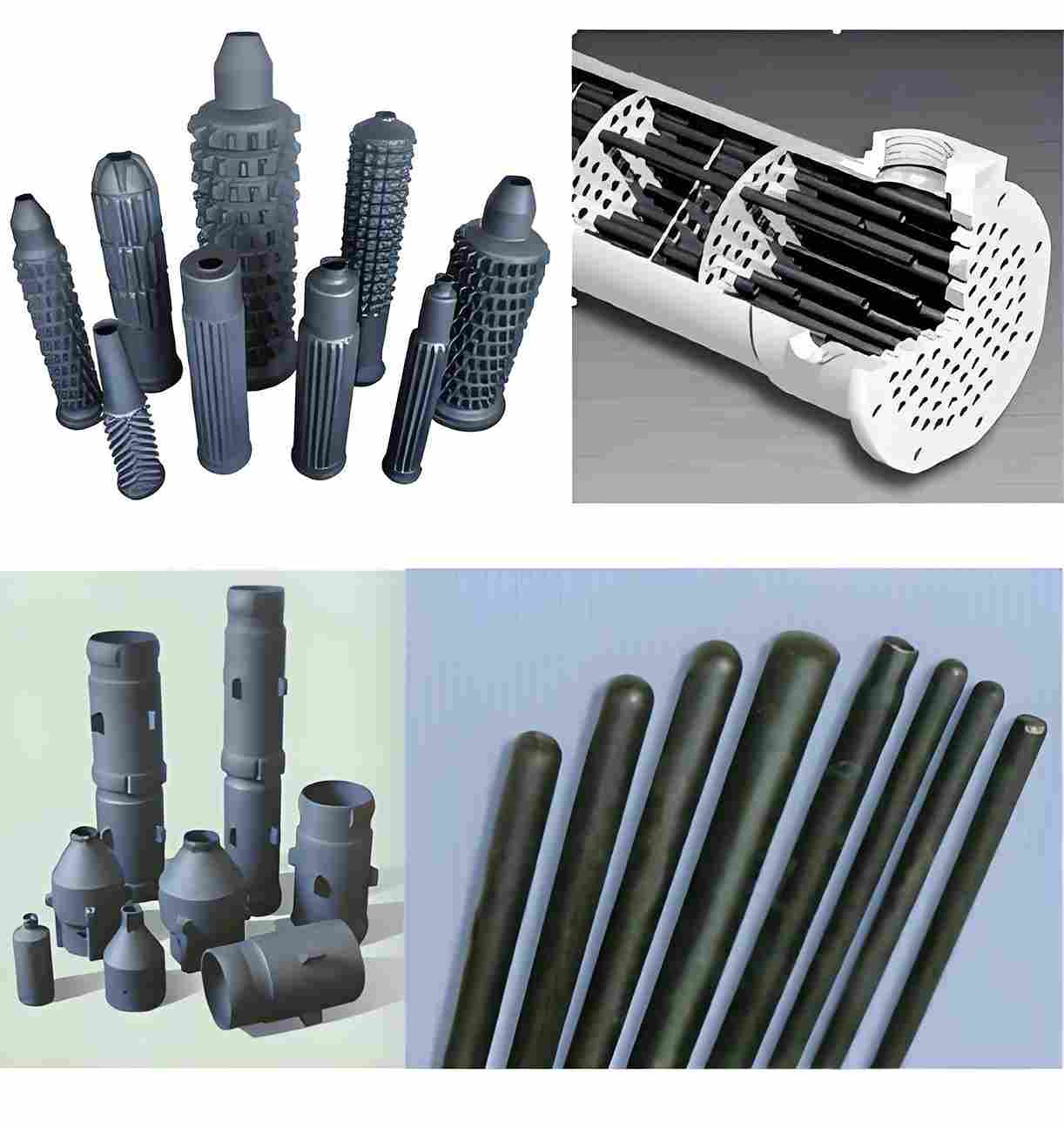
How to Choose Between SiC and Other Ceramics is the question that keeps design engineers, procurement managers and plant supervisors up at night when a high‑temperature, high‑wear component is required.
Quick Summary – Decision Checklist
- Temperature ceiling above 1350 °C → SiC wins.
- Severe chemical corrosion (chlorides, acids, molten metals) → SiC preferred.
- Wear rate < 0.1 mm/10 khrs → SiC or Si3N4, not Al2O3.
- Budget < $30 / kg for standard tube → Al2O3 may be acceptable.
- Lead time < 4 weeks, inventory needed → Choose a supplier with stocked SiC like ZIRSEC.
1. Pinpoint the Real Application Requirements
Most mismatched purchases start with a vague statement such as “need a ceramic tube for a furnace”. The hidden concerns are usually:
- Maximum operating temperature.
- Contact with aggressive media (HF, HCl, molten salts, liquid metals).
- Mechanical load – internal pressure, bending or impact.
- Dimensional tolerance and surface finish required for sealing.
- Lifetime expectation versus allowable downtime.
Gathering these data points early turns a speculative choice into a data‑driven decision.
2. Why Silicon Carbide (SiC) Stands Out
2.1 Thermal Performance
SiC retains >70 % of its strength at 1500 °C and can survive short spikes to 1700 °C without catastrophic failure. Its thermal conductivity (120–200 W/m·K) dissipates hot spots, a decisive advantage for furnace tubes, burner nozzles and thermocouple protection sleeves.
2.2 Chemical Resilience
With a dense, covalent lattice, SiC resists oxidation up to 1200 °C in air and shows negligible attack by most acids, alkalis and halides. In a pilot study for a European pump‑seal manufacturer, replacing Al₂O₃ seals with SiC reduced annual corrosion‑related replacements by 68 %.
2.3 Wear Resistance
Hardness values of 22–24 GPa and a wear rate an order of magnitude lower than Al₂O₃ make SiC ideal for slurry pumps, abrasive nozzles and grind‑plate applications. In a long‑term test on a silicon‑carbide roller used in a powder‑coating line, the component lasted 2.3 M cycles compared with 0.8 M for the same size alumina part.
2.4 Mechanical Strength
Typical flexural strength of 350–450 MPa at room temperature and >200 MPa at 1400 °C outpace most alternatives. When a US‑based steel‑plant upgraded its furnace tube bundle with SiC, the rupture risk dropped from 12 % to under 2 % over a 5‑year horizon.
3. The Main Competitors – When They Might Beat SiC
3.1 Alumina (Al₂O₃)
Al₂O₃ is cheap (≈$15 / kg) and offers good dielectric strength, but its temperature limit (≈1300 °C) and wear resistance are inferior. It works well for low‑temperature filtration, decorative tiles and some electrical insulators.
3.2 Silicon Nitride (Si₃N₄)
Si₃N₄ excels in thermal shock resistance and has a lower density, making it attractive for lightweight turbine blades. However, its cost ($80‑$120 / kg) and limited oxidation resistance above 1100 °C restrict its use in aggressive chemical environments.
3.3 Zirconia (ZrO₂)
Zirconia offers the highest fracture toughness among ceramics (≈10 MPa·m½) and is often selected for wear plates in mining equipment. The downside is its susceptibility to low‑temperature degradation in humid environments and a modest temperature ceiling (~1200 °C).
3.4 Metal‑Matrix Composites (MMCs)
When you need a blend of conductivity and thermal resistance, MMCs can be an option. They are, however, far more complex to machine and usually require a “design‑for‑manufacturing” effort that adds weeks to lead time.
4. Building a Decision Matrix – A Practical Tool
Take the following weighted scorecard and fill in the numbers for your project. The highest total points indicate the best material.
| Criterion | Weight (%) | SiC | Al₂O₃ | Si₃N₄ | ZrO₂ |
|---|---|---|---|---|---|
| Max Temperature | 30 | 9 | 5 | 6 | 5 |
| Chemical Resistance | 25 | 9 | 4 | 6 | 5 |
| Wear Rate | 20 | 9 | 4 | 7 | 8 |
| Cost (inverse) | 15 | 5 | 9 | 4 | 6 |
| Lead Time / Stock Availability | 10 | 8 | 9 | 5 | 6 |
| Total | 100 | 75 | 58 | 61 | 61 |
In a typical high‑temperature furnace upgrade, SiC scores above 70 % and becomes the clear winner.
5. Cost, Supply Chain & Lead Time – Real‑World Considerations
Even the best material choice can fail if the supply chain is fragile. ZIRSEC operates a 20‑year‑old SiC production line in China, maintains a 30‑day stocked inventory of standard tubes and plates, and offers rapid 24‑hour dispatch for items in stock. For custom parts, the typical prototype cycle is 3‑4 weeks, with full‑scale production ready in 6‑8 weeks.
Pricing examples (2024):
- Standard SiC tube (Ø 25 mm × 2 m) – $35 / piece.
- Custom‑shaped SiC seal ring – $120 / piece (tooling included).
- Al₂O₃ tube of same size – $18 / piece.
The premium is justified when you factor in reduced downtime, longer component life and the ability to meet stringent ISO‑9001 / ISO‑14001 quality audits.
6. Case Studies – How Companies Saved Money and Time
Case 1 – European Pump‑Valve Producer
Problem: Frequent seal failures caused an 8‑day production halt, costing ~€12 000 per incident.
Solution: Switched from Al₂O₃ seal rings to ZIRSEC’s SiC rings (98 % purity, ±0.2 mm tolerance). The new seals survived 1.2 M cycles – a 5‑fold increase.
Result: Annual down‑time dropped from 40 days to under 6 days, net savings of €300 000.
Case 2 – US Steel Plant Furnace Upgrade
Problem: Existing mullite tubes cracked at 1300 °C, forcing premature replacement.
Solution: Installed SiC tubes with a wall thickness of 6 mm, supplied by ZIRSEC on a 3‑week lead‑time schedule.
Result: Furnace runtime increased by 22 %, energy consumption fell 7 % thanks to superior heat transfer, and the total project ROI reached 18 % within the first year.
7. Frequently Asked Questions
- Q: Can SiC be used in cryogenic applications?
- A: Yes, SiC retains mechanical strength at low temperatures, but thermal expansion mismatch with metals must be managed.
- Q: How does SiC compare to Si₃N₄ in thermal shock?
- A: Si₃N₄ has a slightly lower coefficient of thermal expansion, giving it a marginal edge in rapid temperature cycling. For most furnace environments, SiC’s higher oxidation resistance outweighs this benefit.
- Q: Is machining SiC possible in‑house?
- A: SiC requires diamond tools and coolant. ZIRSEC offers precision grinding and CNC shaping as part of its value‑added service.
- Q: What documentation does ZIRSEC provide for export?
- A: Full Material Test Reports (MTR), Certificate of Analysis (COA), Safety Data Sheets (SDS) and compliance with REACH/EU‑RoHS.
8. Take the Next Step with ZIRSEC
If your next project demands a material that survives extreme heat, aggressive chemistry and relentless wear, SiC is rarely a compromise – it’s the logical choice. ZIRSEC’s stocked product line, rapid prototyping, and experienced engineering team can turn a specification into a shipped part within weeks.
Contact us at info@zirsec.com or request a free sample through our website. Let’s replace uncertainty with a ceramic solution that keeps your line running.