Aerospace hardware is built to operate where most engineering materials give up: high Mach numbers, rapid temperature swings, elevated stresses and long service lives with limited maintenance. Whether in turbine engines, re-entry vehicles or satellite structures, components must survive extreme heat and stress without losing shape or function.
Silicon carbide ceramics have become a key material in solving these challenges. With high temperature capability, excellent stiffness-to-weight ratio and strong resistance to thermal shock, silicon carbide (SiC) is now used in selected aerospace components where metals and polymers reach their limits.
This article explains how silicon carbide ceramics are used in aerospace applications, why they fit these environments and what to consider when specifying them for extreme conditions.
Aerospace Environments: Extreme Heat and Stress
Aerospace systems, broadly described in aerospace, must handle combinations of conditions that are rare in other industries:
- High temperatures: turbine hot sections, combustion zones, thermal protection surfaces and hot gas paths.
- Large thermal gradients: cold structures connected to parts exposed to very hot gas or radiation.
- High mechanical loads: centrifugal forces in rotating parts, bending and vibration in structural components.
- Thermal cycling: repeated take-off/landing or orbital day–night cycles causing expansion and contraction.
- Weight constraints: every kilogram added to the vehicle or payload has a cost.
Conventional metals and alloys work well in many areas, but their temperature limits and density restrict what is possible. Silicon carbide ceramics help push those limits in carefully selected locations.
Why Silicon Carbide Ceramics Suit Aerospace Applications
Silicon carbide, described more fully in silicon carbide, offers several properties that are particularly valuable in aerospace environments:
- High temperature resistance: retains strength and stiffness at elevated temperatures where many alloys soften.
- High stiffness and low density: good specific stiffness (stiffness-to-weight ratio) for structural and precision components.
- Excellent wear and erosion resistance: suitable for hot gas and particulate-laden flows.
- Good thermal shock behaviour: tolerates rapid temperature changes better than many other ceramics.
- Dimensional stability: maintains geometry under combined thermal and mechanical load.
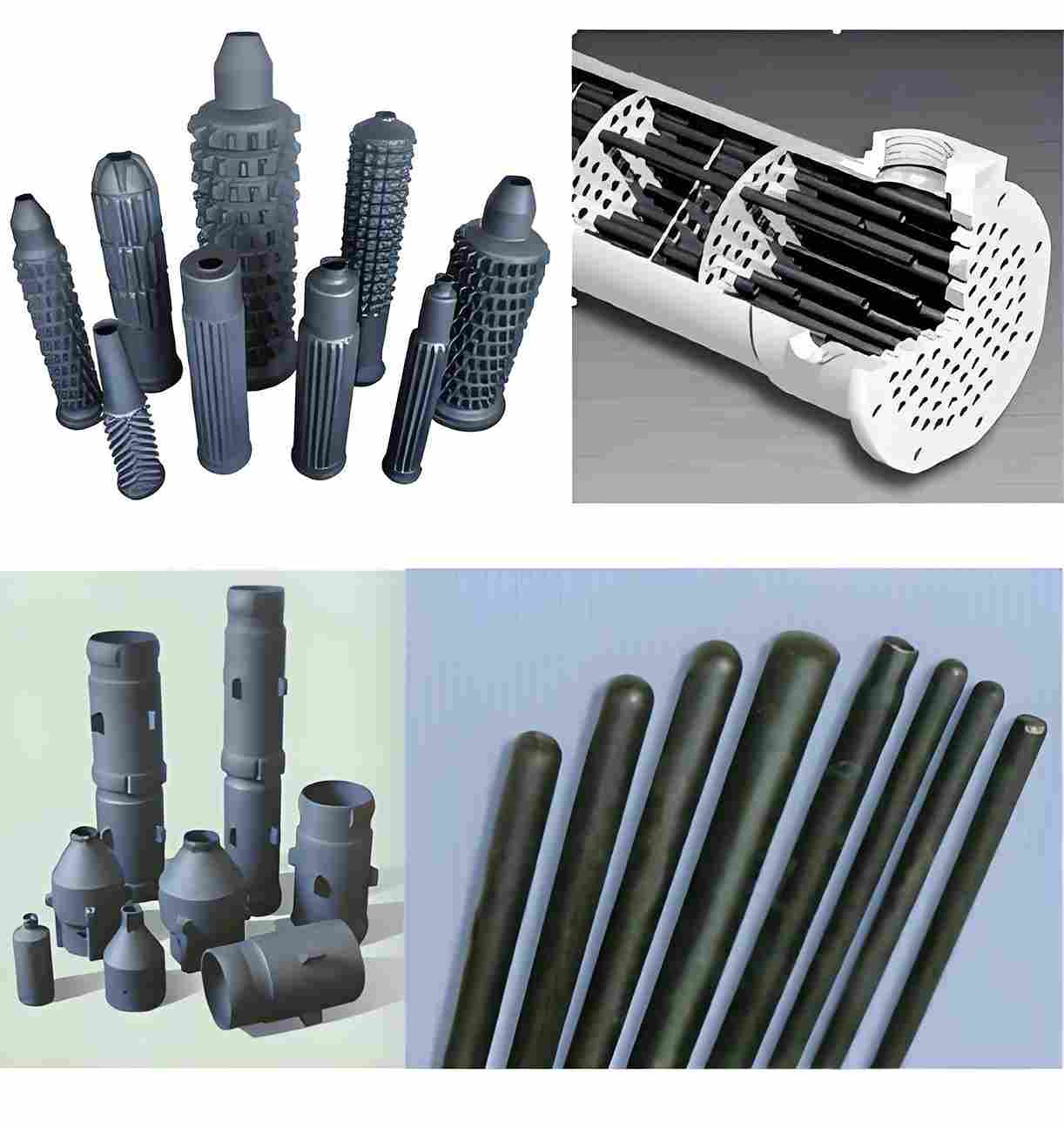
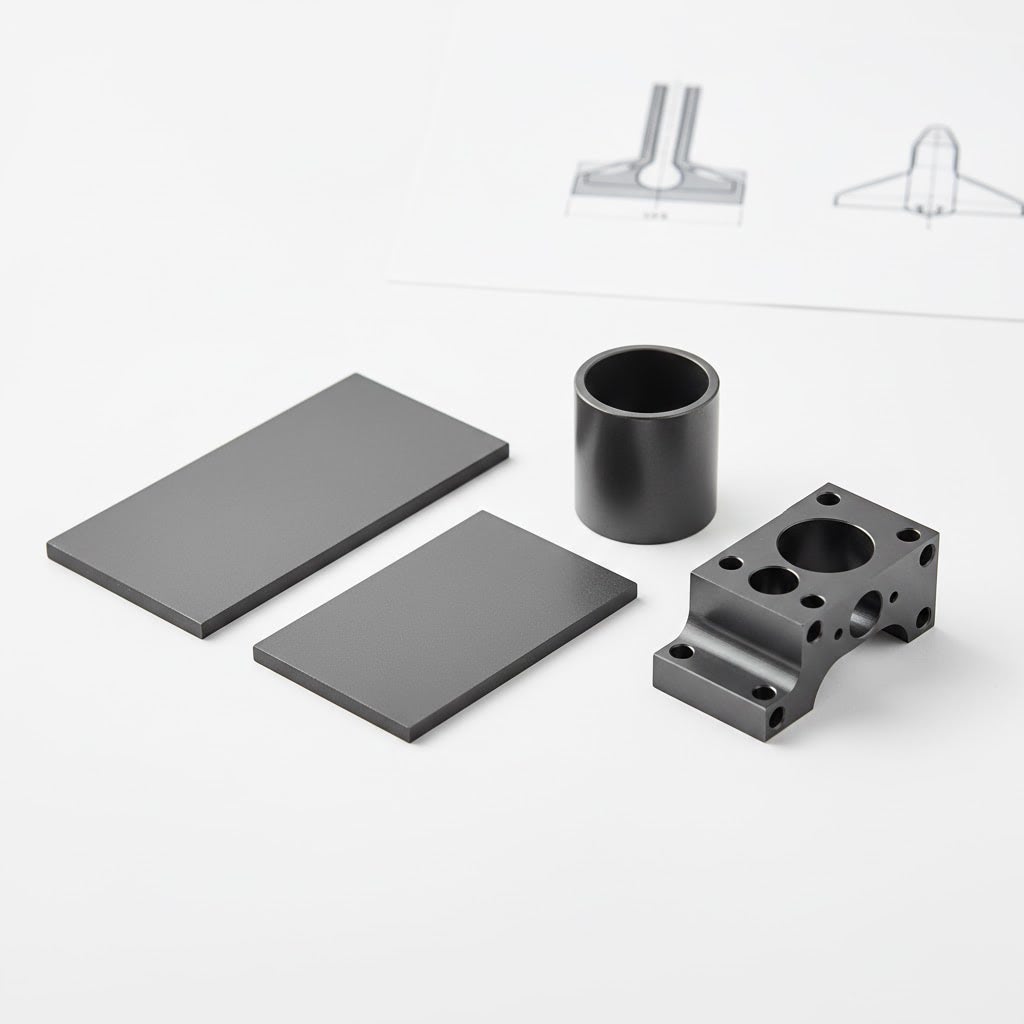
Zirsec produces industrial silicon carbide components such as silicon carbide plates, tubes and custom mechanical parts that can be engineered into aerospace-related test rigs, ground-support equipment and high-temperature subsystems that face similar conditions to flight hardware.
Key Aerospace-Related Applications for Silicon Carbide Ceramics
1. High-Temperature Gas Path Components (Test & Support Systems)
Many aerospace development programs rely on high-temperature test facilities and ground-support equipment to qualify designs before flight. Silicon carbide ceramics are used in:
- Flow path liners and tiles: SiC plates protecting hot gas ducts and test chambers from erosion and thermal shock.
- Burner and nozzle components: silicon carbide burner tiles and nozzles used in high-temperature combustion rigs.
- Supporting fixtures: SiC elements in jigs and fixtures that must survive repeated high-temperature cycles.
Using silicon carbide in these ground-based systems allows test engineers to reproduce extreme flight conditions without constant repair of metal or low-grade refractory hardware.
2. Thermal Protection and Shielding Components
Vehicle surfaces exposed to intense heating or radiation require reliable thermal protection. While many flight systems use specialised composite materials, silicon carbide ceramics appear in:
- Heat shields and tiles in test systems: SiC plates used as sacrificial or reusable protection in re-entry and high-heat-flux test rigs.
- Radiation-facing parts: elements in optical benches, baffles or shields that face strong solar or IR loading.
Zirsec’s high-temperature silicon carbide tubes and plates can be adapted to protect sensors and instrumentation in aerospace-related test and measurement equipment.
3. Precision Structures and Optics Support
In certain aerospace applications, the combination of stiffness, dimensional stability and thermal behaviour is more important than raw strength. Silicon carbide ceramics are used in:
- Optics mounts and support plates: SiC components supporting mirrors or lenses in thermally challenging environments.
- Structural inserts and interfaces: parts that must maintain alignment between subsystems under temperature swings.
Because silicon carbide has a relatively low coefficient of thermal expansion and high stiffness, it helps maintain precise alignment in systems exposed to changing temperatures, such as satellite payloads and high-altitude instruments.
Advantages of Silicon Carbide Ceramics for Extreme Heat and Stress
Improved Temperature Capability
Compared with many high-performance alloys, silicon carbide ceramics can operate at higher surface temperatures with less creep or permanent deformation. This allows:
- Higher allowable gas temperatures in ground test equipment and hot-flow rigs.
- More compact thermal protection designs that do not rely solely on very thick metallic structures.
Weight and Stiffness Benefits
With a favourable stiffness-to-weight ratio, silicon carbide enables light yet rigid components:
- Less mass for a given stiffness compared with many metals.
- Better vibration behaviour for precision structures that must resist deflection.
In aerospace, every kilogram saved in support structures can be reallocated to payload, instrumentation or fuel.
Thermal Shock and Fatigue Resistance
Repeated thermal cycling is often as damaging as maximum temperature. Silicon carbide ceramics provide:
- Good thermal shock resistance when temperature gradients are managed correctly.
- Stable properties over many cycles where some materials progressively crack or distort.
This behaviour is particularly useful in high-frequency test programs, where components see many heat-up/cool-down cycles in a short time.
Engineering Considerations When Using Silicon Carbide Ceramics
1. Load Paths and Stress Distribution
Silicon carbide ceramics behave differently from metals under tensile and bending loads. When designing aerospace-related components with SiC:
- Favour compressive loading and avoid large tensile stresses where possible.
- Use geometries that distribute stress smoothly, avoiding sharp corners and sudden section changes.
- Check thermal and mechanical stress combinations rather than each in isolation.
Integrating silicon carbide into a system designed as if all parts were metal is a common source of premature failure.
2. Attachment and Interfaces
Interfaces between silicon carbide components and metallic structures are critical:
- Allow thermal expansion differences through compliant mounts, sliding interfaces or appropriate joints.
- Avoid rigid clamping that creates point loads on SiC parts.
- Use suitable gaskets, shims or intermediate layers to manage contact pressures and seal requirements.
In many successful designs, SiC components “float” in carefully designed supports rather than being rigidly captured like metal parts.
3. Surface Finish and Environment
For components in hot gas or radiative environments:
- Surface finish influences emissivity and heat transfer behaviour.
- Coatings may be used to tune surface properties or protect against specific chemistries.
- Debris and dust accumulation must be managed if precision alignment or optical paths are involved.
Silicon carbide ceramics can be ground, lapped and coated, but the target environment should be clearly defined when specifying these steps.
System-Level Thinking: Where Silicon Carbide Adds the Most Value
Silicon carbide ceramics are not intended to replace all metals or composites in aerospace. Instead, they bring the most benefit when:
- A component is clearly limited by temperature, stiffness or wear rather than by cost alone.
- The location is critical for alignment, heat flux management or dimensional stability.
- The part experiences extreme local conditions compared with the rest of the structure.
In many projects, silicon carbide is introduced first in test equipment or ground-support systems that replicate flight conditions, then gradually considered for closer integration with flight hardware as experience grows.
Case Example: SiC Components in High-Temperature Aerospace Test Rigs
Background
An aerospace development team needed to run repeated high-temperature gas flow tests on components intended for advanced propulsion systems. Conventional metallic duct and burner components suffered distortion, erosion and cracking, forcing frequent repairs and limiting test availability.
Approach
- Introduce silicon carbide tiles and plates in the highest heat-flux and erosion zones of the test duct.
- Replace certain burner nozzle elements with silicon carbide nozzles to stabilise flame shape and throat geometry.
- Redesign supports and mounts to allow for differential expansion between SiC and the surrounding steel structure.
Results
- Test campaigns could run longer between shutdowns for repair.
- Gas path geometry remained more stable, improving repeatability of test conditions.
- Overall utilisation of the test facility increased, enabling faster development cycles.
FAQ – Silicon Carbide Ceramics for Aerospace-Related Applications
Q1. Does silicon carbide replace superalloys in aerospace engines?
No. Silicon carbide ceramics complement, rather than fully replace, metallic superalloys. Ceramics are used selectively where their temperature capability and stiffness bring clear advantages, typically in specific high-heat or high-stability components rather than across entire engine structures.
Q2. Where is silicon carbide most realistically applied today?
Realistic applications include high-temperature test rigs, ground-support equipment, hot gas ducts, burner and nozzle components, precision structural inserts and selected thermal protection or shielding parts. These areas benefit from SiC’s high-temperature stability and wear resistance without requiring full redesign of flight-critical hardware.
Q3. What information should I provide when considering silicon carbide components?
Provide details on maximum and cyclic temperatures, mechanical loads, environment (gas composition, radiation, particulates), allowable mass, required lifetime and current failure modes. Drawings and existing material specifications help translate requirements into suitable SiC geometries and grades.
Q4. How can Zirsec support aerospace-related projects?
Zirsec supplies silicon carbide plates, tubes and custom mechanical parts that can be integrated into aerospace-related test systems, high-temperature subsystems and ground-support equipment. By reviewing operating conditions and design constraints, Zirsec helps identify where SiC ceramics can safely and effectively improve performance under extreme heat and stress.
Working on high-temperature aerospace systems or test rigs? Introducing silicon carbide ceramics in the right locations can turn chronic hot-zone problem areas into stable, predictable components, supporting both performance and reliability targets.