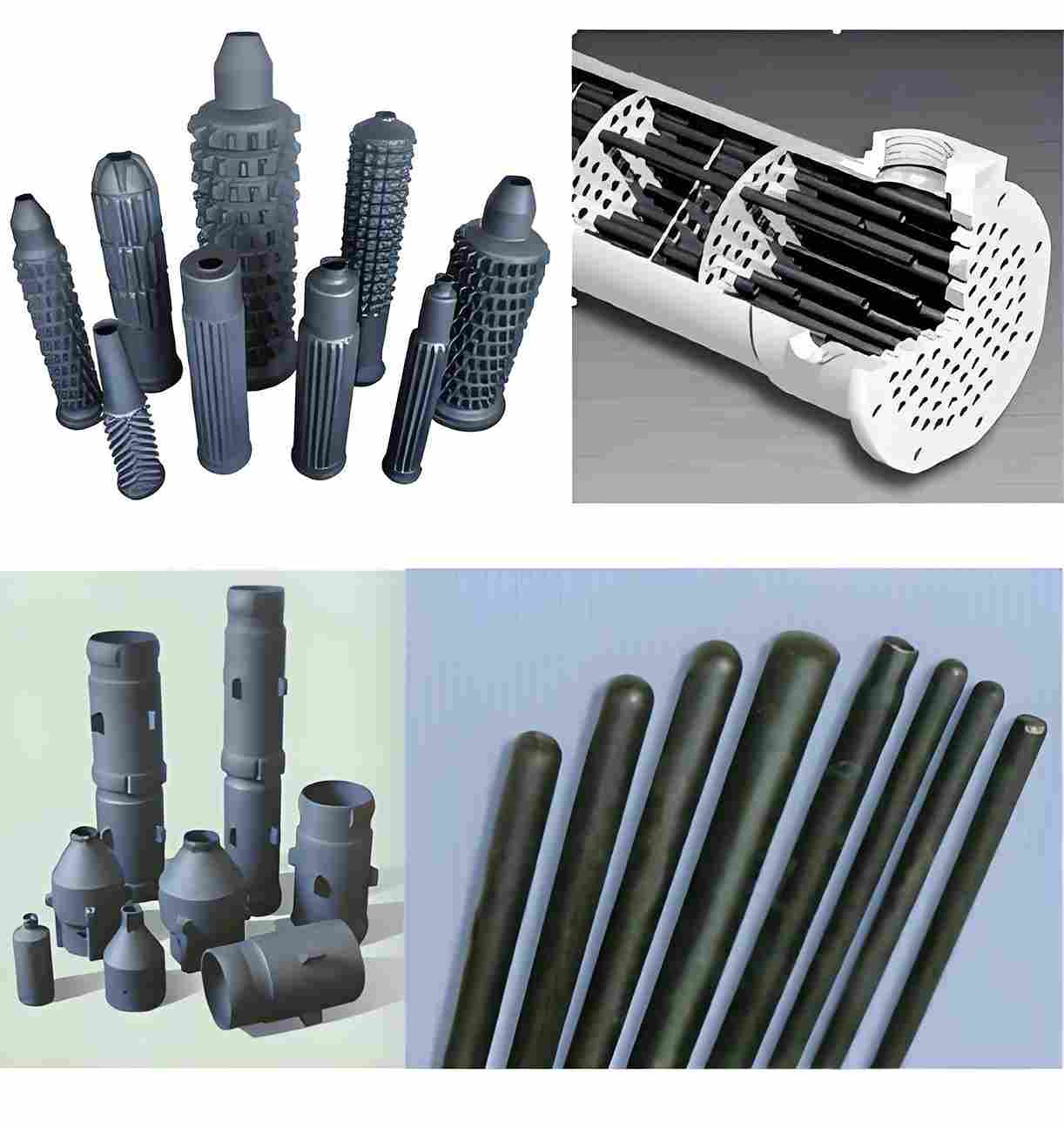
Downhole drilling tools live in one of the toughest environments in engineering: high pressure, high temperature, abrasive drilling fluids, vibration, shock loads and constant rotation. When seals and bearings fail, motors stall, tools are pulled out of hole and rig time disappears into non-productive time.
Silicon carbide seals and bearings give drilling tool designers a way to push reliability further in these harsh conditions. With extreme hardness, excellent corrosion resistance and strong performance at elevated temperatures, silicon carbide (SiC) has become a key material in advanced downhole tools.
This article explains how silicon carbide seals and bearings are used in oil & gas drilling, why they work and what to consider when specifying them for harsh downhole conditions.
Harsh Downhole Conditions: What Seals and Bearings Must Survive
Oil and gas drilling involves driving a drill string thousands of meters into the earth, with complex bottom-hole assemblies (BHAs) made up of motors, measurement tools and rotary steerable systems. In this environment, seals and bearings face:
- High pressure: differential pressures across seals and bearings in mud motors and tools.
- High temperature: elevated downhole temperatures that can exceed 150–200 °C in some wells.
- Abrasive drilling fluids: solids-laden mud with cuttings, barite and other particles.
- Corrosive media: formation fluids containing CO₂, H₂S, chlorides and other aggressive species.
- Shock and vibration: dynamic loads from bit–rock interaction and stick–slip.
Conventional metallic and polymer-based components struggle to maintain long-term sealing and support under this combination of stresses. That is where silicon carbide comes in.
Why Silicon Carbide Fits Downhole Seals and Bearings
Silicon carbide, described in more detail in silicon carbide, offers a unique set of properties for downhole service:
- Very high hardness: excellent resistance to abrasion from solids-laden drilling fluids.
- Good corrosion resistance: stable in many drilling mud chemistries and formation fluids.
- High-temperature capability: retains strength and stiffness at downhole temperatures where many polymers soften.
- Dimensional stability: maintains geometry and clearances under thermal and mechanical load.
- Good thermal conductivity: helps distribute heat in dynamic seal and bearing interfaces.
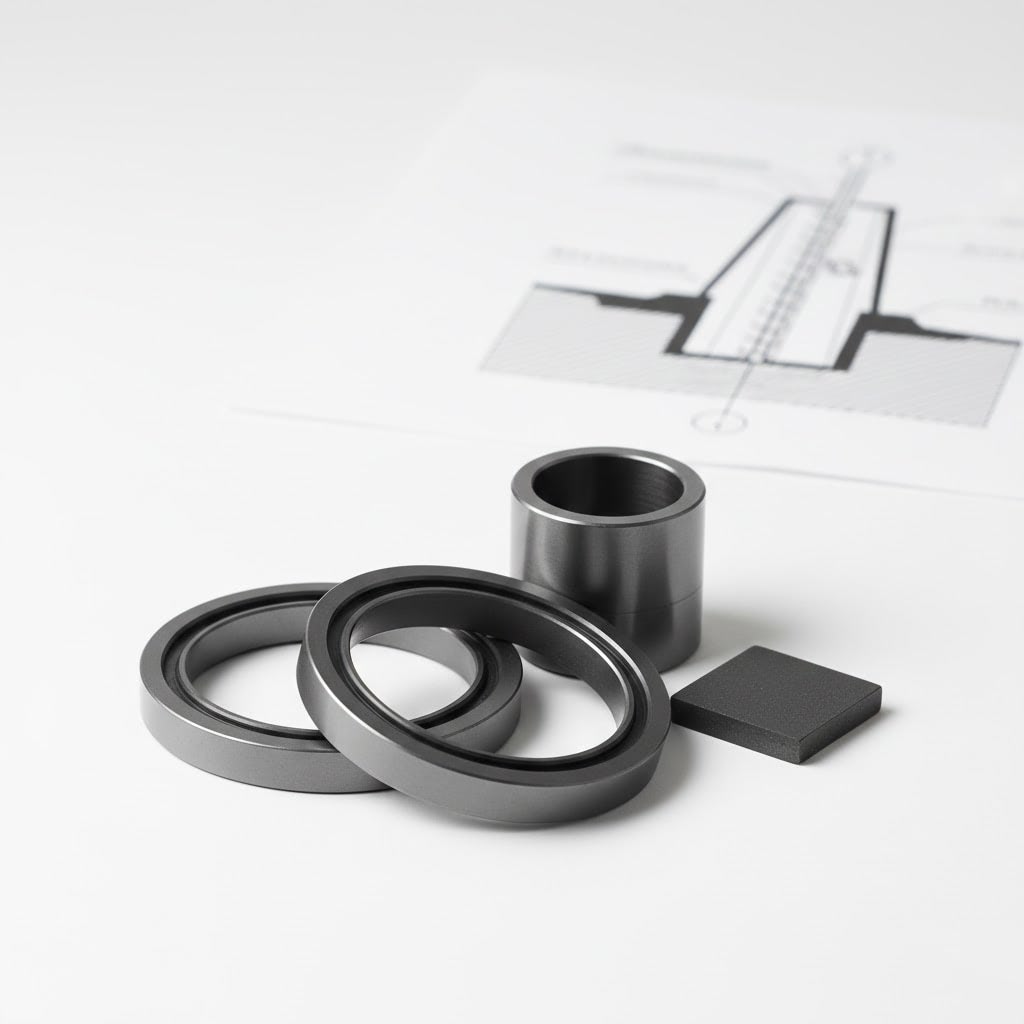
Zirsec supplies precision silicon carbide seal rings and components that can be integrated into downhole tools and surface equipment where conventional materials reach their limits.
Key Applications of Silicon Carbide in Oil & Gas Drilling
Mechanical Seals in Downhole Motors and Tools
In positive displacement mud motors and certain measurement tools, mechanical seals are used to protect internal components from drilling fluid and formation fluids. Silicon carbide is commonly used for:
- Seal rings and faces: SiC vs SiC or SiC vs carbon sliding pairs in mechanical seals.
- Thrust face elements: where sealing and axial load support are combined.
These components must survive both continuous rotation and pressure differentials while running in abrasive mud. Silicon carbide’s hardness and corrosion resistance significantly extend seal life compared with softer materials.
Radial and Thrust Bearings in Downhole Motors
Radial and thrust bearings in mud motors and rotary steerable systems support the rotor and transfer loads to the housing. Here, silicon carbide is used for:
- Radial bearing sleeves and bushings: SiC elements running in mud-lubricated interfaces.
- Thrust bearing pads or rings: carrying high axial loads from bit weight and dynamic loads.
In these designs, silicon carbide components must manage a mixed lubrication regime where drilling mud or formation fluids are both lubricant and abrasive. Correct geometry and surface finish are essential.
Surface Equipment and Completion Tools
Beyond the BHA, silicon carbide seals and bearings also appear in:
- High-pressure surface pumps feeding drilling fluid or completion fluids.
- Wellhead and choke equipment exposed to erosive, corrosive flow.
- Completion tools where high-pressure seals run against hard seats.
In all these cases, silicon carbide is deployed in locations where wear, corrosion and temperature combine to push traditional materials beyond acceptable life.
How Silicon Carbide Seals and Bearings Improve Downhole Reliability
- Extended tool runs: seals and bearings last longer before performance drops below acceptable levels.
- Reduced non-productive time: fewer trips out of hole caused by seal or bearing failures.
- More stable tool performance: better control of torque, vibration and steering because supports remain in tolerance.
- Improved safety margins: reduced risk of catastrophic failures and associated well control issues.
Instead of treating seals and bearings as consumables, correctly applied silicon carbide helps turn them into predictable, long-life components in the downhole system.
Material and Design Considerations
1. Silicon Carbide Grade Selection
Different SiC grades exist, and grade selection matters in oil & gas service:
- SSiC (sintered silicon carbide): dense, high-purity, low porosity. Excellent corrosion resistance and mechanical strength; often used for high-performance seal faces and bearing elements.
- RBSiC / SiSiC (reaction-bonded silicon carbide): strong and tough with good thermal shock behaviour; suitable for certain structural or larger bearing components.
Choice depends on pressure, temperature, fluid chemistry and required lifetime. Critical components in sour, high-temperature wells usually favour high-quality SSiC.
2. Lubrication and Fluid Compatibility
Downhole seals and bearings frequently operate in drilling mud, completion brine or produced fluids rather than clean oil. Design must consider:
- Solids content: particle size, hardness and concentration in the fluid.
- Chemistry: pH, chloride content, presence of H₂S / CO₂ and additives.
- Pressure–temperature envelope: combined HPHT conditions.
Even though silicon carbide is highly wear-resistant, the surrounding materials (mating rings, housings, cages) and lubrication regime must be configured to avoid edge loading, scoring and debris accumulation.
3. Tolerances, Surface Finish and Geometry
In downhole tools, small changes in clearances can materially affect performance. For SiC seals and bearings:
- Tight tolerances on flatness and roundness are necessary to control leakage and load distribution.
- Surface finish must support a stable fluid film without promoting excessive wear-in.
- Geometry (chamfers, edges, grooves) must be optimised for mud-lubricated contact and debris passage.
Silicon carbide can be machined and lapped to precise specifications, but those specifications need to be clearly defined and consistent across tool generations.
System-Level Thinking: Beyond a Single Component Swap
Simply replacing an existing metal or ceramic part with silicon carbide, without reviewing the rest of the design, often leaves performance on the table. For best results:
- Review entire load paths for radial and thrust loads through the BHA section.
- Check alignment and concentricity of housings, sleeves and rotors.
- Verify that adjacent materials (metals, elastomers, polymers) can handle any temperature increase or extended lifetime expectations.
- Consider debris management so that solids are flushed rather than trapped at critical interfaces.
In practice, using silicon carbide seals and bearings often goes together with incremental changes to tool hydraulics, clearances and filtration to fully realise the reliability benefits.
Case Example: Extending Mud Motor Life with Silicon Carbide Components
Background
A drilling contractor operating in abrasive formations experienced frequent mud motor failures attributed to bearing and seal wear. These failures forced unplanned trips, increased motor rental costs and reduced well construction efficiency.
Approach
- Replace conventional bearing and seal materials with silicon carbide-based seals and bearing elements in the motor’s bearing assembly.
- Optimise clearances and surface finishes for the specific drilling mud and solids content.
- Introduce improved solids control and mud conditioning to support the new bearing and seal design.
Results
- Average motor run length increased, reducing trips and non-productive time.
- Seal-related failures dropped, with fewer internal fluid ingress issues.
- Overall cost per meter drilled improved when accounting for both tool life and rig time.
FAQ – Silicon Carbide Seals and Bearings in Oil & Gas Drilling
Q1. Where is the best place to start using silicon carbide in drilling tools?
Start with components that are already limiting tool life: seal faces in mud motors, thrust bearing pads in high-load assemblies and critical radial bearings exposed to abrasive mud. These locations usually show clear wear patterns and measurable impact on tool reliability.
Q2. Are silicon carbide seals and bearings only for high-temperature wells?
No. They are valuable in both conventional and high-temperature wells. The main drivers are combined abrasion, corrosion and pressure, not temperature alone. High-temperature capability is an additional advantage where downhole temperatures are extreme.
Q3. How do silicon carbide components perform in solids-laden drilling mud?
Silicon carbide’s hardness and wear resistance make it well-suited to solids-laden mud, provided that clearances, surface finishes and hydraulics are designed for such service. It resists scratching and grooving better than many softer materials.
Q4. What information should I provide when asking Zirsec about SiC seals and bearings?
Provide operating pressure and temperature, drilling fluid type and solids content, expected loads (radial and axial), rotational speed, existing failure modes and current material specifications. Drawings or 3D models of the bearing or seal assembly are extremely helpful.
Q5. Can silicon carbide seals and bearings be retrofitted into existing tool designs?
Often yes, within the constraints of existing envelopes. Retrofits may require adjustments to mating part materials, clearances and surface finishes, but many tools can be upgraded without a complete redesign of the outer geometry.
Designing or upgrading drilling tools for harsher wells? Incorporating silicon carbide seals and bearings into the right locations can turn recurring downhole failure points into stable components, improving run lengths and reducing non-productive time for the rig.