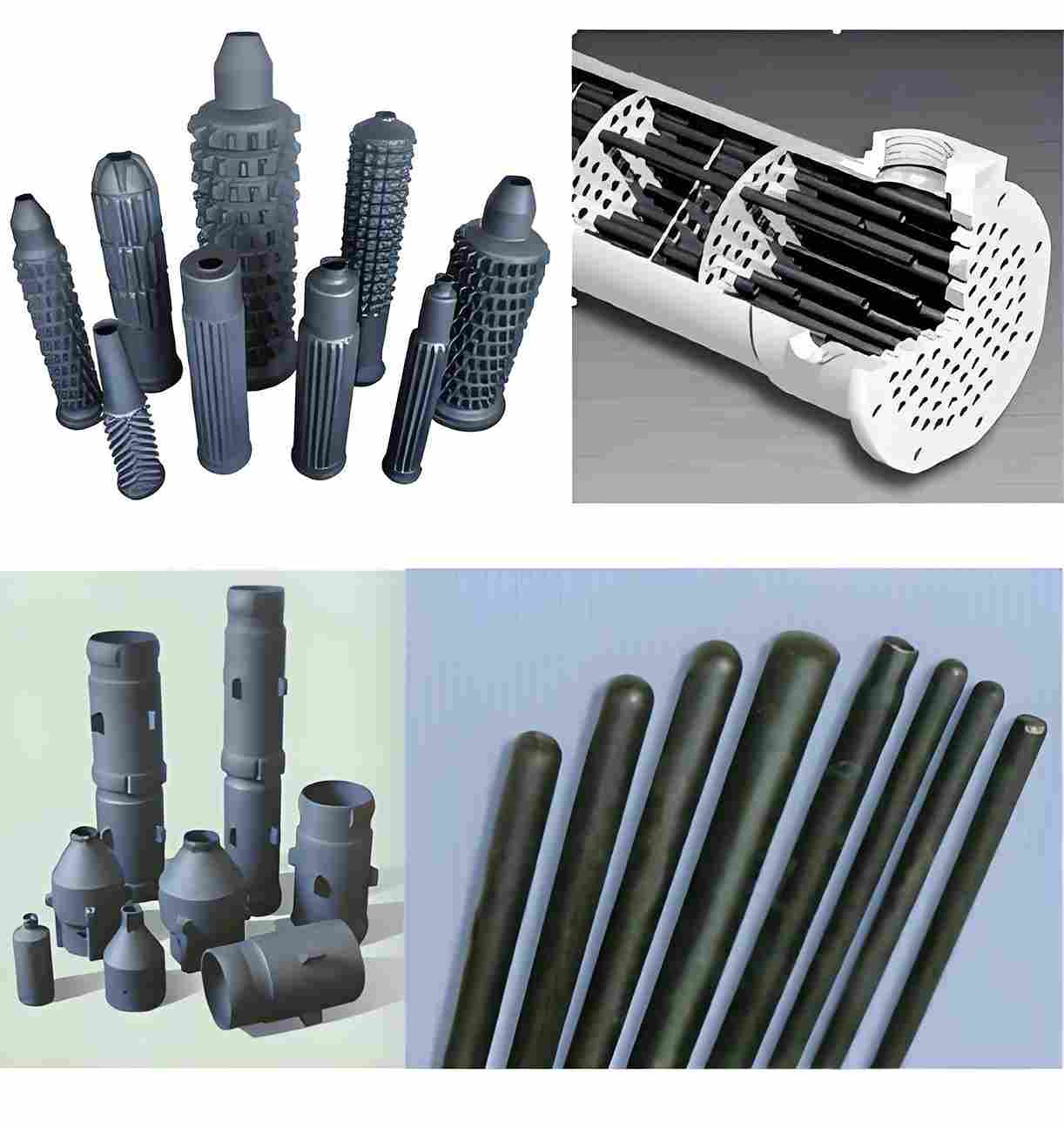
Running a ceramic kiln is a constant balance between product quality, firing time and energy cost. Every extra minute of soaking and every kilogram of kiln furniture you heat up eats into productivity and profit. As firing temperatures climb and product requirements become stricter, traditional kiln furniture materials start to show their limits.
Silicon carbide kiln furniture offers a practical way to improve firing efficiency without redesigning your entire kiln. With high strength at temperature, good thermal conductivity and the ability to work in thinner cross-sections, silicon carbide (SiC) shelves, beams and supports help you carry the same (or more) ware with less mass and shorter cycles.
This article explains what silicon carbide kiln furniture is, why it improves firing efficiency and what to consider when upgrading from conventional cordierite or mullite systems.
What Limits Firing Efficiency in Ceramic Kilns?
Whether you run periodic or continuous kilns, the physics is the same: every firing cycle consumes energy to heat up both the ware and the kiln furniture. Major factors include:
- Thermal mass of kiln furniture: heavy shelves, props and beams require energy every cycle, even though they are not your product.
- Cycle time and soaking: thick, low-conductivity furniture slows heat transfer and forces longer ramps and soaks.
- Load density: shelf sagging and strength limits constrain how tightly you can stack ware.
- Deformation and cracking: warped shelves reduce usable area, forcing more kiln time for the same output.
Traditional materials like cordierite and mullite-based refractories are economical and widely used, but their mechanical strength and creep resistance at high temperature limit how thin and light you can go.
What Is Silicon Carbide Kiln Furniture?
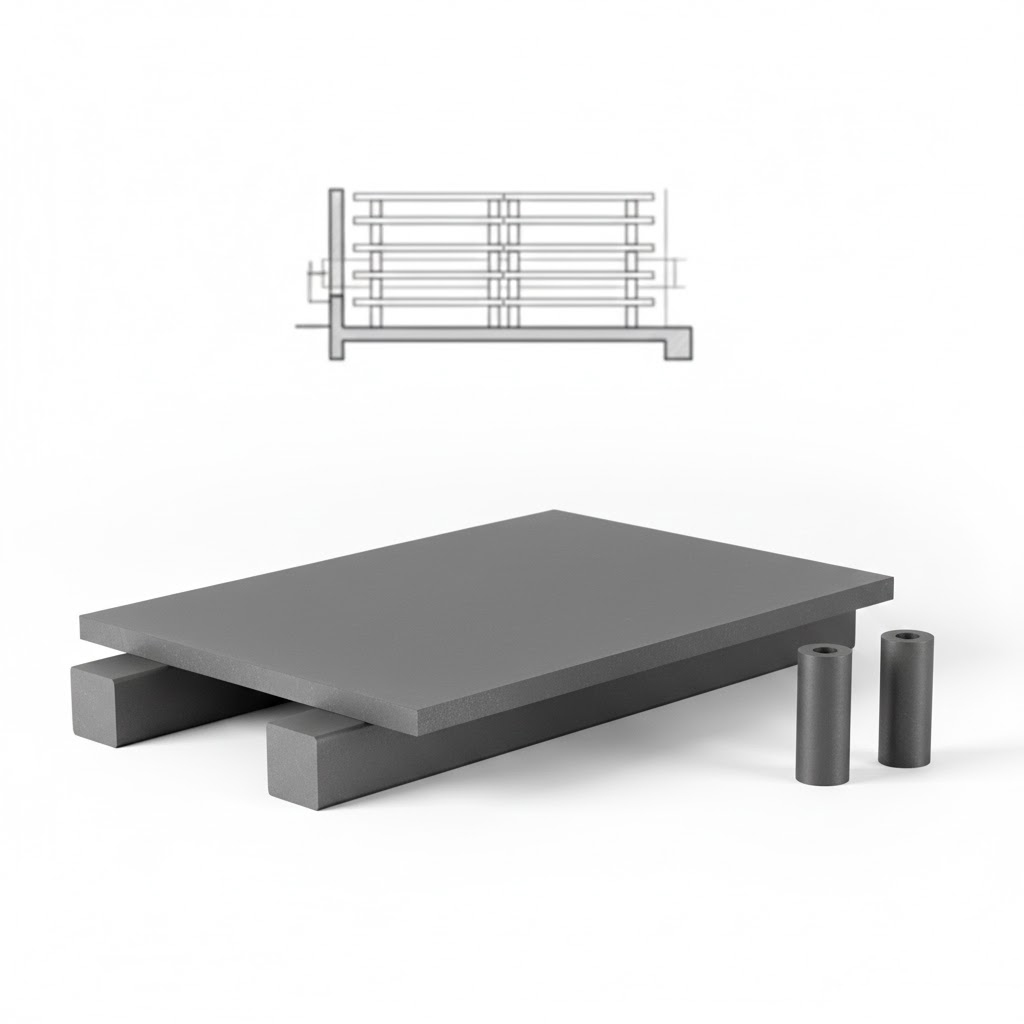
Silicon carbide kiln furniture refers to shelves, beams, posts and custom supports made from SiC-based ceramics. Compared with conventional kiln furniture, SiC pieces typically offer:
- Higher strength at temperature: supports more load with less deflection.
- Higher thermal conductivity: transfers heat faster through shelves and beams.
- Better creep resistance: reduced long-term sagging over many firing cycles.
- Lower required thickness: thinner cross-sections for the same load capacity.
Zirsec produces silicon carbide plates, beams and mechanical parts for high-temperature industrial applications. These same design principles are applied when engineering SiC kiln furniture for ceramic kilns, sanitaryware, technical ceramics and other firing lines.
How Silicon Carbide Kiln Furniture Improves Firing Efficiency
1. Reduced Thermal Mass
Every kilogram of kiln furniture consumes energy in each firing cycle. Because of their higher strength, silicon carbide shelves and beams can be designed thinner and lighter than equivalent cordierite or mullite pieces:
- Thinner shelves: SiC shelves with reduced thickness still support the same load.
- Lighter posts and beams: higher strength allows smaller cross-sections for supports.
The result is less dead weight to heat up, so more of your energy goes into the ware instead of the furniture. Over hundreds of cycles, the energy savings become significant.
2. Faster Heat Transfer and Shorter Cycles
Silicon carbide has much higher thermal conductivity than many conventional refractory materials. This has several effects:
- Heat moves more quickly through shelves and setters, reducing temperature gradients.
- The ware can reach target temperature faster, especially on lower layers of a stack.
- Soak times can often be reduced once a stable process is established.
For kilns where throughput is limited by how fast you can fire, the combination of lower mass and better heat transfer can shorten cycle times without compromising product quality.
3. Increased Load Density with Lower Sagging
One of the most common issues in high-temperature firing is shelf sagging. As temperatures rise and cycles accumulate, shelves bow and deform, forcing operators to:
- Reduce load density to avoid contact and distortion.
- Scrap warped product from uneven support.
Silicon carbide shelves and beams maintain their shape better at temperature. That means:
- More stable stacking: tighter, more uniform stack patterns are possible.
- Higher product per firing: more ware on each shelf or level.
Instead of leaving space “just in case” shelves sag, you can use more of the kiln volume for product.
4. Improved Kiln Availability and Less Maintenance
Warped and cracked kiln furniture is a constant maintenance headache. When shelves fail unexpectedly, you lose time rearranging loads or replacing components.
Silicon carbide kiln furniture typically offers:
- Longer service life before strength or flatness become unacceptable.
- More predictable wear patterns that fit into planned maintenance windows.
- Less dust and debris from spalled or cracked supports.
More stable furniture reduces unscheduled downtime and supports more consistent firing behaviour across campaigns.
Typical Applications for Silicon Carbide Kiln Furniture
Sanitaryware and Tableware
Heavy pieces and large setters put significant load on shelves and beams. SiC kiln furniture helps by:
- Supporting heavy stacks without excessive sag.
- Allowing thinner shelves for the same load.
- Improving heat transfer in tightly packed loads.
Technical Ceramics and Refractories
High firing temperatures and tight dimensional tolerances put additional demands on kiln furniture:
- Silicon carbide beams supporting multi-level kiln cars.
- Precision SiC plates used as setters or support surfaces.
These applications benefit from SiC’s high-temperature strength and dimensional stability over many cycles.
Glaze Firing and Decoration Lines
In fast-fire kilns and decoration lines, cycle time and thermal shock resistance are critical. SiC shelves and supports help:
- Absorb thermal shocks from rapid heating and cooling better than many dense refractories.
- Allow shorter firing curves once the process is tuned.
Design Considerations When Upgrading to Silicon Carbide Kiln Furniture
1. Temperature Range and Atmosphere
Before specifying SiC kiln furniture, define:
- Maximum operating temperature and typical firing curve.
- Atmosphere: oxidising, neutral, slightly reducing or special atmospheres.
- Cycle type: periodic vs continuous, frequency of thermal cycling.
Different silicon carbide formulations and designs can be matched to your specific firing conditions.
2. Load Patterns and Support Geometry
Besides material choice, geometry heavily influences performance:
- Use beam and shelf layouts that distribute load evenly and avoid point loads.
- Design post locations to align through stacks and minimise bending moments.
- Review contact points between SiC components and other refractories.
Optimising the support geometry allows you to use slimmer SiC components safely, unlocking weight and energy savings.
3. Integration with Existing Furniture
Many plants upgrade in stages rather than replacing all kiln furniture at once:
- Start with the hottest or most deformation-prone zones in the kiln.
- Introduce silicon carbide shelves or beams in selected levels.
- Monitor behaviour and then expand SiC usage where the benefits are clear.
Zirsec can supply silicon carbide plates, beams and custom supports sized to work alongside existing refractory systems during a phased upgrade.
Case Example: Improving Kiln Throughput with SiC Kiln Furniture
Background
A ceramic manufacturer running multiple periodic kilns struggled with long firing cycles and frequent shelf replacement. Cordierite shelves sagged over time, forcing lower stacking heights and longer soaks to reach uniform temperature.
Approach
- Replace shelves in the hottest kiln zones with silicon carbide shelves of reduced thickness.
- Optimise support posts and stacking pattern to make full use of SiC shelf strength.
- Gradually shorten soak times after verifying product quality and temperature uniformity.
Results
- Total cycle time decreased, increasing the number of firings per week.
- Energy consumption per unit of product dropped due to lower thermal mass.
- Shelf replacement frequency decreased as SiC shelves maintained flatness longer.
FAQ – Silicon Carbide Kiln Furniture and Firing Efficiency
Q1. Will silicon carbide kiln furniture work in my existing kiln?
In many cases, yes. Silicon carbide shelves, beams and posts can be designed to fit existing car layouts and supports. A review of dimensions, firing temperature and load patterns is needed to select appropriate SiC components.
Q2. Does silicon carbide always reduce firing time?
Silicon carbide enables shorter firing times by reducing thermal mass and improving heat transfer. Actual time savings depend on how conservative your current schedule is and how much process optimisation is carried out after the upgrade.
Q3. Is silicon carbide kiln furniture only for very high-temperature firing?
No. While SiC is strong at high temperature, it can also bring benefits at moderate temperatures by reducing weight and improving stiffness. The business case is strongest where shelf sagging, long cycles or frequent repairs are already a problem.
Q4. How do I evaluate the cost–benefit of switching to SiC kiln furniture?
Consider energy consumption per firing, number of firings per campaign, shelf replacement frequency, unplanned downtime and labour for rearranging warped furniture. In many plants, savings in energy and maintenance offset the higher initial cost of SiC over the service life of the furniture.
Q5. What information should I provide when asking Zirsec about silicon carbide kiln furniture?
Provide kiln type, firing temperature curve, atmosphere, current furniture material and layout, typical loads per shelf and main failure modes (sagging, cracking, spalling). With this data, Zirsec can propose silicon carbide shelves, beams or custom supports tailored to your firing process and efficiency goals.
Looking to push more product through your kilns with less energy and fewer repairs? Upgrading critical shelves, beams and supports to silicon carbide kiln furniture is a practical way to improve firing efficiency while stabilising product quality and kiln availability.