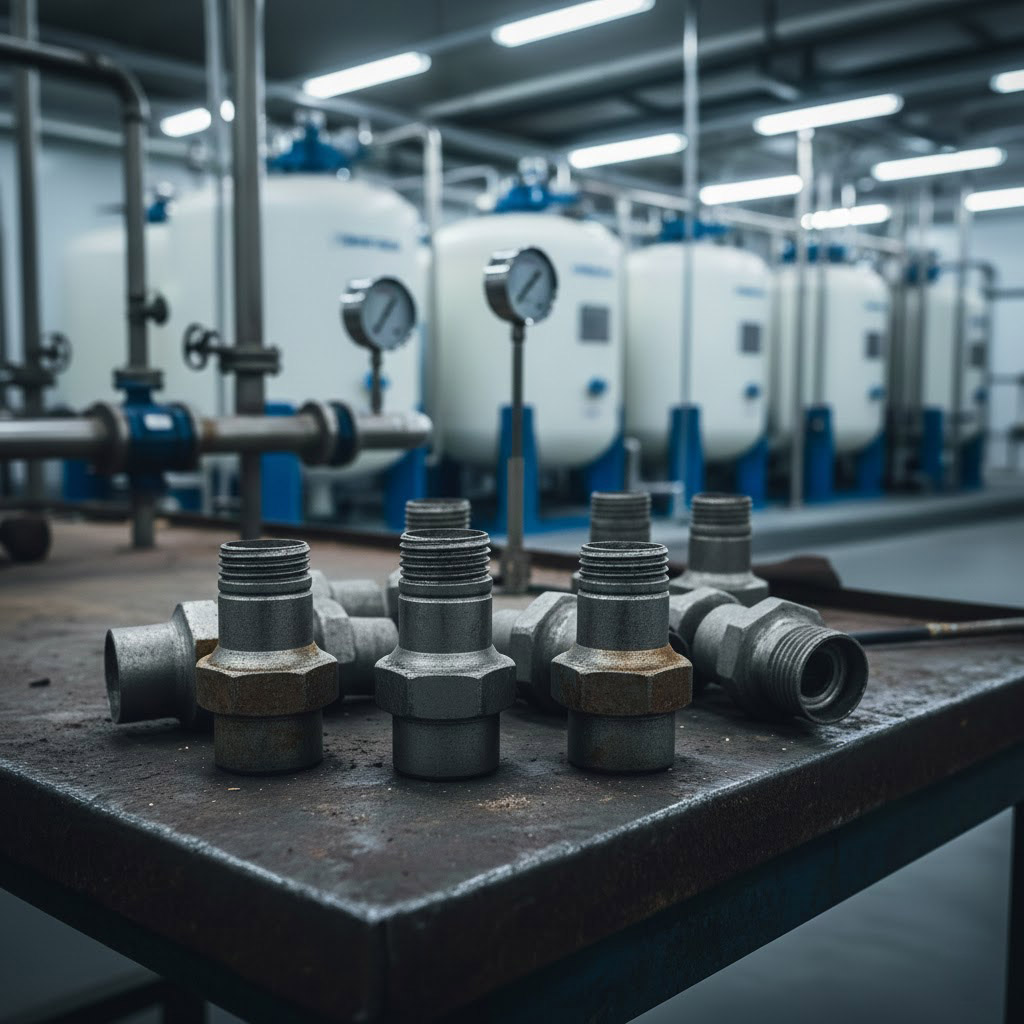
Metal nozzles are still widely used in flue gas desulfurization units due to their availability and low initial cost. However, under actual operating conditions, these nozzles frequently experience premature failure, directly affecting spray efficiency and SO₂ removal performance.
Operating Environment Inside FGD Units
FGD units expose nozzles to acidic slurry, dissolved chlorides, suspended gypsum particles and continuous high-flow impact. This combination creates an aggressive environment that accelerates material degradation in metallic components.
Uniform Corrosion and Pitting
Acidic slurry gradually attacks metal surfaces, leading to uniform corrosion or localized pitting. Over time, wall thinning reduces mechanical strength and increases the risk of leakage or cracking.
Erosion at the Nozzle Orifice
Solid particles in FGD slurry continuously strike the nozzle orifice at high velocity. This erosion enlarges the opening, alters spray angles and reduces droplet uniformity, compromising desulfurization efficiency.
Scaling and Deposit Formation
Chemical reactions between slurry components and metal surfaces promote scale buildup. Deposits restrict flow paths, increase pressure drop and may eventually cause partial or complete blockage.
Thermal Stress and Mechanical Deformation
Temperature fluctuations during plant startup and shutdown cycles cause repeated expansion and contraction. Over time, thermal stress can deform metal nozzles, loosening connections and misaligning spray patterns.
Impact on FGD System Performance
Nozzle degradation results in uneven slurry distribution, reduced gas-liquid contact and lower sulfur removal efficiency. In severe cases, plants are forced into unplanned shutdowns for nozzle replacement.
Limitations of Metal Nozzles in Long-Term Operation
While metal nozzles may offer lower upfront cost, their limited resistance to corrosion and erosion leads to frequent replacement, higher labor cost and increased downtime over the equipment lifecycle.
Transition Toward Advanced Ceramic Nozzles
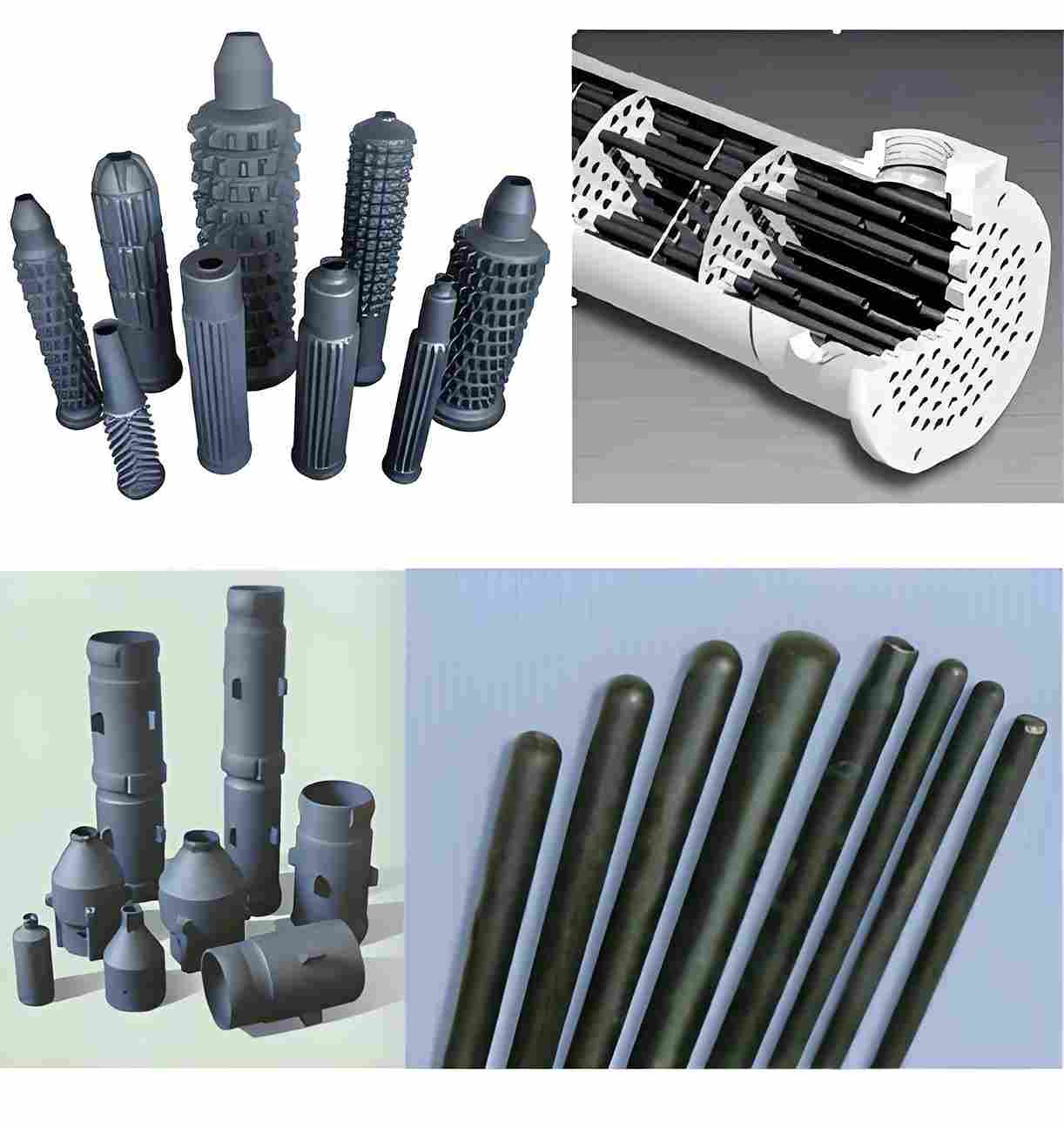
To address these failure modes, many operators replace metal nozzles with Silicon Carbide Nozzles. Silicon carbide provides superior chemical stability and wear resistance in acidic slurry environments.
Zirsec Support for Nozzle Upgrades in FGD Units
Zirsec works with power plants and environmental engineering companies to replace metal nozzles with custom silicon carbide designs. Drawing-based customization ensures compatibility with existing FGD units while significantly extending service life.
Comparison: Metal vs Silicon Carbide Nozzles in FGD Units
| Performance Aspect | Metal Nozzles | Silicon Carbide Nozzles |
|---|---|---|
| Corrosion Resistance | Low to Moderate | Excellent |
| Erosion Resistance | Low | High |
| Spray Pattern Stability | Degrades Over Time | Stable |
| Maintenance Frequency | High | Low |
| Overall Service Life | Short | Long |
FAQ: Metal Nozzle Failures in FGD Units
Why do metal nozzles fail quickly in FGD units?
Acidic slurry, abrasive particles and continuous operation accelerate corrosion and erosion beyond metal limits.
Can coatings extend the life of metal nozzles?
Coatings may slow degradation but typically wear off under abrasive slurry conditions.
Is replacing metal nozzles with SiC cost-effective?
Yes. Silicon carbide reduces replacement frequency and lowers total lifecycle cost.
Does Zirsec support retrofit projects for existing FGD units?
Yes. Zirsec provides custom SiC nozzle solutions designed to fit existing installations.
Reduce FGD Maintenance Risk with the Right Nozzle Material
If your FGD unit experiences frequent metal nozzle failures, upgrading to silicon carbide can significantly improve reliability and system uptime. Contact Zirsec to evaluate your operating conditions and replacement options.