In foundries, “good casting results” are never just about pouring metal. They depend on melt quality, temperature control, energy use and equipment uptime. If the crucible fails early, heats take too long or the metal picks up contamination from the lining, the final casting will suffer no matter how good the pattern and mould are.
Silicon carbide crucibles give foundries a powerful way to improve metal casting performance. With high thermal conductivity, strong high-temperature strength and good resistance to chemical attack, SiC crucibles help stabilise melting and holding operations. This article explains how silicon carbide crucibles support better casting results and how to apply them effectively in a foundry environment.
Typical Foundry Challenges in Metal Melting
Foundries working with non-ferrous alloys and some special ferrous applications face recurring problems, many of which are directly linked to the crucible and furnace set-up. As outlined in the broader context of foundries and metal casting, common issues include:
- Slow melting and high energy use due to low thermal conductivity of traditional refractories.
- Crucible cracking or rapid wear under thermal shock and mechanical impact.
- Metal contamination from degraded linings or reacting crucible materials.
- Temperature instability during holding and ladle filling.
- Unplanned downtime when crucibles fail earlier than expected.
Improving crucible performance is therefore one of the most direct ways to stabilise casting quality and reduce cost per tonne of finished product.
Why Silicon Carbide Crucibles Work Well in Foundries
Silicon carbide (SiC), described in more detail in silicon carbide, has a property combination that matches foundry needs extremely well:
- High thermal conductivity: supports faster heat transfer from the heat source into the metal bath.
- Excellent high-temperature strength: maintains shape and wall thickness under operating load.
- Good thermal shock resistance: better tolerance to repeated heating and cooling cycles.
- High hardness and wear resistance: robustness against charge impact and slag/flux contact.
- Chemical stability: compatible with many non-ferrous alloys and their flux systems.
Zirsec provides industrial silicon carbide crucibles designed specifically for foundry melting and holding of aluminium, copper alloys, brass, bronze and precious metals.
How Silicon Carbide Crucibles Improve Casting Results
1. Faster, More Efficient Melting
High thermal conductivity allows heat to pass through crucible walls more efficiently. For foundries, this means:
- Shorter melting times for the same furnace power.
- More heats per shift or increased flexibility for mixed-alloy production.
- Potential energy savings by reducing over-heating margins.
In operational terms, foundries often see more stable furnace curves and less time “waiting for temperature” when switching to silicon carbide crucibles from lower-conductivity alternatives.
2. Better Temperature Stability During Pouring
For casting quality, metal temperature at pouring is as important as melt temperature. Silicon carbide crucibles help by:
- Reducing temperature gradients in the molten metal.
- Helping maintain consistent temperature during holding and ladle filling.
- Reducing the need for repeated re-heating cycles that can harm metal quality.
This stability results in more consistent fluidity, feeding behaviour and solidification characteristics in the mould.
3. Longer Crucible Life and Less Unplanned Downtime
Silicon carbide crucibles are engineered to handle thermal shock, mechanical impact and chemical exposure better than many standard crucible materials. In practice, this leads to:
- Extended crucible campaigns before replacement is required.
- Fewer sudden failures that interrupt production and force emergency clean-out.
- More predictable maintenance planning based on known crucible lifetimes.
With fewer unexpected crucible changes, foundry managers can plan heats, lining work and alloy changes more efficiently.
4. Improved Metal Cleanliness
Metal quality is strongly influenced by what the molten metal “sees” on its way through the furnace and ladle system. Silicon carbide crucibles can contribute to cleaner metal by:
- Reducing erosion of the crucible wall and limiting refractory fines in the bath.
- Providing stable, chemically compatible surfaces that do not introduce unwanted reaction products.
- Maintaining internal surface condition over more cycles, reducing spalling and local damage.
Cleaner metal at the furnace translates into fewer inclusions, better mechanical properties and a lower scrap rate in casting.
Key Selection Factors for Silicon Carbide Crucibles in Foundries
Metal Type and Alloy System
Not all alloys impose the same demands. When specifying a silicon carbide crucible, clarify:
- Base metal: aluminium, copper alloys, brass, bronze, precious metals, or others.
- Fluxes and treatments: type and frequency of fluxing, degassing and grain refinement.
- Typical operating temperatures and superheat levels.
Chemical compatibility between crucible material and alloy/flux system must be considered to avoid unwanted reactions or reduced lifetime.
Furnace Type and Heating Method
Silicon carbide crucibles can be used in different furnace types, but conditions vary:
- Gas-fired furnaces: direct flame or semi-direct firing requires attention to flame impingement on the crucible.
- Electric resistance furnaces: stable, controllable heating suits SiC very well.
- Induction furnaces (certain designs): crucible must be matched to the electrical and thermal design.
When switching to SiC, check burner alignment, support points and control settings to take advantage of improved thermal response.
Operating Practice: Preheating and Handling
Even with good thermal shock resistance, silicon carbide crucibles perform best when operators follow disciplined procedures:
- Controlled preheating: follow recommended heat-up curves to avoid unnecessary stress.
- Charge practice: avoid dropping large heavy scrap directly onto hot crucible walls; use controlled charging and baffles if needed.
- Slag and dross removal: use appropriate tools to avoid damaging the crucible surface.
Simple changes in everyday practice can increase SiC crucible life significantly and make performance more consistent from one campaign to the next.
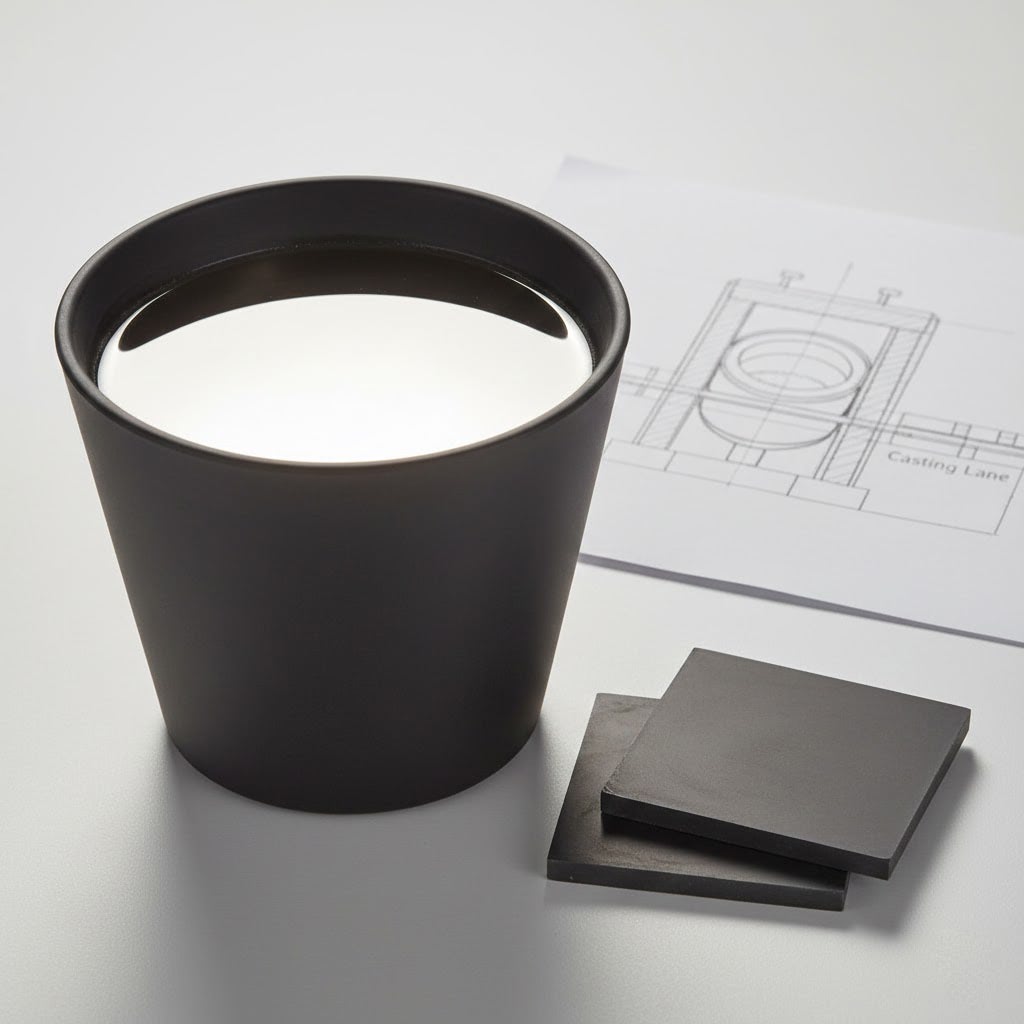
Integrating Silicon Carbide Plates for Additional Protection
Foundries often benefit from using silicon carbide not only in crucibles but also in related wear areas. For example:
- Install silicon carbide plates in charge impact zones and at the furnace lip.
- Use SiC plates as support or spacer layers under crucibles where load distribution and thermal stability are important.
This combination allows the crucible to work in a more forgiving environment, further improving lifetime and casting consistency.
Case Example: Foundry Upgrading to Silicon Carbide Crucibles
Background
A non-ferrous foundry producing aluminium and brass castings experienced short crucible life, high gas consumption and variable metal temperature during pouring. Unplanned crucible failures forced emergency shutdowns and repair work.
Approach
- Replace legacy crucibles with silicon carbide crucibles sized and shaped for the existing gas-fired furnaces.
- Optimise preheating and charging procedures to match SiC behaviour.
- Install SiC plates in the primary charge impact area to protect surrounding refractories.
Results
- Crucible campaigns lengthened, with fewer unexpected failures mid-campaign.
- Melting times became shorter and more repeatable, allowing tighter scheduling.
- Metal temperature at pouring became more stable, improving casting quality and reducing scrap rates.
FAQ – Silicon Carbide Crucibles for Foundry Applications
Q1. Which metals are best suited to silicon carbide crucibles in foundries?
Silicon carbide crucibles are widely used for non-ferrous alloys, including aluminium, brass, bronze, copper alloys and precious metals. For each application, crucible grade and flux compatibility should be checked, but SiC is generally a strong candidate where temperature and duty are demanding.
Q2. Will silicon carbide crucibles reduce my energy consumption?
They can help. Higher thermal conductivity supports faster heat transfer and more efficient melting, which often reduces total energy used per tonne of metal, especially when combined with good furnace control and insulation practices.
Q3. Are silicon carbide crucibles more fragile than traditional crucibles?
Silicon carbide is a ceramic, so it behaves differently from metals, but SiC crucibles are engineered for industrial use. If preheating, charging and handling procedures are followed correctly, they provide robust performance and long service life in foundry conditions.
Q4. How should I preheat a silicon carbide crucible?
Follow the manufacturer’s recommended heating curve, typically involving gradual temperature increases to allow the crucible to equalise and relieve thermal stresses. Rapid, uncontrolled thermal shocks should be avoided, particularly during the first few cycles.
Q5. Can I use silicon carbide crucibles in my existing furnaces without redesign?
In many cases, yes. Silicon carbide crucibles can often be selected with compatible dimensions for existing furnace shells. Some adjustments to burner angle, support points or control settings may be needed to fully benefit from the material’s properties.
Q6. What information should I provide when requesting SiC crucibles from Zirsec?
Provide furnace type, metal/alloy system, operating temperatures, charging practice, desired capacity, current crucible lifetime and known failure modes. With this information, Zirsec can recommend suitable silicon carbide crucible designs and grades for your foundry.
Looking to improve casting quality, energy efficiency and crucible lifetime? Upgrading to silicon carbide crucibles, and integrating them with appropriate plates and operating practices, gives foundries a practical path to better metal casting results without redesigning the entire plant.