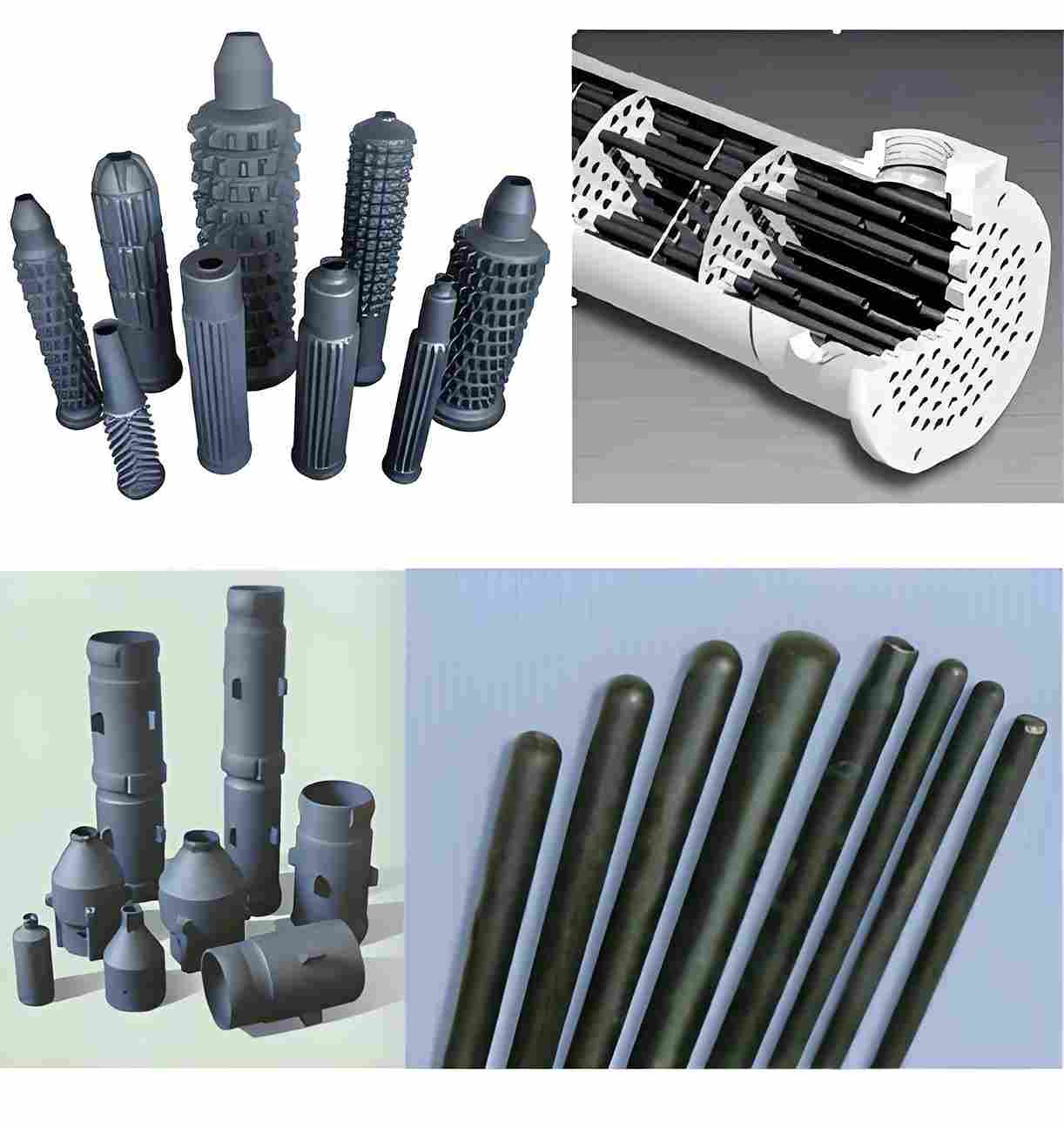
Designing high-temperature furnaces is always a balancing act between thermal efficiency, temperature uniformity, mechanical reliability and maintenance cost. Steel and traditional refractories can only go so far before oxidation, creep or cracking become daily problems.
Silicon carbide tubes and burners give furnace designers and operators a way to push performance further without constantly fighting material limits. With high thermal conductivity, oxidation resistance and strong mechanical behaviour at temperature, SiC components are now standard in many modern high-temperature furnace designs.
This article explains how silicon carbide tubes and burners fit into high-temperature furnace design, the advantages they bring and key engineering considerations when applying them.
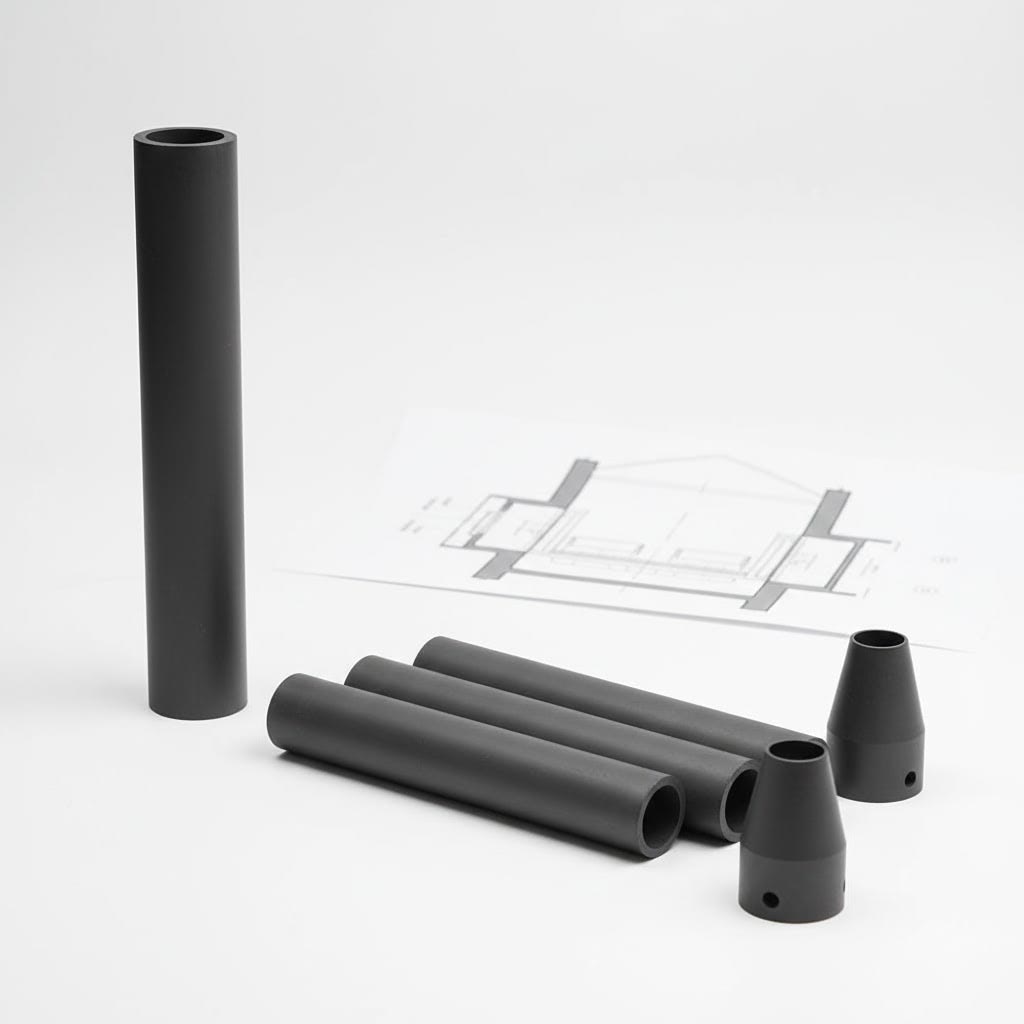
High-Temperature Furnaces: What Really Limits Performance
Industrial furnaces, as discussed in the context of industrial furnaces and heat transfer, face a combination of constraints:
- Temperature capability: maximum allowable temperature before materials creep, oxidise or deform.
- Heat transfer: how efficiently energy moves from the burner or heating element into the load.
- Temperature uniformity: ability to maintain a tight temperature window across the working zone.
- Lifetime and maintenance: how often tubes, burners and furnace linings need replacement.
- Fuel or power consumption: energy required per tonne of product or per cycle.
In many designs, metallic tubes and conventional refractory burner blocks are the limiting factors. They suffer oxidation at elevated temperatures, bow or crack under thermal cycling and restrict heat transfer efficiency.
Why Silicon Carbide Works in High-Temperature Furnaces
Silicon carbide (SiC) brings a very different property package to furnace design:
- High thermal conductivity: efficient heat transfer through tube walls and burner tiles.
- Excellent high-temperature strength: dimensional stability under sustained thermal load.
- Good thermal shock resistance: tolerance to repeated heating and cooling cycles.
- Oxidation resistance: stable performance in air and many combustion atmospheres up to high temperatures.
- Wear and erosion resistance: robustness against flame impingement and particle-laden flow.
These properties make silicon carbide ideal for components placed directly in the hot zone of the furnace: radiant tubes, protection tubes, burner nozzles, burner tiles and certain structural elements.
Silicon Carbide Tubes in Furnace Design
Silicon carbide tubes are used in several roles inside high-temperature furnaces:
- Radiant tubes: enclose gas burners or electric elements while radiating heat into the furnace chamber.
- Process tubes: carry gases or products through heated zones with controlled atmospheres.
- Protection tubes: shield sensitive elements such as thermocouples or sensors from direct flame and corrosive gases.
Zirsec supplies industrial silicon carbide tubes for high-temperature furnaces used in heat treatment, ceramics, powder metallurgy, petrochemical and specialty material processing.
Key advantages of SiC tubes in furnaces
- Improved heat transfer: higher thermal conductivity than many refractories and steels helps move energy efficiently from inside the tube to the load.
- Stable geometry at temperature: less risk of tube sagging or distortion over time.
- Resistance to oxidation and scaling: better durability in hot air and combustion products.
- Better tolerance to cycling: SiC tubes can handle repeated heat-up and cool-down cycles typical of batch furnaces.
For furnace designers, these benefits translate into more compact designs, higher throughput or higher maximum temperature windows without sacrificing reliability.
Silicon Carbide Burners and Burner Nozzles
Burners are the “heart” of many high-temperature furnaces. Traditional metallic or low-grade refractory burner blocks struggle with flame erosion, thermal shock and chemical attack. Silicon carbide burner nozzles and tiles address these pain points.
- Burner nozzles: silicon carbide nozzles shape and stabilise the flame while resisting erosion and thermal shock.
- Burner tiles and blocks: SiC tiles protect the wall around the burner port from direct flame and hot gas impact.
Zirsec offers silicon carbide nozzles that can be integrated into burner assemblies for high-temperature industrial furnaces.
Key advantages of SiC burners/nozzles
- Shape stability: burner throat geometry remains consistent over long campaigns, preserving flame pattern.
- Resistance to flame erosion: SiC surfaces stand up to high-velocity, high-temperature combustion gases.
- Thermal shock resistance: better survival under frequent ignition cycles and load changes.
- Reduced maintenance frequency: fewer burner-block replacements and less rework around burner ports.
In regenerative and recuperative burner systems, keeping nozzle and tile geometry stable is vital for combustion efficiency and emissions control. Silicon carbide helps maintain these geometries over longer periods.
Design Advantages of Using Silicon Carbide Tubes and Burners Together
The largest benefits appear when SiC tubes and burners are used as a coordinated package in the furnace design:
- Higher operating temperatures: SiC components extend the practical temperature window of the furnace.
- More compact furnace layouts: better heat transfer allows shorter or smaller chambers for the same duty.
- Improved temperature uniformity: stable radiant surfaces and burner geometries reduce hot spots and cold zones.
- Better utilisation of fuel energy: less energy lost to inefficient transfer through low-conductivity materials.
For example, a furnace with silicon carbide radiant tubes driven by SiC burner nozzles can deliver high heat flux with controlled flame interaction, improving both throughput and product quality.
Engineering Considerations When Applying Silicon Carbide
1. Grade Selection and Service Conditions
Different silicon carbide grades exist, such as sintered SiC (SSiC) and reaction-bonded SiC (RBSiC / SiSiC). Selection should be based on:
- Maximum service temperature: sustained and peak temperatures in operation.
- Atmosphere: oxidising, reducing, neutral, or containing specific aggressive species.
- Thermal cycling intensity: number and speed of heat-up/cool-down cycles.
- Mechanical loads: tube spans, support spacing, vibration, thermal expansion constraints.
Furnace designers should work with their silicon carbide supplier to match grade and geometry to the real duty rather than relying only on catalogue values.
2. Support and Expansion Design
Silicon carbide behaves differently from metals in terms of expansion and fracture behaviour. Good design practice includes:
- Proper tube support spacing to control bending stress.
- Allowance for thermal expansion at tube and burner interfaces.
- Avoidance of point loads and concentrated clamping forces on SiC components.
- Use of compliant seals or gaskets where SiC interfaces with steel structures.
If SiC tubes and burners are installed as if they were ductile metal parts, premature damage is almost guaranteed. A small amount of design adjustment pays off in much longer lifetimes.
3. Combustion and Flow Patterns
When using silicon carbide burners and tubes, combustion and flow design should be reviewed:
- Match burner power and flame shape to SiC tube dimensions and furnace volume.
- Avoid local hot spots by distributing burners and tuning flame patterns.
- Ensure that gas flow inside and outside tubes promotes efficient heat transfer without causing erosion.
Because SiC tolerates high temperatures, designers sometimes feel tempted to “push” the system too hard. It is still important to keep conditions within reasonable limits for long-term reliability.
Performance Gains in Practice
When silicon carbide tubes and burners are correctly applied in high-temperature furnace design, plants typically report:
- Shorter heating cycles at the same product quality level.
- Higher allowable setpoints or increased load capacity per cycle.
- Longer component life for tubes, burners and adjacent refractories.
- More stable temperature profiles from batch to batch or coil to coil.
- Reduced downtime for tube and burner replacement.
These benefits can be converted into simple metrics: tonnes per year, kWh or Nm³ fuel per tonne, hours between maintenance outages and scrap rate.
Case Example: Upgrading Furnace Tubes and Burners to Silicon Carbide
Background
An industrial furnace used for heat treatment of metallic components operated at high temperatures with metallic radiant tubes and conventional burner blocks. Problems included tube deformation, burner block cracking and uneven temperature distribution across the load.
Approach
- Replace metallic radiant tubes with silicon carbide tubes sized to fit existing furnace geometry.
- Install silicon carbide burner nozzles at the burner ports and adjust burner tuning to match the new system.
- Review tube support and expansion clearance to reduce bending and thermal stress.
Result
- Tube lifetime increased substantially, with less sagging and fewer tube-related outages.
- Temperature uniformity improved, reducing product variation and rejects.
- Maintenance on burner ports dropped as SiC nozzles resisted cracking and erosion.
FAQ – Silicon Carbide Tubes and Burners in High-Temperature Furnaces
Q1. Can silicon carbide tubes be used in both gas-fired and electric furnaces?
Yes. Silicon carbide tubes are used as radiant tubes in gas-fired furnaces and as protection or support tubes in electric furnaces. The design must be adapted to the heating method, but SiC is compatible with both combustion and electric systems.
Q2. Are silicon carbide burner nozzles only for very high-temperature furnaces?
No. They are certainly valuable in very high-temperature applications, but they also perform well in mid-temperature furnaces where flame erosion and thermal shock are frequent. The decision is often based on lifetime and maintenance economics, not only on maximum temperature.
Q3. How do silicon carbide tubes affect fuel consumption?
Higher thermal conductivity and stable geometry help transfer heat more efficiently to the load, which can reduce fuel consumption per unit of product, especially when combined with good insulation and control. The precise saving depends on furnace design and operation.
Q4. What information should I provide when asking Zirsec about SiC tubes or burners?
Provide furnace type, operating temperatures, atmosphere, burner layout (if gas-fired), tube dimensions, support arrangement and typical failure modes of current components. With this information, Zirsec can recommend suitable silicon carbide tubes and burner nozzles.
Q5. Can I retrofit silicon carbide tubes and burners into an existing furnace?
In many cases, yes. Retrofitting involves checking available space, adapting supports, providing expansion clearance and tuning burners or power settings. Many plants have successfully upgraded existing furnaces to SiC-based components without rebuilding the entire system.
Designing or upgrading a high-temperature furnace? Considering silicon carbide tubes and burners early in the design process can unlock higher temperatures, better efficiency and longer component life, while reducing the maintenance burden that often limits furnace performance.