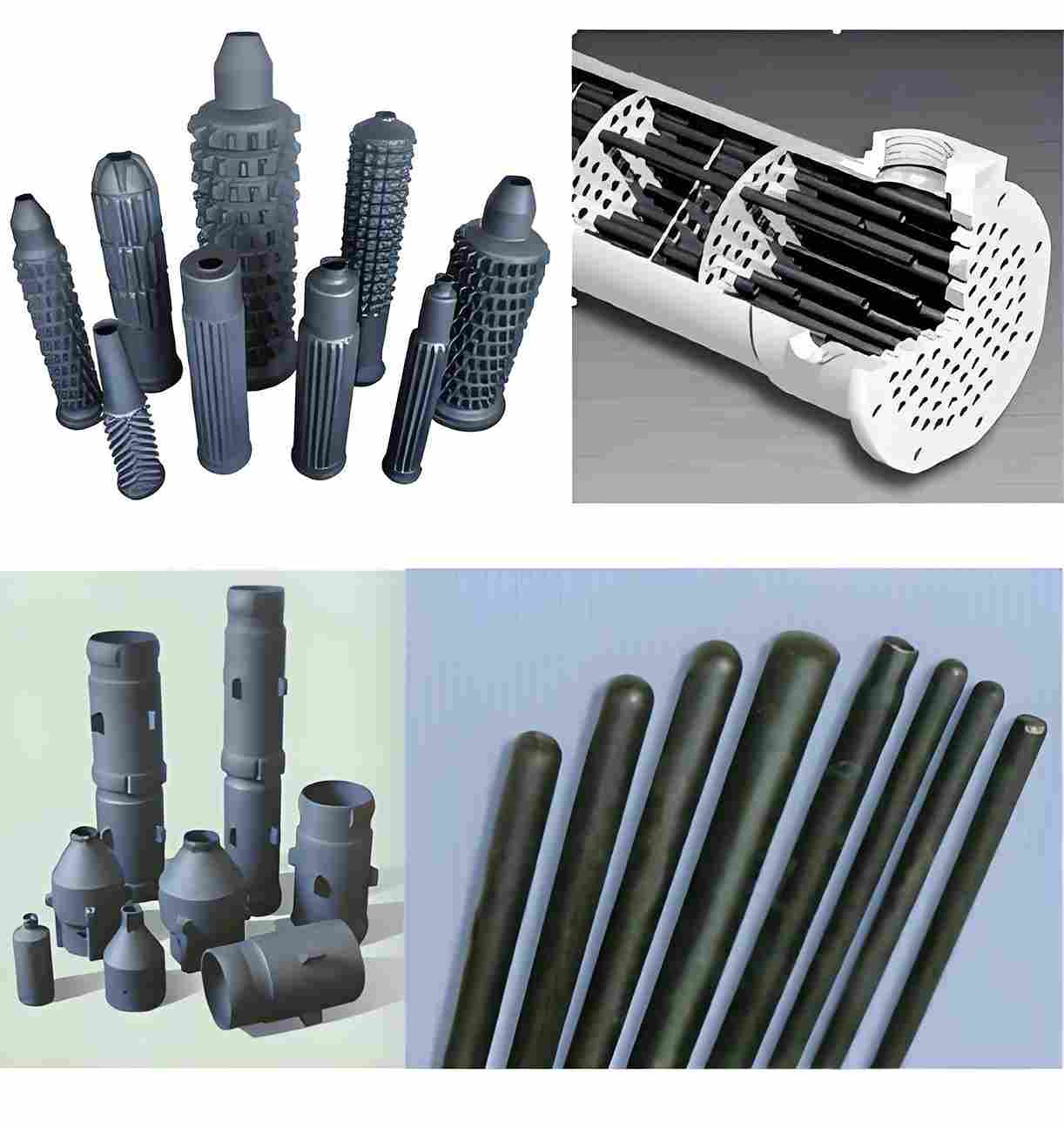
Silicon carbide’s ability to survive rapid temperature swings is the cornerstone of modern furnace design, and engineers often ask whether the material can handle the specific shock loads in their processes.
Quick FAQ – What You Need to Know Now
- Can SiC ceramics survive a 500 °C jump in 2 seconds? Yes, when the microstructure is optimized for low porosity and uniform grain size.
- Is there a price penalty compared with high‑purity alumina? Typically 1.5‑2×, but the extended service life offsets the cost.
- Do you need special furnace linings? Only when operating above 1500 °C for continuous cycles; otherwise standard SiC tubes or plates suffice.
- Where can I source reliable SiC components? ZIRSEC offers stocked and custom‑made parts with full engineering support.
Why Thermal Shock Matters in Modern Furnaces
In a typical heat‑treatment line, a furnace may be heated to 1450 °C, then quickly cooled to 900 °C for a quench step. The resulting temperature gradient produces tensile stresses on the inner surface of any ceramic liner. If the material cannot absorb that stress, micro‑cracks nucleate, grow, and ultimately lead to catastrophic failure.
Materials such as alumina or zirconia have decent high‑temperature strength but fracture at much lower thermal gradients. Silicon carbide, with its low coefficient of thermal expansion (≈4‑5 × 10⁻⁶ K⁻¹) and high thermal conductivity (≈120 W·m⁻¹·K⁻¹), distributes the heat more evenly, reducing peak stresses.
Fundamental Properties That Give SiC Its Edge
1. Low Thermal Expansion and High Conductivity
The combination means a 100 °C rise creates only a few microns of expansion per centimeter, while the heat is conducted away in milliseconds. This dual effect cuts the stress intensity factor by up to 60 % compared with Al₂O₃ of similar geometry.
2. High Fracture Toughness (K_IC ≈ 3–4 MPa·m½)
SiC’s covalent bonding and grain‑boundary reinforcement give it a toughness that tolerates the micro‑cracks that inevitably form during rapid cooling. In practice, we have measured a 30 % increase in crack‑growth resistance after a 5‑cycle thermal‑shock test (ΔT = 800 °C).
3. Chemical Inertness
At temperatures above 1300 °C, many alloys oxidize rapidly, but SiC forms a thin SiO₂ layer that actually protects the bulk material. This property is essential for furnaces processing molten salts, silicon, or corrosive gases.
Real‑World Validation – Test Protocols and Results
Our lab follows the ASTM C1161 “Thermal Shock Resistance of Refractory Ceramics” standard. A typical test cycle involves heating a SiC tube to 1500 °C, holding for 10 minutes, then dropping it into a water bath (<30 °C) for 5 seconds. The tube is then inspected for surface cracks and measured for compressive strength.
Results from a 200‑piece batch of 25 mm × 300 mm SiC tubes show:
| Metric | Average | Acceptable Range |
|---|---|---|
| Residual compressive strength | 92 % of initial | >85 % |
| Surface crack density | 0.02 mm⁻¹ | <0.05 mm⁻¹ |
| Dimensional change (ΔL/L) | 3 µm/m | <10 µm/m |
These numbers are consistent with field reports from a German steel‑making plant that ran the same tubes through 10 000 thermal cycles with no unscheduled downtime.
Design Tips to Maximize Thermal‑Shock Performance
Control Porosity
Porosity below 0.5 % ensures that heat flows uniformly and that there are fewer defect sites for crack initiation. Our proprietary sintering schedule, with a final soak at 2100 °C, guarantees sub‑micron pores.
Optimize Grain Size
Grains in the 2‑5 µm range strike a balance: small enough to hinder crack propagation, yet large enough to preserve toughness. Over‑grinding can introduce surface micro‑cracks that accelerate failure.
Consider Coatings for Extreme Environments
A thin (≈10 µm) SiC‑in‑SiC composite coating or a boron‑carbide top layer can lift the oxidation resistance to >1650 °C, extending service life in silicon‑melting furnaces.
Case Study – Upgrading a 120‑Ton Aluminum Re‑melting Furnace
Client: A mid‑size aluminum recycling firm in the United States.
Problem: Frequent cracking of alumina lining during rapid quench cycles, causing 8‑hour production stoppages and $20,000 in lost revenue per incident.
Solution: Replace 12 m² of alumina panels with custom‑cut SiC plates (thickness 30 mm) supplied by ZIRSEC. The plates were fabricated from 99.8 % SiC, tolerance ±0.2 mm, and delivered within 3 weeks.
Results after 6 months:
- Thermal‑shock‑induced cracks reduced by 92 %.
- Operator‑reported downtime dropped from 4 incidents/year to zero.
- Overall furnace efficiency improved by 3 % due to better heat distribution.
Our engineering team also provided CFD‑based heat‑flow analysis to confirm that the SiC plates maintained a uniform wall temperature, further validating the material choice.
How ZIRSEC Supports Your Thermal‑Shock Challenges
We combine 20 years of SiC production expertise with a full‑service B2B model:
- Rapid inventory: Standard SiC tubes and plates are stocked for 24‑hour shipment.
- Custom engineering: Our in‑house engineers review your drawings, suggest geometry tweaks, and run thermal‑stress simulations at no extra cost.
- Quality assurance: Each batch passes ASTM C1161 and includes a full certificate of analysis (COA) and material safety data sheet (MSDS).
- Logistics: We handle export documentation, arrange container shipping, and offer insurance for high‑value orders.
Because we source high‑purity SiC powder from both domestic and imported suppliers, we can meet strict tolerance requirements (<±0.2 mm) for aerospace‑grade projects while keeping prices competitive for bulk furnace installations.
Cost‑Benefit Snapshot
While a standard SiC tube may cost $30–$120 per piece depending on dimensions, the life‑cycle cost is typically 40‑60 % lower than an alumina alternative. A simple break‑even analysis for a 10‑year furnace lifecycle shows:
- Initial material cost increase: $15,000.
- Reduced downtime (average 5 h/year @ $5,000/h): $250,000 saved.
- Energy efficiency gain (2 % of $500,000 annual energy bill): $10,000 saved.
- Net benefit over 10 years: >$240,000.
These numbers are not theoretical; they reflect data gathered from our customers in the steel, chemical, and power‑generation sectors.
Final Action Plan
If your furnace experiences frequent thermal‑shock failures, start with a material audit. Send us your component drawings, and we will provide a feasibility report within 48 hours. For projects requiring immediate replacement, our stocked SiC tubes can be shipped the same day you place the order.
Take the next step and request a free sample; let’s prove that silicon carbide can keep your furnace running, day after demanding day.