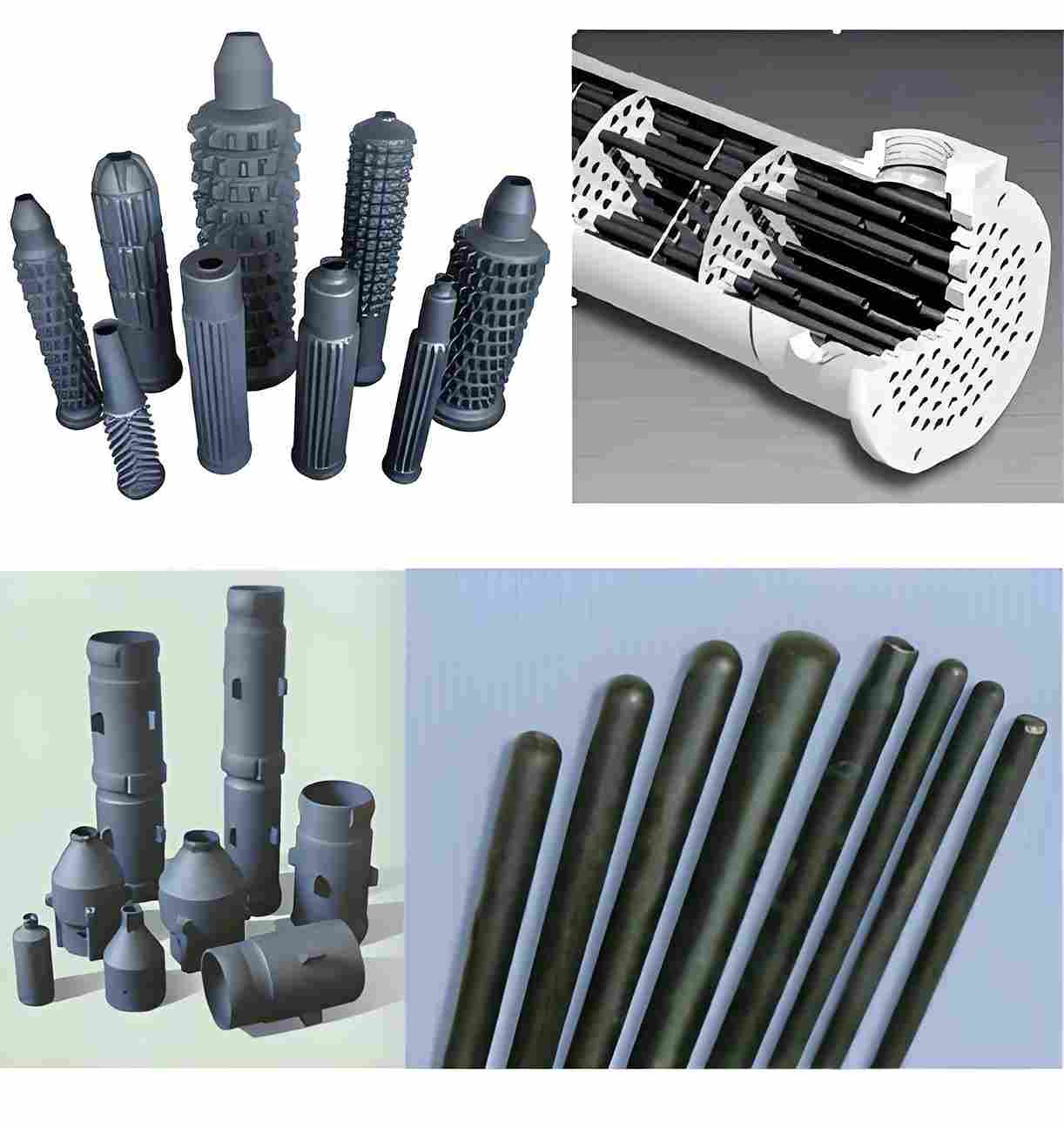
Two seemingly identical SiC components can deliver opposite results because the name hides a complex web of material, process and quality variables.
Quick Summary
- Same part name does not guarantee identical microstructure, density or surface finish.
- Key differentiators are raw material purity, sintering route, grain size, post‑heat‑treatment and dimensional tolerance.
- Ask for COA, micro‑graph, crush strength and thermal‑shock data before committing to a batch.
- ZIRSEC offers in‑house QC, 20 years of SiC experience and 24‑hour stock for standard sizes.
What engineers really worry about when they see the same part name
Most procurement teams search for “silicon carbide seal ring” or “SiC tube” and stop at the first catalog that matches the drawing. The hidden pain points are:
- Unexpected premature failure. A tube that cracks at 1350 °C after only a few heat‑up cycles.
- Dimensional out‑of‑tolerance. A seal ring that is ±0.4 mm instead of the required ±0.1 mm, causing leakage.
- Supply inconsistency. One batch meets spec, the next batch shows a 15 % drop in compressive strength.
These issues stem from factors that are invisible on a part drawing but are critical to performance.
Hidden variables that turn “same name” into “different performance”
1. Raw material purity and source
Silicon carbide powder is sold with a purity rating ranging from 95 % to >99.9 %. Impurities such as iron, aluminum or free carbon act as stress‑concentration points during high‑temperature service. A batch sourced from a domestic supplier in China may contain 0.5 % Fe₂O₃, while a premium European lot stays below 0.05 %.
2. Grain size distribution
Fine‑grained SiC (≤1 µm) provides higher bend strength but can be more vulnerable to thermal shock. Coarse‑grained material (5‑10 µm) improves thermal shock resistance but reduces ultimate strength. Two manufacturers may both claim “d50 = 2 µm” yet one actually has a bimodal distribution that skews performance.
3. Sintering route
Pressureless sintering, hot‑pressing, spark plasma sintering (SPS) and reaction‑bonded SiC each produce a distinct density and residual porosity. For example, a pressureless‑sintered tube typically reaches 96 % theoretical density, while hot‑pressed parts exceed 99 %. The remaining porosity dictates gas permeability and creep rate at 1500 °C.
4. Post‑heat‑treatment
Annealing in an inert atmosphere can relieve internal stresses and grow a protective SiO₂ layer that improves oxidation resistance. Skipping this step can cause the same part to oxidize 3× faster, shortening lifespan in oxidizing environments.
5. Surface finish and machining tolerance
Surface roughness (Ra) influences seal integrity and wear. A seal ring with Ra 0.8 µm passes a high‑speed pump test, while the same nominal part with Ra 3.2 µm wears out after 200 h. Dimensional tolerance (±0.1 mm vs ±0.5 mm) determines whether the part can be assembled without additional re‑machining.
6. Quality control documentation
Certificates of Analysis (COA), melt‑batch records, and batch‑specific mechanical test reports are rarely shipped with the product. Without them, the buyer cannot trace a failure back to a specific production run.
Real‑world case studies that illustrate the risk
Case A – Furnace tube for a steel‑making reheating furnace
Customer A ordered a 75 mm × 3000 mm SiC tube, specifying “SiC tube, 1500 °C continuous operation”. The first batch, sourced from Supplier X, performed flawlessly for 12 months. The second batch, supplied six months later under the same part number, began to develop micro‑cracks after only 200 h of operation.
Root‑cause analysis (RCA) performed by the end user revealed:
- Raw powder purity dropped from 99.8 % to 97.5 % (increase in Fe₂O₃).
- Sintering temperature was lowered by 50 °C to reduce energy cost, resulting in 94 % density and 12 % residual porosity.
- No post‑anneal step was applied, leaving a thin SiO₂ layer that oxidized rapidly.
The downstream cost was a forced shutdown, an estimated loss of $22,000, and a rush order for a replacement tube that delayed the plant’s production schedule by two weeks.
Case B – SiC seal ring for a high‑pressure chemical pump
Customer B specified a “SiC seal ring, 300 MPa crush strength” for a corrosive pump handling hot sulfuric acid. Two suppliers delivered parts stamped with the same drawing number.
After three months in service, Supplier Y’s rings showed a 30 % drop in seal pressure, while Supplier Z’s maintained performance. A comparative lab test uncovered:
- Supplier Y used pressureless sintering (96 % density) and did not polish the inner surface, yielding Ra 3.2 µm.
- Supplier Z employed hot‑pressing (99 % density) and performed a fine mechanical polish (Ra 0.8 µm).
- The difference in surface finish created a higher friction coefficient, accelerating wear in the abrasive acid environment.
This example shows that “same name” does not guarantee the same wear life, especially in aggressive chemical media.
Key parameters you must verify before buying
| Parameter | Why it matters | Typical acceptable range for high‑temp applications |
|---|---|---|
| SiC purity (≥ 98 %) | Reduces brittle fracture initiation sites | 98‑99.9 % |
| Grain size (median) | Balances strength vs thermal‑shock resistance | 0.5‑2 µm (fine) or 5‑10 µm (coarse) |
| Bulk density | Controls porosity‑driven creep | ≥ 96 % theoretical |
| Surface roughness (Ra) | Directly influences seal leakage & wear | ≤ 1.0 µm for seals, ≤ 3.0 µm for tubes |
| Dimensional tolerance | Ensures proper assembly without re‑machining | ±0.1 mm (precision) or ±0.5 mm (standard) |
| Crush/ bending strength | Predicts load‑bearing capability | > 130 MPa (compressive) |
| Thermal‑shock resistance (ΔT) | Prevents cracking during rapid temp changes | > 400 °C |
Practical checklist for engineers and procurement teams
- Request the latest COA and raw‑material mill‑test report for the specific batch.
- Ask the supplier to provide a micro‑graph (SEM) showing grain size distribution.
- Insist on a certified crush‑strength test and thermal‑shock test result for the exact geometry you order.
- Verify the sintering route (hot‑press, SPS, pressureless) and confirm post‑heat‑treatment steps.
- Obtain a surface‑finish specification, ideally with measured Ra value.
- Check whether the supplier can supply a small sample (5‑20 pcs) for in‑house verification before the full production run.
- Confirm lead time and inventory availability; standard sizes should ship within 24‑48 hours.
- Make sure all documentation (MSDS, COA, test certificates) complies with your import‑customs requirements.
Why ZIRSEC eliminates the guesswork
With two decades of SiC ceramic manufacturing, ZIRSEC has built a closed‑loop quality system that tracks every variable from powder batch to finished part.
- In‑house powder sourcing. We procure SiC powder with ≥ 99.8 % purity and keep a certified inventory to avoid sudden quality shifts.
- Multiple sintering lines. Hot‑press, pressureless and SPS capabilities let us match the exact density and grain‑size profile you need.
- Automated dimensional inspection. Every part passes a CMM scan with ±0.05 mm tolerance before it leaves the floor.
- Full documentation package. COA, SEM images, crush‑strength curves and thermal‑shock data are uploaded to a secure portal for your review.
- Rapid stock response. Over 200 standard SiC sizes are kept at 24‑hour ready stock; custom orders start within 2 weeks after CAD approval.
For a concrete illustration, our Silicon Carbide Tubes line offers a 96 %‑99 % density range, selectable grain sizes, and optional annealing—all documented per batch.
Frequently Asked Questions (FAQ)
- Do all SiC parts labeled “high‑temperature” survive 1600 °C?
- No. Survival depends on density, grain size, and whether a protective SiO₂ layer was formed during annealing. Ask for the exact test temperature and duration.
- Can I get a price quote without a full engineering drawing?
- Yes. Provide key dimensions (diameter, length, tolerance) and the intended operating environment; we will return a preliminary quote and suggest the optimal sintering route.
- How do you handle small‑batch custom orders?
- We accept orders as low as 10 pieces for custom geometry. The first prototype is machined within 2‑3 weeks, and once approved, the batch is scaled up.
- What warranty do you provide on mechanical strength?
- All parts come with a 12‑month performance warranty based on the documented crush strength. Failure due to material defects is replaced at no charge.
Take the next step
Stop guessing based on part names alone. Request a tailored data package from ZIRSEC, run a quick sample test, and lock in a supply chain that guarantees the performance you need. Visit our homepage or contact us at info@zirsec.com to start the conversation.