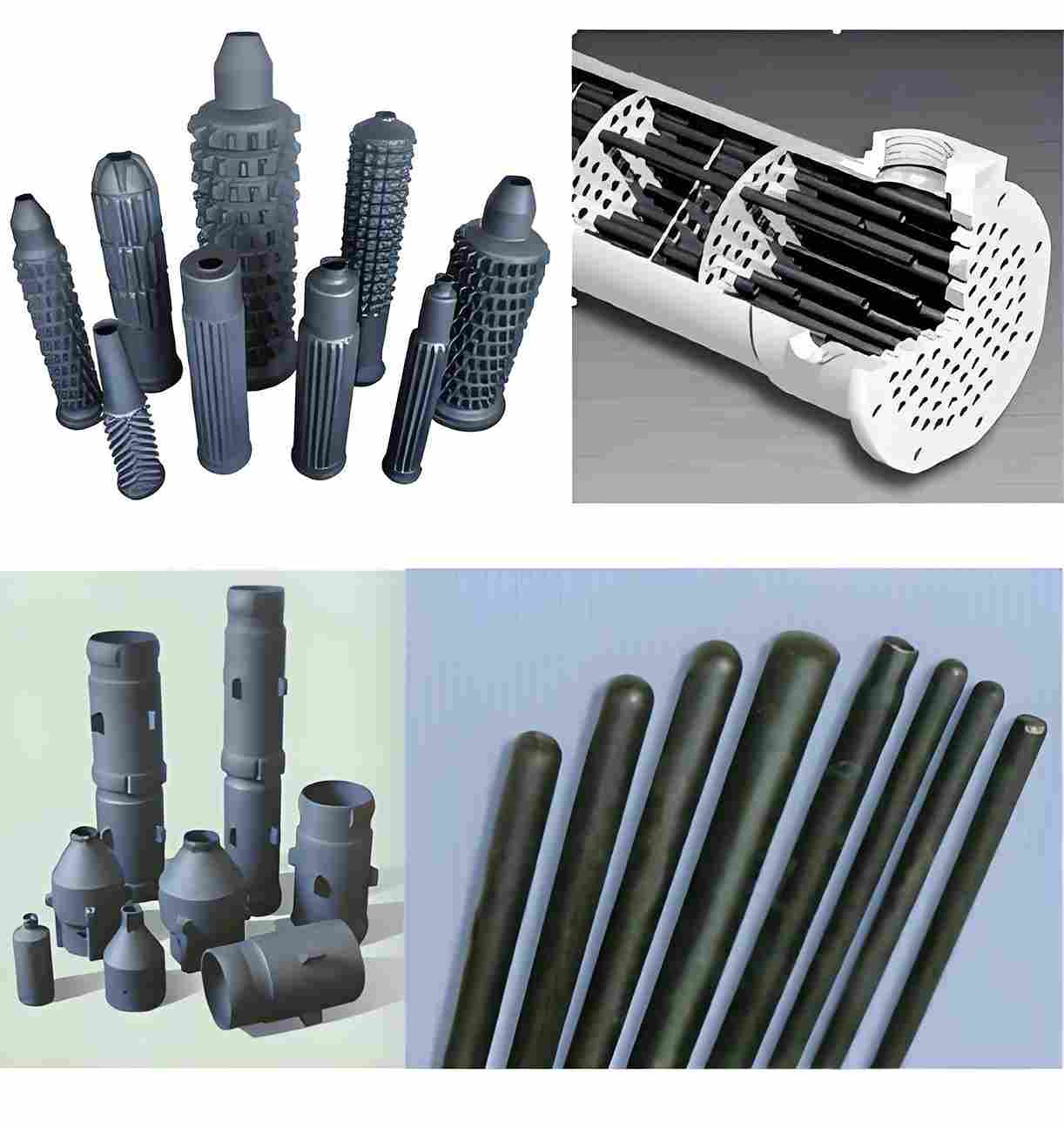
Silicon carbide (SiC) tubes and plates can survive extreme temperatures, rapid cycling, and aggressive media. Most unexpected failures in service are not because SiC is “too weak,” but because the component was exposed to thermal shock beyond what the design and operating conditions can tolerate.
This guide explains what causes thermal shock in silicon carbide tubes and plates, and gives practical steps for preventing it through smarter design, installation, operation, and shutdown procedures.
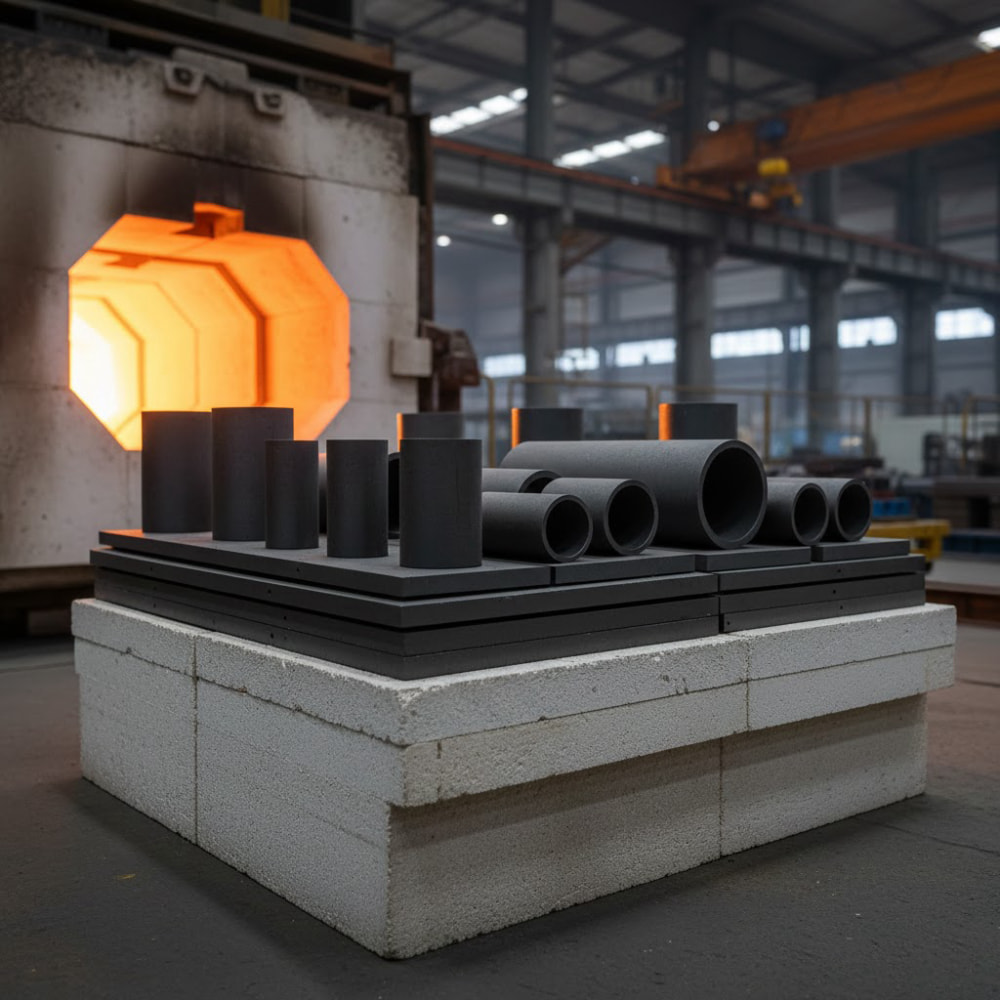
What thermal shock does to SiC tubes and plates
Thermal shock occurs when the temperature within a component changes too quickly or too unevenly. Different regions expand or contract at different rates, creating internal stresses that can exceed the material’s strength and cause cracking.
For SiC tubes and plates, typical thermal-shock failure patterns include:
- Radial or longitudinal cracks in tubes, often starting near burner hot spots or sudden cooling zones
- Edge or corner cracks in plates and kiln furniture caused by rapid heating or cooling
- Cracks around supports or contact points where temperature gradients and mechanical constraints are highest
Silicon carbide has better thermal shock resistance than many ceramics, but it is still a brittle material. Reasonable protection from extreme gradients is essential if you want consistent, long service life.
Design choices that reduce thermal shock risk
Prevention starts long before the tube or plate goes into the furnace. Good design gives you more “buffer” against real-world operating mistakes.
Choose appropriate wall thickness and plate geometry
- Thicker is not always safer. Very thick sections can build large internal gradients during rapid heating or cooling, increasing thermal stress.
- For tubes, select a wall thickness that balances strength and thermal response. For long, slender tubes, avoid excessively thick walls unless structurally required.
- For plates and kiln furniture, use ribbed or hollow designs where possible to reduce mass and help more uniform heating.
Support and clearance design
- Ensure tubes and plates are properly supported so they are not cantilevered or point-loaded in a way that concentrates stress during thermal expansion.
- Provide adequate expansion clearance at ends and around supports so components can expand and contract freely.
- Avoid rigidly clamping SiC parts between cold, massive steel structures that restrain thermal movement.
Match material grade to duty
- Different SiC grades (RBSiC/SiSiC, SSiC, RSiC) have different combinations of thermal conductivity, porosity, and strength.
- For very rapid cycling or severe temperature gradients, choose grades and designs optimized for thermal shock, not just maximum strength on paper.
If you are designing a new system or upgrading components, work with your supplier to define realistic temperature ramps and gradients, then choose a tube or plate design that can handle them.
Installation and start-up: where most damage begins
Many silicon carbide components are weakened or damaged during the first few hours of life. A controlled installation and start-up procedure dramatically reduces that risk.
Drying before heat-up
- Ensure tubes and plates are completely dry before firing. Residual moisture inside porous areas or at interfaces can flash to steam during the first heat-up.
- If parts were stored in a humid environment, allow time in a warm, dry area before loading the furnace.
Controlled initial heating
- Avoid going directly from ambient to full operating temperature on the first cycle.
- Use stepwise ramps with dwell periods (for example: ambient → 200 °C → 600 °C → operating temperature) so the entire component can equalize.
- In fuel-fired systems, verify burner alignment to prevent one area of a tube or plate receiving a concentrated flame during start-up.
Check alignment and support in hot condition
- After the first heat-up, visually confirm that tubes and plates have not shifted or overloaded supports.
- Misalignment can cause localized hot spots from flame impingement or uneven gas flow, increasing thermal shock risk.
Operating practices to prevent thermal shock
Even a perfect design can be destroyed by everyday bad habits. Small operational changes accumulate into longer service life for SiC components.
Avoid sudden temperature steps
- Limit setpoint jumps on furnace controllers. Increase temperature in controlled ramps rather than large, instantaneous steps.
- When increasing production rate, avoid aggressive changes in fuel input, fan speed, or power that create steep gradients.
Manage door openings and cold air ingress
- Minimize duration and frequency of furnace door openings, especially at peak temperatures.
- Use curtains, vestibules, or baffles where possible to reduce direct cold-air impingement on hot tubes and plates.
- Train operators to avoid parking cold loads directly in front of very hot SiC surfaces immediately after opening.
Control process media and flow changes
- For silicon carbide tubes carrying process gases or liquids, avoid sudden introduction of cold media into a hot tube.
- Ramp flow and temperature together when starting or stopping flow through SiC components.
- Use mixing or preheating where practical to avoid extreme inlet temperature differences.
Use realistic cycling schedules
- If possible, avoid constant “on–off–on–off” cycling at full range. A smaller, controlled temperature band is easier on the ceramic.
- Where frequent cycling is unavoidable, ensure that ramp rates are tuned to the component’s allowed gradients.
Shutdown and emergency procedures
How you cool the furnace can be just as important as how you heat it.
Normal shutdown
- Plan for a gradual cooldown, stepping through one or more intermediate temperature plateaus.
- Avoid forced cooling with cold air jets or fans directed at hot SiC tubes or plates.
- Keep doors closed as long as practical to avoid steep surface temperature drops.
Emergency situations
- If you must shut down rapidly, prioritize uniform cooling over maximum cooling rate.
- Do not spray water on hot SiC components under any circumstances. Water quenching is a near-guaranteed way to crack them.
Inspection routines to catch issues early
Regular inspection can identify thermal-shock damage while it is still manageable, before catastrophic failure.
- Visual crack checks: Look for hairline cracks, especially around burner zones, tube supports, and plate corners.
- Color and surface changes: Discoloration or roughened regions can indicate localized overheating or chemical attack linked to poor heat distribution.
- Geometry checks: For long tubes and large plates, watch for bowing, warping, or distortion that signals uneven heating.
- Logging: Track cycles, major upset events, and any observed damage for each tube or plate.
Integrating prevention into your standard procedures
To consistently prevent thermal shock, you need more than a good material – you need repeatable procedures:
- Document start-up, operating, and shutdown ramps and make them part of the standard operating procedure.
- Include checks for tube and plate condition in regular maintenance and inspection rounds.
- Train operators on why thermal shock happens so they understand the cost of shortcutting temperature ramps.
- Review furnace control tuning with actual field data to ensure ramp rates are realistic.
When prevention becomes part of daily routines, your silicon carbide components stop being a frequent failure point and become predictable, long-life assets.
FAQ: Preventing thermal shock in SiC tubes and plates
1. How fast can I safely heat silicon carbide tubes and plates?
There is no universal safe ramp rate because it depends on geometry, wall thickness, grade, and installation. As a rule, avoid sudden jumps of several hundred degrees in a few minutes. Use supplier-recommended ramp profiles and test gradually, watching for damage or distortion at each step.
2. Does higher thermal conductivity automatically mean better thermal shock resistance?
Higher thermal conductivity helps reduce temperature gradients and can improve thermal shock resistance, but it is not the only factor. Microstructure, porosity, and mechanical strength also matter. Good design and operating practice are still necessary even with high-conductivity SiC.
3. Are plates more vulnerable to thermal shock than tubes?
Both can be vulnerable, but for different reasons. Plates often have sharp corners and large flat areas that see steep gradients, especially near doors and burners. Tubes can suffer localized shock where cold media enters or flames impinge. Prevention is about controlling gradients in each specific geometry.
4. Can I mix silicon carbide plates with other refractory materials in the same furnace?
Yes, but be aware that different materials heat up and cool down at different rates. Design the layout so that SiC components are not forced to follow the extreme behaviour of more insulating or slower-heating materials, and avoid rigid connections that prevent independent expansion.
5. How do I know if a crack is caused by thermal shock or by mechanical overload?
Thermal-shock cracks often start at hot spots, corners, or areas exposed to sudden temperature change, and may appear after start-up or shutdown events. Mechanical cracks are more commonly associated with obvious impact, misalignment, or overloading. Reviewing temperature logs and operating history around the time of crack appearance usually gives strong clues.
6. Does coating or glazing the surface help with thermal shock resistance?
Some coatings and glazes can reduce chemical attack or slag adhesion, indirectly helping with lifetime, but they do not eliminate thermal shock risk. If a coating changes emissivity or local heat transfer, it can even create new hot spots. Any coating should be tested on a limited scale before full deployment.
7. What is the quickest improvement I can make if I’m already seeing thermal-shock failures?
The fastest wins usually come from slowing down the most aggressive temperature changes: initial heat-up, emergency shutdowns, and sudden setpoint jumps. Revising these parts of your operating procedure often has an immediate effect on component life, even before you change hardware.
8. How can Zirsec support thermal shock prevention for my application?
Zirsec supplies silicon carbide tubes and silicon carbide plates engineered for high-temperature duty, and can review your operating conditions, ramp profiles, and support design. By combining the right SiC grade and geometry with realistic thermal management in your furnace, you can dramatically reduce thermal-shock-related failures and extend service life.