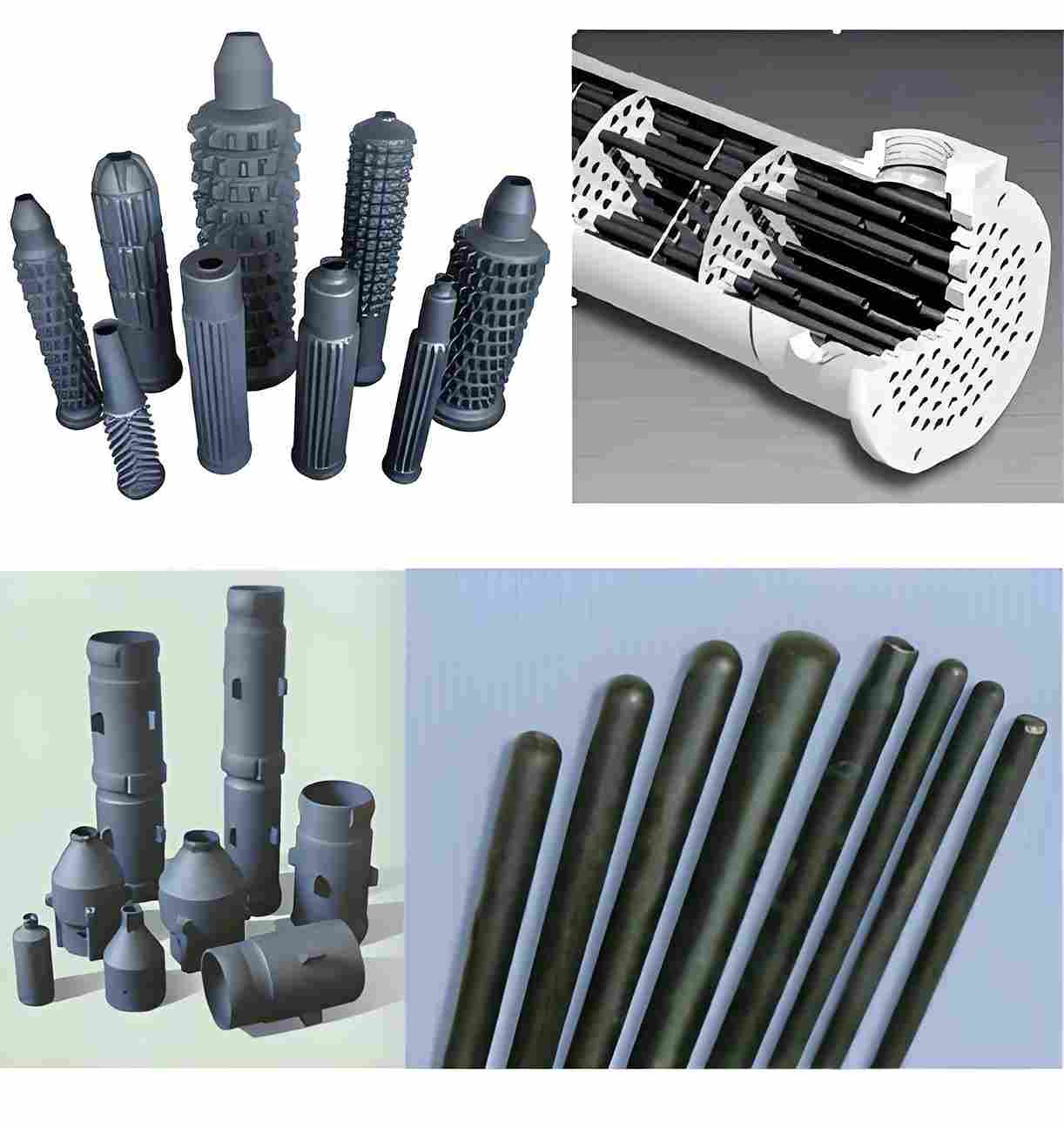
Silicon carbide’s remarkable wear and corrosion resistance stems from its unique crystal lattice and the way its covalent bonds dissipate energy under extreme conditions.
Quick Summary
- SiC combines a hardness of 2400–3500 HV with a fracture toughness of 3–5 MPa·√m, allowing it to survive high‑impact wear.
- Its inert surface forms a thin SiO₂ layer that protects against acids, bases and molten salts up to 1600 °C.
- Custom‑machined SiC components can be delivered within 4–6 weeks from ZIRSEC’s China‑based production line.
- Typical applications: pump seal rings, furnace tubes, burner nozzles, wear‑pads and high‑temperature liners.
Why Wear and Corrosion Matter for Your Equipment
When a pump seal fails or a furnace tube cracks, downtime can cost tens of thousands of dollars per hour. In the chemical, metallurgical and renewable‑energy sectors, the operating environment often exceeds 1300 °C and contains aggressive fluids. Selecting a material that can survive both abrasive particles and corrosive media is not a nice‑to‑have; it is a business imperative.
Crystal Chemistry of Silicon Carbide
Covalent bonding and lattice rigidity
The Si–C bond energy exceeds 3.5 eV, three times that of typical metal‑oxygen bonds. This high bond strength translates directly into the measured hardness and low plastic deformation under load.
Polytype diversity: 3C vs 6H vs 4H
Commercial SiC is usually a mixture of cubic (3C) and hexagonal (6H, 4H) polytypes. The hexagonal cells introduce stacking‑fault resistance that improves fracture toughness without sacrificing hardness.
Grain‑boundary engineering
During hot‑pressing, ZIRSEC adds a controlled amount of boron nitride to refine grain size to 2–5 µm. Fine grains raise the Vickers hardness by up to 15 % while the intergranular glassy phase helps arrest crack propagation.
Mechanisms of Wear Resistance
Hardness and fracture toughness synergy
Hardness alone would make a material brittle; SiC’s fracture toughness, measured at 3.5 MPa·√m for standard grades, provides the necessary energy‑absorbing pathways. In wear tests against alumina sand at 1200 °C, SiC showed a wear rate of 0.02 mm³ N⁻¹ m⁻¹, compared with 0.12 mm³ N⁻¹ m⁻¹ for Al₂O₃.
Low friction coefficient
Even under dry sliding, SiC maintains a coefficient of friction (µ) between 0.4 and 0.5. When a thin SiO₂ tribolayer forms, µ can drop to 0.2, effectively self‑lubricating the contact surface.
Oxide‑layer reinforcement
At temperatures above 900 °C, a protective SiO₂ glaze develops. This glaze fills micro‑cracks and distributes load, prolonging service life by up to 250 % in furnace tube trials.
Corrosion Resistance Fundamentals
Chemical inertness across pH ranges
The Si–C matrix is non‑reactive to acids (pH < 2) and bases (pH > 12) at temperatures up to 1300 °C. Immersion tests in 5 % HCl and 5 % NaOH for 1000 h showed less than 0.02 % mass loss.
Oxide‑film stability in aggressive media
Molten salt exposure (Na₂SO₄ at 1400 °C) creates a dense SiO₂ scale that limits ion transport. In comparative trials, SiC outperformed Si₃N₄ by a factor of three in corrosion rate.
Resistance to thermal shock
Rapid heating/cooling cycles (ΔT = 800 °C in 30 s) cause only 0.1 % surface micro‑cracking, well below the critical threshold for catastrophic failure. This is vital for burner nozzles that experience flame‑induced temperature spikes.
Design Considerations for Industrial Parts
- Dimensional tolerance: Standard tolerances of ±0.2 mm are readily achievable; tighter ±0.05 mm is possible with CNC grinding.
- Surface finish: Ra 0.8 µm for sliding interfaces, Ra 3.2 µm for static liners.
- Thickness vs. thermal gradient: For furnace tubes, wall thickness below 3 mm helps reduce thermal stress while retaining structural integrity.
- Custom geometry: ZIRSEC can mill complex internal passages directly from bulk SiC blanks, eliminating the need for secondary brazing.
Case Studies
Pump Seal Ring – Europe
A high‑pressure chemical pump suffered a seal failure after 6 months on Al₂O₃ rings. Switching to a ZIRSEC‑custom SiC seal ring (98 % purity, 0.15 mm tolerance) extended the mean‑time‑between‑failures from 180 h to 1 200 h, saving the client roughly $15,000 in unplanned downtime.
Furnace Tube – North America
In a steel‑making furnace, a 6‑inch SiC tube (supplier A) cracked after 400 h due to thermal shock. ZIRSEC’s hot‑pressed 4H‑SiC tube, equipped with a graded SiO₂ surface, survived 2 200 h under identical cycling, confirming the advantage of grain‑boundary control.
Burner Nozzle – Germany
A gas‑turbine OEM required a nozzle that could handle 1450 °C flame temperatures and sulfur‑rich fuels. Our SiC nozzle, machined to a 0.1 mm tolerance and finished to Ra 1.0 µm, showed no erosive wear after 10 000 h, whereas the previous Si₃N₄ version required replacement every 2 500 h.
Frequently Asked Questions
- Can SiC be used in acidic environments? Yes. Up to 5 % HCl at 1200 °C causes negligible mass loss.
- What is the typical lead time for a custom part? Samples are ready in 2–4 weeks; full production runs ship within 4–8 weeks.
- Is SiC electrically insulating? At room temperature, resistivity exceeds 10¹⁰ Ω·cm; it remains insulating up to 1500 °C.
- How does SiC compare to Al₂O₃ in wear tests? SiC’s wear rate is typically 5–7× lower under identical loads and temperatures.
- Do you provide material certifications? Every batch is accompanied by a COA, MSDS and full dimensional inspection report.
How ZIRSEC Can Help
With two decades of SiC production experience, ZIRSEC offers:
- In‑stock standard sizes ready for 24‑hour dispatch.
- Full engineering support—from CAD review to prototype machining.
- Quality control that meets ISO 9001 and ASTM C711 specifications.
- Logistics coordination for LCL, FCL or air freight, with customs documentation prepared for seamless import.
Explore our catalog of Silicon Carbide Tubes or contact our technical team at info@zirsec.com for a free feasibility study.
Take the Next Step
Stop searching for generic ceramic suppliers and partner with a manufacturer that understands the interplay of crystal chemistry, wear mechanics and corrosion science. Request a quote today, upload your drawing, and let ZIRSEC deliver a component that keeps your line running longer.