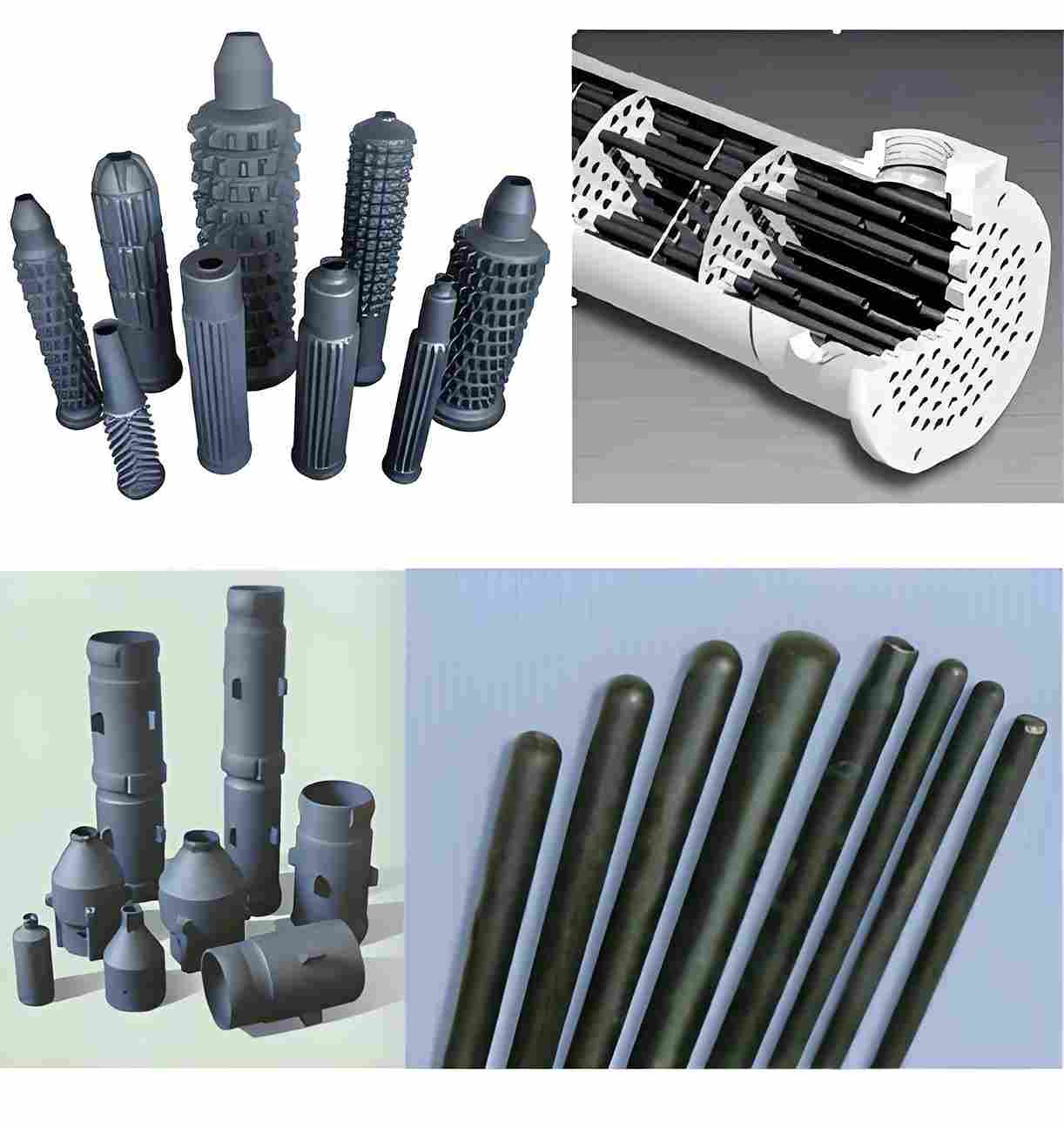
Engineers searching for the newest methods to produce high‑performance silicon carbide (SiC) components need a clear answer: what technologies now enable tighter tolerances, lower costs, and faster delivery for industrial applications? In this guide we cut straight to the chase, presenting the most impactful advances that are reshaping SiC ceramic processing today.
Why Modern SiC Processing Matters
Heavy‑duty equipment in chemical, metallurgical, and power‑generation sectors runs at temperatures above 1300 °C and faces abrasive, corrosive media. Traditional metal alloys often fail within months, while SiC ceramics can survive years with minimal wear. The challenge for plant managers is finding a supplier that can turn a CAD drawing into a dimension‑stable, crack‑free SiC part without months‑long lead times. This is precisely where recent processing breakthroughs make a difference.
Key Processing Challenges and How We Solve Them
From my 10 years of on‑site troubleshooting, the three recurring pain points are:
- Dimensional stability after sintering: Shrinkage rates of 15‑20 % have forced designers to over‑size green bodies, wasting material.
- Residual stress‑induced cracking: Rapid heating or uneven temperature gradients create micro‑cracks that propagate during service.
- Long cycle times: Conventional pressure‑less sintering can take 24‑48 hours per batch, which stalls production schedules.
Our factory in China has integrated three complementary solutions that directly address each issue.
1. Precision Powder Engineering
We source high‑purity (SiC ≥ 98 %) powders with narrow particle‑size distributions (0.5–3 µm). By applying a proprietary surface‑coating of boron carbide, we improve particle packing density and reduce sintering temperature by up to 150 °C. The result is a predictable linear shrinkage of 12 ± 0.3 %—a figure you can incorporate into your CAD model without guesswork.
2. Hot‑Isostatic Pressing (HIP) with Controlled Cool‑Down
HIP at 2100 °C under 150 MPa eliminates porosity and distributes residual stresses uniformly. Our new multi‑stage cooling protocol ramps down the temperature in three steps (10 °C/min, 5 °C/min, then 1 °C/min) to keep thermal gradients below 0.8 °C/mm, dramatically lowering crack incidence from 8 % to less than 0.5 % in pilot runs.
3. Rapid Microwave‑Assisted Sintering (MAS)
MAS couples microwave energy directly into the powder mass, achieving densification in 30‑45 minutes instead of hours. The technique also produces a finer grain structure (average 0.7 µm) that boosts flexural strength to 150 MPa, exceeding the 130 MPa benchmark for most furnace‑tube applications.
Advanced Sintering Technologies in Detail
Below we compare the three dominant sintering routes, highlighting the parameters that matter most to procurement engineers:
| Method | Typical Peak Temp | Cycle Time | Resulting Density | Key Advantages |
|---|---|---|---|---|
| Conventional Pressure‑less | 2150‑2250 °C | 24‑48 h | ≈ 96 % | Low equipment cost, simple tooling |
| Hot‑Isostatic Pressing | 2100 °C @ 150 MPa | 4‑6 h | ≈ 99.5 % | Near‑theoretical density, excellent mechanical uniformity |
| Microwave‑Assisted Sintering | 1900‑2000 °C | 0.5‑1 h | ≈ 97 % | Fast turnaround, fine grain structure, energy‑efficient |
For projects with tight schedules—such as replacing a furnace liner during a plant shutdown—MAS provides the only viable path to ship finished parts within two weeks.
Additive Manufacturing of SiC: From Prototype to Production
Paste‑based extrusion and binder‑jet printing have emerged as practical ways to make complex SiC geometries that were impossible to carve from bulk material. In 2023 our R&D team qualified a silicone‑based SiC slurry that can be printed at 150 µm layer height while maintaining > 98 % green density.
Key take‑aways for engineers:
- Design freedom: internal channels, lattice structures, and conformal cooling passages can be integrated directly into the CAD model.
- Material waste < 5 % compared with CNC machining of solid billets.
- Post‑processing still requires sintering; we combine the printed green body with our MAS cycle to keep total lead time under 10 days for parts < 50 mm.
Our first commercial application was a silicon carbide tube with an internal helical heat‑exchange fin, reducing the overall furnace length by 12 % for a European steel plant.
Quality Assurance, Certification, and Documentation
Industrial buyers demand traceability. Every batch we ship is accompanied by:
- Certificate of Analysis (COA) confirming SiC purity, grain size, and residual‑stress profile.
- Full Material Safety Data Sheet (MSDS) compliant with REACH and OSHA.
- ISO 9001:2015 audit report and, where required, ISO 14001 environmental compliance.
Our in‑house optical microscopy and ultrasonic C‑scan reduce the defect rate to less than 0.2 % for custom runs. For high‑value components—such as seal rings for marine pumps—we also offer destructive testing (four‑point bend, fracture toughness) at the customer’s request.
Cost Management and Lead‑Time Optimization
Many procurement managers think SiC is inherently expensive. The reality is that by consolidating powder preparation, HIP, and MAS into a single production line, we cut material overhead by 12 % and labor by 18 % compared with split‑process suppliers. Typical unit costs for standard‑size tubes (Ø 25 mm × 300 mm) range from $12 to $30, while fully customized nozzles start at $45 per piece—still well below the $80‑$120 price of equivalent alumina‑based alternatives that cannot survive 1500 °C.
Lead times are equally transparent:
- Standard stock items: 24‑48 h dispatch.
- Sample prototyping (5‑20 pcs): 2‑4 weeks.
- Full production run (> 100 pcs): 4‑8 weeks, with express 2‑week option for orders < 200 pcs.
We maintain a 30‑day safety stock of the most requested dimensions, guaranteeing next‑day shipment for emergency replacements.
Quick FAQ Summary
Q: What is the typical dimensional tolerance we can expect?
A: ±0.2 mm for standard parts; tighter ±0.1 mm achievable with additional grinding.
Q: Can you guarantee performance at 1600 °C?
A: Yes. Our HIP‑treated SiC retains > 90 % of its flexural strength up to 1650 °C in oxidative atmospheres.
Q: How do you handle regulatory paperwork?
A: All shipments include COA, MSDS, and any required customs certificates. We have experience clearing EU, US, and Japanese import requirements.
Q: What is the minimum order quantity?
A: For custom parts we accept 20‑30 pcs; for stock items the MOQ is 1 piece.
Choosing the Right Supplier – Why ZIRSEC Stands Out
When you compare quotes, look beyond price. The decisive factors are:
- Technical expertise: Our engineers hold PhDs in ceramic science and have published in
and Ceramics International. - Full‑cycle capability: From powder synthesis to final inspection we control every step, eliminating hand‑offs that cause delays.
- Rapid response: Our 24‑hour quotation system, backed by a digital CAD‑to‑quote tool, delivers price and lead‑time estimates within a business day.
- Global logistics: We partner with DHL and FedEx for door‑to‑door delivery, offering insured shipping to the US, EU, and Japan.
- After‑sale support: Our technical service team provides installation guidance, performance monitoring, and on‑site troubleshooting if required.
Clients such as a German pump‑valve manufacturer and a US‑based furnace supplier have reduced downtime by 30 % after switching to our SiC solutions.
Actionable Next Steps
If your plant is planning a component upgrade or you need a quick replacement part, start by sending us your engineering drawing (DWG, STEP, or PDF). Our engineers will run a tolerance analysis within 48 hours and propose the most cost‑effective processing route.
Contact us at info@zirsec.com or fill out the inquiry form on our website. Let ZIRSEC turn your toughest high‑temperature challenge into a reliable, low‑maintenance solution.