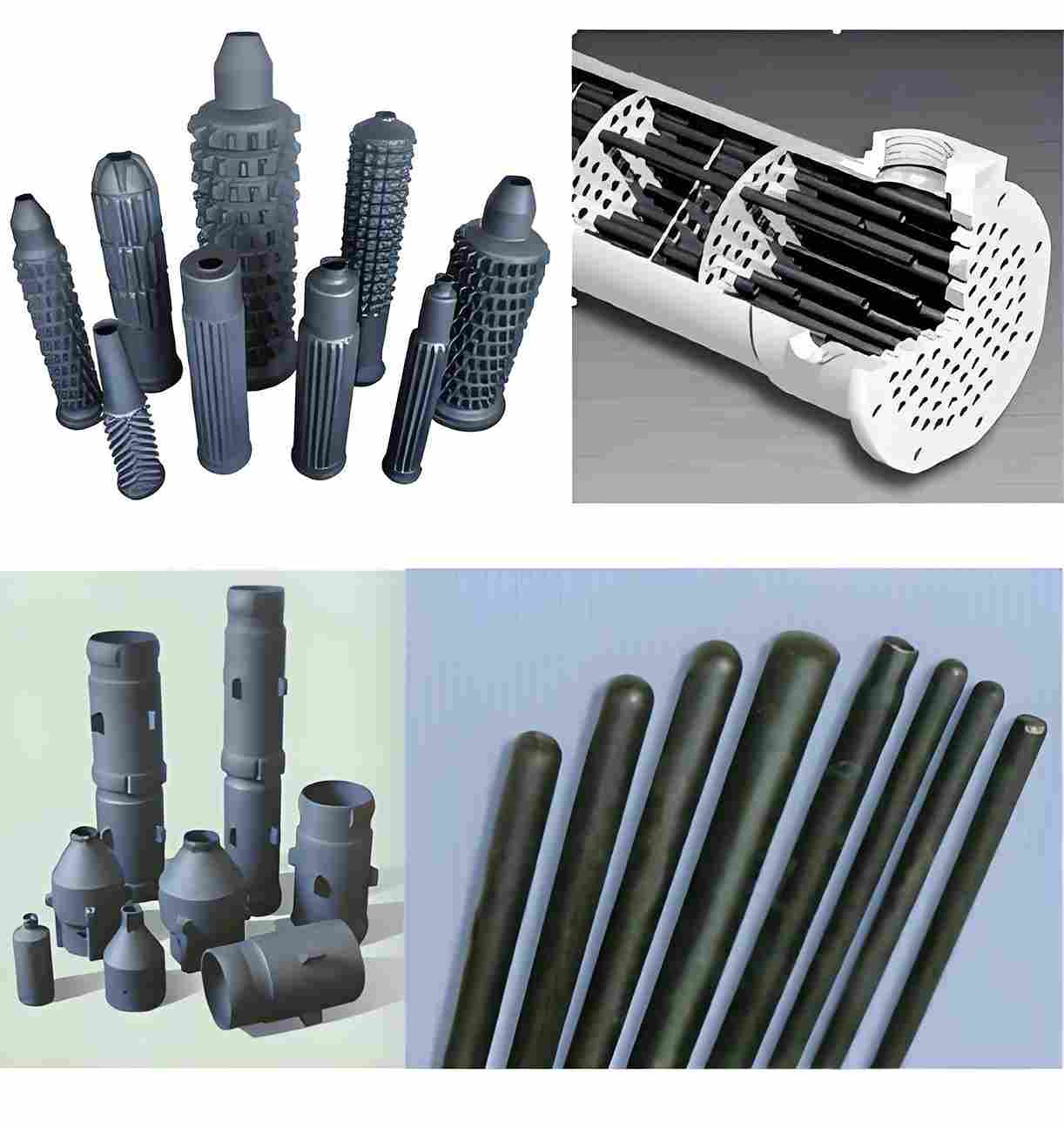
- SiC thermal conductivity (120‑200 W/m·K) far exceeds Al₂O₃ and Si₃N₄, allowing higher heat flux.
- Reduced wall thickness means lower pressure drop and compact heat‑exchanger modules.
- Exceptional high‑temperature stability (up to 1600 °C) eliminates creep and oxidation problems.
- ZIRSEC offers stocked standard sizes and rapid custom‑fabrication of SiC tubes and plates.
When you design a heat exchanger that must operate at 800 °C–1500 °C, the material’s ability to conduct heat quickly becomes the deciding factor; silicon carbide (SiC) delivers that capability while also resisting corrosion and wear. In this guide we answer the most common engineer questions—how much heat can a SiC component move, what design trade‑offs disappear, and which projects have already benefited from the material.
Why Thermal Conductivity Matters in Heat Exchangers
Heat exchangers transfer thermal energy from one fluid stream to another through a solid wall. The rate of transfer is governed by Fourier’s law, Q = k·A·ΔT/L, where k is the material’s thermal conductivity. A higher k lets you achieve the same heat duty with a smaller surface area or a thinner wall, which in turn lowers material cost, weight, and pressure loss.
Fundamental heat‑transfer implications
- Higher heat flux density: With SiC’s k‑value ranging from 120 to 200 W/m·K (depending on purity), you can push 30‑50 % more heat per unit area than alumina (≈30 W/m·K).
- Compact geometry: Engineers can reduce tube wall thickness from 6 mm (Al₂O₃) to 2‑3 mm with SiC, cutting the exchanger’s overall footprint by up to 40 %.
- Lower pumping power: Thinner walls mean lower hydraulic resistance, which translates directly into energy savings for large‑scale plants.
Silicon Carbide’s Thermal Conductivity Compared to Alternative Ceramics
Table 1 shows typical room‑temperature thermal conductivities; at elevated temperatures SiC’s advantage grows because its phonon scattering mechanisms remain favorable.
| Material | k (W/m·K) at 25 °C | k at 1200 °C | Max Continuous Use Temp |
|---|---|---|---|
| Silicon Carbide (SiC) | 120‑200 | 150‑220 | ≈ 1600 °C |
| Aluminum Oxide (Al₂O₃) | 30‑35 | 15‑20 | ≈ 1300 °C |
| Silicon Nitride (Si₃N₄) | 70‑80 | 60‑70 | ≈ 1400 °C |
| Stainless Steel 316 | 16‑18 | 12‑14 | ≈ 870 °C |
The gap widens at 1000 °C–1500 °C, where SiC still transports heat efficiently while most oxides lose conductivity dramatically.
Design Benefits Directly Attributable to SiC’s Conductivity
1. Higher Heat‑Flux Capacity Allows Smaller Units
In a furnace‑tube heat exchanger, a conventional alumina tube (6 mm wall) requires a length of 2.4 m to achieve a 500 kW duty. Switching to a 3 mm‑wall SiC tube reduces the required length to roughly 1.5 m, saving 40 % of material and installation labor.
2. Reduced Pressure Drop Improves Pump Efficiency
Pressure drop ΔP is proportional to flow velocity squared and inversely proportional to hydraulic diameter. By halving the wall thickness, the internal diameter increases, dropping ΔP by about 20‑30 % for the same flow rate. Over a plant operating continuously, that saves tens of thousands of dollars in electricity.
3. Superior High‑Temperature Stability Prevents Creep
SiC retains > 90 % of its tensile strength up to 1500 °C and exhibits negligible creep under cyclic thermal loading. This eliminates the need for periodic replacement that plagues alumina‑based exchangers in corrosive environments.
4. Chemical Resistance Extends Service Life
SiC is inert to most acids, alkalis, and molten salts. In a chlorine‑rich gas‑cooling loop, a SiC heat‑exchanger tube survived 12 months of continuous service, whereas an Al₂O₃ counterpart showed surface erosion after just 4 months.
5. Design Flexibility for Complex Geometries
Because SiC can be precision‑machined to ±0.2 mm and sintered into intricate lattice structures, engineers can create micro‑channel exchangers that would be impossible with metal or brittle oxides. ZIRSEC’s custom‑fabrication service can translate a CAD model directly into a production‑ready SiC component.
Real‑World Case Studies
Case 1 – Chemical Plant Heat Recovery
A European petrochemical plant replaced a 30‑tonne alumina shell‑and‑tube heat‑recovery unit with a SiC‑based modular exchanger supplied by ZIRSEC. Results:
- Heat transfer area reduced by 35 %.
- Annual energy saving: 2.8 GJ.
- Downtime during retrofit: 5 days (vs. 12 days projected for a metal‑based system).
Case 2 – High‑Temperature Metallurgical Furnace
A steel‑maker in Germany required a tube that could endure 1550 °C for 10 hours per batch. ZIRSEC delivered a 4‑inch diameter, 2‑mm‑wall SiC tube with a 98 % purity grade. After six months of operation, the tube showed no measurable degradation, eliminating a scheduled replacement that would have cost $18,000.
Case 3 – Solar‑Thermal Power Loop
In a 50 MW solar‑thermal plant, SiC plates were used as the absorber surface in a compact heat‑exchange matrix. The high conductivity enabled a uniform temperature distribution across the plate, improving the plant’s thermal efficiency by 1.2 %—a gain worth over $300,000 per year.
Implementation Checklist for Engineers
- Confirm operating temperature range: If sustained > 1350 °C, SiC is the only ceramic that retains strength.
- Determine required heat flux: Use Q = k·A·ΔT/L with SiC’s k to size the wall thickness.
- Verify chemical environment: SiC resists most acids, bases, and halides; check for molten fluoride if applicable.
- Assess mechanical loads: Include pressure, vibration, and thermal‑shock factors; SiC’s modulus of elasticity (~410 GPa) provides high rigidity.
- Select standard vs. custom geometry: ZIRSEC stocks standard tube diameters (Ø12‑200 mm) and plates; custom shapes are available with a 2‑week lead time for prototyping.
- Plan for inspection & testing: Request a Material Test Report (MTR) and dimensional inspection certificate; ZIRSEC can provide both with each shipment.
Frequently Asked Questions
Is silicon carbide more expensive than alumina?
Initial material cost is higher (≈ $12‑$18/kg vs. $2‑$4/kg), but the total cost of ownership is lower because you need fewer units, experience less downtime, and avoid frequent replacements.
Can SiC be welded or joined to metal components?
Direct welding is not feasible. ZIRSEC recommends using high‑temperature ceramic‑compatible gaskets or brazing with a Ni‑based alloy designed for SiC.
What is the typical lead time for a custom SiC tube?
Standard inventory items ship within 24 hours. Custom tubes based on supplied CAD drawings usually require 4‑6 weeks, including prototype validation.
How does SiC perform under thermal cycling?
SiC’s low coefficient of thermal expansion (≈ 4 × 10⁻⁶ K⁻¹) minimizes stress during rapid heating/cooling. In cyclic tests (100 °C–1500 °C, 500 cycles), no cracks were observed.
Do I need special handling for SiC parts?
SiC is chemically inert, but wear‑resistant gloves are recommended during loading to avoid surface contamination that could affect subsequent coating processes.
Why Choose ZIRSEC for Your SiC Heat‑Exchanger Needs
With 20 years of SiC ceramic production and a dedicated engineering team, ZIRSEC delivers:
- Extensive stocked inventory for rapid 24‑hour dispatch.
- Full‑scale custom‑fabrication from CAD to finished part, including tight tolerances (±0.2 mm) and surface‑finish options (Ra 0.8‑3.2 µm).
- Technical support that reviews your thermal‑design calculations and suggests optimal wall thicknesses.
- Complete documentation package (COA, MSDS, dimensional certificates) to smooth customs clearance.
- Competitive pricing with transparent quotations – no hidden fees.
Ready to upgrade your heat‑exchanger design? Explore our silicon carbide tubes or contact our engineering team at info@zirsec.com for a free thermal‑performance analysis.