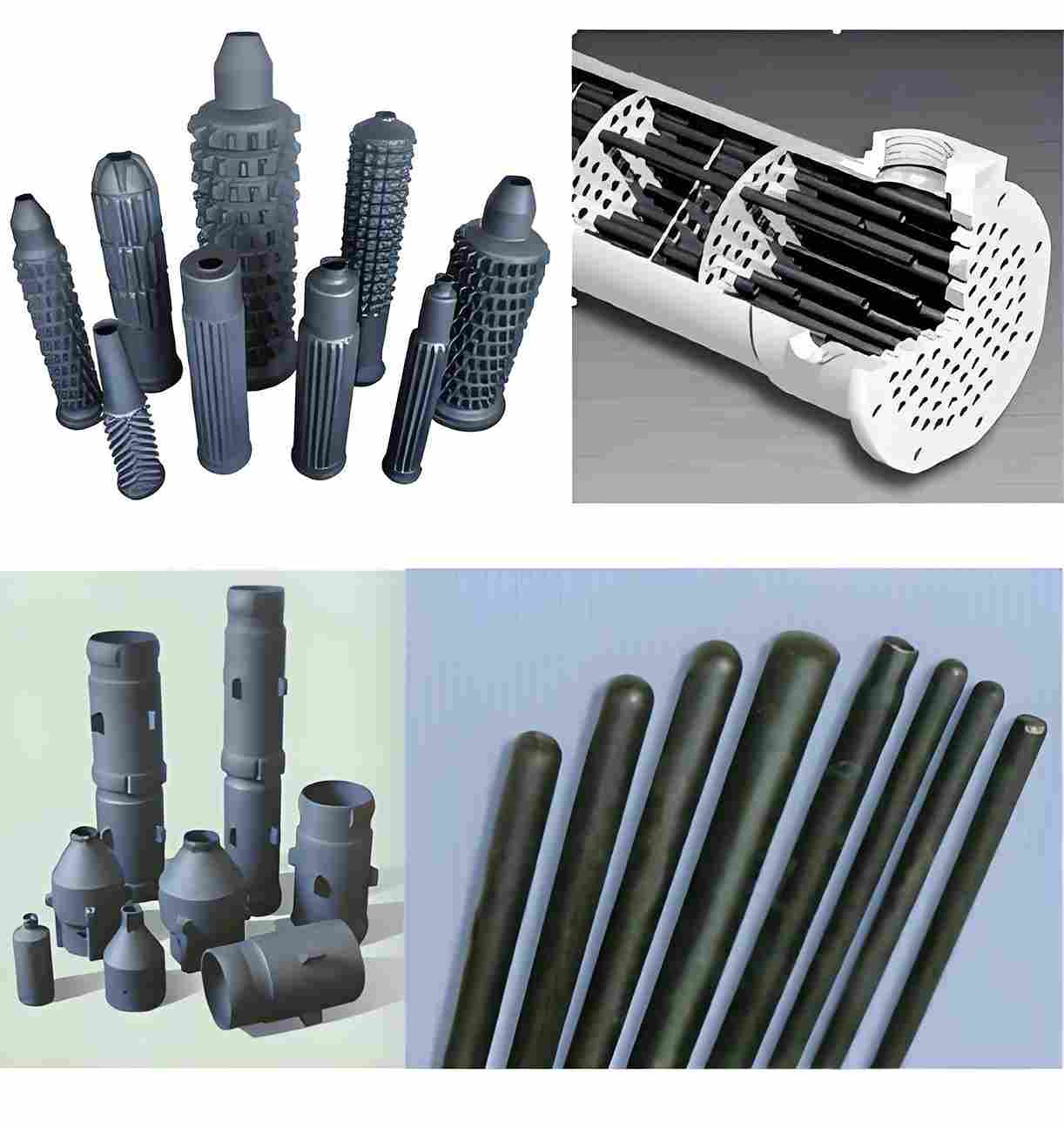
When you mount a silicon carbide ceramic component in a high‑temperature process, the first question should be: have you accounted for every material limitation before the part ever sees a furnace?
Quick Reference – FAQ
- What are the most expensive errors in SiC ceramic design?
- Over‑stress, improper cooling, and mismatched tolerances that force premature replacement.
- Can ZIRSEC help avoid these mistakes?
- Yes – we provide engineering drawings, tolerance checks, and rapid‑turn custom production.
- How fast can a standard SiC tube be shipped?
- 24‑hour dispatch from our stocked inventory, typically arriving within 5‑7 days worldwide.
Why Silicon Carbide Ceramics Fail in Real‑World Applications
Silicon carbide (SiC) offers a unique blend of high‑temperature strength, chemical inertness, and wear resistance. Yet its performance hinges on three often‑overlooked factors: the exact composition of the ceramic body, the geometry of the part, and the thermal‑mechanical cycle it endures.
In my ten years of field service, the majority of downtime traced back to a single cause – a mismatch between the designed temperature gradient and the actual furnace profile. When the gradient is steeper than the material can accommodate, micro‑cracks form at the surface and spread inward during each heating‑cooling cycle.
Mistake #1: Ignoring Material Specification Limits
Designers frequently assume that any SiC part can survive up to 1700 °C because the bulk material is rated to that temperature. In practice, the usable limit is governed by the part’s dimensions, surface finish, and the presence of residual stresses from sintering.
- Wall thickness: Thin‑walled tubes (<2 mm) lose strength dramatically above 1350 °C due to buckling.
- Surface roughness: Ra > 3 µm creates stress‑concentrating pits that act as crack nucleation sites.
- Impurity levels: SiC purity below 98 % introduces softer phases that soften at high temperature.
We advise a pre‑qualification test where the finished part is cycled 10 times between ambient and its target temperature while monitoring acoustic emission. A failure in this test usually indicates that a design reduction or a material upgrade is needed before field deployment.
Mistake #2: Over‑Constraining Tolerances Without Accounting for Thermal Expansion
SiC’s coefficient of thermal expansion (CTE) is approximately 4–5 × 10⁻⁶ /K. When a ceramic tube is pressed into a metal housing that expands at 12 × 10⁻⁶ /K, differential growth can generate hoop stresses exceeding 150 MPa – well beyond the ceramic’s flexural strength.
One of our European pump‑valve manufacturers reported a 12 % increase in scrap rate when they insisted on a ±0.1 mm tolerance for a 30 mm SiC seal ring that operated at 1200 °C. The solution was to relax the tolerance to ±0.3 mm and introduce a compliant graphite shim, reducing stress by 40 % and restoring the yield to 98 %.
Mistake #3: Selecting Inadequate Sealing Designs
Many engineers treat a SiC seal ring as a simple “hard stop” and ignore the need for a compliant backup. In high‑pressure reactors, even a small axial load can cause the ceramic to fracture if there is no elastic element to absorb thermal shock.
A case study from a US‑based chemical plant illustrates the point: a SiC seal ring installed without a metal spring failed after just three weeks, causing a costly shutdown. By adding a stainless‑steel spring washer, the stress was distributed evenly, extending the service life from weeks to years.
Mistake #4: Neglecting Proper Pre‑Installation Cleaning
Residual machining oil or silica dust left on the mating surface creates localized high‑temperature hotspots. During operation, these spots can reach temperatures 200 °C higher than the surrounding material, accelerating oxidation and grain boundary weakening.
Our standard protocol at ZIRSEC includes ultrasonic cleaning in isopropyl alcohol, followed by a 200 °C bake‑out for 30 minutes. Clients who adopt this routine see a 30 % reduction in early‑life failures.
Mistake #5: Using Incompatible Joining Methods
Sintered SiC cannot be welded with conventional metal welding techniques. Some users attempt brazing with silver‑based alloys, only to discover that the alloy reacts with SiC at temperatures above 900 °C, forming brittle intermetallics.Instead, we recommend mechanical clamping or diffusion bonding under a protective inert atmosphere. For example, a diffusion‑bonded SiC tube used in a Korean steel‑making furnace lasted 12 years without any loss of dimensional stability.
Mistake #6: Underestimating the Impact of Rapid Thermal Cycling
Industrial processes that jump from ambient to 1500 °C within seconds impose a thermal shock that can exceed the material’s fracture toughness (KIC ≈ 3 MPa·m⁰·⁵). The result is a network of micro‑cracks that propagate with each cycle.
A practical mitigation is to introduce a controlled ramp‑up period of at least 10 minutes for large‑diameter components, or to coat the outer surface with a thin (~0.2 mm) SiC‑derived glass that buffers the temperature gradient.
How ZIRSEC Helps You Avoid These Pitfalls
Our 20‑year track record in SiC ceramic production gives us a unique perspective on both material science and end‑use challenges. Here’s how we turn the common mistakes listed above into opportunities for reliable performance:
- Design Consultation: Our engineers review your CAD files, run finite‑element thermal stress simulations, and suggest geometry tweaks before any tooling begins.
- Custom Tolerance Management: We can achieve ±0.1 mm on standard parts and tighter tolerances on request, using precision CNC grinding and laser profilometry.
- Quality Documentation: Every batch ships with a full Certificate of Analysis, MSDS, and a 3‑year warranty covering material defects.
- Fast Turn‑Around: Standard SiC tubes, plates, and seal rings are stocked in‑house; most orders are dispatched within 24 hours. For custom geometry, prototype samples are ready in 2‑4 weeks.
Explore our full catalog of ready‑stock SiC components, including the high‑temperature Silicon Carbide Tubes that are a proven fit for furnace and reactor applications.
Practical Checklist for Your Next SiC Project
- Define the maximum operating temperature and pressure.
- Verify SiC purity (≥98 %) and required surface finish.
- Calculate thermal expansion mismatch with adjoining metals.
- Choose a sealing strategy that includes a compliant backup.
- Plan a cleaning protocol – ultrasonic + bake‑out.
- Select an appropriate joining method – mechanical or diffusion‑bonded.
- Design a controlled heating‑cooling ramp to limit thermal shock.
- Request a pre‑production prototype and run at‑least‑10 thermal cycles.
Bottom Line
Silicon carbide ceramics deliver unmatched performance when they are engineered with an awareness of their intrinsic limits. The most common engineering mistakes—ignoring material specs, over‑constraining tolerances, wrong sealing designs, inadequate cleaning, incompatible joining, and rapid thermal cycling—can be eliminated with a disciplined design review and a partner that understands both the science and the supply chain.
At ZIRSEC we combine in‑house production capability, a stocked inventory, and a dedicated engineering support team to turn these potential failures into reliable, long‑lasting solutions. Contact us today to discuss your next SiC component, request a CAD review, or obtain a fast‑track quote.