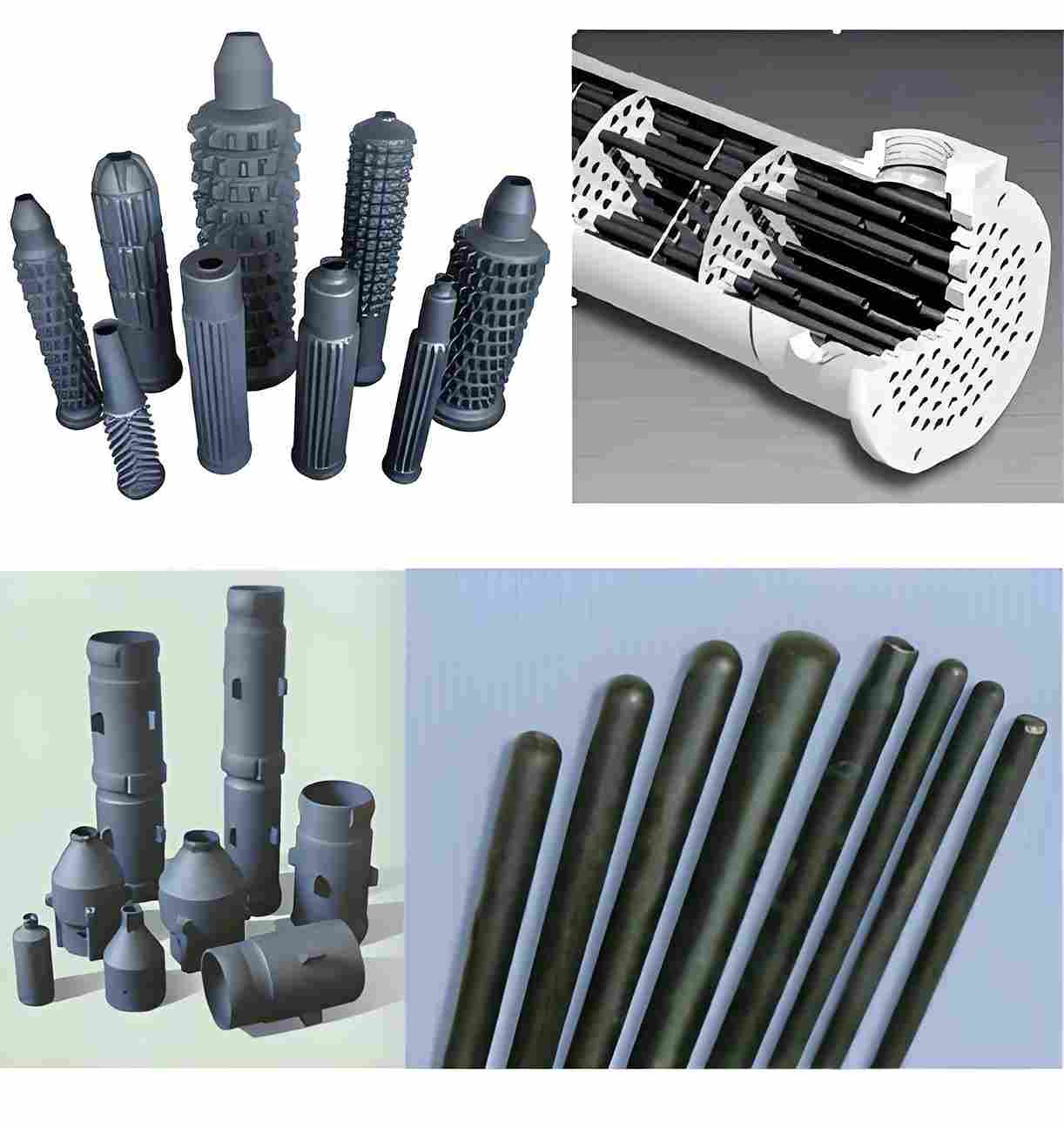
When you place an OEM order for silicon carbide (SiC) parts, the first question is always: will the component survive the extreme temperature, wear and chemical environment of my equipment? Below we answer that and every hidden concern that can turn a smooth purchase into a costly delay.
Quick FAQ – What You Need at a Glance
- Typical lead time for a custom SiC part? 2‑4 weeks for sample, 4‑8 weeks for volume production.
- Can ZIRSEC meet tolerances tighter than ±0.2 mm? Yes, with specialized grinding and inspection we can reach ±0.1 mm on demand.
- Is the material grade 98% SiC enough for 1500 °C service? For most industrial furnaces, 98% purity meets the required strength and oxidation resistance; higher purity is available on request.
- What documentation is provided for export? Full Material Safety Data Sheet (MSDS), Certificate of Analysis (COA), and ISO‑9001 quality reports.
- How does ZIRSEC handle small‑batch custom orders? Minimum order quantity starts at 20 pieces, and we can ship 24 hours from stock for standard sizes.
Understanding OEM Silicon Carbide Parts
Silicon carbide ceramics combine high‑temperature strength, chemical inertness, and exceptional wear resistance. These properties make SiC the go‑to material for furnace tubes, sealing rings, nozzles, rollers and many other critical components. However, the same benefits bring complexities: shrinkage during sintering, anisotropic thermal expansion, and strict machining tolerances.
Why SiC Beats Competing Materials?
In corrosive, high‑heat applications Al₂O₃, Si₃N₄ or ZrO₂ often fail sooner. When operating above 1300 °C, SiC retains >70 % of its room‑temperature flexural strength, while Al₂O₃ drops below 40 %. Moreover, SiC’s thermal conductivity (120 W/m·K) helps dissipate hot spots, extending the life of surrounding metal components.
Key Technical Parameters Every Buyer Should Verify
Before signing a purchase order, cross‑check the following specs with your engineering team.
Mechanical Strength & Hardness
- Flexural strength: ≥130 MPa (typical 150‑200 MPa for 98 % SiC)
- Rockwell hardness: 84‑88 HRB
- Impact resistance: verified by ASTM C1161
Dimensional Accuracy
- Standard tolerance: ±0.2 mm (industrial), ±0.1 mm (precision)
- Surface roughness (Ra): 0.8‑3.2 µm, depending on function
- Flatness/roundness: ≤0.05 mm for sealing rings
Thermal Performance
- Maximum continuous service temperature: 1350‑1600 °C (depends on grade)
- Thermal expansion coefficient: 4‑5 ×10⁻⁶ /K
- Thermal shock resistance: ΔT up to 600 °C per minute (ASTM C1498)
Chemical Resistance
- Compatible with strong acids (H₂SO₄, HCl), bases (NaOH), and halogenated solvents
- Corrosion rate <0.01 mm/year in molten salts at 1400 °C
Common Pitfalls and How to Avoid Them
Even seasoned engineers fall into traps when ordering OEM SiC parts. Below are the three most frequent issues and the preventive steps we recommend.
1. Underspecified Tolerances
When a drawing only cites “standard size,” the supplier may default to ±0.5 mm. In a high‑precision pump, that deviation can cause leakage or premature wear. Always attach a tolerance table and request a machining log sheet.
2. Inadequate Lead‑Time Planning
Custom sintering cycles take 7‑10 days, followed by machining and inspection. If you only budget 2‑3 weeks for delivery, you risk line shutdowns. Build a buffer of at least 4 weeks for first‑article verification, then align subsequent orders with a rolling schedule.
3. Absence of Full Documentation
Custom parts shipped without COA or MSDS will be held at customs, especially for European buyers. Provide a clear request for these documents early; ZIRSEC includes them in the export pack by default.
Pricing and Cost Structure
SiC components are high‑value items, but price drivers are transparent.
Material Cost
Base SiC powder (98 % purity) costs $50‑$80/kg. Higher purity (>99.5 %) adds 30 % to the raw material price.
Processing Steps
- Sintering (incl. atmosphere control): $15‑$25 per piece
- Precision grinding & lapping: $10‑$20 per mm of critical dimension
- Quality inspection (CMM, microscopy): $5‑$8 per part
Volume Discounts
Orders >1,000 pieces receive a 12‑15 % reduction on tooling fees. Small‑batch (<50 pcs) incurs a $100 set‑up charge, which is waived for repeat customers with a proven track record.
Supply Chain & Lead Times
ZIRSEC operates a dual‑stock model: standard sizes are stocked in Shenzhen with a 24‑hour dispatch window, while custom items flow through our in‑house sintering line.
Sample Development
From approved drawing to first sample, expect 2‑4 weeks. We provide a photorealistic CAD rendering and a physical mock‑up before the sintering run. This step catches dimensional mismatches early.
Full‑Scale Production
After sample approval, bulk production cycles are 4‑8 weeks depending on quantity and post‑processing (e.g., ceramic coating or surface polishing). We keep you updated through a dedicated project portal.
How ZIRSEC Guarantees a Smooth OEM Experience
Our 20‑year track record in SiC manufacturing translates into three core guarantees:
Technical Support from Concept to Delivery
Our engineers review every drawing, suggest material grade, and run finite‑element simulations if required. For complex geometries, we produce a rapid‑prototype in alumina to validate fit before committing to SiC.
Quality Assurance Aligned with International Standards
We are ISO‑9001 certified, and each batch undergoes:
- Dimensional audit (CMM, ±0.02 mm accuracy)
- Mechanical testing (ASTM C1161, three‑point bend)
- Thermal shock test (ASTM C1498)
- Full chemical analysis (ICP‑OES)
All reports are uploaded to the buyer portal.
Logistics & After‑Sales Service
We partner with DHL and FedEx for worldwide door‑to‑door delivery, handling export paperwork on your behalf. Post‑delivery, our service team offers installation advice and, if needed, a 90‑day performance guarantee.
Ready to start? Explore our Silicon Carbide Tubes catalog and request a free CAD review today.
Bottom Line – Your Checklist Before Placing the Order
- Confirm material grade (98 % SiC vs. higher purity) based on temperature and corrosion needs.
- Define exact tolerances, surface finish, and required certifications.
- Allow 4‑8 weeks for first‑article development; factor in a buffer for larger batches.
- Ask for a detailed quotation that breaks down material, processing, inspection, and tooling fees.
- Verify that ZIRSEC provides full documentation (COA, MSDS, ISO‑9001 audit).
- Set up a single point of contact on both sides to streamline revisions and approvals.
Following this guide eliminates guesswork, reduces downtime, and ensures you receive SiC parts that truly perform at the edge of engineering limits.