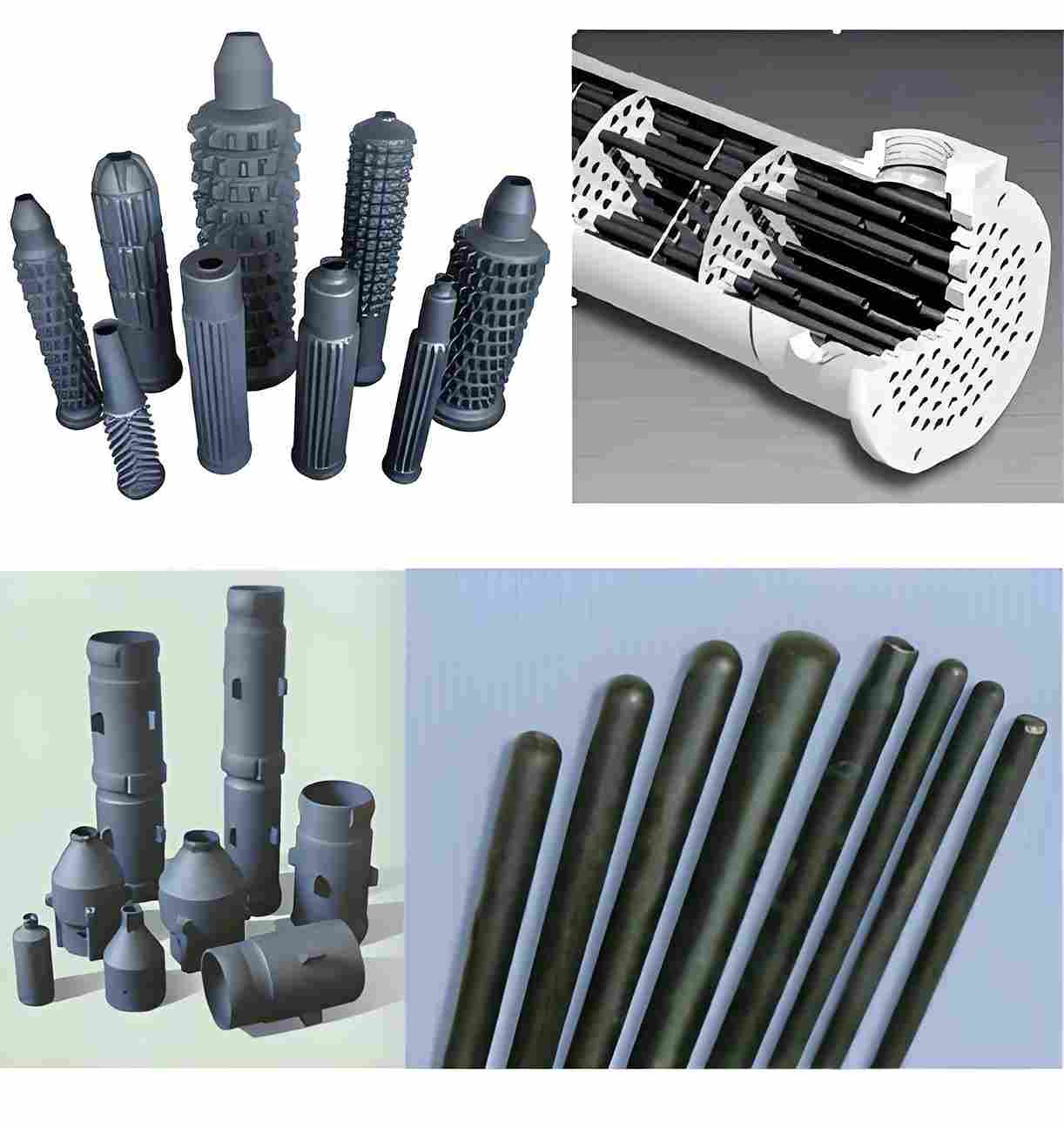
When you need a SiC tube that can survive 1,600 °C, resist corrosive slurries, and keep its shape for years, the first question is always the same: *Will this tube hold up in our process*?
Quick Summary (FAQ)
- What defines a high‑quality silicon carbide tube? Purity ≥ 98 %, consistent microstructure, tight dimensional tolerance (±0.1 mm for precision parts), and verified mechanical strength (fracture load ≥ 130 MPa).
- Which test data should a supplier provide? Full material certification (COA), 3‑point bend test results, thermal shock resistance curves, and surface roughness measurements.
- How fast can a reputable manufacturer deliver? Standard stock tubes ship within 24 h; custom dimensions typically require 4–6 weeks for prototyping and 8–10 weeks for full batch.
- What hidden costs should I watch for? Custom tooling, shipping insurance, and regulatory paperwork (MSDS, CE declarations) can add 10‑15 % to the base price.
- Why choose ZIRSEC? We combine 20 years of SiC ceramic expertise with in‑house CNC grinding, ISO‑9001 quality management, and a 24‑hour stock‑ready service.
Understanding the Buyer’s Real Pain Points
Most engineers have already experienced at least one of the following:
- Unexpected tube breakage during a heat‑up cycle, halting production for days.
- Dimensional drift that forces a redesign of the downstream flange.
- Long lead times that delay equipment commissioning.
- Insufficient documentation that stalls customs clearance.
Our guide addresses each of these issues head‑on, providing concrete metrics you can verify before signing a purchase order.
1. Material Purity and Microstructure
Why purity matters
Silicon carbide with less than 98 % SiC content contains more residual silicon and alpha‑alumina, which lower oxidation resistance at 1,500 °C. In a furnace that cycles between 1,200 °C and 1,600 °C, a 2 % impurity can cut tube life by half.
What to ask for
- Certificate of Analysis (COA) showing SiC ≥ 98 % and free‑silicon ≤ 0.5 %.
- Scanning Electron Microscope (SEM) images of grain size distribution. Ideal grain size: 1–3 µm for uniform thermal expansion.
- Batch‑to‑batch consistency report for the last three production runs.
2. Dimensional Tolerance and Straightness
Even a 0.3 mm deviation in inner diameter can cause excessive flow restriction in a chemical‑process pump, leading to pressure spikes.
Key metrics
- Outer diameter tolerance: ±0.1 mm (precision) or ±0.5 mm (standard).
- Wall thickness variation: ≤ 2 % across the entire length.
- Straightness: < 0.2 mm deviation over a 500 mm length, verified by laser profilometry.
Verification methods
Ask the supplier to provide a full measurement report from a Coordinate Measuring Machine (CMM). Independent third‑party verification (e.g., SGS) adds credibility.
3. Mechanical Strength and Fracture Toughness
Unlike alumina, SiC has a higher fracture toughness (≈ 3.5 MPa·m⁰·⁵). However, manufacturing defects such as micro‑cracks can dramatically reduce the effective strength.
Testing you need
- Three‑point bend test at room temperature and at 1,200 °C. Minimum flexural strength: 130 MPa.
- Impact resistance (Charpy) for applications with sudden temperature shocks.
- Surface defect density: < 5 defects/cm² on the inner wall.
4. Thermal Performance and Oxidation Resistance
In a high‑temperature kiln, a SiC tube must maintain its strength after repeated thermal cycles. Oxidation creates a silica layer that protects the bulk material, but only if the tube composition is correct.
Key data to request
- Weight gain after 100 h at 1,600 °C in air (should be < 0.3 %).
- Thermal expansion coefficient (CTE) – typical range 4–5 × 10⁻⁶ K⁻¹.
- Thermal shock test: rapid quench from 1,600 °C to 200 °C, no cracking after 10 cycles.
5. Surface Finish and Roughness
Inner‑wall roughness influences fluid dynamics and fouling rates. For laminar flow applications, Ra ≤ 0.8 µm is recommended; for abrasive slurry transport, a slightly rougher finish (Ra ≈ 2 µm) can improve wear resistance.
What the supplier should provide
- Surface profilometer trace and arithmetic average roughness (Ra) values for each batch.
- Optional post‑polish or plasma‑etching process description.
6. Certification, Documentation and Compliance
Industrial buyers in the US, EU, and Japan often need the following before customs clearance:
- Material Safety Data Sheet (MSDS).
- CE Declaration of Conformity (for EU).
- ISO 9001 quality‑management certificate.
- Export documentation: Commercial Invoice, Packing List, and Certificate of Origin.
Ask for electronic copies in PDF and the original signed hard copy upon shipment.
7. Supplier Capability and Production Capacity
A small workshop might struggle with large‑diameter tubes (> 200 mm) or high‑volume orders. Look for these indicators of robustness:
- In‑house sintering furnace capacity ≥ 10 tons of SiC powder per batch.
- Dedicated CNC grinding center with 5‑axis capability for complex cross‑sections.
- Stock inventory: standard tube sizes (e.g., Ø 25 mm‑200 mm, lengths 100 mm‑1 000 mm) available for immediate shipment.
- Engineering support team that can interpret CAD drawings, perform finite‑element analysis, and suggest design optimizations.
\n
8. After‑Sales Service and Technical Support
Even the best‑made tube can encounter unexpected wear. A reliable manufacturer will offer:
- Replacement policy for tubes that fail early (typically within 90 days under certified test conditions).
- On‑site technical assistance or remote troubleshooting via video call.
- Regular performance reports during the first year of operation.
9. Common Pitfalls and How to Avoid Them
Below are three mistakes we have seen repeatedly, plus a short remedy.
- Relying only on price. The cheapest quote often skips rigorous QA steps. Verify test certificates before any payment.
- Accepting generic “ceramic tube” samples. Samples must match the exact geometry and tolerances of the final part. Request a pre‑production prototype that uses the same lot of SiC powder.
- Ignoring lead‑time penalties. Align project schedules with the supplier’s production calendar. Early dialogue can shave 2–3 weeks off a custom order.
10. Case Study: Reducing Downtime for a European Pump Manufacturer
Background: A German pump‑valve maker experienced an 8‑day shutdown when their SiC seal rings cracked during a high‑temperature test. The failure analysis showed a micro‑crack density of 12 defects/cm², far above the acceptable 5 defects/cm².
Solution by ZIRSEC:
- Provided a batch of custom‑ground SiC tubes with a refined sintering profile that reduced residual silicon from 0.8 % to 0.3 %.
- Implemented an extra ultrasonic inspection step, lowering defect density to 2 defects/cm².
- Delivered a 24‑hour stock of the corrected tube size, enabling the client to replace the faulty parts within 48 hours.
Result: Production resumed after 2 days instead of 8, saving an estimated $15,000 in lost revenue. The client now places a recurring order of 500 tubes per year, citing “consistent quality and fast response” as primary reasons.
11. Why Choose ZIRSEC for Your SiC Tube Needs
We combine the scale of a mid‑size Chinese factory with the agility of a specialist boutique. Our strengths include:
- 20 years of dedicated SiC ceramic experience, focused on tubes, plates, and custom components.
- ISO‑9001:2015 certification and a fully documented quality‑control flowchart accessible to customers.
- In‑house R&D engineers who can turn a sketch into a production‑ready drawing within 5‑7 working days.
- 24‑hour ready stock of standard‑size silicon carbide tubes, ensuring minimal lead times.
- Comprehensive logistics support—customs paperwork, insurance, and door‑to‑door tracking.
Explore our product line at Silicon Carbide Tubes and contact our technical team for a free feasibility study.
Take Action Now
Before you place your next order, download our checklist (PDF) that summarises all the metrics discussed above. Use it during supplier audits, and ask your potential partner to fill it out with real data. When you’re ready for a partner who can deliver certified, high‑performance SiC tubes on time, reach out to ZIRSEC at info@zirsec.com. Our engineers are standing by to translate your drawing into a tube that survives the toughest industrial environment.