Petrochemical plants run close to the limits of materials every day: hot hydrocarbons, corrosive gases, sour service, abrasive catalysts and tight uptime targets. Equipment failures are rarely “cheap.” When a pump, valve or furnace component gives up, the result is often flaring, production loss and safety risk.
Silicon carbide (SiC) components are increasingly used in petrochemical plants to stabilise critical equipment exposed to extreme conditions. With high hardness, excellent chemical resistance and strong performance at elevated temperatures, SiC closes gaps where metals and polymers struggle. This article explains how silicon carbide enhances reliability in petrochemical environments and where it makes the biggest difference.
Petrochemical Operating Conditions: A Stress Test for Materials
Petrochemical sites sit downstream of the refining processes, converting hydrocarbons into feedstocks like ethylene, propylene, aromatics, solvents and polymers. Along the way, equipment faces:
- High temperatures: cracking furnaces, reformers, high-temperature transfer lines.
- Aggressive media: sour gases, acids, chlorides, oxidising species and dirty hydrocarbons.
- Abrasive solids: catalysts, coke particles, corrosion products and scale.
- Pressure: elevated pressures in pumps, compressors, reactors and piping.
- Dynamic operation: start-ups, shutdowns, load changes and upset conditions.
Standard stainless steels and even high-alloy materials do good work, but they are not immune to localised corrosion, erosion–corrosion and creep at high temperature. Polymers and elastomers bring chemical resistance but cannot cover high temperature or high load zones.
Silicon carbide, described more broadly in silicon carbide, provides a high-performance ceramic option where the environment is simply too harsh for conventional materials to survive economically.
Why Silicon Carbide Fits Petrochemical Applications
Silicon carbide is not a universal replacement for metals, but in petrochemical plants it offers a rare mix of properties:
- Excellent corrosion resistance in many sour, acidic and oxidising environments.
- Very high hardness and wear resistance for erosive flow and catalyst-laden streams.
- High temperature capability compatible with furnace, flare and hot gas applications.
- Dimensional stability under temperature and load for tight clearances and sealing faces.
- Good thermal shock behaviour compared with many other ceramics.
These attributes make silicon carbide a strong candidate for components located in the “hot, dirty and critical” sections of petrochemical plants: pumps, valves, heat exchangers, burners, flares and transfer lines.
Key Silicon Carbide Applications in Petrochemical Plants
Chemical and Hydrocarbon Pumps – Seals, Sleeves and Bearings
Process pumps in petrochemical units handle a wide variety of hydrocarbons and chemical mixtures, often with contaminants or solids. Silicon carbide appears in several wet-end components:
- Mechanical seal rings: SiC faces resist combined corrosion and abrasion, reducing leakage and extending seal life.
- Shaft sleeves: silicon carbide sleeves protect metal shafts from corrosive, erosive fluids.
- Journal bearings and thrust pads: SiC bearings provide stable support in canned motor and magnetic drive pumps.
Upgrading these parts to SiC can turn seals and bearings from “consumables” into predictable, long-life components, especially in dirty, sour or solids-laden services.
Furnaces, Heaters and Flares – Tubes and High-Temperature Internals
High-temperature equipment such as cracking furnaces, process heaters and flare systems stresses materials through heat, gas chemistry and thermal cycling:
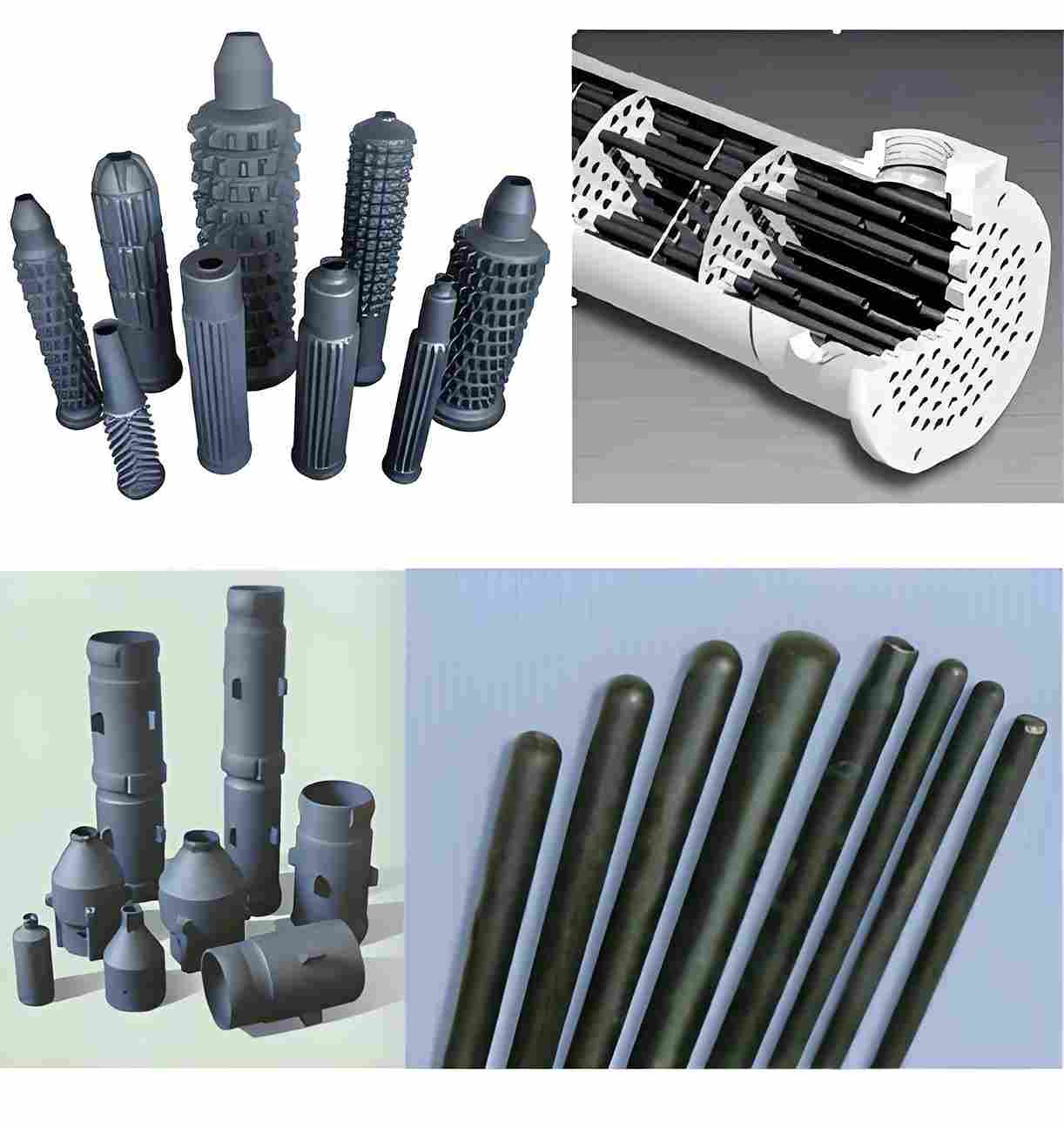
- Silicon carbide tubes act as radiant tubes, protection tubes or process conduits in hot zones.
- SiC tiles and plates protect burner tiles, throat areas and impact zones from flame erosion and thermal shock.
- Flares and high-temperature stacks can benefit from SiC internals in areas hit by direct flame or hot particle impingement.
Zirsec supplies industrial silicon carbide tubes and plates that can be engineered into furnace and flare internals where steels suffer oxidation and distortion over time.
Valves, Chokes and Slurry Lines – Wear and Erosion Protection
Control valves, choke valves and slurry lines handle high-velocity flow with particles and droplets that erode internal surfaces:
- Silicon carbide trims and seats in control valves resist erosion and maintain tight shut-off.
- SiC liners and wear blocks in bends, tees and reducers extend piping life.
- Spray and injection nozzles in silicon carbide maintain internal geometry longer under erosive conditions.
In many cases, silicon carbide is introduced first where the plant sees repeated failures: choke trims, slurry injection points and critical control valves.
Heat Exchangers and High-Temperature Heat Recovery
Some petrochemical services combine corrosive media with high temperatures where conventional metallic heat exchangers struggle:
- Silicon carbide heat exchanger tubes can handle hot, chemically aggressive streams.
- SiC tube sheets and inserts protect high-wear locations at tube entry zones.
By using SiC where temperature and chemistry are most severe, it is possible to extend heat recovery into areas that would otherwise be off-limits for economically viable metallic equipment.
Common Silicon Carbide Component Types Used in Petrochemical Plants
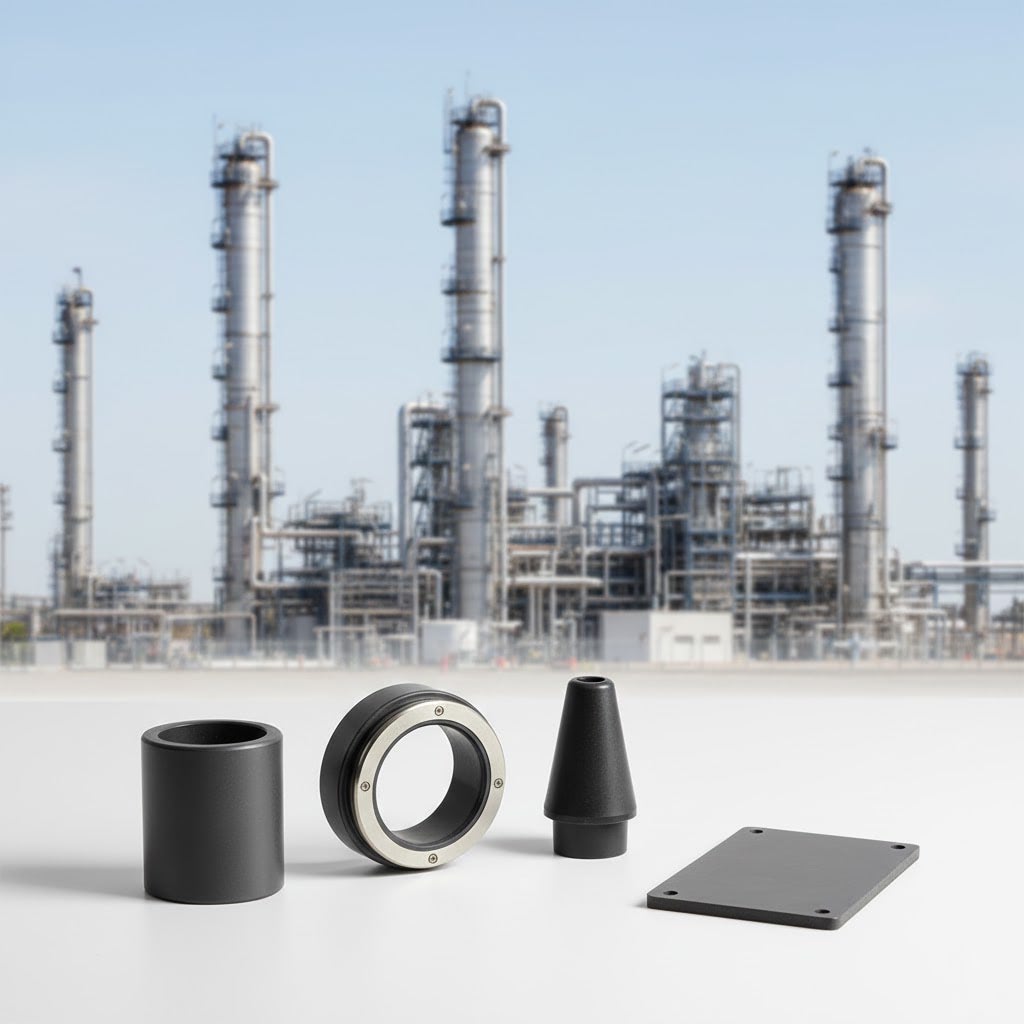
To make implementation concrete, silicon carbide typically appears as:
- Seal faces and sleeves in process and transfer pumps.
- Nozzles and orifices in injection and spray systems.
- Wear plates and tiles in impact zones, chutes and vessel inlets.
- Tubes and protection sleeves in hot gas and liquid services.
- Custom inserts and liners for valves and special fittings.
Zirsec offers standard products such as silicon carbide plates and tubes, as well as custom silicon carbide parts tailored to specific petrochemical equipment geometries.
Material Selection: Matching Silicon Carbide Grade to Service
In petrochemical applications, not all SiC grades are equal. A practical selection approach is:
- SSiC (sintered silicon carbide): dense, high-purity, low porosity. Well suited to mechanical seals, sleeves and critical wetted parts in corrosive, high-pressure services.
- RBSiC / SiSiC (reaction-bonded silicon carbide): excellent strength and thermal shock resistance; common for structural components, nozzles, tubes and wear plates in high-temperature units.
Grade selection is guided by which failure mode dominates: corrosion, wear, thermal shock or a combination. Petrochemical plants often use both families in different parts of the same unit, depending on local conditions.
System-Level Reliability: Beyond Swapping a Single Part
Simply changing one failing part to silicon carbide while leaving the surrounding system unchanged rarely unlocks full reliability gains. A more effective strategy looks at:
- Entire damage chains: identify which components fail first and which are affected downstream.
- Interfaces between SiC and metals: design supports, clamps and flanges that avoid bending or point loading on ceramic parts.
- Maintenance patterns: adjust inspection intervals and spares planning once SiC extends component lifetimes.
For example, upgrading pump seal faces to SiC makes more sense if sleeve materials, flush plans and alignment practices also support longer seal life.
Case Example: SiC Components in a Petrochemical Quench and Fractionation System
Background
In a petrochemical complex, a quench and fractionation system handled hot, dirty hydrocarbons with contaminants and occasional solids. Erosion–corrosion in valves, nozzles and pump seals caused frequent maintenance and unplanned downtime.
Approach
- Replace metallic spray nozzles in the quench tower with silicon carbide nozzles.
- Upgrade mechanical seal faces in key pumps to sintered silicon carbide.
- Install SiC tiles in high-impact zones where sprays hit vessel internals.
Result
- Spray performance remained stable longer; nozzle replacement frequency dropped.
- Pump seal life increased, with fewer leakage-related shutdowns.
- Wear in impact zones slowed, allowing longer intervals between internal inspections.
FAQ – Silicon Carbide in Petrochemical Plants
Q1. Where is the best place to start using silicon carbide in a petrochemical plant?
Start where failures hurt most: pumps that repeatedly suffer seal problems, valves that erode quickly, nozzles that lose spray performance or furnace/flare internals exposed to high heat and aggressive media. Focus on components that already drive unplanned downtime.
Q2. Does silicon carbide replace all metallic alloys in extreme petrochemical services?
No. Silicon carbide complements, not replaces, high-alloy steels and nickel alloys. It is typically used where the combination of corrosion, erosion and temperature exceeds what metals can handle economically, especially for seals, nozzles, tubes and wear parts.
Q3. Are silicon carbide components difficult to integrate into existing equipment?
They require proper design of interfaces, supports and tolerances, but they can often be retrofitted into existing envelopes. Many upgrades keep the same outer dimensions and connection standards while changing internal material and geometry to SiC.
Q4. How do I evaluate whether silicon carbide is worth the investment?
Compare the total cost of current failures – spare parts, labour, lost production, environmental and safety risk – against the expected increase in component lifetime and stability with SiC. In many petrochemical cases, the payback comes from fewer shutdowns rather than from part price alone.
Q5. How can Zirsec support silicon carbide deployment in petrochemical plants?
Zirsec provides application review, material grade selection and manufacturing of standard and custom silicon carbide components tailored to petrochemical services. By treating tubes, plates, seal rings, nozzles and liners as a coordinated set, Zirsec helps plants enhance reliability in extreme operating conditions instead of fighting the same failures again and again.
Facing repeated failures in hot, corrosive or erosive petrochemical services? Introducing silicon carbide components in the right locations can turn chronic problem points into stable elements of your reliability strategy.