Chemical pumps run in one of the harshest environments in any plant: corrosive liquids, suspended solids, temperature variations and continuous operation. When the mechanical seal fails, leakage, unplanned downtime and expensive clean-up follow very quickly.
Silicon carbide mechanical seal rings have become a standard in modern chemical pumps because they combine high hardness, excellent corrosion resistance and good thermal shock behaviour. But not all silicon carbide rings are the same, and not every combination of materials will work with every chemical.
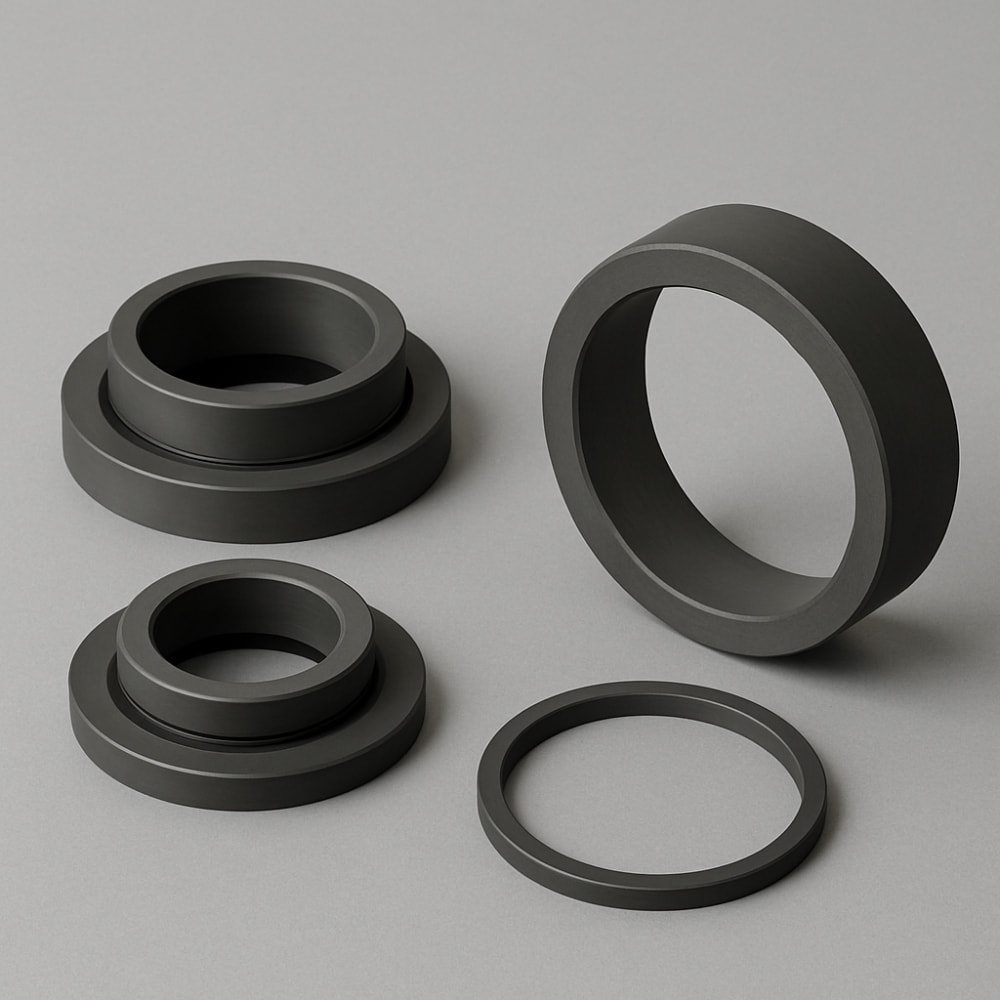
This guide explains how to select silicon carbide mechanical seal rings for chemical pumps, including material grades, face combinations, surface finish, tolerances and operating limits.
Why Mechanical Seal Material Selection Matters
Common symptoms that your current seal solution is not matched to the application:
- Frequent leakage or rapid increase in leakage rate after a short running time
- Face scoring, scratching or pitting on the seal rings
- Thermal cracking of seal faces after dry running or poor flushing
- Corrosion marks or chemical attack at the sealing surface or on the seat
- Short and unpredictable seal life with repeated pump shutdowns
Most of these failures trace back to one or more issues:
- Poor match between seal face material and the pumped medium
- Wrong combination of hard/soft faces
- Inadequate cooling and flushing in dirty or hot services
- Incorrect surface finish or flatness for the required sealing pressure
- Mechanical misalignment or vibration in the pump system
Smart selection of silicon carbide mechanical seal rings starts with understanding the pump duty and media.
Basics: What Makes Silicon Carbide Suitable for Mechanical Seals?
Silicon carbide is a hard, covalently bonded ceramic material with properties that fit mechanical seal applications very well:
- Very high hardness and wear resistance
- Excellent corrosion resistance to many acids, alkalis and solvents
- Good thermal conductivity for removing frictional heat from the seal faces
- High temperature capability compared with many other ceramics
- Dimensional stability and low thermal expansion
For engineers who want the full background, you can find more general information on silicon carbide and mechanical seals in open references, but what you need for real projects is how to specify the right ring for your pump and medium.
Main Silicon Carbide Grades for Seal Rings
For mechanical seals, the most commonly used SiC grades are:
- SSiC – Sintered Silicon Carbide (pressureless sintered, high purity, very dense)
- RBSiC / SiSiC – Reaction-Bonded Silicon Carbide (good performance, cost-effective)
- Special variants such as graphite-loaded SiC for improved tribology in marginal lubrication conditions
Grade comparison for chemical pump seal rings
| Aspect | SSiC Seal Rings | RBSiC / SiSiC Seal Rings | Graphite-Loaded SiC |
|---|---|---|---|
| Hardness and wear resistance | Very high, excellent for abrasive and high-pressure duties | High, suitable for many industrial duties | High, with improved self-lubrication |
| Corrosion resistance | Excellent in most chemical media | Very good in many media | Very good, grade dependent |
| Thermal conductivity | High – good heat removal | Medium to high | Medium – depends on graphite content |
| Typical applications | Harsh chemicals, high pressure, solids-containing media | General chemical services and industrial pumps | Services with risk of dry running or poor lubrication |
| Relative cost | Highest | Medium | High to premium |
In demanding chemical pump applications, sintered silicon carbide (SSiC) is usually the first choice for at least one of the seal faces, often paired with a softer counterface such as resin-bonded carbon.
Hard–Soft and Hard–Hard Face Combinations
Mechanical seal performance depends not only on individual materials but also on how they are paired:
- Hard–soft combination (SiC vs carbon): widely used in clean liquids, offering good running-in behaviour and protection against short periods of dry running.
- Hard–hard combination (SiC vs SiC): used in abrasive or dirty liquids where a carbon face would be destroyed quickly.
For aggressive chemical media with solids, a typical configuration is:
- Rotating ring: silicon carbide
- Stationary ring: silicon carbide or carbon, depending on cleanliness and lubrication
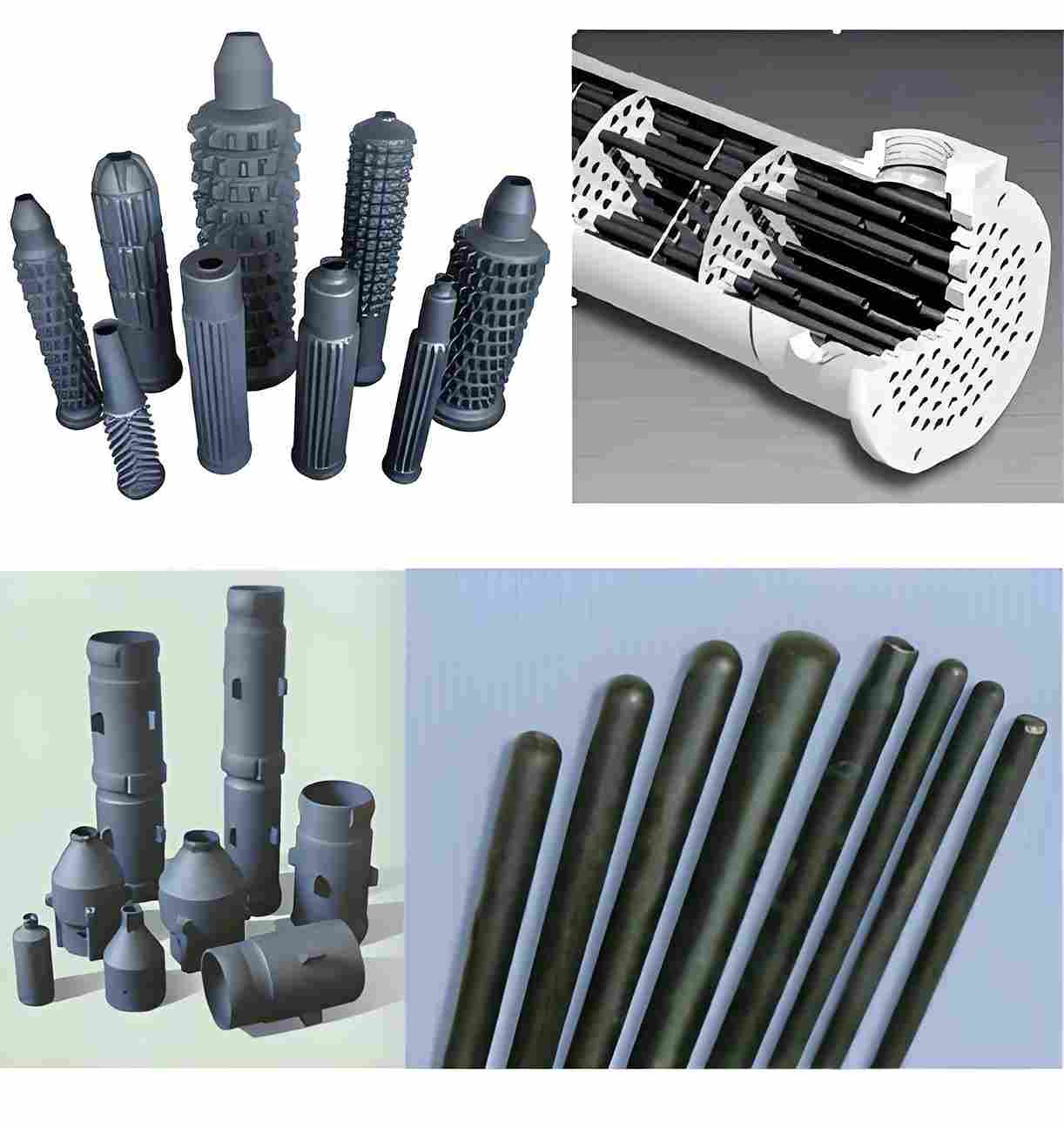
In some cases, you will use other silicon carbide components in the same pump, such as silicon carbide tubes for high-temperature protection or sleeves, to build a consistent wear- and corrosion-resistant system.
Key Operating Parameters for SiC Mechanical Seal Rings
1. Pressure, speed and PV limit
Seal faces generate frictional heat. The product of pressure (P) and sliding speed (V) is a useful indicator of how demanding the duty is.
- Pressure: seal chamber pressure or differential pressure across the seal
- Speed: shaft speed and seal face diameter
Silicon carbide can handle high PV values compared with many other materials, but you still need adequate cooling and lubrication from the pumped liquid or a flushing system.
2. Chemical compatibility
Even though silicon carbide is highly corrosion resistant, you should still check compatibility with:
- Strong acids (sulphuric, nitric, hydrochloric, etc.)
- Alkalis (sodium hydroxide, potassium hydroxide)
- Solvents and organic chemicals
- Slurries and liquids with suspended solids
The elastomers, metal parts and secondary seal materials in the mechanical seal must also be compatible with the same medium.
3. Temperature and thermal shock
Typical mechanical seal service temperatures for chemical pumps range from ambient up to about 200 °C or slightly higher. Silicon carbide has no problem with this range, but:
- Rapid temperature changes (thermal shock) can crack even strong SiC rings.
- Sudden dry running can create hotspots and damage surfaces.
Proper flushing, venting and startup procedures are critical to prevent local overheating at the seal faces.
4. Cleanliness, solids and lubrication
Seal faces are separated by a very thin lubricating film. If abrasive solids enter the gap, they can cause rapid wear and leakage. To control this, consider:
- Flush or quench systems to keep solids away from the seal faces.
- Filters or cyclones upstream in very dirty services.
- Special face profiling or hard–hard SiC vs SiC combinations for slurry duties.
Dimensional and Surface Requirements
1. Tolerances and flatness
Mechanical seal rings require precise dimensional control:
- Inside and outside diameters held to tight tolerances for proper fit.
- Flatness of the sealing face within microns, to maintain a proper sealing film.
- Parallelism of faces for multiple-piece sets.
For engineered solutions, Zirsec works to the tolerances defined in your pump or seal manufacturer drawings, including precision grinding and lapping of faces.
2. Surface finish
Typical surface finish for silicon carbide mechanical seal faces is in the range of Ra 0.02–0.05 µm, achieved by fine grinding and lapping. This fineness:
- Reduces leakage by ensuring good sealing film formation.
- Minimises wear during start-up and running-in.
For less critical surfaces (non-sealing faces), a rougher finish is usually sufficient.
Selection Checklist for Chemical Pump Seal Rings
Before specifying silicon carbide mechanical seal rings, compile the following data:
- Pumped medium (chemical name, concentration, presence of solids)
- Operating temperature range
- Seal chamber pressure and pump speed
- Required seal type (single, double, cartridge, etc.)
- Arrangement of flush, quench or barrier systems
- Existing problems with current seals (leakage, wear, corrosion, dry running)
With this information, a seal supplier or SiC manufacturer can recommend a specific grade, ring design and face combination that matches your duty instead of guessing.
How Zirsec Supports Mechanical Seal Applications
Zirsec focuses on industrial silicon carbide solutions and supplies precision-machined mechanical seal rings for OEMs and end users. Typical support includes:
- Material selection: SSiC, RBSiC and special SiC grades matched to your chemical and temperature conditions.
- Custom machining: Rings produced to drawing, including complex cross-sections, drive slots and profile designs.
- Small-batch flexibility: Low minimum order quantities for development, repairs and retrofit projects.
- Engineering collaboration: Support for replacing metal or carbon-based designs with SiC, while keeping the existing pump layout.
In systems where you also use other SiC components, such as silicon carbide plates for wear protection, Zirsec can help you design a coherent package of parts with compatible materials and lifetimes.
Case Example: Upgrading to SiC Seal Rings in a Chemical Transfer Pump
Background
A chemical plant running centrifugal pumps for acidic process liquids suffered frequent mechanical seal failures. The existing seal used a carbon vs ceramic face combination and showed severe wear and leakage after only a few months of operation.
Findings
- Medium: acidic mixture with some suspended solids.
- Operating temperature: 80–95 °C.
- Pump speed and pressure within normal limits, but cleaning had been poor and solids reached the seal faces.
Solution
- Switch the rotating and stationary seal rings to sintered silicon carbide.
- Improve flushing of the seal chamber to keep solids away from faces.
- Adjust surface finish to the pump manufacturer’s recommended specifications.
Result
- Seal life increased from a few months to more than a year of continuous operation.
- Leakage incidents dropped dramatically, reducing clean-up and downtime costs.
- The upgrade paid for itself quickly through reduced replacement and maintenance work.
FAQ – Silicon Carbide Mechanical Seal Rings for Chemical Pumps
Q1. When should I choose silicon carbide mechanical seal rings instead of carbon or ceramic?
Choose silicon carbide when you have abrasive media, corrosive chemicals, elevated temperature or high pressure, or when previous carbon or ceramic seals fail too quickly. SiC offers significantly higher hardness and better corrosion resistance in many chemical pump services.
Q2. Is SiC vs SiC always better than SiC vs carbon?
No. SiC vs SiC is ideal for abrasive or dirty liquids, but SiC vs carbon often behaves better in clean, well-lubricated services and can tolerate brief dry-running events more gracefully. The right combination depends on cleanliness, lubrication and the risk of dry running.
Q3. Can silicon carbide seal rings handle dry running?
Silicon carbide performs better than many materials at high temperature, but it is not a license for continuous dry running. Short accidental dry-running periods may be tolerated if cooling is restored quickly, but regular operation should always provide adequate liquid film or flush.
Q4. What is the typical service temperature range for SiC mechanical seal rings?
In chemical pump applications, silicon carbide seal rings commonly operate from ambient up to around 200 °C or slightly higher, depending on the seal design, elastomers and surrounding components. The SiC itself can withstand higher temperatures, but the whole seal system must be considered.
Q5. How precise do the seal ring tolerances need to be?
Mechanical seal rings usually require tight tolerances on bore, outside diameter and face flatness. Typical flatness requirements are in the micron range. These tolerances are normally specified in the pump or seal drawing and must be respected during production and inspection.
Q6. Are silicon carbide seal rings compatible with all chemicals?
Silicon carbide is resistant to many acids, alkalis and solvents, but not absolutely everything. For extreme media or combinations of chemicals, a compatibility check is always recommended. Do not forget to verify compatibility for elastomers and metal parts in the seal design as well.
Q7. What information should I send to Zirsec to get a quotation?
Provide the pumped medium, temperature, pressure, pump speed, existing seal type, known failure modes and drawings or dimensions of the required rings. With this information, Zirsec can recommend a suitable SiC grade and ring configuration tailored to your chemical pump duty.
Planning to upgrade your chemical pumps to silicon carbide mechanical seal rings? Share your operating conditions and drawings with Zirsec, and our engineering team will help you design a seal ring solution that improves reliability and reduces total lifecycle cost.