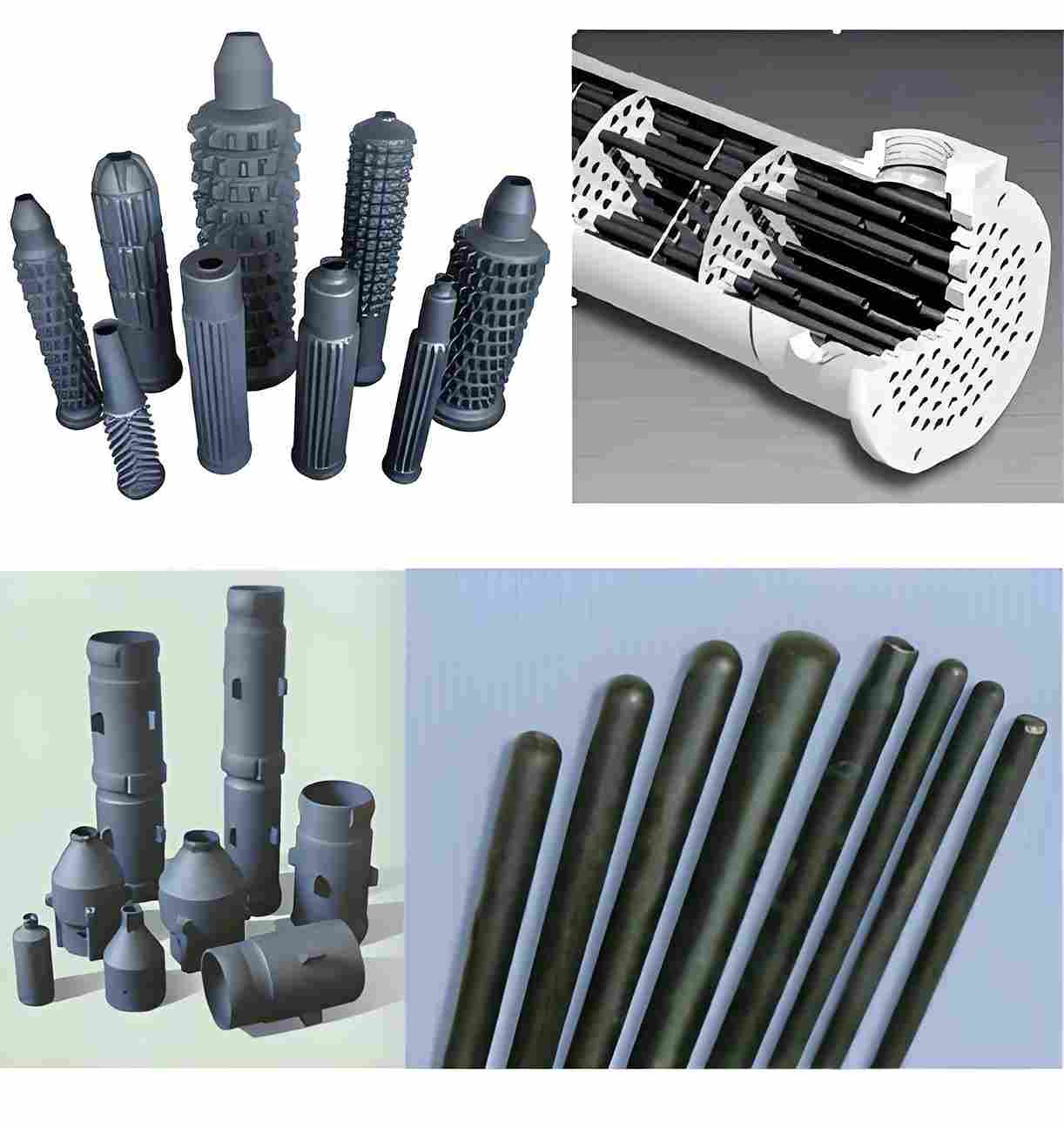
Burner nozzles sit in the most hostile zone of any high-temperature furnace. They face direct flames, hot combustion gases, thermal cycling and chemical attack from fuel and process atmosphere. If a nozzle or burner tube fails, you see distorted flames, hot spots, efficiency loss and, in the worst case, serious damage to the refractory and product.
Silicon carbide burner nozzles and burner tubes are widely used in modern industrial furnaces because they combine high thermal shock resistance, excellent high-temperature strength and very good resistance to oxidation and corrosion. But not every silicon carbide burner nozzle is suitable for every furnace.
This guide explains how to select silicon carbide burner nozzles and tubes for high-temperature furnaces, including material grades, geometry, mounting and cooling design, so you can improve efficiency and reliability instead of constantly reacting to failures.
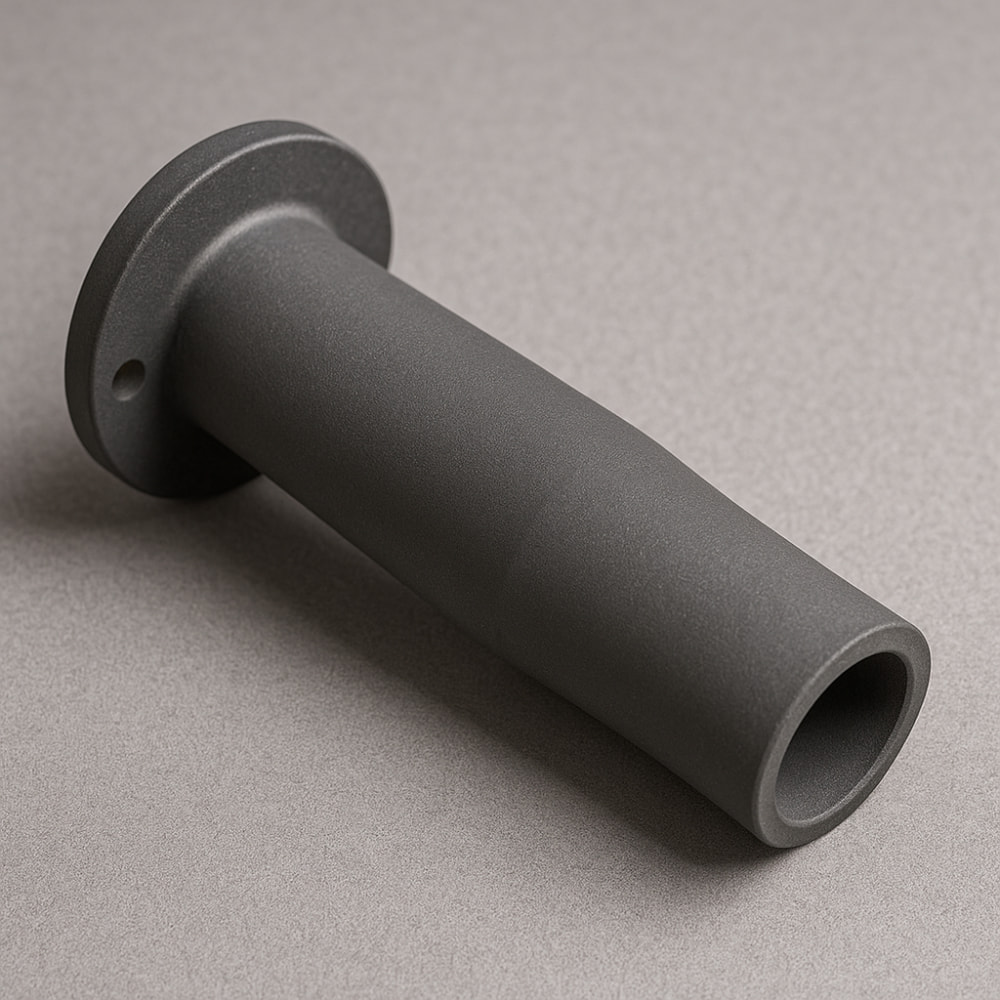
Why Burner Nozzle Selection Matters
Pain points that usually indicate a burner nozzle or tube mismatch:
- Flame impingement on walls or product, causing hot spots and distortion
- Nozzle cracking or spalling near the flame root
- Oxidation, glazing or chemical attack at the nozzle outlet
- Uneven temperature distribution and poor control of furnace zones
- Frequent shutdowns to replace cracked or distorted burner tubes
These problems are often caused by a combination of:
- Material grade that cannot tolerate the furnace atmosphere or temperature
- Incorrect burner tube length or outlet geometry for the combustion space
- Inadequate support, expansion allowance or cooling around the burner block
- Improper matching of burner design and furnace pressure conditions
Good silicon carbide burner nozzle selection starts with understanding the combustion process and furnace layout, not just picking a generic tube diameter.
Key Operating Parameters for Silicon Carbide Burner Nozzles
1. Furnace temperature and duty
- Normal operating temperature and peak temperature in the burner zone
- Type of furnace: walking beam, roller hearth, chamber furnace, kiln, etc.
- Continuous or batch operation, and the number of starts/stops per day or week
Silicon carbide burner tubes are typically used in furnaces that operate in the medium to high temperature range. Their high-temperature capability and thermal shock resistance make them a strong option when metallic tubes deform, oxidise or fail prematurely.
2. Atmosphere and fuel
- Fuel type: natural gas, LPG, oil, hydrogen blends, etc.
- Primary atmosphere: oxidising, neutral or slightly reducing
- Presence of corrosive species: sulphur compounds, chlorides, alkali vapours
The combustion process itself is complex and is well described in general references such as combustion, but for burner nozzle selection you mainly need to know how the resulting flame and flue gas will interact with the nozzle surface.
3. Burner type and control strategy
- Nozzle-mix, premix or regenerative burners
- High-velocity burners or conventional burners
- Air/fuel ratio control and excess air level
High-velocity burners and regenerative burners often require specially designed silicon carbide burner nozzles and tiles to control jet shape, flame stability and recirculation behaviour in the furnace.
4. Thermal cycling and start-up conditions
- How often the furnace is heated up and cooled down
- How quickly burners are ramped to full load after start
- Whether low-fire or pilot modes are used during starts and stops
Even though silicon carbide has very good thermal shock resistance, aggressive cycling with sudden temperature swings at the nozzle can still generate cracks if geometry and mounting are not properly designed.
Silicon Carbide Grades for Burner Nozzles and Tubes
For burner nozzles and tubes, three silicon carbide families are common:
- RBSiC / SiSiC – Reaction-Bonded Silicon Carbide
- SSiC – Sintered Silicon Carbide
- RSiC – Recrystallized Silicon Carbide, used in specific kiln and furnace designs
Grade comparison for burner duty
| Aspect | RBSiC / SiSiC | SSiC | RSiC |
|---|---|---|---|
| High-temperature strength | High, suitable for many furnace burner tubes | Very high, best for highly loaded or long tubes | High, especially under repeated cycling |
| Thermal shock resistance | Very good | Very good | Excellent in many kiln applications |
| Oxidation and corrosion resistance | Very good in many combustion atmospheres | Excellent, high purity and dense structure | Very good, grade dependent |
| Typical uses | Standard burner nozzles, tiles and radiant tubes | Critical burner tubes in harsh atmospheres or long-span designs | Burners and kiln furniture in strongly cycled kilns |
| Relative cost | Medium | Higher | Medium to high |
In many industrial furnaces, reaction-bonded silicon carbide (RBSiC / SiSiC) is the preferred choice for silicon carbide burner nozzles because it gives a good balance between performance and cost. SSiC or RSiC may be selected where conditions are especially severe or where burner tubes are very long or heavily loaded.
Geometry and Design of Silicon Carbide Burner Nozzles
1. Burner tube length and outlet position
- The nozzle or tube length determines where the flame root sits inside the furnace.
- A tube that is too short may allow the flame to impact directly on refractory or product.
- A tube that is too long can create excessive pressure drop or restrict furnace layout.
The burner supplier’s recommendations for flame shape and distance from walls should always be combined with the mechanical limits of the silicon carbide tube to avoid sagging or stressing the tube at high temperature.
2. Outlet shape and hole pattern
Common designs include:
- Simple round outlet nozzles
- Multi-hole outlets for high-velocity jets
- Special diffuser or staged-mixing patterns
The outlet shape and hole pattern control jet velocity, recirculation, flame stability and mixing with furnace gases. When you change a burner tube geometry, you are also changing the combustion behaviour, not just the mechanical component.
3. Wall thickness and support
- Thicker walls provide higher strength and resistance to mechanical damage.
- Thinner walls reduce thermal gradients and self-weight, but must still be robust enough for handling and mounting.
- Support and expansion allowance at the cold end are critical to avoid bending stresses.
For very long burner tubes, you may consider using straight silicon carbide tubes similar to those used in other furnace zones. Zirsec offers dedicated silicon carbide tube solutions that can be integrated into burner assemblies or used as radiant tubes in the same furnace.
Integration with Refractory and Burner Blocks
Burner nozzles and tubes rarely operate alone; they are part of a burner tile or block assembly that interfaces with furnace refractories.
- Allow for thermal expansion of both silicon carbide and surrounding refractories.
- Ensure that supporting surfaces are flat and free of sharp edges or point contacts.
- Seal appropriately around the tube to prevent hot-gas bypassing or backfiring into the lining.
Incorrect support or sealing can generate local stresses and temperature gradients that reduce nozzle life even if the material grade itself is correct.
Cooling, Purging and Protection
Depending on furnace design, burner nozzles may use one or more of the following:
- Cooling air or secondary air streams along the tube
- Protective purging gas around the nozzle outlet
- Special coatings or glazes on the hot face
These features are intended to protect the silicon carbide and stabilise operating temperature. When upgrading to SiC burner nozzles, check whether your burner system already includes such provisions and whether they need to be adjusted.
Selection Checklist for Engineers
Before specifying silicon carbide burner nozzles or tubes, prepare the following information:
- Furnace type, layout and desired temperature profile
- Fuel type and expected operating range (turndown ratio, maximum load)
- Furnace atmosphere and presence of corrosive species
- Required burner tube length and outlet position relative to walls and product
- Preferred burner type (nozzle-mix, premix, regenerative, high-velocity)
- Thermal cycling frequency and typical start-up/shutdown procedures
- Existing issues with current burner nozzles (cracking, hot spots, poor uniformity)
With this data, a burner designer and silicon carbide supplier can work together to select the optimal combination of SiC grade, geometry and mounting concept.
How Zirsec Supports Burner Nozzle and Tube Projects
Zirsec focuses on industrial-grade silicon carbide solutions and supplies burner nozzles, tiles and tubes for high-temperature furnaces. Typical support includes:
- Grade optimisation: RBSiC, SSiC or RSiC matched to temperature, atmosphere and burner duty.
- Custom geometry: Burner tubes and nozzles produced to drawing, including multi-hole designs and complex outlet shapes.
- Small-batch capability: Low minimum order quantities for retrofits, trials and special furnaces.
- System thinking: Assistance in combining burner nozzles with other SiC components such as silicon carbide plates for nearby wear zones.
The result is a burner nozzle system that supports the furnace’s temperature profile and lifetime targets instead of being a weak point.
Case Example: Upgrading Burner Nozzles in a High-Temperature Furnace
Background
A heat-treatment furnace running at high temperature used metallic burner nozzles that oxidised and distorted, leading to uneven flames and local overheating of the refractory near the burner blocks.
Findings
- Operating temperature was above the comfortable range for the metallic nozzles.
- Flames were impinging on the wall because tube length and outlet geometry were not properly matched to the combustion chamber.
- Thermal cycling during frequent start-ups increased mechanical fatigue in the nozzles.
Solution
- Replace metallic nozzles with reaction-bonded silicon carbide burner tubes of optimised length.
- Adjust outlet geometry to stabilise the flame and reduce wall impingement.
- Review burner control strategy to moderate ramp rates during start-up.
Result
- Burner nozzle lifetime increased significantly, with no visible distortion in normal operation.
- Temperature uniformity in the furnace improved, reducing product quality scatter.
- Maintenance intervals were extended, and emergency nozzle changes were largely eliminated.
FAQ – Silicon Carbide Burner Nozzles and Tubes
Q1. Why use silicon carbide burner nozzles instead of metallic nozzles?
Silicon carbide burner nozzles offer far better high-temperature strength, oxidation resistance and thermal shock behaviour than metallic nozzles. This is particularly important in furnaces where flame temperatures and local gas temperatures are well above the safe working range of heat-resistant steels.
Q2. How do I choose between RBSiC and SSiC for burner tubes?
RBSiC is often sufficient for many industrial burner tubes and offers a good cost–performance balance. SSiC is selected when you need the highest strength, longest life or when tubes are very long or subject to severe bending loads or corrosive atmospheres. The right choice depends on furnace conditions and mechanical support.
Q3. Can silicon carbide burner nozzles handle frequent thermal cycling?
Yes. Silicon carbide has very good thermal shock resistance, especially in well-designed burner tiles and mounting systems. However, extreme and sudden temperature changes should still be avoided where possible, and proper start-up and shut-down procedures must be followed.
Q4. Are silicon carbide burner nozzles suitable for all fuels?
Silicon carbide can be used with natural gas, LPG and many other fuels. For fuels with high sulphur or corrosive components, the exact furnace atmosphere and gas composition should be reviewed to confirm long-term compatibility and, if necessary, to select specific SiC grades or protective measures.
Q5. What information should I send when requesting silicon carbide burner nozzles from Zirsec?
Provide furnace type, operating temperature, fuel, atmosphere, burner type, required tube length and geometry, and any known issues with existing nozzles. Drawings or sketches of the burner block area are extremely helpful for designing the mounting and expansion allowance.
Q6. Can silicon carbide burner tubes be retrofitted into existing furnaces?
In many cases, yes. Retrofitting is often possible if there is enough space in the burner block and if the burner design can be adjusted to the new tube geometry. Coordination between the furnace operator, burner supplier and silicon carbide manufacturer is important to achieve a reliable result.
Planning a burner upgrade for your high-temperature furnace? Share your operating conditions and burner drawings with Zirsec, and our team can help you specify silicon carbide burner nozzles and tubes that support cleaner combustion, more stable temperatures and longer service life.