High-temperature industrial furnaces usually fail in very predictable ways: alloy tubes sag, crack, or scale up; temperature uniformity drifts; fuel or power consumption rises; and maintenance teams get called in the middle of the night. For furnace designers, process engineers, and OEMs, choosing silicon carbide tubes for high-temperature industrial furnaces is one of the most direct ways to stabilize temperature, extend component life, and push operating windows higher.
This guide explains what silicon carbide tubes are, why they outperform metallic and conventional ceramic tubes, and how to select them for your furnace. It also shows how Zirsec’s SiC tube solutions support OEMs and MRO teams with real engineering data instead of trial-and-error replacement.
What Are Silicon Carbide Tubes for High-Temperature Industrial Furnaces?
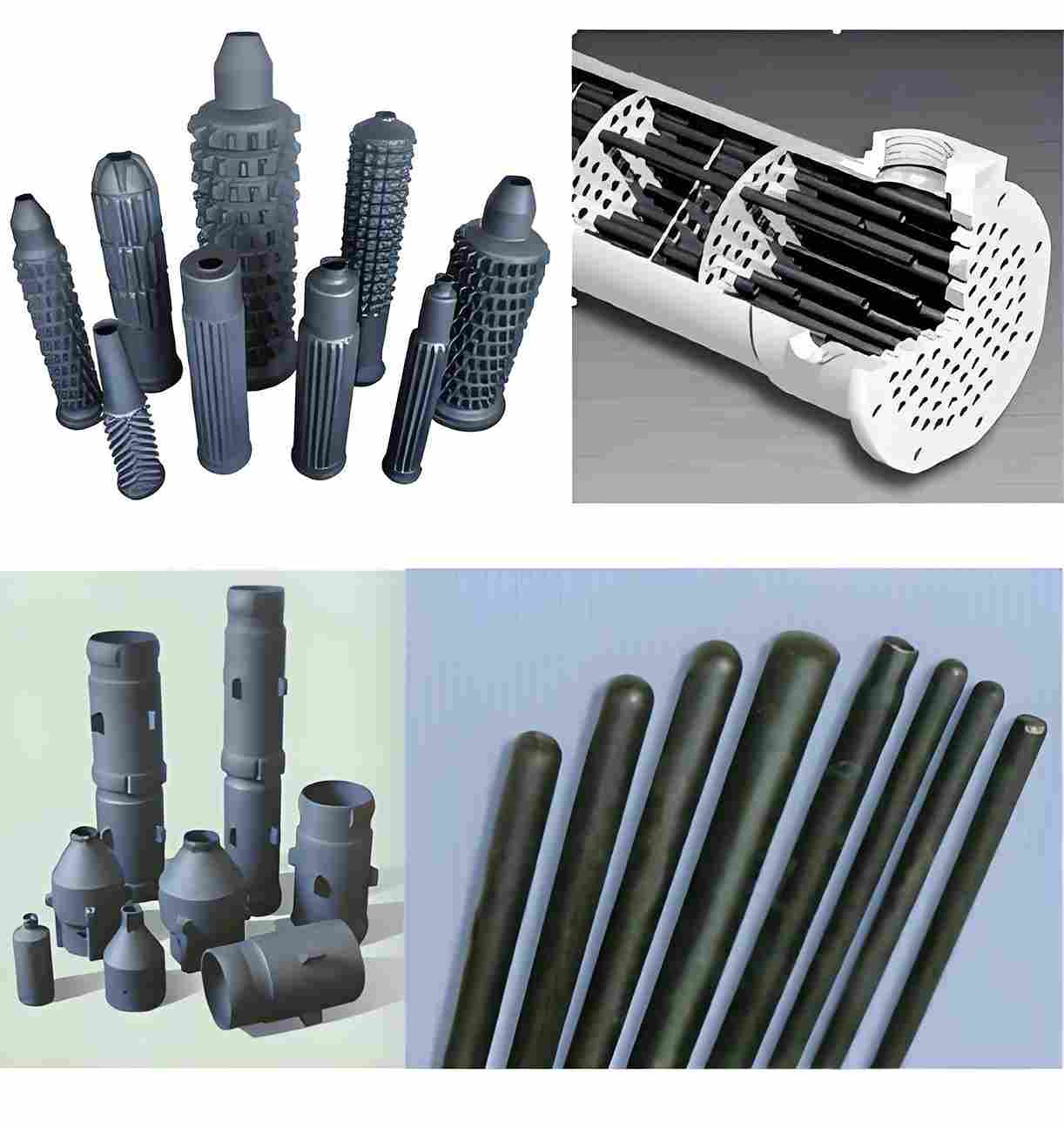
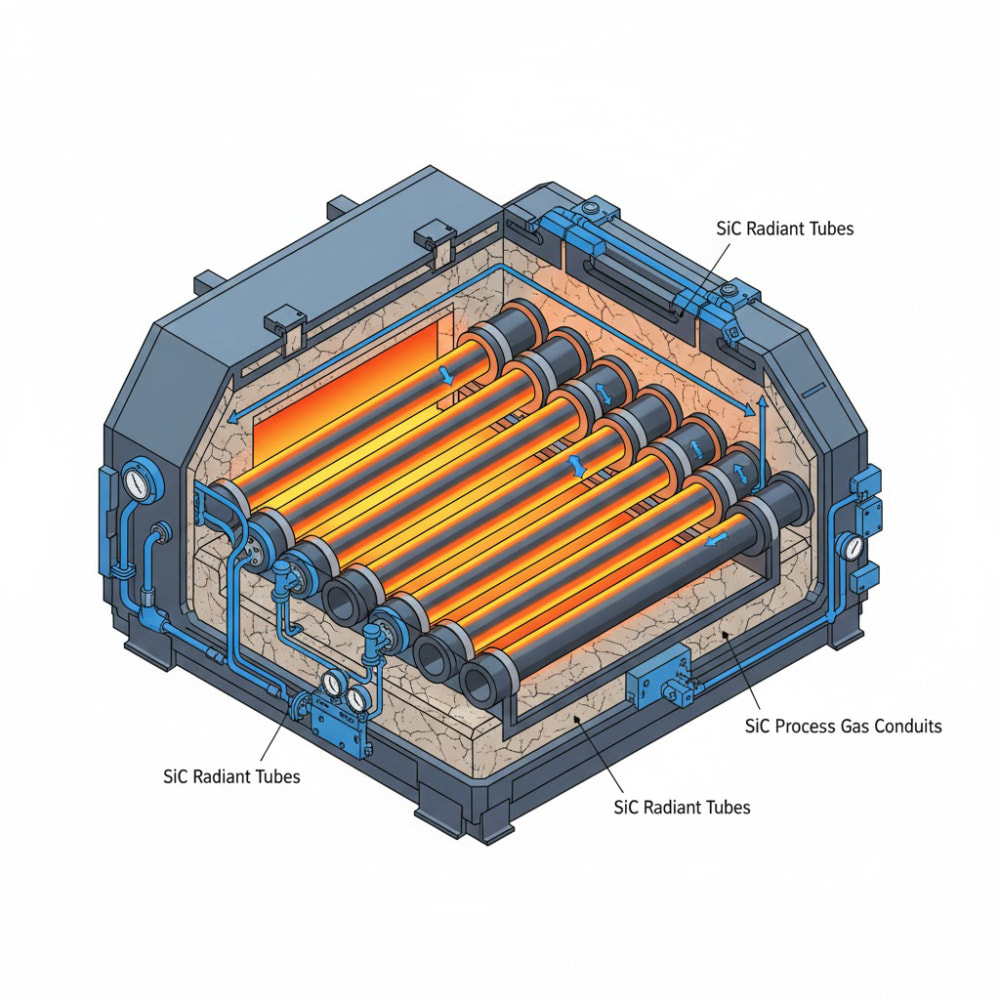
Silicon carbide tubes are high-performance ceramic components extruded or cast from SiC-based materials, used in industrial furnaces as radiant tubes, burner tubes, muffle tubes, thermocouple protection tubes, and process gas conduits. Compared with alloy tubes or basic refractory ceramics, SiC tubes combine:
high thermal conductivity, high strength at temperature, excellent thermal shock resistance, and outstanding corrosion/oxidation resistance.
As a material, silicon carbide maintains stable mechanical and thermal properties well above 1,400 °C, with low thermal expansion and very high hardness. In high-temperature industrial furnaces, this means stiffer tubes, higher allowable heat flux, and longer campaigns compared with metallic tubes or low-grade ceramics.
Problems and Challenges with Conventional Furnace Tubes
Before discussing silicon carbide, it is worth being clear about the typical failure modes of conventional tubes in high-temperature furnaces:
- Sagging and creep of metallic tubes: At elevated temperatures, heat-resistant alloys gradually creep and sag between supports, changing radiant geometry and eventually cracking under their own weight.
- Oxidation and scaling: Alloy tubes in oxidizing or carburizing atmospheres form thick oxide or scale layers, reducing heat transfer, flaking into the furnace, and acting as crack initiators.
- Thermal shock cracking of basic ceramics: Mullite or other oxide ceramics often crack under rapid heat-up, cool-down, burner cycling, and local flame impingement.
- Limited maximum furnace temperature: Alloy tubes cap the realistic maximum zone temperature; pushing above their safe range accelerates creep and catastrophic failure.
- Contamination of product: Spalled oxide, metal dust, or reaction products from tube walls contaminate load material, which is unacceptable in many heat treatment, chemical, or clean processing lines.
- Short, inconsistent service life: Tube life varies widely between zones and campaigns, making it hard to plan shutdowns and spare inventories.
Silicon carbide tubes address these problems by offering higher temperature capability, lower thermal expansion, more stable mechanical strength, and better resistance to chemical attack, so tube performance becomes more predictable instead of a recurring surprise.
Selection Criteria for Silicon Carbide Tubes
Selecting silicon carbide tubes for high-temperature industrial furnaces is an engineering exercise, not a catalogue lottery. The following criteria can be used as a checklist.
1. Furnace Type and Atmosphere
- Furnace type: continuous or batch, pusher, walking-beam, roller hearth, bogie hearth, bell furnace, or vacuum/controlled-atmosphere system.
- Heating method: gas-fired, oil-fired, electric resistance, or hybrid.
- Atmosphere: air, oxidizing, carburizing, nitriding, inert, vacuum, or special process gases.
Silicon carbide tubes can be tuned for different atmospheres with appropriate material grades and surface treatments. For example, dense reaction-bonded or sintered SiC tubes are commonly used as burner tubes or radiant tubes in gas-fired furnaces, while high-purity grades are better suited for clean, controlled-atmosphere or vacuum furnaces.
2. Operating Temperature and Heat Flux
- Maximum furnace temperature: target setpoint and occasional over-temperature excursions.
- Tube wall temperature: actual surface temperature seen by the tube, not just chamber setpoint.
- Heat flux: required power per unit area for heating or holding, especially for radiant tubes and muffle tubes.
Silicon carbide tubes generally allow higher operating temperatures and higher safe heat flux than alloy tubes of similar dimensions, provided they are correctly supported and aligned. When you specify tubes, define both zone setpoints and expected tube wall temperatures so that the SiC grade can be matched to realistic thermal loads.
3. Tube Function and Position in the Furnace
- Radiant tubes: enclose burners or electric elements and radiate heat to the furnace chamber.
- Process tubes: carry process gas or product through a hot zone, often in clean or reactive atmospheres.
- Thermocouple protection tubes: protect sensor elements from direct flame, slag, or process gas.
Radiant tubes require excellent thermal shock resistance and mechanical strength, while process tubes may prioritize corrosion resistance and gas tightness. Thermocouple protection tubes focus on dimensional stability and clean surfaces to avoid contaminating sensors.
4. Silicon Carbide Material Grade
- Recrystallized SiC (RSiC): high purity, excellent thermal shock resistance, and good dimensional stability at very high temperatures.
- Reaction-bonded SiC (RBSiC / SiSiC): dense, strong material with good oxidation and corrosion resistance, widely used for burner and radiant tubes.
- Sintered SiC (SSiC): very high strength and hardness, low porosity, and excellent chemical resistance for the most demanding environments.
Each SiC family offers a different balance between mechanical strength, purity, thermal shock resistance, and cost. Zirsec can map furnace requirements to appropriate SiC grades, avoiding both over-specification and under-specification.
5. Geometry, Span, and Mechanical Support
- Tube length and diameter: long, unsupported spans create bending stresses; larger diameters see higher thermal gradients.
- Wall thickness: thicker walls improve robustness but increase thermal resistance and weight; thinner walls improve heat transfer but require stronger materials.
- Support method: fixed vs. sliding supports, expansion allowances, and how tubes are anchored at cold ends.
Correctly designed silicon carbide tubes remain straight and stable where alloy tubes would sag. Mechanical layout should ensure that tubes are loaded mainly in compression or simple bending, with enough freedom to accommodate thermal expansion of the furnace structure.
6. Thermal Cycling and Start-Up Routine
- Continuous vs. batch operation: continuous lines see relatively steady temperature; batch furnaces experience frequent heating and cooling.
- Ramp rates: aggressive ramping shortens tube life if material grade and design do not match the thermal shock loads.
- Emergency conditions: flame impingement, power outages, or rapid cool-down due to door opening.
Silicon carbide tubes are significantly more tolerant of thermal cycling than many ceramics and alloys, but start-up curves and maximum ramp rates should still be defined and respected to achieve the expected campaign length.
7. Corrosion, Dust, and Process Contaminants
- Dust and particulates: slag, scale, or product dust can abrade surfaces and plug passages.
- Vapors and fumes: corrosive gases or condensable species may attack tube surfaces over time.
- Cleaning procedures: mechanical or chemical cleaning methods should be compatible with SiC surfaces.
Dense, low-porosity SiC tubes resist chemical attack and erosion better than many alternatives. Knowing your actual atmosphere and contaminant profile makes it possible to choose surface finish, glaze, and material grade that slow degradation and extend tube life.
Product Overview and Specifications: Zirsec Silicon Carbide Tubes
Zirsec offers silicon carbide tubes engineered for high-temperature industrial furnaces, including radiant tubes, burner tubes, and process tubes. These products build on the same material principles used in SiC kiln furniture and structural components for high-temperature furnace applications, and are grouped within the Zirsec SiC component families available under:
https://zirsec.com/types/.
Typical Features
- High operating temperature: suitable for furnace zones in the 1,300–1,600 °C range (grade and atmosphere dependent).
- High thermal conductivity: supports efficient heat transfer and uniform temperature distribution along the tube length.
- Low thermal expansion: reduces thermal stress during cycling and contributes to good dimensional stability.
- High strength and stiffness: maintains straightness and integrity at temperature, resisting sagging and creep.
- Excellent oxidation and corrosion resistance: stable performance in air, many process atmospheres, and combustion environments.
Indicative Comparison: SiC Tubes vs. Alloy Tubes
| Parameter | SiC Tube (typical) | Heat-Resistant Alloy Tube (typical) |
|---|---|---|
| Max service temperature (furnace atmosphere) | up to ~1,600 °C (grade-dependent) | ~1,050–1,150 °C |
| Thermal conductivity | high, supports strong heat flux and uniformity | moderate |
| Thermal expansion | low, good dimensional stability | higher, more prone to distortion |
| Oxidation resistance | excellent, stable protective surface at high temperature | limited; scaling and spallation over time |
| Expected service life at high temperature | long, multi-campaign with correct design | shorter, higher replacement rate |
Exact property values and dimensional ranges are defined in Zirsec’s product data sheets and can be tailored to OEM specifications for furnace platforms.
Applications and Use Cases
Silicon carbide tubes from Zirsec are suitable for a wide range of high-temperature industrial furnaces across multiple industries. Typical applications include:
- Strip and wire heat treatment furnaces: SiC radiant tubes or muffle tubes in continuous furnaces for stainless steel strip, wire, and profiles, where temperature uniformity and long life are critical.
- General heat treatment furnaces: gas-fired or electric furnaces used for hardening, tempering, or annealing components in automotive and industrial markets.
- High-temperature process furnaces: furnaces for ceramics, powder metallurgy, and advanced materials where tubes carry process gases, protect heating elements, or support loads in the hot zone.
- Chemical and petrochemical furnaces: furnace coils and process tubes in corrosive or high-heat-flux environments where alloys reach their limits.
- Laboratory and pilot furnaces: compact furnaces used for material development and testing that require stable, repeatable temperature profiles.
In many of these furnaces, SiC tubes work together with other silicon carbide components such as beams, plates, and burner blocks, allowing Zirsec to support complete high-temperature furnace lining and support systems rather than isolated parts.
Zirsec Support for OEM and MRO Teams
Zirsec’s role is not just to supply tubes, but to support OEM design teams and plant maintenance teams in integrating silicon carbide tubes into new or existing furnace platforms.
- Design collaboration: support on tube sizing, wall thickness, span, and support geometry, often using existing furnace drawings as a starting point.
- Material selection: guidance on which SiC grade (RSiC, RBSiC, SSiC) fits temperature, atmosphere, and life targets.
- Prototype and trial campaigns: small-batch supply for first installations, including simple monitoring plans (temperature, deformation, failure modes).
- Quality and traceability: inspection of key dimensions, straightness, and surface finish, documented for OEM and end user quality systems.
- Lifecycle and reliability focus: support in translating tube performance into furnace KPIs such as uptime, energy per ton, and cost per campaign.
- Supply chain planning: coordinated production and logistics to align with scheduled shutdowns and new line commissioning.
FAQs: Silicon Carbide Tubes for High-Temperature Industrial Furnaces
1. How much hotter can silicon carbide tubes run compared with alloy tubes?
In many industrial furnace designs, silicon carbide tubes can safely operate at significantly higher wall temperatures than heat-resistant alloys, often enabling furnace setpoints in the 1,300–1,600 °C range where alloys would suffer rapid creep or oxidation. Exact limits depend on SiC grade, geometry, support conditions, and atmosphere.
2. Can silicon carbide tubes replace existing metallic radiant tubes one-to-one?
Sometimes yes, but not always as a simple drop-in. In many retrofits, SiC tubes can be made to match existing outer dimensions and connection points, while wall thickness or support details are optimized for SiC. Zirsec typically reviews furnace drawings and operating data before recommending a one-to-one replacement or a slightly modified design.
3. How long do silicon carbide tubes typically last in furnace service?
Service life depends on temperature, cycling, atmosphere, and mechanical design. Under well-controlled conditions, SiC tubes usually deliver substantially longer campaigns than alloy tubes, with more consistent behavior across zones. Zirsec often evaluates life in terms of operating hours or campaigns per tube set, then adjusts material grade or support layout to hit target values.
4. What information is needed to specify a SiC tube correctly?
For a technically solid specification, it is helpful to provide:
- Furnace type and heating method
- Atmosphere and maximum zone temperature
- Tube function (radiant, burner, process, protection)
- Required length, diameter, and approximate wall thickness
- Support spacing, mounting details, and expected temperature cycling
With this input, Zirsec can recommend geometry and material grade that match real conditions instead of purely nominal ratings.
5. How do silicon carbide tubes handle thermal shock and frequent cycling?
High-quality SiC tubes have excellent thermal shock resistance compared with many oxide ceramics and alloys. They tolerate rapid temperature changes better, provided basic rules are followed: avoid sudden direct flame impingement on cold tubes, define realistic ramp rates, and allow for free expansion. Correct grade selection further increases tolerance to frequent cycling.
6. Are SiC tubes suitable for different furnace atmospheres?
Yes. Silicon carbide tubes are widely used in air, oxidizing, inert, and some reactive atmospheres. The specific SiC grade and any surface treatments are chosen to handle the expected combination of oxygen potential, process gases, and contaminants. For highly specialized atmospheres, Zirsec can review process details before confirming suitability.
7. How does the cost of SiC tubes compare to alloy tubes over the lifecycle?
On purchase price alone, SiC tubes are usually higher than alloy tubes. However, when tube life, furnace uptime, energy consumption, and product quality are included, total cost per operating hour or per ton processed often improves with SiC. Zirsec can help build a simple lifecycle cost model that compares different tube options in terms of cost per campaign, not just cost per piece.
Get a Tailored Silicon Carbide Tube Recommendation from Zirsec
If you are designing a new high-temperature industrial furnace or upgrading an existing line, a tailored silicon carbide tube specification will usually beat off-the-shelf guesses. The fastest way to converge is to combine your real operating data with Zirsec’s SiC tube families under Zirsec Types and the relevant high-temperature furnace applications.Prepare a short summary of furnace type, atmosphere, target temperatures, tube functions, geometry, and life expectations. With that information, Zirsec’s engineering team can propose specific silicon carbide tube designs and material grades that are aligned with your process window, energy targets, and maintenance strategy, turning furnace tubes from a recurring problem into a stable, long-term part of your thermal process.