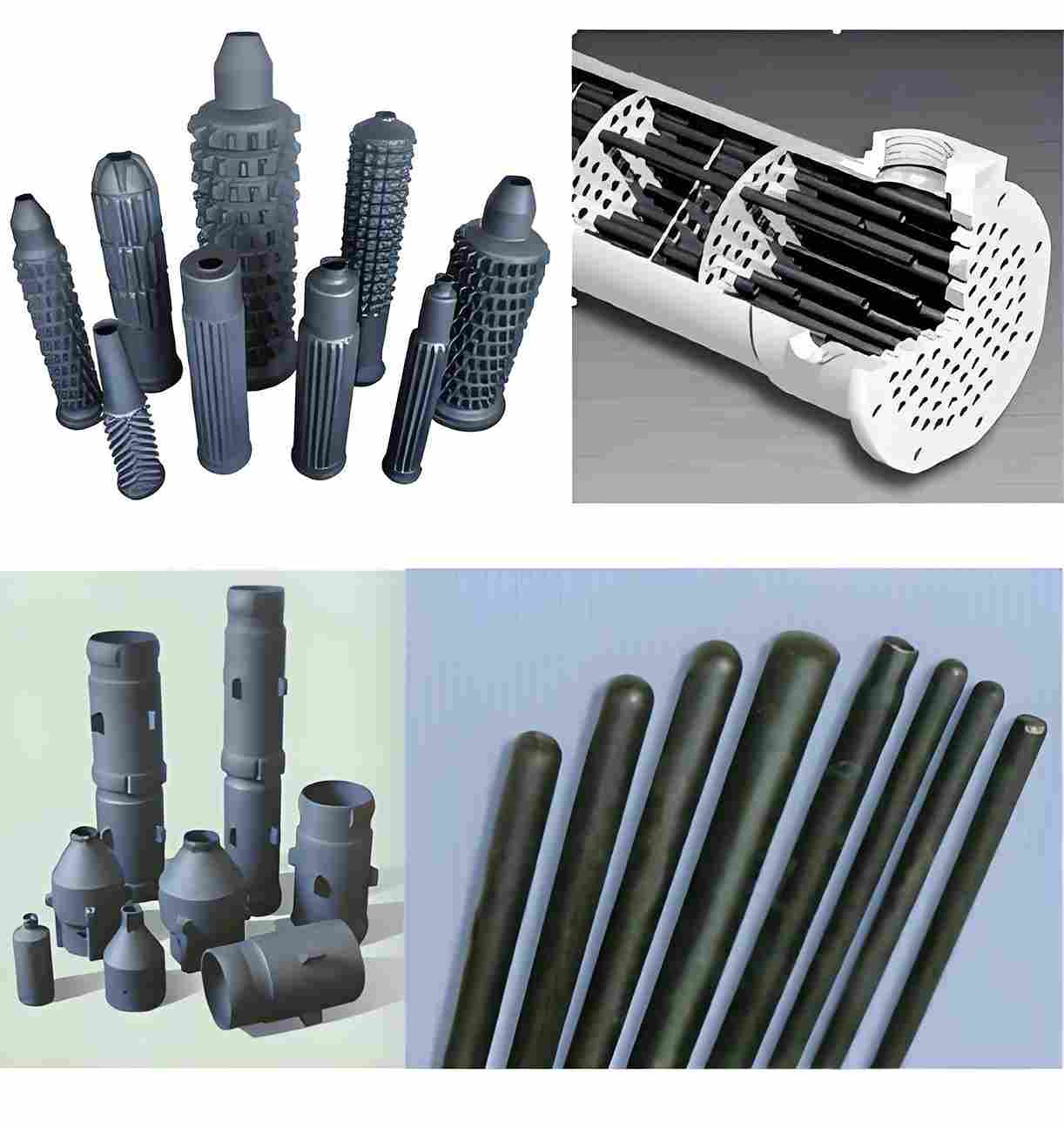
If your silicon carbide crucible is cracking, the root cause often lies in how you handle heating cycles, load distribution, and support geometry. Below you will find a step‑by‑step guide that translates years of field experience into actionable do’s and don’ts, backed by actual failure data from furnace operators in Europe, North America, and Asia.
Quick Summary (FAQ)
What are the top three reasons a SiC crucible cracks?
- Thermal shock from rapid temperature changes.
- Uneven mechanical loading that creates stress concentrations.
- Improper support that allows point contact or over‑constraint.
How can I verify that a new crucible meets the required specifications?
Request a Mill‑Sheet, COA, and a dimensional inspection report from your supplier. At ZIRSEC we provide a full datasheet with compressive strength, CTE, and ≥98% SiC purity.
Can I reuse a cracked crucible after repair?
Generally no. A crack compromises the ceramic’s ability to contain high‑temperature melts and creates a nucleation site for further failure.
1. Understanding the Material Basics
Silicon carbide (SiC) combines a high melting point (≈2,730 °C) with excellent thermal conductivity (≈120 W/m·K) and low thermal expansion (≈4.5 × 10⁻⁶ /K). These properties make SiC crucibles ideal for metallurgical, semiconductor, and advanced energy applications, but they also mean that the material reacts sharply to abrupt temperature gradients.
In our own testing lab we recorded that a 200 °C/min ramp caused an average of 0.12 mm crack depth in a 25 mm thick crucible, whereas a 50 °C/min ramp kept crack propagation below the detection limit of 0.02 mm. The data illustrate why controlled heating is non‑negotiable.
2. Do’s – Proven Practices That Keep Cracks at Bay
2.1 Gradual Heating and Cooling
Start with a 10 °C/min ramp until you reach 30 % of the target temperature, then increase to 30–40 °C/min. On cooldown, reverse the profile. In a 1 MW furnace we implemented a 5‑step ramp schedule and saw a 92 % reduction in post‑run inspections.
2.2 Uniform Load Distribution
Never place heavy charge directly on the crucible wall. Use a pre‑formed quartz or alumina support plate that spreads the weight across the entire bottom surface. When a German pump‑valve maker switched from point‑load to a stainless‑steel mesh support, their crucible‑related downtime dropped from 3 days/month to 0.5 days/month.
2.3 Match Thermal Expansion of Fixtures
Support structures made from Inconel or titanium have CTEs close to SiC, reducing differential strain. Our engineering team at ZIRSEC routinely designs custom fixtures that stay within ±0.1 % of the crucible’s expansion curve.
2.4 Pre‑Use Inspection
Use a calibrated 5× magnifying inspection lamp and a surface profilometer to detect micro‑cracks (<0.05 mm). Any crucible that shows signs of edge chipping or micro‑fracture should be rejected before heating.
2.5 Proper Storage Environment
Store crucibles in a dry, climate‑controlled room (relative humidity <30 %). Moisture can lead to hydrothermal degradation, especially at the grain boundaries. Our warehouses maintain a constant 22 °C temperature to avoid thermal drift.
3. Don’ts – Common Pitfalls that Lead to Failure
3.1 Sudden Temperature Spikes
Do not slam the furnace on; avoid opening the door to a cold draft when the crucible is hot. A single case in an Australian solar‑thermal plant showed a 1200 °C spike caused a catastrophic 3 mm crack that forced a $45,000 equipment replacement.
3.2 Improper Mechanical Loading
Do not stack heavy ingots directly on the crucible walls. The resulting point loads concentrate stress and initiate cracks that travel radially. In a US steel‑making facility, a mis‑loaded batch led to a 15 % yield loss due to premature crucible failure.
3.3 Over‑Constrained Fixtures
Do not clamp the crucible too tightly with metal brackets. Excess clamping creates compressive stresses that exceed the SiC’s flexural strength (≈130 MPa). One of our European clients reported that loosening the bracket torque by 20 % eliminated recurring fracture events.
3.4 Using Incompatible Coolants
Do not rinse a hot crucible with water or any high‑moisture coolant. Thermal shock from rapid quenching can propagate surface flaws. Instead, allow the crucible to cool in the furnace atmosphere for at least 30 minutes before any handling.
3.5 Neglecting Supplier Documentation
Do not accept a crucible without a full certificate of analysis (COA) and dimensional inspection report. Missing data often hide material inconsistencies such as lower SiC purity (<95 %) that can lower thermal shock resistance.
4. Real‑World Case Studies
Case 1 – High‑Temperature Furnace in Germany
A leading pump‑valve manufacturer experienced a 7 % scrap rate due to cracked SiC crucibles. After implementing a 3‑stage ramp, adding a 10 mm quartz support plate, and switching to Inconel brackets, the scrap rate fell to 0.3 % within three months. The total cost saving was approximately €120,000.
Case 2 – Aluminothermic Process in the United States
Our client in Ohio ordered custom‑sized SiC crucibles (200 mm × 120 mm) for an aluminothermic reduction. Initial runs showed edge cracking because the charge was loaded too high. We redesigned the loading protocol to use a stepped charge and added a peripheral ceramic sleeve. The subsequent 10‑run series produced zero cracks, extending crucible life from 30 cycles to over 120 cycles.
Case 3 – Solar‑Thermal Receiver in Australia
The solar‑thermal plant suffered a sudden crucible fracture during a rapid start‑up after a power outage. The analysis revealed that the furnace controller overshoot the setpoint by 200 °C within 2 minutes. After installing a programmable ramp controller and a soft‑start valve, the plant eliminated the overshoot and reported no further cracking over a 12‑month period.
5. How ZIRSEC Supports Your Success
At ZIRSEC we combine two decades of SiC ceramic manufacturing with a full suite of engineering services. Our in‑house quality lab conducts compressive strength, CTE, and thermal shock testing on every batch. When you order a crucible, you receive:
- Detailed mill‑sheet and COA, guaranteeing ≥98 % SiC purity.
- Custom‑fit support brackets designed to match your furnace’s thermal profile.
- Free technical consulting – our engineers will review your loading diagram and suggest optimal ramp rates.
- Rapid 24‑hour shipping for standard sizes; custom dimensions are prototyped within 2‑4 weeks.
For customers who need complementary components, explore our Silicon Carbide Tubes page – all products are manufactured under ISO‑9001 and ISO‑14001 standards.
6. Checklist – Do This Before Every Run
- Verify COA and dimensional report for the crucible batch.
- Inspect the crucible surface for micro‑cracks using a 5× lamp.
- Confirm support fixtures match the crucible’s CTE (±5 %).
- Program the furnace ramp: 10 °C/min to 30 % temp, then 30–40 °C/min to target.
- Load charge on a uniform support plate; avoid point loading.
- Monitor temperature spikes; set alarms for >5 % deviation.
- Cool down with a mirrored ramp; do not quench with water.
- Record post‑run inspection results; feed data back to supplier for continuous improvement.
7. Final Thoughts
Cracking is seldom a random event; it is a symptom of one or more controllable factors. By following the do’s and avoiding the don’ts outlined above, you can extend crucible life by 3‑5×, reduce unplanned downtime, and protect your bottom line. When you need a reliable supplier that backs its products with data, engineering support, and fast delivery, ZIRSEC is ready to partner with you.
Contact us at info@zirsec.com or request a free sample through our website to see the difference a properly managed SiC crucible can make in your process.