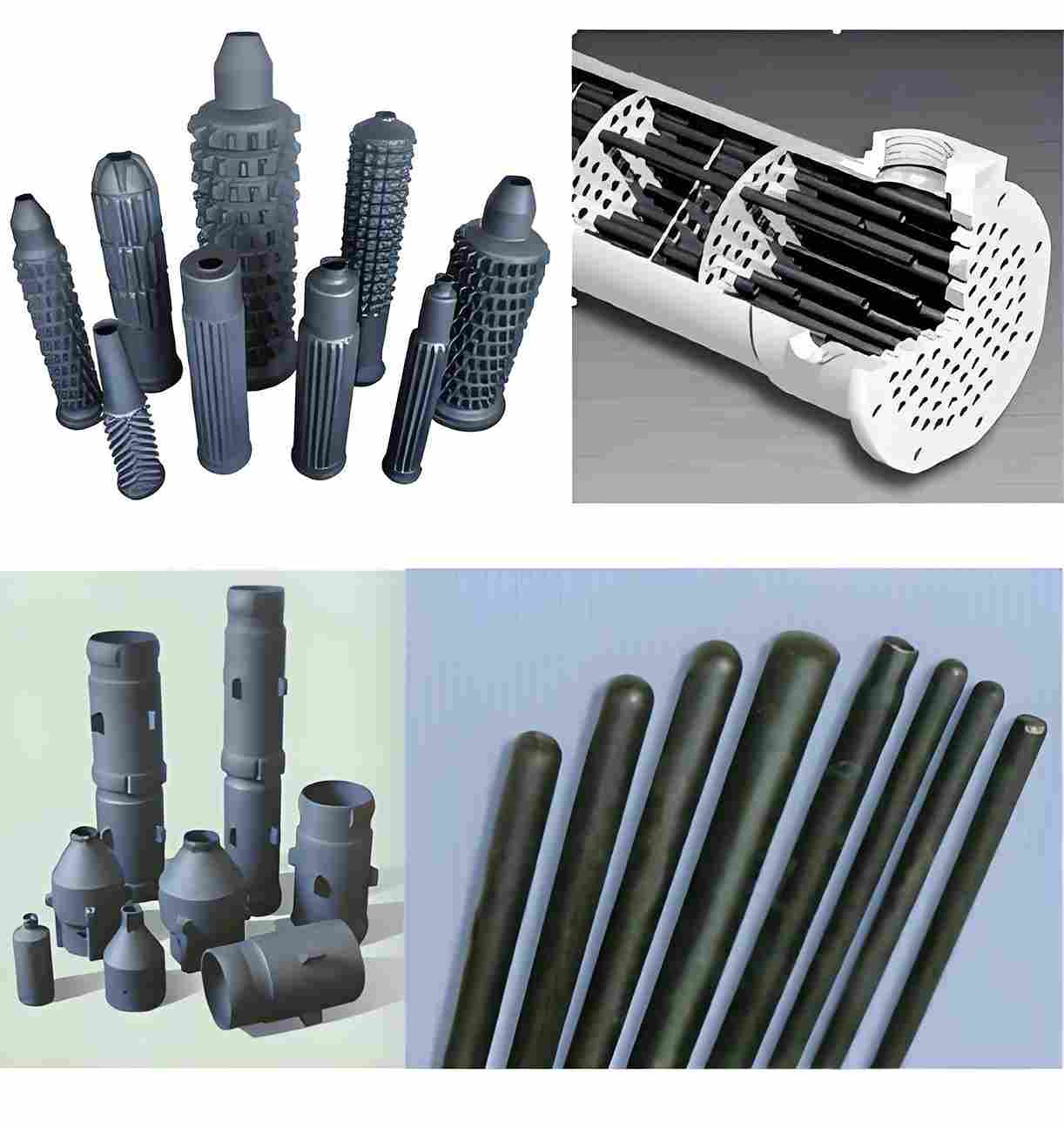
In many industrial systems, engineers still default to alumina when specifying ceramic components. It is familiar, relatively low cost, and widely available. But in harsher environments, there is a clear point where choosing silicon carbide (SiC) over alumina becomes the only rational decision if you care about uptime, safety, and lifecycle cost.
This guide explains when to move from alumina to silicon carbide, how the two materials differ in real applications, and where SiC components such as silicon carbide tubes and SiC plates deliver the biggest performance gains.
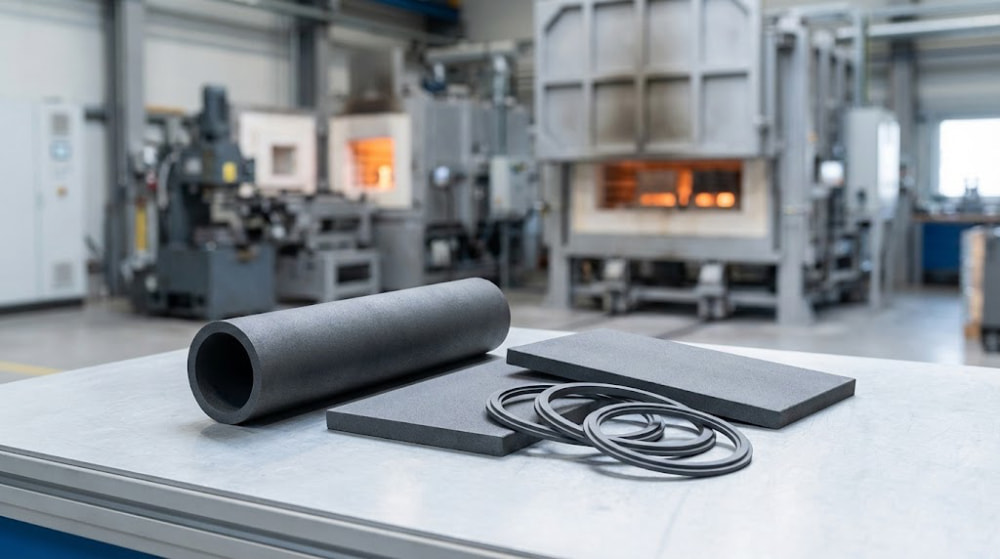
Silicon Carbide vs Alumina: Key Differences at a Glance
Silicon carbide and alumina (aluminium oxide) are both technical ceramics, but they behave very differently under stress, heat, and chemical attack.
| Property | Silicon Carbide (SiC) | Alumina (Al₂O₃) | Practical Impact |
|---|---|---|---|
| Max. working temperature | Up to ~1,600 °C (grade-dependent) | Typically ~1,300–1,500 °C | SiC is safer at the top end of furnace duty and long cycles. |
| Thermal conductivity | High | Medium to low | SiC heats and cools faster, better thermal shock resistance. |
| Thermal shock resistance | Excellent | Moderate | SiC tolerates rapid heating/cooling; alumina cracks more easily. |
| Hardness / wear resistance | Very high | High | SiC lasts longer under abrasion, slurry, and sliding wear. |
| Chemical / corrosion resistance | Excellent in many acids, gases, and hot corrosive media | Good, but more limits in extreme chemistries | SiC is more reliable in mixed chemical + thermal stress. |
| Density | Generally lower than dense alumina | Higher | Lighter SiC parts reduce inertia and load on supports. |
| Cost | Higher unit cost | Lower unit cost | SiC wins in lifecycle cost where downtime is expensive. |
In short: alumina is a solid “standard” choice. Silicon carbide is the material you choose when failure is too expensive.
When Alumina Is Usually Enough
Alumina still has a strong role in many systems. If your conditions look like the list below, alumina may be sufficient:
- Moderate temperatures, typically < 1,200–1,300 °C with slow heating/cooling rates.
- Non-aggressive media, such as clean air or mildly corrosive atmospheres.
- Limited mechanical shock and low abrasion (little slurry, little hard particle impact).
- Short duty cycles where components are easy and cheap to replace.
- Cost-driven projects where downtime impact is low and materials are viewed as “consumables.”
If your operating envelope stays in this regime, alumina can deliver acceptable performance with a lower initial price.
When to Choose Silicon Carbide over Alumina
Once your system moves into more severe conditions, the total cost of ownership flips in favor of SiC. The triggers below are the most common reasons our customers decide to switch from alumina to silicon carbide.
1. High Temperature plus Rapid Cycling
If your furnace or reactor frequently moves between ambient and >1,300 °C, alumina components are at high risk of thermal shock cracking. SiC has:
- Higher thermal conductivity, distributing heat more evenly.
- Lower thermal expansion, reducing internal stress.
- Better resistance to repeated rapid temperature swings.
Typical cases include:
- Rapid-fire kilns and shuttle kilns.
- Furnaces with frequent charged/uncharged cycles.
- Burner tubes and silicon carbide tubes in zones with quick ramp-up and cool-down.
If thermal shock fractures have caused unplanned shutdowns with alumina components, it is usually time to move to SiC.
2. Severe Abrasion and Slurry Wear
Alumina is hard, but silicon carbide is harder and more wear-resistant, especially in mixed modes of erosion, sliding, and impact.
You should strongly consider SiC if:
- You handle abrasive slurries (minerals, catalysts, sand, ash).
- You see groove wear on liners, plates, or flow parts.
- You replace nozzles, liners, or tiles at a high frequency.
In these systems, SiC plates and tiles deliver much longer service life. Upgrading to silicon carbide plates or wear-resistant components typically reduces shutdowns and maintenance labor.
3. Corrosive and High-Temperature Media
When hot gases, acids, alkalis, or aggressive combustion products are involved, alumina can gradually degrade, soften, or react. SiC offers:
- Excellent resistance to many acidic and basic environments.
- High stability in oxidizing and some reducing atmospheres.
- Lower risk of surface glazing or spalling in mixed chemical + thermal stress.
This is why SiC is often preferred in:
- Chemical processing equipment, reactors, and transfer piping.
- Flue gas paths and high-temperature exhaust lines.
- Burner blocks, protection tubes, and kiln furniture in corrosive firing atmospheres.
4. Long Continuous Operation and High Downtime Cost
If your line runs 24/7 and shutdowns are expensive, extending component life becomes more important than saving on unit cost.
Typical indicators that favor SiC:
- Each unplanned outage costs thousands of dollars per hour.
- You must schedule maintenance windows months in advance.
- Alumina parts fail before planned maintenance intervals.
In these cases, switching to SiC tubes, crucibles, rollers, or seals often pays back quickly through reduced failure rate and fewer emergency interventions.
5. Tight Tolerances and Structural Stability
Many modern systems demand precise alignment and minimal deflection at high temperatures. Compared with alumina, SiC offers:
- Higher stiffness at elevated temperatures.
- Better straightness retention for long beams or rollers.
- More consistent dimensions after repeated thermal cycles.
This is especially relevant for:
- Long structural parts in kilns and furnaces.
- Precision sleeves, bearings, and SiC sealing rings in pumps and mechanical systems (URL adjust if different on your site).
Typical Application Scenarios Where SiC Outperforms Alumina
High-Temperature Furnace Tubes and Protection Components
For heat exchangers, burner lances, and thermocouple protection in extreme environments, engineers increasingly specify silicon carbide instead of alumina.
Benefits include:
- Lower risk of tube cracking when burners are cycled.
- Stable geometry over long exposure at high temperatures.
- Improved safety due to fewer sudden breakages.
Zirsec supports these needs with custom silicon carbide tubes in SSiC, RBSiC, and recrystallized SiC grades.
Wear Liners, Plates, and Tiles in High-Wear Zones
In chutes, hoppers, cyclone inlets, classifier outlets, and slurry lines, alumina liners often suffer rapid erosion. SiC plates and tiles generally provide:
- Higher hardness and lower wear rate under slurry and particle impact.
- Better behavior under combined wear + temperature.
- Longer predictable service intervals.
Switching to SiC here often cuts liner replacement frequency dramatically, stabilizing throughput and product quality.
Seals, Bearings, and Pump Components
In corrosive, abrasive, or hot fluids, alumina seal faces and bearings may chip, crack, or wear prematurely. SiC seal rings, sleeves, and bearings offer:
- High hardness and toughness against particle impact.
- Excellent chemical resistance for aggressive process media.
- Lower friction and better running behavior in many pump designs.
For chemical pumps, petrochemical systems, and seawater equipment, moving from alumina to SiC is often a straightforward way to extend pump life and reduce leakage events.
Decision Checklist: Is It Time to Switch to Silicon Carbide?
Use the checklist below as a quick screening tool for your project. If you answer “yes” to several items, it is worth evaluating SiC in detail.
- Operating temperature exceeds 1,250–1,300 °C for long periods.
- Frequent temperature cycling or rapid ramp-up / cool-down.
- Component failures due to thermal shock or cracking have occurred.
- High abrasion, hard particles, or erosive slurries contact the component.
- Corrosive gases, acids, or alkalis are present at elevated temperature.
- Downtime cost or safety risk from component failure is significant.
- You need long, thin, or precision parts that must stay straight and dimensionally stable.
- You are already replacing alumina parts more often than planned.
If your system matches this profile, silicon carbide is likely to provide better lifecycle economics even if the initial price per piece is higher.
How Zirsec Helps Engineers Choose Between SiC and Alumina
Material selection is rarely just about a single property. Temperature, atmosphere, mechanical load, cycling, and cost all interact. Zirsec supports engineers by combining:
- Application experience across chemical processing, metallurgy, power, and environmental systems.
- Multiple SiC grades (sintered, reaction-bonded, recrystallized) to match performance and budget.
- Custom geometries for tubes, plates, seal rings, rollers, and other structural parts.
- Fast sampling and small-batch production so you can validate SiC in your equipment with limited risk.
If you are evaluating silicon carbide vs alumina for a specific project, share your drawings, working conditions, and current failure modes. Our engineers can recommend a SiC grade and geometry that targets your most critical pain points.
Next Step: Evaluate SiC in Your Critical Components
Silicon carbide is not always the cheapest option, but in harsh environments it is often the lowest-cost solution over the full lifecycle. The tipping point usually comes when:
- Failures of alumina parts are already causing downtime or quality problems, or
- You are designing a new line where high reliability is mandatory from day one.
To start a concrete evaluation, you can:
- Review our product families such as silicon carbide tubes and SiC plates.
- List the exact failure modes and operating conditions of your current alumina components.
- Contact our engineering team with your drawings and target lifetime requirements.
We will help you determine whether it is time to move from alumina to silicon carbide, and if so, specify a practical, manufacturable SiC solution for your system.