When furnace linings start cracking, spalling or dragging down energy efficiency, the usual response is to “reline with better bricks.” But for many modern processes, simply swapping one traditional refractory for another is no longer enough. Silicon carbide (SiC) linings offer a very different performance profile compared with conventional fireclay, high-alumina and basic refractories.
If your furnaces or kilns run at high temperature, see frequent thermal cycling, or face aggressive slags and gases, upgrading part of the lining to silicon carbide can extend campaign life, stabilise product quality and reduce fuel consumption.
This guide compares silicon carbide vs traditional refractories and explains where SiC tiles, plates and blocks from Zirsec can make a measurable difference in industrial furnace linings.
Traditional refractories: strengths and limitations
Conventional refractory linings are usually based on:
- Fireclay bricks for moderate temperatures and general furnace structures
- High-alumina bricks and castables for higher temperature and abrasion resistance
- Basic refractories (magnesia, doloma) for steelmaking and slag-contact zones
They are proven and widely available, but they also come with known limitations:
- Lower thermal conductivity than SiC, which can reduce heat transfer rates where you actually want heat to flow.
- Higher thermal mass, which increases heat-up time and energy consumption per cycle.
- Limited thermal shock resistance in fast-firing or frequently cycled furnaces.
- Spalling and cracking at corners, burner zones and areas with steep temperature gradients.
- Wear and corrosion under abrasive or chemically aggressive slags and dust-laden gases.
In many applications, these limitations are simply “built into the process.” But silicon carbide linings allow you to redesign the hot face to behave differently.
Silicon carbide furnace linings: what changes?
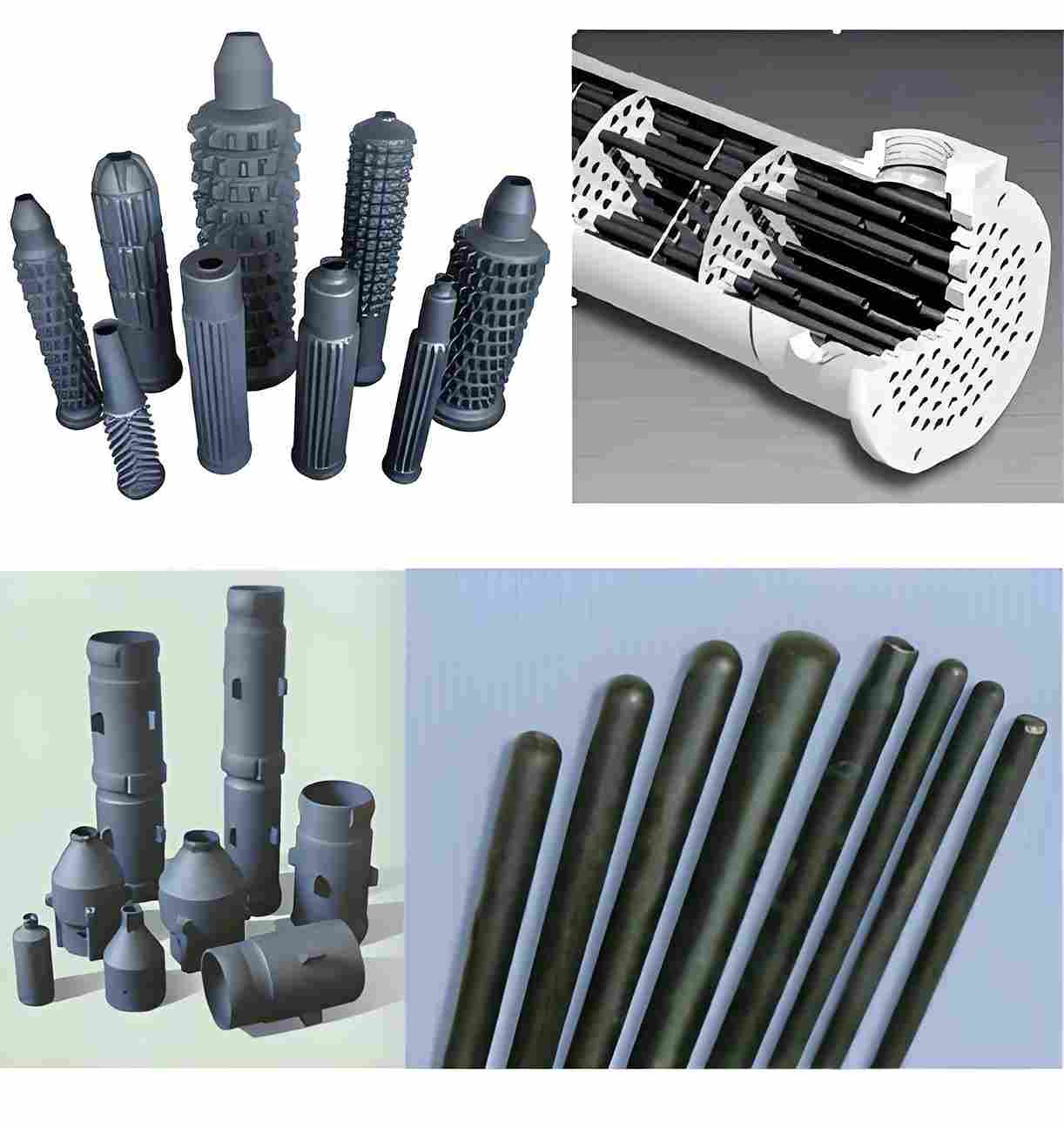
Silicon carbide-based tiles and plates, such as SiC plates and custom SiC blocks, bring a combination of properties that traditional refractories usually lack:
- High thermal conductivity – faster heat transfer where needed.
- High strength at temperature – surfaces stay flatter and more dimensionally stable.
- Excellent thermal shock resistance – less cracking during heating and cooling cycles.
- Outstanding wear and erosion resistance – surfaces withstand abrasion from charge materials, dust and gas flows.
- Good chemical resistance in many oxidising and mildly reducing atmospheres.
Instead of treating the lining as a passive barrier, SiC linings let you design the hot face as an active, engineered interface between the process and the insulation behind it.
Side-by-side comparison: silicon carbide vs traditional refractories
| Property | Traditional Refractories (Fireclay / High-Alumina) | Silicon Carbide Linings | Practical impact |
|---|---|---|---|
| Thermal conductivity | Low to moderate | High | SiC transfers heat faster; useful in radiant zones and where uniform temperature is critical. |
| Thermal mass | High | Lower for same strength | SiC linings can reduce heat-up time and energy per cycle. |
| Thermal shock resistance | Limited, especially at corners and edges | Excellent | SiC is far more tolerant of rapid heating/cooling and cyclic operation. |
| Mechanical strength at temperature | Moderate | High | SiC plates and tiles maintain shape and resist deformation under load. |
| Abrasion and erosion resistance | Moderate | Very high | SiC survives impact and scouring from charge, dust and slag splash much longer. |
| Chemical resistance (oxidising atmospheres) | Good to moderate | Very good | SiC better resists many combustion gases and alkali-bearing vapours. |
| Lining thickness for same load | Typically thicker | Can be thinner | SiC enables more compact linings or larger working volume in the same shell. |
| Installation method | Bricklaying, casting, gunning | Mechanically fixed or mortared SiC tiles/plates | Requires some design work but often compatible with existing shells. |
| Unit cost | Lower | Higher | SiC costs more per tonne but often less per tonne of product processed. |
The key point is simple: silicon carbide is not a one-for-one brick replacement. It is a different category of hot-face material that can redesign how the lining interacts with the process.
Where silicon carbide linings make the biggest difference
High-wear zones and impact areas
In many furnaces, damage is not uniform. Specific locations take the abuse:
- Charge impact areas where scrap, ore or product hits the wall or floor.
- Zones with strong gas flow or dust-laden streams.
- Spill and splash zones for slag or metal.
These hot-face areas are ideal candidates for SiC upgrade using silicon carbide plates or custom SiC tiles. Their high hardness and wear resistance allow:
- Longer campaigns between relines.
- More predictable wear patterns.
- Less emergency patching and unplanned shutdown.
Burner and radiant zones
Burner blocks and radiant sections see steep temperature gradients, flame impingement and chemical attack from combustion products.
Using SiC components in and around burner zones can:
- Improve thermal shock resistance around burner quarls and ports.
- Provide smoother, more stable hot-face surfaces for flame shaping.
- Resist cracking and chipping that occur in traditional bricks under cyclic firing.
In some designs, SiC tubes or radiant elements are combined with SiC tiles to create highly efficient, controlled heat transfer into the furnace space.
Fast-firing and cyclic kilns
Where cycles are short and ramps are steep, traditional linings show their limits very quickly: spalled corners, cracked arches, and loose bricks. Silicon carbide’s thermal shock resistance allows faster ramps and more aggressive operating profiles, with:
- Less lining damage per cycle.
- Improved consistency of temperature profiles over time.
- Reduced maintenance downtime across a multi-year campaign.
How silicon carbide linings affect energy and productivity
Reduced thermal mass
Because SiC has higher strength and stiffness at temperature, you can often achieve the required mechanical performance with thinner hot-face layers than traditional bricks. This reduces thermal mass, leading to:
- Shorter heat-up times at start-up or after maintenance.
- Lower fuel consumption per cycle in batch or cyclic furnaces.
- Faster response to setpoint changes in continuous furnaces.
Improved heat transfer where it matters
In zones where the process relies on radiant or convective heat from the lining, SiC’s high thermal conductivity helps:
- Reduce cold spots and uneven heating.
- Stabilise wall temperature during rapid load changes.
- Improve overall thermal efficiency by reducing temperature gradients through the lining.
Behind the hot face, conventional insulation materials still do their job of limiting shell temperature and heat loss. The change is at the process interface, where SiC improves how energy moves into the load.
Practical upgrade strategies
1. Targeted hot-face reinforcement
Instead of rebuilding the entire lining, many plants start by upgrading only the “problem zones” with silicon carbide tiles or plates:
- Impact and wear spots on the floor and lower walls.
- Burner zones and flame-facing areas.
- Transition regions where thermal gradients are steep.
This approach offers a relatively low-risk trial of SiC benefits without a full redesign. If performance improves, the scope of SiC use can be expanded in the next repair campaign.
2. Hybrid lining concepts
In hybrid designs, silicon carbide forms the hot face, backed by traditional refractories and insulation:
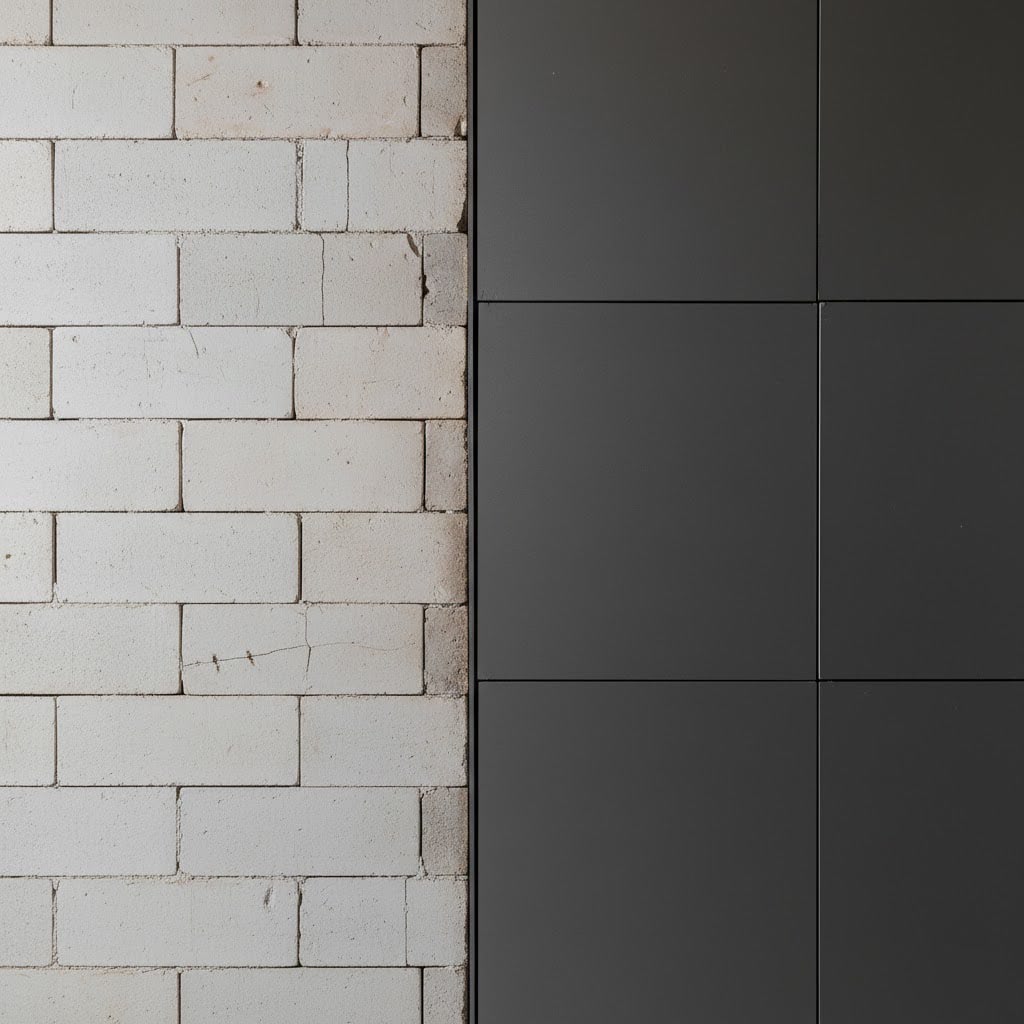
- SiC front layer: tiles, plates or custom blocks directly exposed to the process.
- Conventional refractory backup: bricks or castables to provide thickness and insulation.
- Insulation layer behind to protect the shell and reduce heat losses.
This combination leverages the best of both: SiC performance at the interface, with cost-effective backup materials behind.
3. Full hot-face redesign
For new furnaces or major rebuilds, you can go further and implement a full SiC-based hot face in critical zones, including:
- Continuous lines where uptime is critical and unplanned shutdown is extremely expensive.
- High-value product kilns where temperature uniformity and surface quality are tight.
- Processes with very aggressive slag, dust or gas chemistry.
Here, Zirsec can provide custom silicon carbide component design and manufacturing based on your drawings, load conditions and campaign targets.
Example: upgrading a combustion furnace lining
Background
A combustion furnace using traditional high-alumina bricks in the burner zone experienced regular spalling and cracking. Repairs every few months caused downtime and disrupted production.
Approach
- Replace the most damaged hot-face bricks around the burners with SiC tiles and blocks.
- Keep the existing backup refractories and insulation layers unchanged.
- Introduce simple visual wear monitoring on the SiC hot face during planned inspections.
Results
- Spalling in the burner zone was significantly reduced.
- Maintenance intervals could be extended, with fewer emergency repairs.
- Flame shape and temperature stability improved thanks to a more stable hot face.
FAQ – silicon carbide vs traditional refractories for furnace linings
Q1. Do I need to replace my entire lining with silicon carbide?
No. In many projects, only the highest-stress areas are upgraded to SiC. Floors, impact zones, burner regions and high-wear spots are common starting points. The rest of the lining can remain conventional until the next major rebuild.
Q2. Will silicon carbide make my furnace shell hotter?
Not if the lining is designed properly. SiC is used as the hot face to improve process-side behaviour, while backup refractories and insulation still control shell temperature. The goal is to move heat more intelligently inside the furnace, not to increase heat loss.
Q3. Is silicon carbide compatible with my existing bricks and castables?
In most cases, yes. Silicon carbide tiles and plates can be anchored or mortared to existing refractory structures. Expansion behaviour and joint design need to be considered, but SiC is widely combined with traditional materials in hybrid linings.
Q4. How do I estimate the economic benefit of upgrading to SiC?
Look beyond unit material cost. Include reduced downtime, fewer emergency repairs, lower fuel consumption per tonne of product and any scrap reduction due to more stable temperatures. In many cases, these savings outweigh the higher cost of SiC hot-face components.
Q5. What information should I prepare before discussing SiC linings with Zirsec?
Prepare basic furnace data: temperature profile, fuel type, atmosphere, product type, problem zones, current refractory design, failure history and desired campaign length. With this, Zirsec can suggest where silicon carbide tiles, plates or custom components will have the most impact and how to integrate them with your existing lining system.
Bottom line: traditional refractories are not going away, but in the hottest, most abused parts of your furnace, silicon carbide linings can turn a fragile, maintenance-heavy hot face into a stable, engineered interface that supports higher uptime and better energy efficiency.