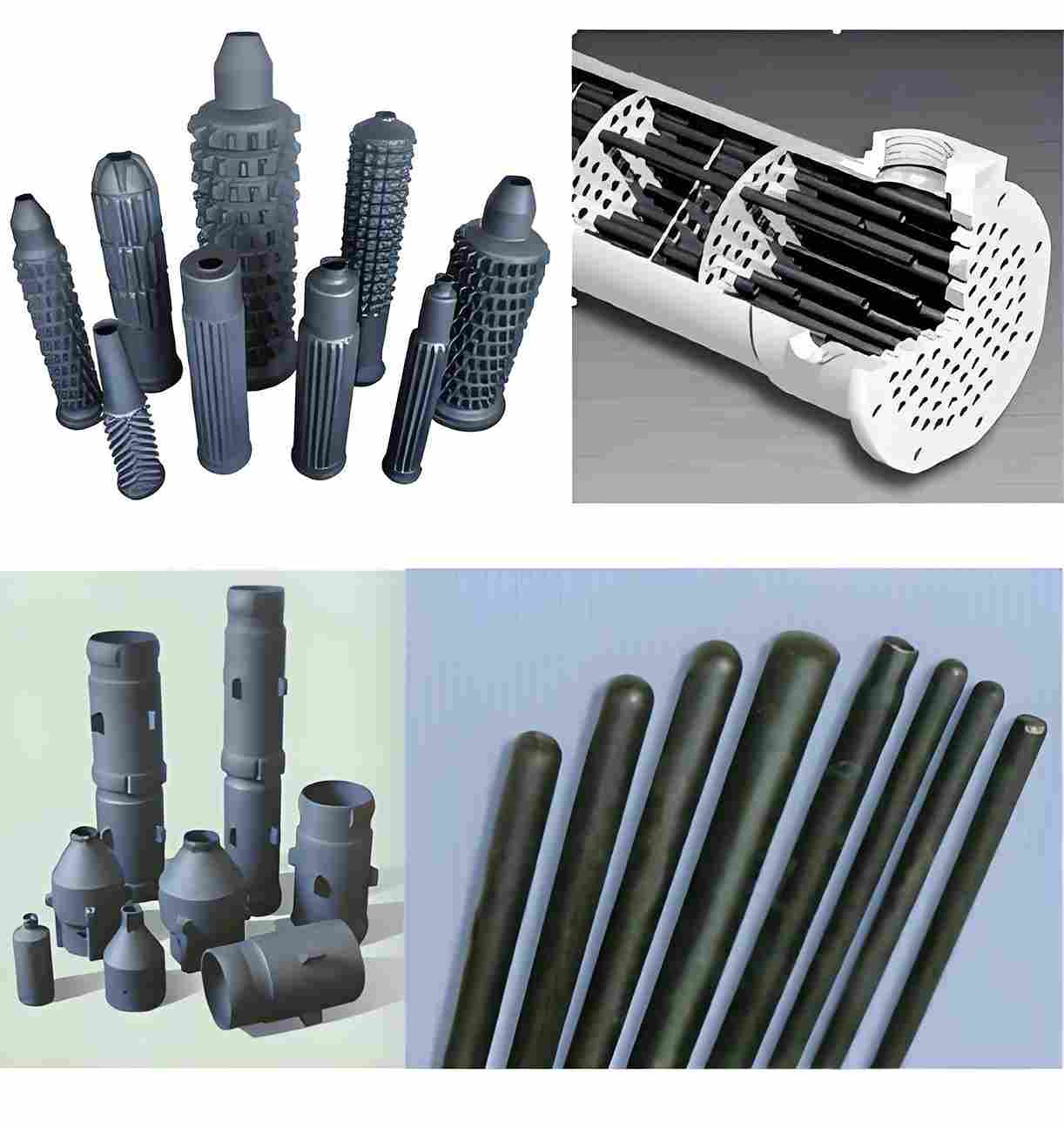
In corrosive process environments, heat exchangers are usually among the first pieces of equipment to suffer. Metallic tubes corrode, foul and leak, causing production losses and safety concerns. When traditional alloys reach their limits, silicon carbide heat exchanger tubes become a serious alternative, especially in aggressive chemical and high-temperature services.
This guide explains how to select silicon carbide heat exchanger tubes for corrosive environments – from understanding the process media and temperature to choosing the right SiC grade, tube geometry and design details that control lifetime and reliability.
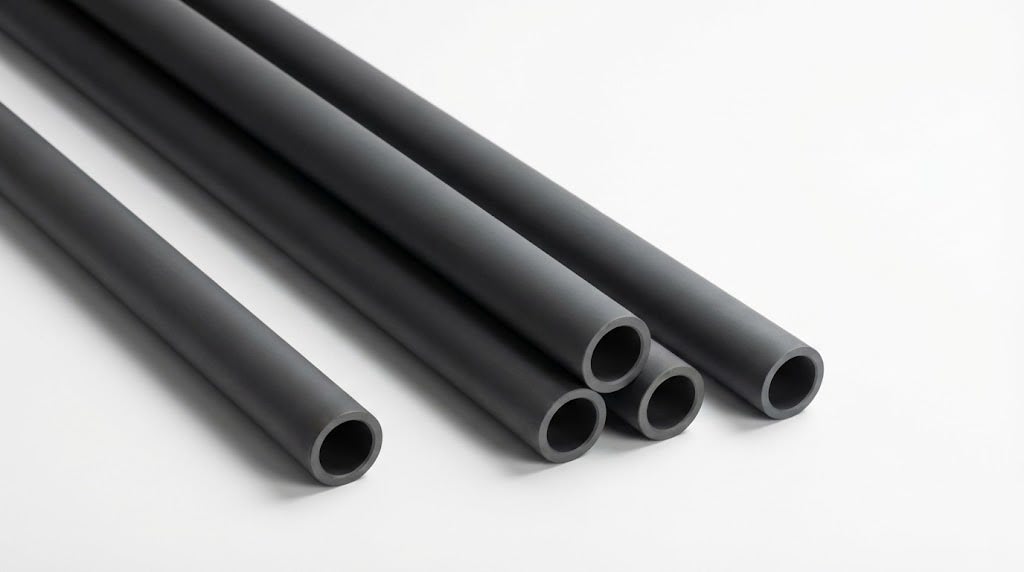
Why Conventional Metallic Tubes Fail in Corrosive Environments
Typical problems with metallic heat exchanger tubes in harsh services include:
- General corrosion, pitting or crevice attack on the tube wall
- Stress corrosion cracking under combined stress and chemical attack
- Rapid thinning in two-phase or high-velocity regions
- Frequent leaks leading to cross-contamination of process streams
- Short tube bundle lifetime and high maintenance cost
In processes involving strong acids, oxidising media, halides or hot, contaminated streams, upgrading to more exotic alloys quickly becomes expensive and still may not solve the reliability issue. At this point, silicon carbide ceramics can offer a fundamentally different level of chemical and thermal resistance.
What Makes Silicon Carbide Suitable for Heat Exchanger Tubes?
Silicon carbide is a high-performance ceramic with a combination of properties that fits heat exchanger tube duty very well:
- Excellent corrosion resistance to many acids, alkalis and aggressive chemicals
- High thermal conductivity, enabling efficient heat transfer
- High temperature capability with good strength retention
- Low thermal expansion and good thermal shock resistance
- Hard, wear-resistant surface that resists erosion and particle attack
General details of the material can be found in references such as silicon carbide, but the critical point for design engineers is that SiC tubes can maintain structural integrity and heat transfer in conditions where metallic tubes would corrode or deform.
Zirsec supplies industrial-grade silicon carbide tubes that can be used as core elements in heat exchangers, condensers and tubular reactors in corrosive environments.
Step 1 – Define the Process and Corrosive Environment
Before selecting any tube material or geometry, you need a clear picture of the process side and service conditions.
1. Process media
- Chemical composition of the fluid (acids, alkalis, salts, organic phases)
- Concentration range and possible contaminants
- Single-phase liquid, two-phase flow, slurry or gas
2. Temperature and pressure
- Normal operating temperature range and maximum upset temperature
- Operating and design pressure on both tube and shell side
- Thermal cycling: start-up, shut-down, cleaning cycles
3. Flow conditions
- Velocity and Reynolds number on both sides of the tube wall
- Flow regime: laminar, turbulent or transitional
- Areas with risk of erosion (elbows, inlets, distributors)
These parameters strongly affect both the required silicon carbide grade and the mechanical design of the tube bundle and tube–sheet interface.
Step 2 – Select an Appropriate SiC Grade
For heat exchanger tubes, three main silicon carbide families are commonly used:
- SSiC – Sintered Silicon Carbide – dense, high-purity material with outstanding corrosion resistance, particularly suitable for harsh chemical services.
- RBSiC / SiSiC – Reaction-Bonded Silicon Carbide – excellent strength and thermal shock resistance; often used in structural and furnace tubes.
- RSiC – Recrystallized Silicon Carbide – good high-temperature and cycling behaviour, with specific use cases in thermal equipment.
Basic grade selection guide
- Use SSiC where chemical resistance and liquid tightness are critical, especially in aggressive acid or mixed-chemical services.
- Use RBSiC / SiSiC where mechanical loading, thermal shock and structural stiffness are more dominant, and chemistry is severe but manageable.
- Use RSiC in specific high-temperature applications where open porosity and cycling are acceptable and controlled.
In many corrosive heat exchanger applications handling liquids, SSiC tubes are often preferred due to their very low porosity and strong chemical resistance.
Step 3 – Tube Geometry, Wall Thickness and Length
Once the SiC grade is chosen, geometry decisions follow. These have a major impact on both performance and manufacturability.
1. Tube diameter
- Inner diameter matches process-side flow requirements and allowable pressure drop.
- Outer diameter must fit bundle layout, pitch and tube–sheet design.
2. Wall thickness
- Must handle internal and external pressure differentials with a suitable safety margin.
- Thicker walls improve mechanical robustness but slightly increase thermal resistance.
- Very thin walls should be avoided if bending or thermal stresses are high.
3. Tube length
- Long tubes increase heat transfer area but also increase bending loads at high temperature.
- Support spacing and tube–sheet design must prevent excessive deflection and vibration.
For long and slender tubes, the combination of SiC grade, wall thickness and support points needs careful review to avoid overstressing the ceramic.
Step 4 – Tube–Sheet Connection and Sealing Concept
The interface between silicon carbide tube and tube sheet is a critical design area. Misalignment, thermal expansion mismatch or poor sealing can all cause leaks or tube damage.
- Check differential thermal expansion between SiC and tube–sheet material (metallic or ceramic).
- Design tube seats and gaskets to accommodate relative movement without overstressing the tube.
- Consider floating heads, flexible joints or other allowances where temperature differences are large.
For corrosive media, all wetted parts at the interface must be made of compatible materials, not just the tube itself.
Step 5 – Fouling, Cleaning and Maintenance
Heat exchanger tubes do not operate in a laboratory; they foul, scale and accumulate deposits. Cleaning strategy should therefore be considered during selection.
- Chemical cleaning: verify that cleaning agents are compatible with silicon carbide and any seals or gaskets.
- Mechanical cleaning: evaluate whether pigging or soft-brush cleaning is possible without damaging the tube bore.
- Schedule: define realistic inspection and cleaning intervals based on process behaviour.
Silicon carbide’s hardness and smooth surface can help reduce erosion and certain types of fouling, but no material completely eliminates build-up in challenging processes.
How Zirsec Supports SiC Heat Exchanger Tube Projects
Zirsec focuses on industrial silicon carbide solutions and supplies tubes for corrosive and high-temperature heat exchanger applications. Typical support includes:
- Application review: media, temperature, pressure and fouling behaviour analysis.
- Grade selection: choosing between SSiC and RBSiC/SiSiC based on corrosion and mechanical requirements.
- Custom geometry: tube diameters, wall thicknesses and lengths tailored to your bundle design.
- System integration: coordinating SiC tubes with other SiC components such as silicon carbide plates used for wear protection in adjacent equipment.
By treating tubes, tube–sheets and surrounding components as a single system instead of separate items, you increase the chances of achieving the expected lifetime in corrosive environments.
Case Example: Replacing Alloy Tubes with SiC in an Acid Heat Exchanger
Background
A chemical plant operated a shell-and-tube heat exchanger handling hot acidic process liquid. High-alloy metallic tubes suffered from rapid corrosion and pitting, leading to frequent leaks and costly shutdowns.
Findings
- Temperature and acid concentration were at the edge of the chosen alloy’s capability.
- Local flow conditions created high wall shear stresses and accelerated corrosion.
- Cleaning cycles with aggressive chemicals further shortened tube life.
Solution
- Replace the metallic tubes with sintered silicon carbide heat exchanger tubes.
- Adjust tube wall thickness and support scheme to account for ceramic mechanical behaviour.
- Verify chemical compatibility of cleaning agents with SiC and gasket materials.
Result
- Tube lifetime increased significantly, with no corrosion-related failures over the initial operating period.
- Unplanned shutdowns due to tube leaks were eliminated.
- Total lifecycle cost was reduced despite higher initial tube cost.
FAQ – Silicon Carbide Heat Exchanger Tubes in Corrosive Environments
Q1. In which applications do silicon carbide heat exchanger tubes bring the biggest benefit?
Silicon carbide tubes show the greatest advantage where corrosive media and elevated temperatures combine to destroy metallic tubes quickly. Typical examples include hot acid streams, mixed acid–salt environments and aggressive slurries where both corrosion and erosion are present.
Q2. Are SiC tubes suitable for both tube-side and shell-side service?
Yes, silicon carbide tubes can be used on either side, provided the support, sealing and thermal expansion are correctly designed. In many cases, the SiC tubes are used on the more aggressive side, while the other side remains metallic.
Q3. How do SiC tubes compare to metallic tubes in terms of heat transfer?
Silicon carbide has high thermal conductivity compared with many engineering ceramics and is competitive with some metallic solutions, especially when corrosion allowances and fouling of metals are considered. Proper design ensures efficient overall heat transfer coefficients.
Q4. Can standard heat exchanger designs be converted to silicon carbide tubes without major changes?
Sometimes yes, sometimes no. Tube–sheet design, support spacing and expansion allowances may need to be adapted for ceramics. It is often possible to retrofit, but early engineering review is essential to avoid overstressing the tubes.
Q5. What information should I provide when asking for silicon carbide heat exchanger tubes?
Provide process media and composition, temperature and pressure, flow rates, required heat duty, current exchanger design (if any), lifetime expectations and known failure modes with existing tubes. Drawings or P&IDs are very helpful for a complete assessment.
Considering silicon carbide heat exchanger tubes for your corrosive service? Share your process conditions and exchanger design with Zirsec, and our engineering team can help you evaluate whether SiC tubes are a suitable and cost-effective upgrade for your application.