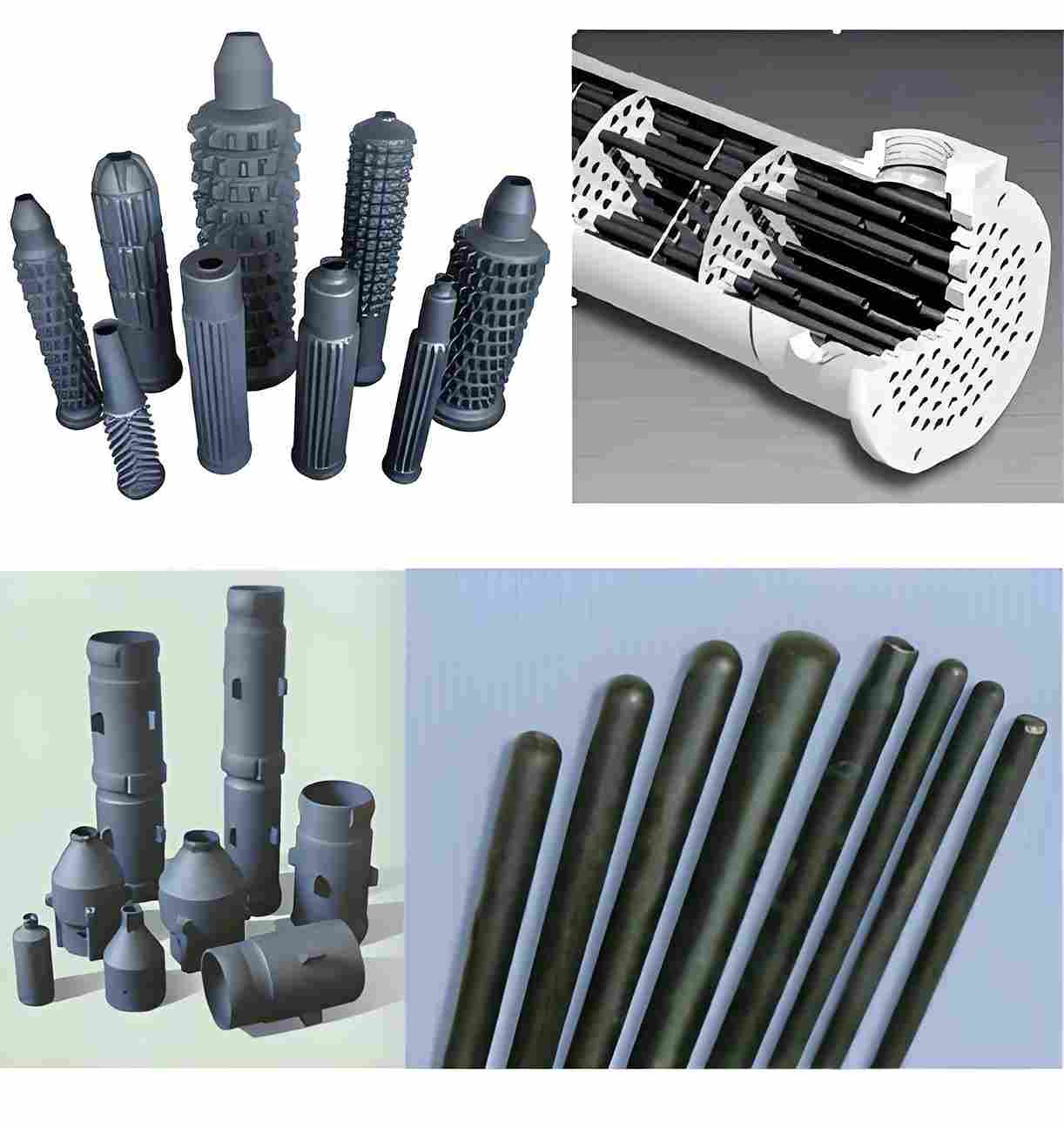
In modern industrial kilns, silicon carbide plates are widely used as load-bearing shelves, setters and support elements. They sit directly in hot zones, carry product weight and experience repeated thermal cycles. Selecting the wrong plate thickness or size can lead to warping, cracking and unpredictable downtime.
This guide focuses on how to select the right silicon carbide plate for your kiln, with particular emphasis on thickness, span and loading. The goal is not just to survive a few cycles, but to achieve stable, repeatable service life.
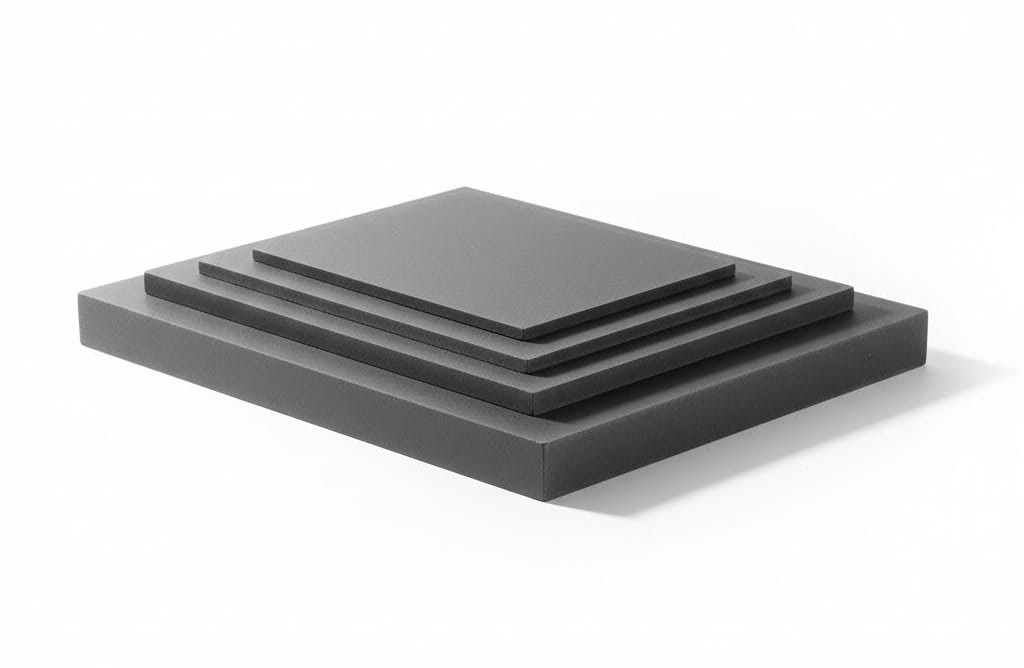
Understand Your Kiln and Firing Conditions First
Before discussing plate thickness and size, you need a clear picture of the kiln environment. General background on kilns can be found in references such as kiln, but for plate selection you mainly care about:
- Type of kiln: shuttle kiln, tunnel kiln, pusher kiln, roller kiln, etc.
- Firing temperature: normal operating temperature and maximum peak.
- Atmosphere: oxidising, neutral, slightly reducing, or special atmospheres.
- Thermal cycling: how often the kiln heats up and cools down per day or per batch.
- Product type: dense ceramic parts, refractories, powder compacts, etc.
These factors directly influence the mechanical and thermal demands on the silicon carbide plate.
Choose a Suitable Silicon Carbide Grade for Kiln Plates
Several silicon carbide families are commonly used in kiln furniture and plates:
- RBSiC / SiSiC – Reaction-bonded silicon carbide – widely used for kiln furniture; high strength, good thermal shock resistance and relatively dense structure.
- RSiC – Recrystallized silicon carbide – excellent high-temperature behaviour and thermal shock resistance; often selected for very high-temperature or strongly cycled kilns.
- SSiC – Sintered silicon carbide – high-purity, dense material; more often used in chemical and seal applications, but can be considered for special kiln components.
In most industrial kilns, RBSiC / SiSiC and RSiC are the primary choices for plates and shelves. Zirsec provides industrial-grade silicon carbide plates based on these kiln-proven material systems.
Thickness vs. Span: The Core Design Trade-Off
For kiln plates, thickness and span (the clear distance between supports) are tightly linked. Too thin for the span and load, and the plate will sag or crack; too thick, and you add unnecessary mass, cost and thermal inertia.
Key questions to answer
- What is the clear span between supports in the kiln (beams, posts or other shelves)?
- What is the total load on the plate (product + setters + any extra fixtures)?
- How is the plate supported – at two ends, multiple points, or fully bedded?
- What is the acceptable deflection at temperature (to avoid product distortion)?
As a general principle, for a given material and firing temperature:
- Longer spans require thicker plates or additional supports.
- Heavier product loads require thicker plates or smaller spans.
- Higher firing temperatures reduce available strength, pushing designs towards thicker plates or better support.
Instead of guessing, it is often useful to standardise a small set of plate sizes (length, width, thickness) that match your most common kiln setups.
Plate Size: Length, Width and Layout in the Kiln
Size selection is not only about what fits physically; it also affects loading flexibility and thermal performance.
1. Length and width
- Choose lengths that match your kiln car or kiln zone geometry with sensible support spacing.
- Avoid plate sizes that force supports too far apart or too close to one edge.
- Consider how many product pieces fit per plate to optimise firing batch layouts.
2. Plate layout and stacking
- Define a stacking pattern (posts, props, spacers) that keeps load paths vertical and predictable.
- Use consistent support positions from plate to plate to simplify loading and reduce stress.
- Avoid random stacking arrangements that concentrate load in unexpected areas.
Stable, repeatable layouts are usually more important than squeezing every centimetre of area out of a single plate.
Thermal Mass and Heating/Cooling Behaviour
Thicker plates mean more material, which means higher thermal mass. This affects firing profiles and energy use.
- Thicker plates: more robust mechanically, but slower to heat and cool; can influence temperature uniformity and cycle time.
- Thinner plates: heat and cool faster, but must remain within safe stress levels under load.
Finding the right thickness is therefore a compromise between mechanical robustness, energy efficiency and acceptable cycle time. Well-designed silicon carbide plates can support product loads with minimum excess mass while still surviving long-term cyclic operation.
Flatness, Surface Finish and Product Contact
For many products, the flatness and surface condition of kiln plates are important.
- Flatness: affects product deformation and contact patterns during firing.
- Surface texture: can influence friction, sticking and gas flow under or around the product.
- Wear behaviour: repeated loading and unloading should not quickly damage the plate surface.
In some lines, a combination of silicon carbide plates and setters is used: the plate provides structural support, while thinner setters or saggars provide a specific contact surface for sensitive parts.
Support Concepts: Beams, Posts and Frames
Silicon carbide plates do not operate in isolation; they are part of a larger kiln furniture system with beams, posts and frames.
- Align supports to create clean load paths from product through plate to beams and posts.
- Avoid complex support geometries that create twisting or local bending in the plate.
- Check that beams and posts are themselves properly sized; upgrading plates alone will not fix under-sized supports.
In many kilns, using a consistent system of SiC beams, posts and plates is more reliable than mixing random legacy components. Zirsec’s silicon carbide plates can be integrated with other SiC kiln furniture elements for coherent support structures.
Standard vs. Custom Silicon Carbide Plate Sizes
There is always a balance between using standard plate sizes and designing custom plates.
- Standard sizes simplify stocking, replacements and manufacturing cost.
- Custom sizes can optimise loading patterns and reduce the number of plates per car or zone.
For many users, the best approach is to define a small catalogue of standard plate sizes and thicknesses, then use custom plates only where process or product demands are clearly different.
How Zirsec Supports Kiln Plate Selection
Zirsec focuses on industrial silicon carbide solutions and supplies silicon carbide plates for kiln and high-temperature applications. Typical support includes:
- Application review: kiln type, firing temperature, cycle profile and load patterns.
- Size and thickness recommendations: matching plate dimensions to span, load and lifetime targets.
- Standard and custom options: standard plates for common layouts, custom plates for special processes.
- System thinking: integrating plates with beams, posts and other silicon carbide kiln furniture.
By working from real kiln data instead of generic assumptions, plate thickness and size can be selected on purpose rather than trial and error.
Case Example: Optimising Plate Thickness in a Tunnel Kiln
Background
A tunnel kiln producing technical ceramic components used legacy kiln plates of mixed thickness and origin. Some plates warped, others cracked prematurely, and product flatness issues were frequent.
Findings
- Support spans varied significantly between cars, creating uneven stress on plates.
- Thinner plates were overloaded in some zones, while thicker plates added unnecessary thermal mass.
- Stacking patterns were not standardised, causing inconsistent load on each plate.
Solution
- Standardise support spacing and stacking layouts across kiln cars.
- Define two optimised plate thicknesses for different zones based on span and load.
- Replace mixed legacy plates with a family of silicon carbide plates from a single material system.
Result
- Plate failures decreased; warping and cracking were significantly reduced.
- Product flatness improved thanks to more stable support surfaces.
- Firing became more predictable, and maintenance planning was simplified.
FAQ – Silicon Carbide Plates for Kiln Applications
Q1. How do I know if my current plates are too thin?
Visible sagging at temperature, frequent cracks starting near mid-span and product deformation are strong indicators that plates are under-sized for the span and load. A basic review of span, loading and firing temperature is usually enough to identify under-dimensioned plates.
Q2. Is it always better to choose thicker silicon carbide plates?
Not necessarily. Thicker plates are stronger but heavier and slower to heat and cool. Beyond a certain point, extra thickness only adds thermal mass without meaningful lifetime gains. The target is an optimal thickness for your span, load and temperature, not the absolute maximum.
Q3. Can I mix different plate thicknesses in the same kiln?
You can, but it should be done intentionally. Different thicknesses can be used for different zones or load levels, but random mixtures make firing behaviour and maintenance more complex. Standardising plate families usually pays off in the long term.
Q4. What information should I provide when requesting silicon carbide kiln plates from Zirsec?
Provide kiln type, firing temperature profile, atmosphere, support spacing, typical stacking pattern, total load per plate and any known failure issues with existing plates. This allows Zirsec to propose plate sizes and thicknesses matched to your real operating conditions.
Reviewing kiln plates for an upgrade? Treat thickness and size as engineering decisions, not guesswork. With clear kiln data and support from an experienced silicon carbide supplier, you can move from trial-and-error to predictable, optimised plate performance.