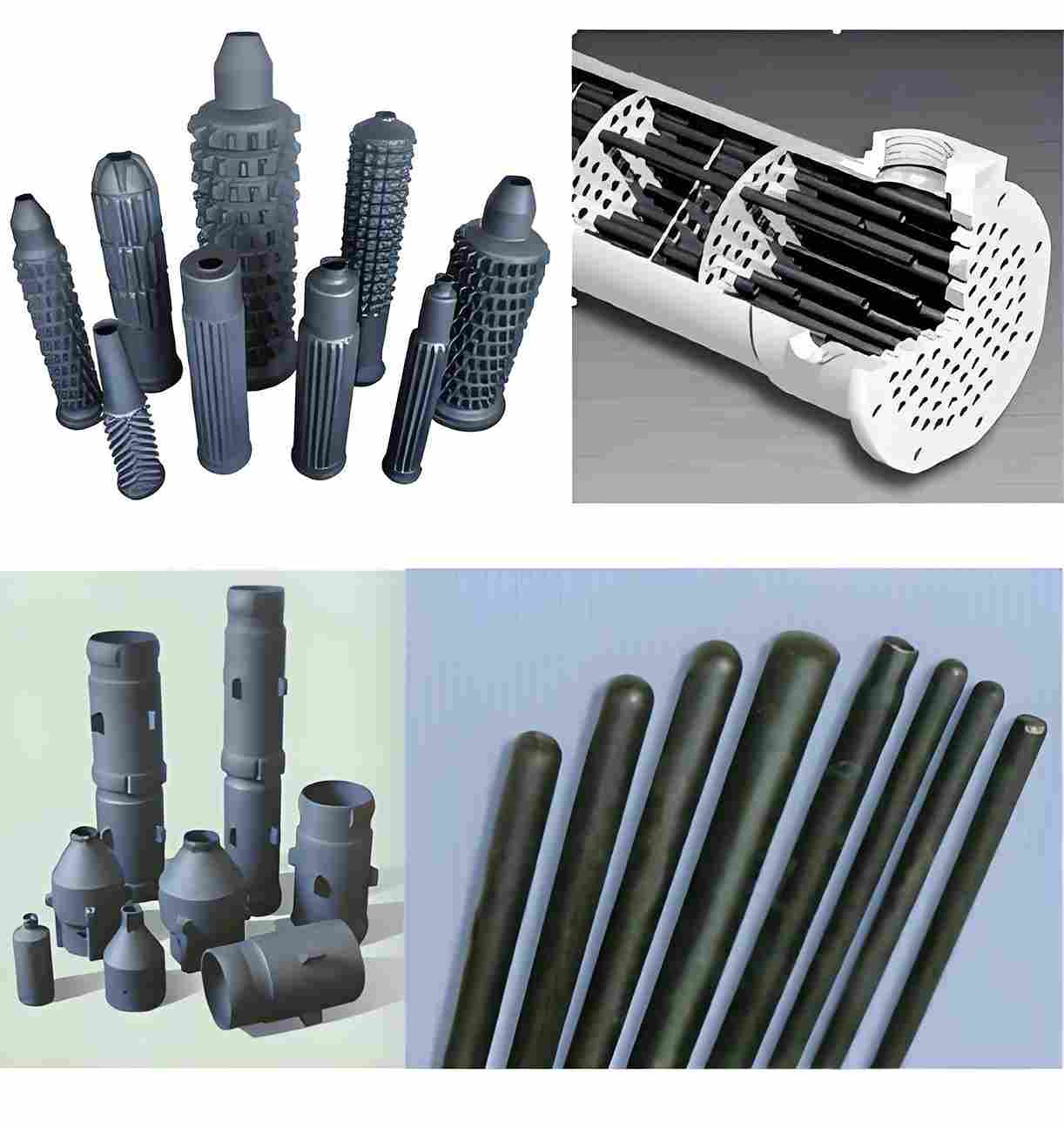
Abrasive slurries are one of the fastest ways to destroy poorly chosen nozzles. High solids loading, sharp particles and high velocities combine to erode internal surfaces, distort spray patterns and shorten maintenance intervals. When the slurry is also corrosive or hot, standard metal and polymer nozzles usually do not last long.
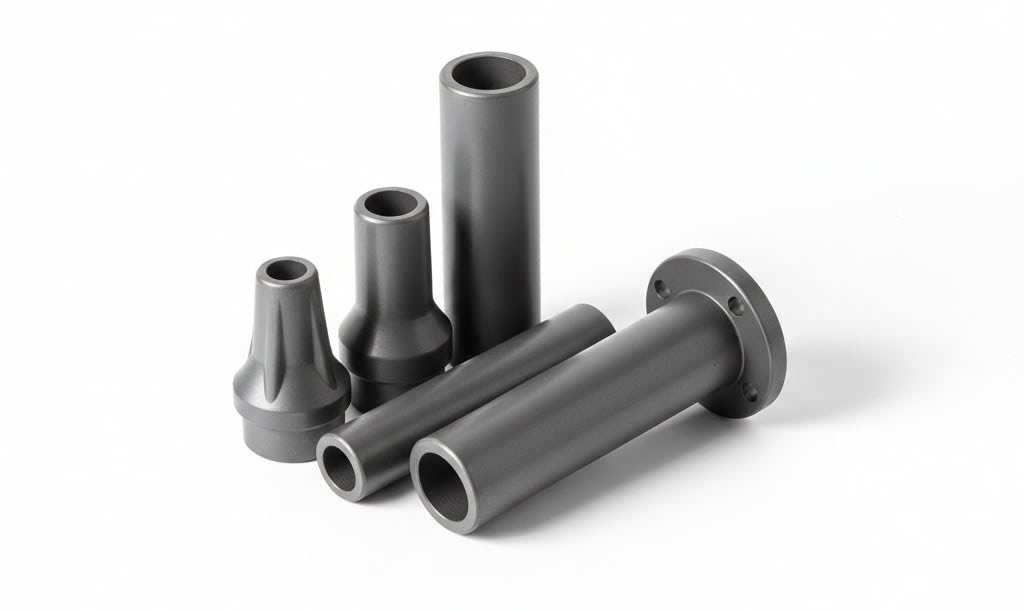
Silicon carbide nozzles offer a way out of this cycle. With very high hardness and good chemical resistance, they are well suited for abrasive slurry services such as desulfurisation, spray scrubbers, mine backfill and high-solids process lines. This article explains how to select the right silicon carbide nozzle for abrasive slurries, so you can control wear instead of chasing failures.
Understand Your Slurry Before Choosing a Nozzle
All abrasive slurries are not equal. A controlled selection starts with a basic “slurry profile.” General background on slurries can be found in slurry, but for nozzle selection you mainly care about:
- Solids type: mineral particles, coal, lime, metal oxides, sand or industrial by-products.
- Particle size: typical size range and presence of very coarse particles.
- Solids concentration: low, medium or high weight percentage.
- Liquid phase: water, process solution, chemicals or mixtures.
- Temperature: cold, warm, hot or close to boiling.
The harder and coarser the particles and the higher the velocity, the more aggressive the erosion. Knowing this upfront is essential when selecting the nozzle material, geometry and expected service life.
Why Silicon Carbide is a Good Fit for Abrasive Slurry Nozzles
In abrasive slurry services, the main nozzle failure mechanisms are internal erosion and sometimes corrosion. Silicon carbide addresses both:
- Very high hardness: strongly resists abrasive wear from solid particles.
- Good chemical resistance: suitable for many process liquids and additives.
- High temperature capability: can handle hot slurries and steam-assisted systems.
- Dimensional stability: maintains internal geometry longer, so spray pattern and flow rate remain more consistent.
Zirsec supplies industrial-grade silicon carbide nozzles designed for abrasive and corrosive media in desulfurisation units, spray towers, cleaning systems and other demanding applications.
Key Factor 1 – Nozzle Function and Spray Pattern
Before deciding on material, you must be clear about the nozzle’s job in the system. Common functions include:
- Spray scrubbing: creating fine droplets to increase gas–liquid contact.
- Slurry distribution: spreading abrasive slurries evenly over surfaces or beds.
- Descaling / cleaning: high-impact jets directed at surfaces.
- Dust suppression: generating droplets that bind dust particles.
Different functions call for different spray patterns:
- Full cone: for uniform coverage of areas or packed beds.
- Hollow cone: for high surface area and fast evaporation or reaction.
- Flat fan: for strips or belt coverage.
- Solid stream: for high-impact cleaning and cutting.
Each pattern has a characteristic internal geometry. When you change material from metal to silicon carbide, you need to keep the essential internal shape intact while considering manufacturability and wear behaviour.
Key Factor 2 – Operating Pressure and Flow Rate
Pressure and flow rate dictate exit velocity and thus erosion potential. In abrasive slurries, more pressure means more impact energy on the internal surfaces.
- Operating pressure range: minimum, normal and maximum pressures.
- Flow rate: typically expressed in litres per minute or m³/h at a given pressure.
- Velocity: internal velocities in bores and throats are critical for erosion.
For a given flow rate, smaller internal diameters increase velocity and erosion. When designing or selecting a silicon carbide nozzle, it is often worth considering slightly larger flow passages to reduce wear, provided that the process can accept the spray characteristics.
Key Factor 3 – Silicon Carbide Grade Selection
For abrasive slurry nozzles, the two most relevant silicon carbide families are:
- RBSiC / SiSiC – Reaction-bonded silicon carbide – excellent wear resistance, high strength and good thermal shock behaviour; widely used for structural and wear parts.
- SSiC – Sintered silicon carbide – dense, high-purity ceramic with very high hardness and corrosion resistance; used where media is highly aggressive.
Selection guidelines
- Use RBSiC / SiSiC where mechanical robustness and erosion resistance are dominant requirements and chemistry is moderate to severe.
- Use SSiC when the liquid phase is strongly corrosive or chemically complex and you need minimal porosity and maximum chemical resistance.
In many abrasive slurry applications (e.g. lime slurry, mine water, desulfurisation slurries), high-quality RBSiC nozzles provide a very good balance of cost and lifetime.
Key Factor 4 – Internal Geometry and Wear Zones
Inside the nozzle, erosion is not uniform. Certain regions wear faster:
- Entrance region where slurry first changes direction.
- Converging or throat section where velocity peaks.
- First impact zone after exit if spray hits a surface at short distance.
When designing or selecting a silicon carbide nozzle:
- Minimise sharp internal corners where particles impact directly.
- Use smooth transitions between bore sections to reduce turbulence and local impact.
- Consider slightly thicker walls in the throat or entrance zones where wear is highest.
Because silicon carbide is brittle, the geometry should avoid thin unsupported sections that might crack under mechanical shock or installation loads, even if they look ideal from a pure flow perspective.
Key Factor 5 – Connection Type and Mounting
Nozzle failures often start at the connection, not inside the bore. Common connection types include threaded, flanged and clamped designs.
- Threaded nozzles: check thread compatibility, torque limits and use of gaskets or sealants.
- Flanged nozzles: gasket choice and bolt tightening must respect ceramic limits; avoid bending the nozzle body.
- Clamp-on designs: use suitable support to prevent vibration and overloading.
In abrasive slurry systems, misalignment, vibration and rigid piping can create bending loads on the nozzle body. Silicon carbide nozzles should be supported and mounted so that most loads are compressive or axial rather than bending.
Key Factor 6 – Expected Service Life and Maintenance Strategy
“The right nozzle” is not always the one that lasts the longest at any cost. You need to match material and design to your maintenance concept.
- Define an acceptable service life in operating hours, days or tonnes processed.
- Decide whether nozzles should be long-life components or planned consumables.
- Plan inspection intervals and simple visual checks of spray pattern and wear.
Sometimes, using a slightly more conservative spray pattern or larger nozzle size in silicon carbide can provide a more predictable and economical lifecycle than pushing designs to the limit for maximum theoretical coverage.
Integrating Silicon Carbide Nozzles into the Overall Wear Strategy
Nozzles are typically just one piece of the wear puzzle. Abrasive slurries also attack pipes, bends, liners and impact plates.
- Combine silicon carbide nozzles with SiC or other wear-resistant liners downstream.
- Use silicon carbide plates or tiles in high-impact zones where the spray hits surfaces.
- Review upstream slurry conditioning (e.g. strainers, flow straighteners) to reduce large particle impact where possible.
A consistent approach to slurry handling usually gives better results than upgrading the nozzle alone and leaving the rest of the system unchanged.
Case Example: Silicon Carbide Nozzles in a Desulfurisation Slurry System
Background
A flue gas desulfurisation system used metallic spray nozzles to distribute abrasive limestone slurry. Nozzle wear changed the spray pattern quickly, reducing efficiency and causing frequent replacement.
Findings
- High solids loading and moderate pressure created strong internal erosion.
- Some nozzles were misaligned, causing uneven impact on internal surfaces.
- Nozzle selection did not distinguish between cleaner and dirtier slurry branches.
Solution
- Replace metallic nozzles with reaction-bonded silicon carbide nozzles in the most abrasive lines.
- Optimise internal geometry based on real flow conditions to reduce peak erosion zones.
- Standardise connection and support details to avoid bending loads on the ceramic nozzles.
Result
- Nozzle lifetime increased significantly, and spray patterns remained stable for longer periods.
- Maintenance intervals became more predictable, with planned replacement instead of reactive emergency work.
- Overall system performance improved thanks to more consistent droplet distribution.
FAQ – Silicon Carbide Nozzles for Abrasive Slurries
Q1. When is a silicon carbide nozzle justified instead of a metal nozzle?
Silicon carbide nozzles are justified when metal nozzles wear out too fast, when downtime is expensive or when the slurry is both abrasive and corrosive. If you are replacing nozzles so often that maintenance becomes a regular pain point, SiC is worth evaluating.
Q2. Do I always need the most expensive SiC grade for slurry nozzles?
No. In many abrasive slurry applications, high-quality reaction-bonded silicon carbide is sufficient and more economical than premium grades. The right choice depends on both erosion and corrosion severity.
Q3. How do I know if my nozzle internal geometry is suitable for silicon carbide?
If your current design uses very thin walls, sharp internal corners or complex undercuts, it may need adjustment for ceramic manufacturing and strength. Sharing existing drawings and operating data with a silicon carbide supplier is the fastest way to identify required changes.
Q4. Can silicon carbide nozzles be retrofitted into existing systems?
Often yes. SiC nozzles can be designed with the same external dimensions and connection types as existing metal nozzles, allowing retrofit without major piping changes. Internal geometry can then be optimised within those constraints.
Q5. What information should I send to Zirsec when asking for silicon carbide slurry nozzles?
Provide slurry composition and solids loading, particle size range, temperature, operating pressure, desired flow rate, required spray pattern, current nozzle type and typical failure modes. Drawings or photos of existing nozzles and connections are also helpful.
Considering silicon carbide nozzles for your abrasive slurry system? With a clear understanding of your slurry, operating conditions and service life targets, Zirsec can help you select or design SiC nozzles that turn nozzle wear from a constant headache into a controlled maintenance item.