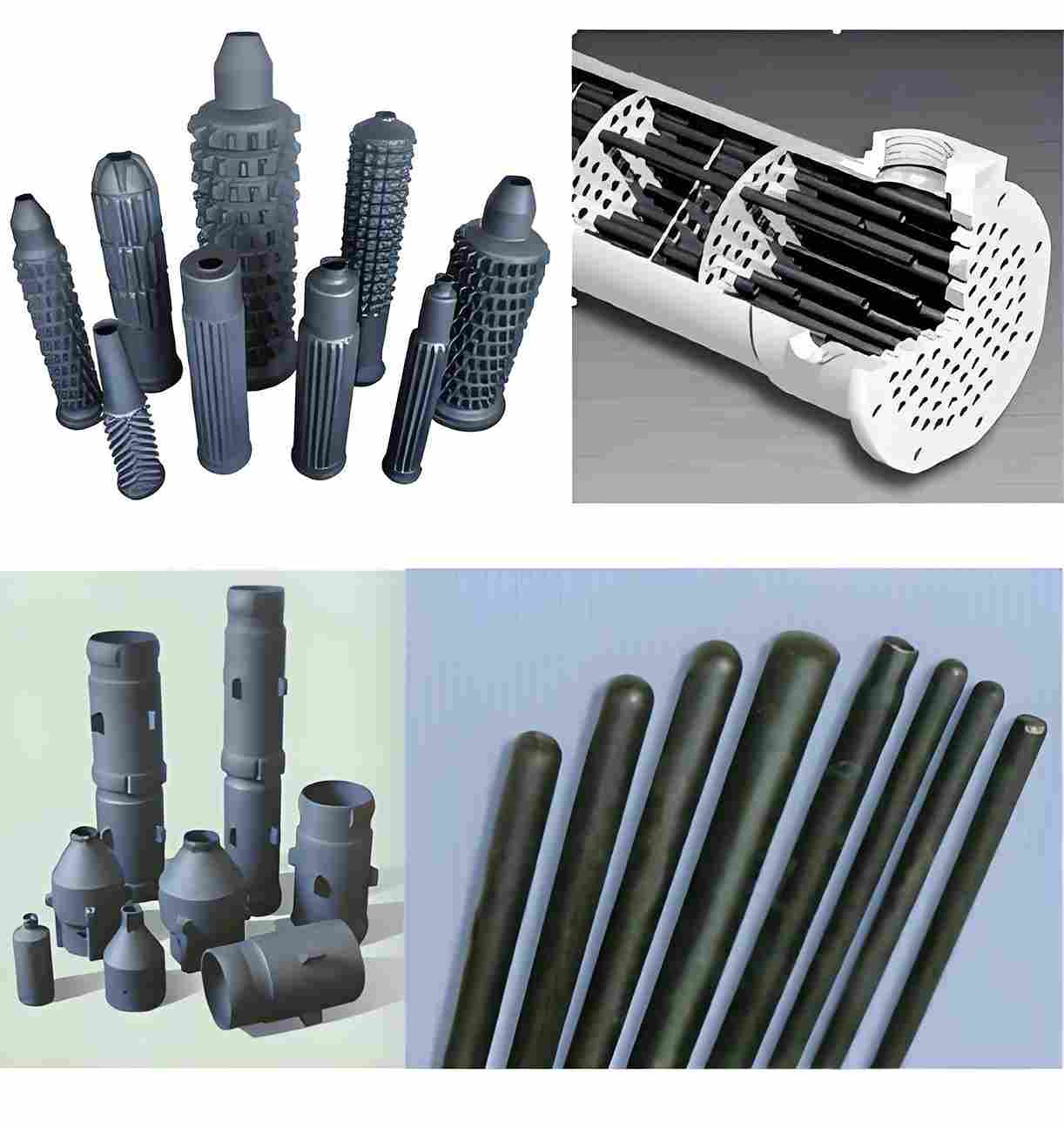
Ordering custom silicon carbide parts without a clear checklist usually leads to endless emails, drawing revisions and delivery delays. A few missing dimensions or unclear tolerances are enough to stall the whole project.
This quick checklist is for engineers, buyers and project managers who work with custom SiC components. Use it before you send your enquiry to make sure the supplier has enough information to quote accurately and manufacture reliably.
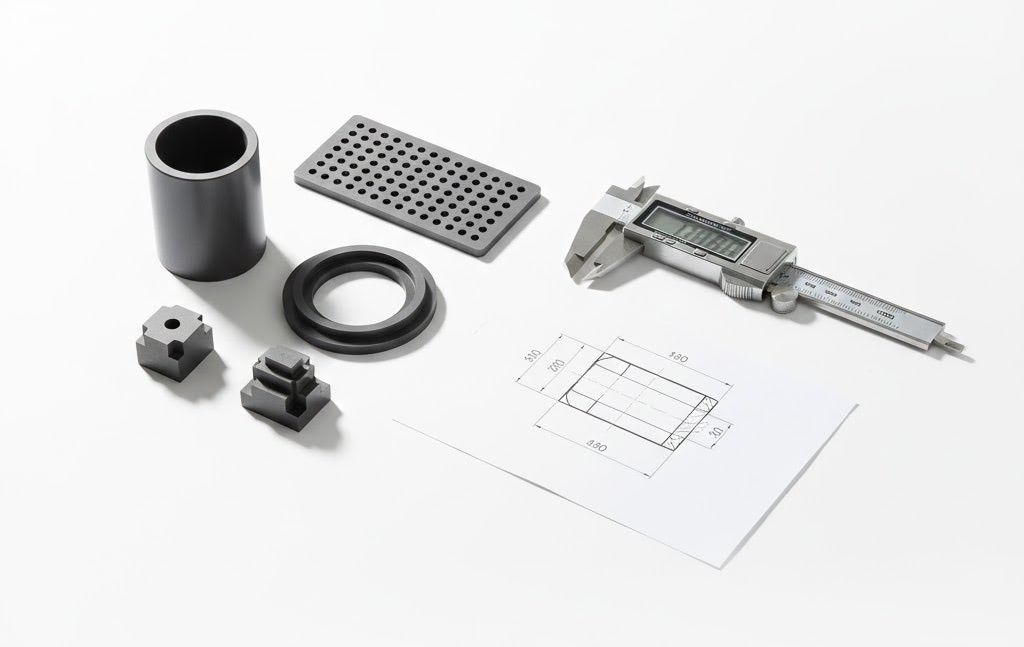
1. Application & Operating Conditions
Start with the “why” before the “what.” A simple application summary helps the supplier choose the right silicon carbide grade and design support.
- Function: wear protection, sealing, support, guiding, heat transfer, structural part, etc.
- Medium: gases, liquids, slurries; corrosive chemicals, solids loading.
- Temperature: normal operating temperature and maximum peaks.
- Pressure & loads: internal pressure, external loads, bending, vibration, rotation.
- Environment: vacuum, furnace, kiln, outdoor, clean room, etc.
A short, clear application description often does more for part reliability than adding extra decimal places to every dimension.
2. Drawings with Complete Dimensions
A proper drawing is essential. If you do not have a finished CAD model yet, a clear drawing is still required. General information on engineering drawings is useful, but for custom SiC parts focus on what really matters:
- Overall length, width, height (or diameter and length for rotational parts).
- Inner diameters, grooves, slots and step dimensions.
- Location and size of holes, notches and cut-outs.
- Chamfers and radii where needed for assembly or stress control.
If you provide 3D files, pair them with a 2D drawing highlighting critical dimensions. For typical shapes such as tubes, plates and rings, you can often adapt existing Zirsec products such as silicon carbide tubes or silicon carbide plates and adjust only a few dimensions.
3. Tolerances – Mark What Really Matters
Tolerances are where many custom projects go wrong: either everything is “tight” (and expensive) or nothing is defined (and assembly becomes a fight). Use realistic tolerancing practices such as those described in geometric dimensioning and tolerancing, but keep it practical.
- Mark critical dimensions: fits, sealing faces, mounting interfaces.
- Assign specific tolerances only where they have a real function.
- Allow standard tolerances on non-critical features.
- Be aware that ultra-tight tolerances on ceramics require extra grinding or lapping.
When in doubt, indicate functional needs (“sliding fit”, “light press fit”, “locating surface”) and let the supplier suggest achievable tolerances in silicon carbide.
4. Material & Silicon Carbide Grade
Not all silicon carbide is the same. For custom parts, specify at least:
- Base material: silicon carbide (SiC).
- Preferred family: SSiC, RBSiC / SiSiC, RSiC, or “to be recommended by supplier.”
- Key priorities: corrosion resistance, wear resistance, thermal shock resistance, cost balance.
Typical guidelines:
- SSiC: for aggressive chemicals, high pressure and sealing surfaces.
- RBSiC / SiSiC: for structural parts, tubes, nozzles and beams in high-temperature equipment.
- RSiC: for certain kiln and furnace components where thermal cycling is dominant.
If you are unsure, describe the application and allow Zirsec to recommend the specific silicon carbide grade as part of the customisation process.
5. Surface Finish & Special Requirements
Surface finish strongly affects seals, sliding surfaces and contact friction.
- Sealing faces: specify required flatness and roughness where the part must seal.
- Sliding or bearing surfaces: define whether ground, lapped or as-fired surfaces are acceptable.
- Non-critical areas: can often remain as-fired or simply ground to reduce cost.
Also list any special requirements:
- Coatings (e.g. oxidation-resistant or acid-resistant layers).
- Electrical properties (insulating vs. conductive behaviour at temperature).
- Markings or identification features (engraved codes, orientation marks).
6. Quantities, Samples & Delivery Schedule
Custom silicon carbide parts often follow a pattern: sample → testing → batch orders. Clarify this up front.
- Prototype or sample quantity: how many pieces for testing and approval.
- Expected batch size: typical order quantity after validation.
- Required delivery dates: for both samples and first production batch.
- Repeat demand: expected annual volume or project duration.
Zirsec can support small-batch and sample runs, then ramp to series supply once the design is frozen. Sharing realistic volume expectations helps optimise tooling and pricing.
7. Quality Documentation & Inspection Requirements
Different projects need different levels of documentation. Before ordering, decide what you actually need:
- Dimensional inspection reports for critical features.
- Material certificates with key property data (density, hardness, strength where applicable).
- Leak tests or pressure tests for tubes, seals and hollow components.
- Special approvals or customer-specific documentation formats.
Defining documentation in advance avoids last-minute delays when parts are ready but paperwork is still being negotiated.
8. Packaging, Handling & Logistics
Silicon carbide is mechanically strong in service, but like all ceramics it can be damaged by poor handling.
- Packaging: individual wrapping, foam inserts, partitioned boxes or crates for larger parts.
- Labelling: part numbers, drawing revisions and orientation markings on boxes.
- Transport route: air, sea, courier; special requirements for fragile long parts like tubes and beams.
For long tubes, plates and beams, transport design is part of engineering. The packaging must protect against bending and impact over the entire shipping route.
9. Communication Checklist Before Sending Your RFQ
Before you send your enquiry for custom silicon carbide parts, check that you have included:
- Application description and key operating conditions.
- Drawings with complete dimensions and marked critical features.
- Tolerances, especially on fits and sealing surfaces.
- Requested silicon carbide material family or performance priorities.
- Surface finish and any special requirements (coatings, markings, electrical behaviour).
- Quantities for samples and production, with required delivery windows.
- Documentation and inspection requirements.
- Packaging and transport constraints, if any.
With this information, suppliers like Zirsec can respond faster and with fewer clarification rounds, and you reduce the risk of surprises later in the project.
FAQ – Ordering Custom Silicon Carbide Parts
Q1. Do I need a full 3D model before asking for a quote?
No, not always. A clear 2D drawing with all key dimensions and tolerances is usually enough to start. A 3D model helps for complex geometries, but for many tubes, plates, rings and simple shapes, a detailed drawing is sufficient.
Q2. What if I do not know which silicon carbide grade to choose?
Then focus on describing your operating conditions and performance priorities. Based on temperature, media, loads and lifetime expectations, Zirsec can recommend SSiC, RBSiC / SiSiC or other suitable grades for your parts.
Q3. How tight can tolerances be on silicon carbide parts?
It depends on geometry and size. Many functional dimensions can be ground to tight tolerances, but cost and lead time increase as tolerances tighten. A good approach is to apply tight tolerances only to truly critical features and use more relaxed tolerances elsewhere.
Q4. Can I start with a small trial order for a custom part?
Yes. Many projects begin with a small batch or even a few pieces for testing. Once the design and performance are confirmed, the same tooling and process can be used for larger series.
Q5. How can Zirsec help streamline the ordering process?
Zirsec supports customers with drawing review, tolerance suggestions, silicon carbide grade selection and feedback on manufacturability before you lock the final design. Using the checklist in this article together with Zirsec’s customisation service helps you move from concept to reliable supply with fewer iterations and less risk.
Next time you order custom silicon carbide parts, walk through this checklist first. A bit of structure on dimensions, tolerances and operating conditions will turn your RFQ from “rough idea” into a manufacturable, reliable design brief.