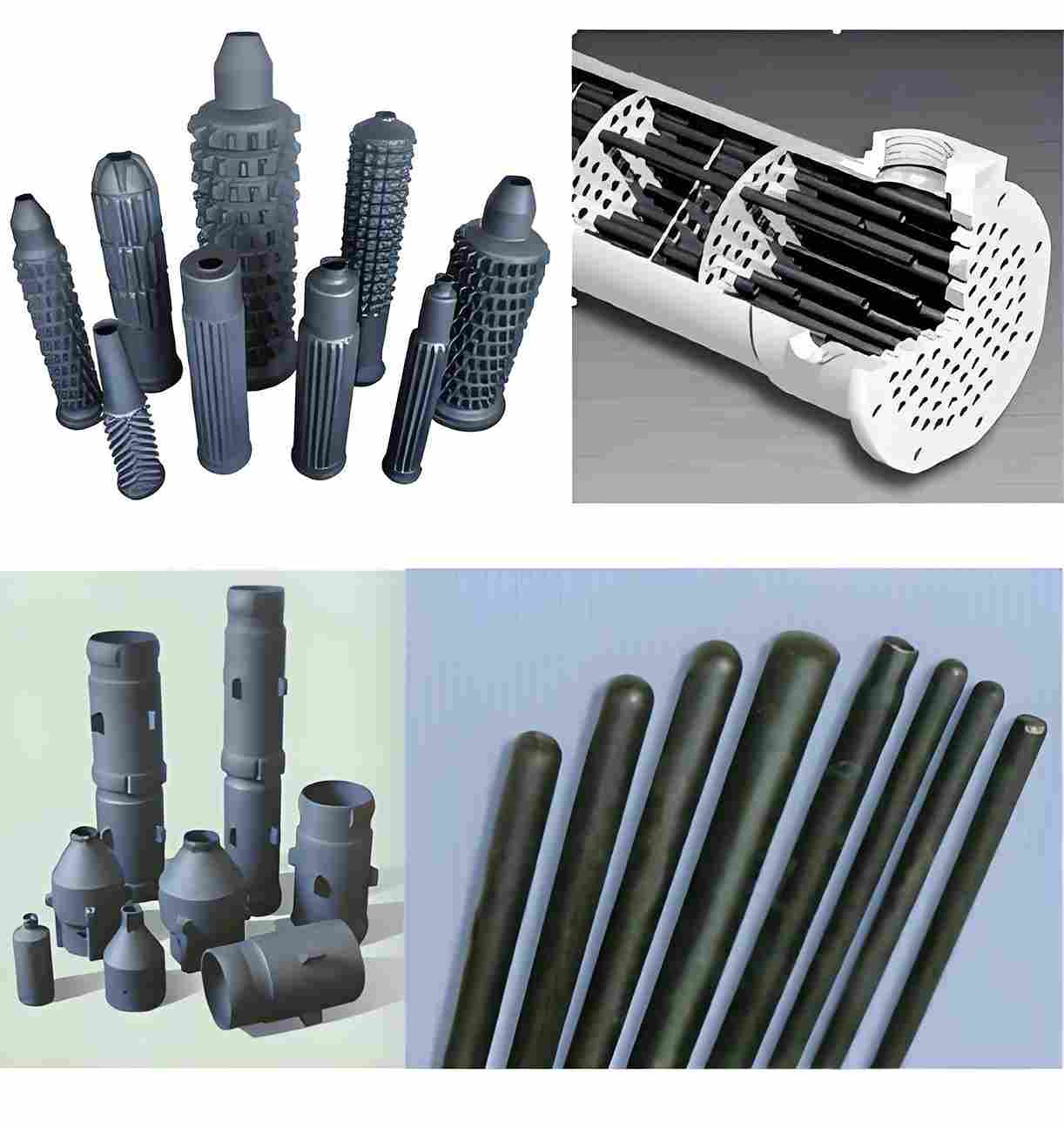
Extreme environments are where conventional materials run out of excuses: metals creep or oxidise, polymers burn or soften, and low-grade ceramics crack under thermal shock. When temperatures are high, media are corrosive, or loads are severe, silicon carbide components often become serious candidates for critical equipment.
This step-by-step guide walks through a structured approach to silicon carbide component selection for extreme environments, so you can move from “it might work” to a defensible engineering decision.
Step 1 – Define the Environment, Not the Part
Before discussing dimensions or drawings, start with the environment. Silicon carbide is a high-performance ceramic with outstanding properties, but it is not magic. You need a clear picture of the conditions it must survive. General background on the material can be found in silicon carbide, but for selection you should define:
- Temperature: normal operating range, peak temperature, heating and cooling rates.
- Media: gases, liquids, slurries; composition, contaminants and aggressiveness.
- Pressure & loads: internal/external pressure, static loads, dynamic loads, vibration.
- Mechanical constraints: fixed, sliding, rotating, impact risk, thermal cycling frequency.
- Safety & criticality: what happens if the part fails: leakage, shutdown, damage.
Extreme environments often combine several factors: high temperature + corrosion + mechanical load. The more precisely you define them, the more reliable your silicon carbide implementation will be.
Step 2 – Clarify the Component’s Role in the System
Silicon carbide can show up in many roles. Instead of thinking “I need a SiC part here,” define what that part actually does:
- Structural support: beams, plates, rollers, kiln furniture or frames.
- Flow and containment: tubes, nozzles, liners, thermocouple protection tubes.
- Wear protection: tiles, wear plates, liners, impact blocks.
- Sealing and guiding: mechanical seal rings, sleeves, bearings.
- Thermal functions: radiant tubes, heat exchanger tubes, high-temperature carriers.
Once the function is clear, it becomes easier to choose the appropriate silicon carbide component family and geometry. For example, in high-temperature process lines, Zirsec supplies silicon carbide tubes for flow and radiant duties, and silicon carbide plates for wear and structural support in the same zone.
Step 3 – Choose a Silicon Carbide Grade Family
“SiC” is not a single material but a family of ceramics with different microstructures and processing routes. For extreme environments, three families dominate:
- SSiC – Sintered Silicon Carbide
Dense, high-purity, very low porosity. Excellent corrosion resistance, high strength and good creep behaviour. Used for seals, critical chemical equipment and tightness-critical parts. - RBSiC / SiSiC – Reaction-Bonded Silicon Carbide
Very good mechanical strength, excellent thermal shock resistance and reliable performance in structural and furnace parts. Widely used for tubes, beams, burners and wear components. - RSiC – Recrystallized Silicon Carbide
Good high-temperature and cycling behaviour; often used for kiln furniture and furnace internals where atmosphere and cycling dominate.
Grade selection guidelines for extreme environments
- Extreme chemistry + pressure: SSiC is often preferred for seals and pressure-retaining parts.
- Extreme thermal cycling + structural loads: RBSiC / SiSiC or RSiC, depending on temperature and design.
- High-temperature wear and support: RBSiC / SiSiC plates, beams and burners are common choices.
If you are unsure, specify priorities: “corrosion resistance first”, “thermal shock first”, or “wear resistance first”, and let the silicon carbide supplier propose the grade accordingly.
Step 4 – Map Loads and Constraints on the Component
In extreme environments, failure rarely comes from a single source. Map the loads acting on the SiC component systematically:
- Mechanical loads: bending, axial loads, compression, contact forces, impacts.
- Thermal loads: gradients across the part, local hot spots, rapid changes.
- Pressure loads: internal pressure for tubes, external pressure in vessels or vacuum.
- Constraints: rigid fixings, clamped edges, interference fits, misalignments.
For complex shapes, numerical tools such as the finite element method are widely used to identify stress concentrations and dangerous combinations of thermal and mechanical loads.
When designing with ceramics, a simple rule is: minimise tension and bending, use compression where possible, and eliminate sharp stress raisers.
Step 5 – Design Geometry for Ceramic Behaviour
Silicon carbide is strong but brittle. Geometries that are comfortable for steel can be dangerous for SiC. When designing the component:
- Avoid sharp corners: use generous fillets and smooth transitions in cross-section.
- Control wall thickness: avoid very thin, unsupported sections; change thickness gradually.
- Manage spans: for beams, plates and tubes, ensure support spacing matches thickness and material strength.
- Protect critical areas: reinforce edges, holes and slots where possible.
For high-temperature structures, combining SiC beams, rollers and plates into coherent systems is usually more robust than upgrading only one element. Zirsec’s product families are often used together in kilns, furnaces and reactors precisely for this reason.
Step 6 – Consider Interfaces, Mounting and Sealing
Most ceramic failures start at the interface to the rest of the equipment, not in the middle of an unloaded section. In extreme environments, these details matter even more.
Mechanical interfaces
- Use seats and supports that distribute load over larger areas instead of point contacts.
- Limit torque and clamping forces; use softer interlayers where necessary.
- Design supports that remain effective at operating temperature, not just at room temperature.
Sealing interfaces
- Select gasket or packing materials compatible with both SiC and the process media.
- Ensure sealing loads do not introduce bending or twisting in the ceramic part.
- For mechanical seals, coordinate flatness, roughness and material pairing (e.g. SiC vs carbon, SiC vs SiC).
In pumps and rotating machinery, Zirsec’s silicon carbide seals, sleeves and bearings are often designed as a matched set, so interfaces and tolerances work together, not against each other.
Step 7 – Define Realistic Tolerances and Surface Requirements
For extreme environments, tolerances and surfaces are not “nice to have.” They directly influence leakage, wear and stress.
- Identify critical dimensions: fits, seal diameters, bearing seats, alignment features.
- Assign tighter tolerances only where needed; keep others at standard levels to control cost.
- Specify surface finish on sealing faces, sliding surfaces and high-contact areas.
- Consider where grinding or lapping is necessary and where an as-fired surface is acceptable.
Extreme environments do not automatically mean “everything must be ultra-precise.” Precision should follow function, not fear.
Step 8 – Plan Validation: Testing, Monitoring and Safety Margins
For critical components in extreme environments, validation is essential. Plan how you will confirm that the selected silicon carbide solution works as intended:
- Testing scope: prototype testing, pilot line, or full-scale trial.
- Monitoring parameters: temperature, vibrations, leakage, pressure drop, wear.
- Inspection intervals: first months of operation, then extended intervals if behaviour is stable.
- Safety margins: defined in terms of stress, temperature or lifetime, not vague “it should be fine.”
In many projects, a first generation of SiC components is installed with relatively conservative stress levels. Once field data confirm performance, later generations can be optimised for weight, cost or throughput.
How Zirsec Supports Silicon Carbide Component Selection
Zirsec specialises in industrial silicon carbide solutions for pumps, furnaces, chemical equipment, kiln furniture and wear systems. In extreme environments, support typically includes:
- Application review: temperature, media, loads and failure history of existing components.
- Grade selection: choosing between SSiC, RBSiC / SiSiC and other variants based on priorities.
- Geometry and interface recommendations: adapting shapes, supports and interfaces for ceramic behaviour.
- Prototype and series production: from trial parts to stable supply for ongoing operations.
By treating tubes, plates, seals, nozzles and other SiC parts as a coordinated system instead of separate catalogue items, Zirsec helps customers deploy silicon carbide in extreme environments with fewer surprises.
Case Example: SiC Components in a High-Temperature, Corrosive Gas Line
Background
A process line carrying hot, corrosive gas used metallic components for support and flow control. Repeated failures occurred due to oxidation, distortion and wear, causing unplanned shutdowns.
Approach
- Define environment: gas composition, temperature profile, local velocities and pressure.
- Identify roles for SiC: support beams, protection tubes, wear plates in impact zones.
- Select RBSiC for structural elements and SSiC for the most exposed contact parts.
- Redesign supports and interfaces for ceramic loading patterns.
Result
- Component lifetime increased, with fewer failures related to oxidation and distortion.
- Process stability improved thanks to more stable geometry at temperature.
- Maintenance became more predictable, with longer planned intervals instead of emergency repairs.
FAQ – Silicon Carbide Component Selection for Extreme Environments
Q1. How do I know if silicon carbide is appropriate for my extreme application?
If metals or polymers repeatedly fail from a combination of high temperature, corrosion or wear, and if downtime is expensive, silicon carbide is worth evaluating. Start with an application review: temperature, media, loads and failure modes of the current solution.
Q2. Is it enough to upgrade just one component to SiC?
Sometimes, but not always. In extreme environments, changing only one part can move the failure point to another component. A system-level review of all parts in the hot or aggressive zone usually delivers better results than isolated upgrades.
Q3. How early should silicon carbide be considered in an equipment design?
Ideally at the concept or early design stage, especially if you already know the environment is harsh. Early consideration avoids having to redesign supports, interfaces and clearances later when metal parts cannot cope.
Q4. What if I cannot define all loads and conditions precisely?
Provide the best available data and describe uncertainties honestly. In many extreme environments, engineers work with ranges and scenarios rather than exact numbers. A good silicon carbide supplier can still make robust recommendations if the main constraints are clear.
Q5. How can Zirsec help reduce risk when moving to silicon carbide in extreme environments?
Zirsec supports you with environment analysis, grade selection, geometry and interface design, and stepwise validation (samples → pilot → full-scale). By combining standard components (such as SiC tubes, plates and seals) with customised designs where needed, Zirsec helps you introduce silicon carbide into extreme environments with controlled risk instead of trial-and-error.
Considering silicon carbide for a high-temperature, corrosive or high-wear application? Use this step-by-step guide as a checklist, and combine it with an application review from an experienced SiC supplier to move from “extreme problem” to “engineered solution.”